Studio for Rent in Kearny NJ: A Creator’s Pro Guide
 July 17, 202620 Minutes
Meta description: Searching studio for rent in Kearny NJ? Skip apartment listings and find the right podcast or video studio setup near Kearny.
URL slug: /studio-for-rent-kearny-nj
Primary keyword: studio for rent in Kearny NJ
Secondary keywords: podcast studio near Kearny, recording studio rental NJ, content studio New Jersey
You're probably doing what almost every new creator does. You type studio for rent in Kearny NJ into Google, expecting a clean list of podcast studios, video sets, and turnkey creative spaces. Instead, you get apartment listings, lease rates, square footage, and photos of kitchens you'll never record in.
That confusion isn't small. It slows decisions, wastes budget, and pushes people into the worst shortcut in content creation, trying to force a residential space to act like a production studio. If you're building a podcast, filming a branded series, or batching reels for your business, you need a place designed for capture, not a place designed for sleep. This guide cuts through the search mess, shows you what really matters in a studio rental, and points you toward the kind of setup that helps creators look and sound like they've arrived.
The Kearny Studio Search A Common Creator Mistake
A creator in Kearny starts the same way every time. Search the phrase, open a few tabs, compare options, try to book something this week. Then the tabs fill up with apartment listings.
That's not your fault. The search for studio for rent in Kearny NJ predominantly yields residential studio apartments, creating a significant information gap for creators who need acoustically treated podcast or video production spaces, as dedicated commercial listings are absent from top search results, according to Kearny studio apartment listings on Zillow.
The problem is the word studio itself. Real estate platforms interpret it as a floor plan. Creators mean something else entirely. They mean clean audio, reliable lighting, camera-ready sets, and enough support to walk in and shoot.
What creators mean when they search studio
A creator searching this phrase usually wants one of four things:
- A podcast room: somewhere quiet enough to record without traffic, neighbors, or HVAC noise fighting the mic.
- A video set: a polished background that looks intentional on YouTube, LinkedIn, or client-facing brand content.
- A content batching space: a place to knock out reels, shorts, interviews, and stills in one block.
- A production partner: not just a room, but a system that removes DIY friction.
Search intent matters. If the results page thinks you're apartment hunting, you need to change how you evaluate options, not just how you search.
A lot of creators also realize this confusion spills into their visual brand. If you're tightening up your presentation across audio, video, and profile imagery, it's worth taking a minute to compare local vs AI headshots so your on-camera identity matches the quality of your content.
For a better read on what an actual nearby recording option looks like, start with this guide on where to record a podcast in NJ. It solves the exact problem that Kearny search results create.
Why Your Apartment Is Not a Recording Studio
The apartment workaround sounds smart until you use it. You save a trip. You stay local. You think you'll make the room work with a ring light, a USB mic, and some heavy curtains. Then the recording starts, and the room tells the truth.
With studio apartment rents in Kearny ranging from $1,100 to over $7,437 per month, the financial commitment for a residential space is significant, yet these units lack the essential production infrastructure creators need, making it a costly compromise, based on Kearny studio rental listings from ApartmentHomeLiving.
The audio problem is bigger than most beginners think
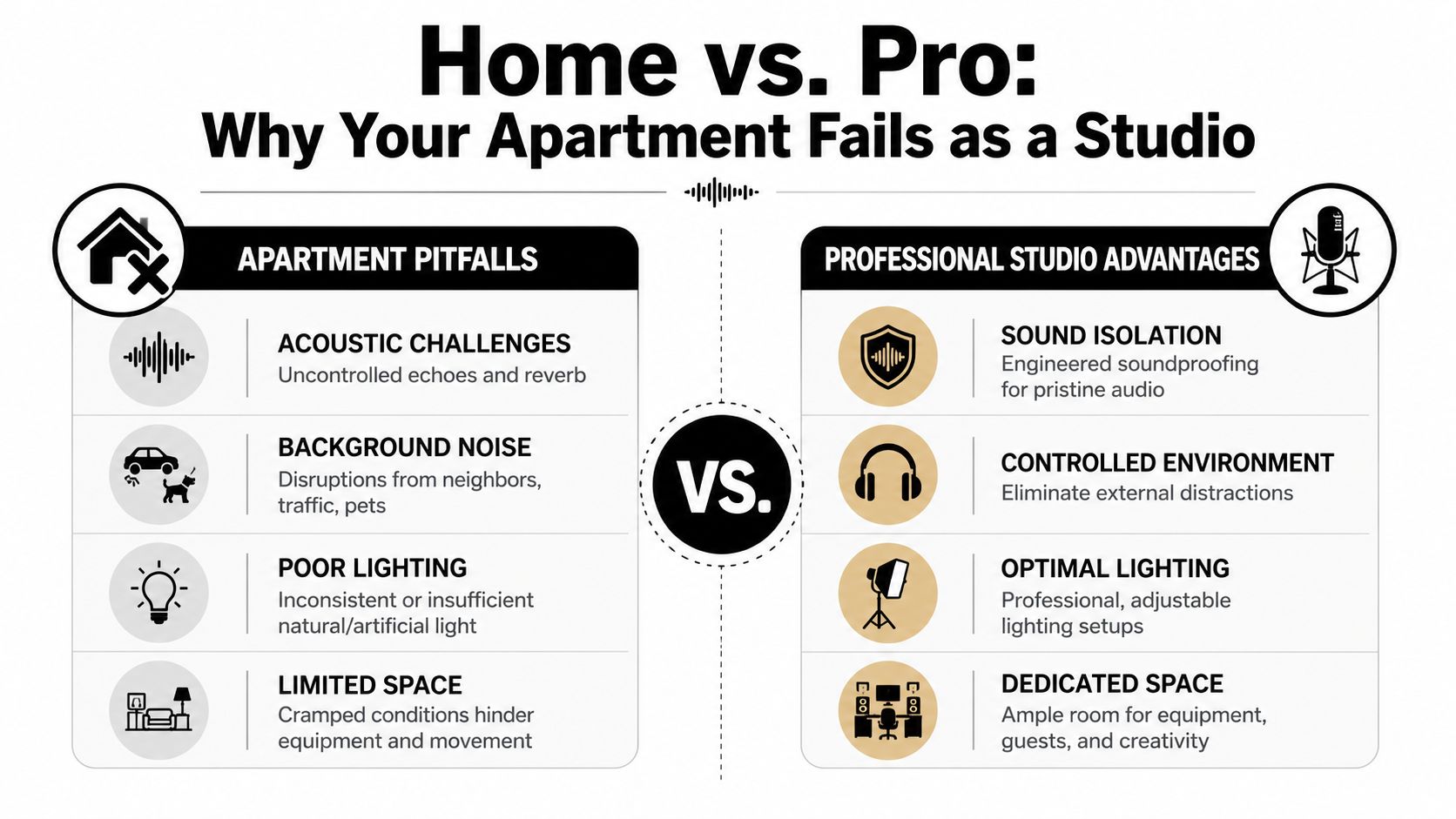
Apartments weren't built for voice capture. Hard walls bounce sound. Windows leak noise. Hallways carry footsteps and door slams. Even a decent microphone will expose a bad room fast.
You can soften a room a little. You can't turn a residential unit into a dependable production environment just because you bought better gear.
- Room echo: untreated walls create reflections that make voices sound distant or harsh.
- Noise bleed: neighbors, traffic, pets, appliances, and building systems don't care that you're recording.
- Session inconsistency: even if one episode sounds okay, the next one may not.
- Editing drag: the more junk in the audio, the more cleanup you need later.
The visual problem hurts your brand
The camera sees everything. Low ceilings, cluttered corners, uneven daylight, and random furniture communicate “side project” even when your ideas are strong.
If you sell expertise, your set has to support the message. Coaches, consultants, founders, and hosts lose credibility when the environment looks accidental.
Practical rule: Don't measure a recording space by whether it's available. Measure it by whether it makes you easier to trust.
The money argument doesn't hold up
People justify apartment recording by saying, “I already pay for the space.” That's exactly why it's a weak production decision. You're absorbing a major monthly cost for a room that still doesn't give you proper acoustics, lighting control, or studio functionality.
If you want to understand what proper acoustic treatment involves before you waste money patching your apartment, read this guide on how to soundproof a room. It's a useful reality check. Soundproofing isn't a weekend aesthetic upgrade. It's infrastructure.
The Professional Studio Checklist
A real studio should be easy to identify once you know what to inspect. Most creators don't need more options. They need better filters.
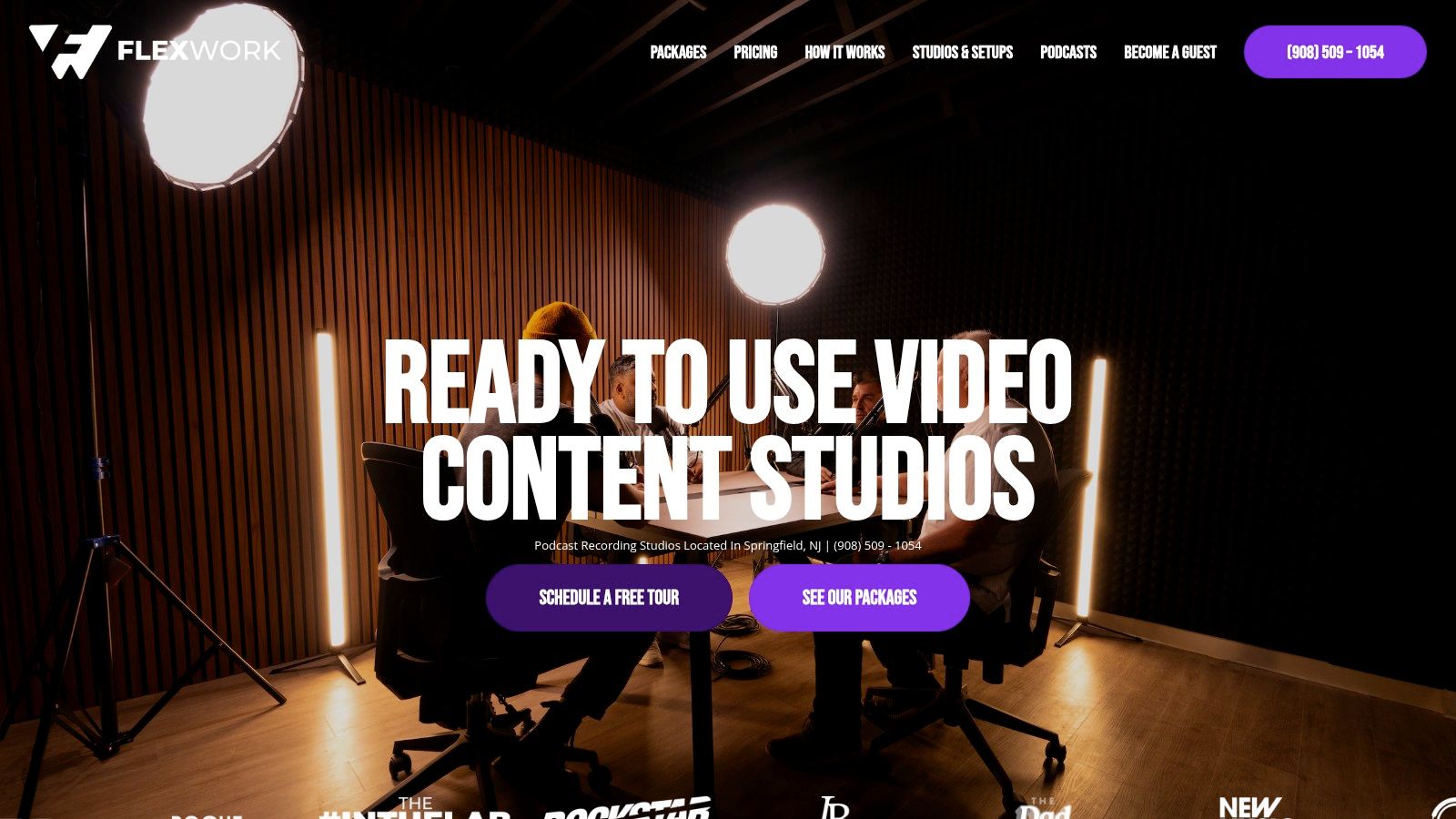
Start with the room, not the camera
The room is the product. Everything else comes after that.
True broadcast-quality facilities, like those in the Kearny Point area, meet Level 2 acoustic certification standards (STC ≥60) to eliminate ambient noise, a critical feature residential studios lack and a benchmark for professional audio capture, according to the New Jersey Motion Picture and Television Commission studio directory.
That single benchmark tells you more than a pretty Instagram carousel ever will.
| What to check | Why it matters |
|---|---|
| Acoustic isolation | Keeps outside noise out and your recording usable |
| Absorption inside the room | Controls reflections so speech sounds tight and clear |
| Dedicated control workflow | Reduces mistakes during capture |
| Flexible set options | Lets one booking produce more than one content format |
The non-negotiables serious creators should demand
Some studio features are nice to have. Others are the line between usable content and expensive frustration.
- Professional microphones: Ask what mics are available and whether the setup supports multi-person recording cleanly.
- Cinema or broadcast-ready cameras: Your talking-head content shouldn't look like a rushed Zoom backup.
- Lighting that can be shaped: Good studios don't rely on whatever the sun is doing that day.
- Monitoring and engineering support: Even confident hosts perform better when someone else watches levels and framing.
- A set that fits your brand: Your studio shouldn't force every creator into the same generic look.
A polished episode starts before you hit record. It starts with a room that removes variables.
For creators mapping out a higher-end filming footprint, this creator setup guide for 2026 is useful for thinking beyond one mic and one camera. It helps you evaluate your setup like a media brand, not a hobbyist.
If you want to see how a polished local studio environment is built for consistency, review this breakdown of what makes a great podcast studio. It's the right benchmark for comparing spaces.
Ask better questions before you book
Most creators ask, “How much is it?” first. Ask these instead:
- What does the room do for audio quality?
- What equipment is included versus extra?
- Can I record podcast, video, and short-form content in one session?
- Is there support on-site if something goes wrong?
Those answers tell you whether you're booking a studio or just renting a decorated room.
Smart Investments Hourly Rentals And Content Days
Not every creator needs the same buy-in. Some need a room for one clean session. Others need a full production sprint that saves them from scrambling every week.
That's why the smartest approach isn't “spend more.” It's match the format to the stage of your brand.
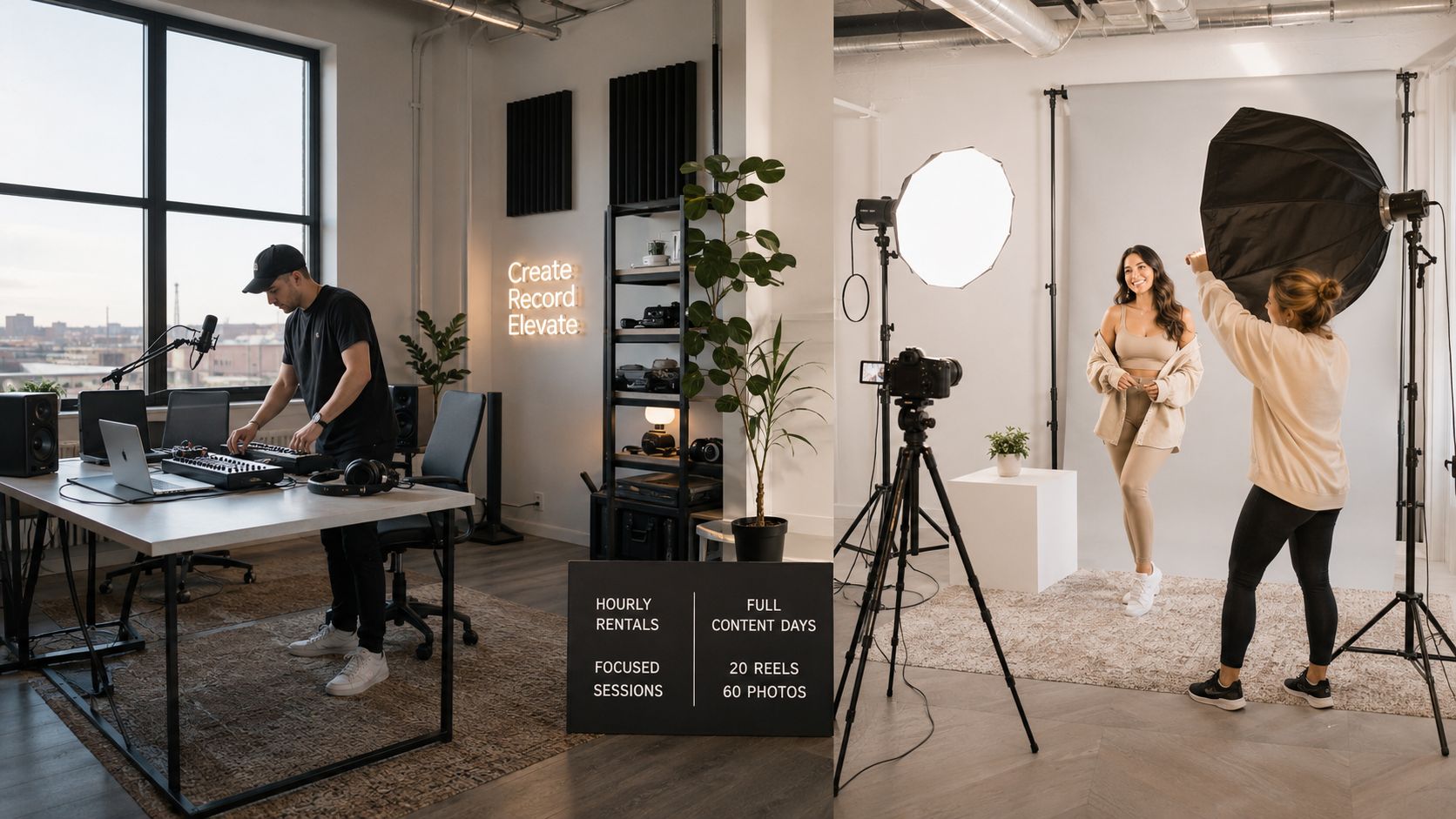
Hourly rentals make sense when you need speed
If you already know your format and just need a clean place to capture, hourly rental is the practical move. You get access to a better environment without taking on the burden of building your own.
Hourly access works best for:
- Solo hosts: record a tight episode or interview without turning your home into a set.
- Guest sessions: bring in a client, founder, or collaborator and keep the experience polished.
- Pilot episodes: test your concept before committing to a bigger package.
- Short-form batching: record multiple intros, hooks, and promo clips in one visit.
Content Days are for people who value momentum
At this juncture, newer creators either level up or stay stuck. Weekly DIY recording feels cheaper until it starts eating your schedule, delaying launches, and draining your energy.
A Content Day is $3000/day and includes 20 edited reels or 60 pro photos. That's not a luxury line item. It's a way to batch your brand presence in one concentrated session instead of dragging content creation across the entire month.
The most efficient creators don't make one piece of content at a time. They build systems that let one recording session create weeks of output.
Use a Content Day when you want to:
- Launch stronger: walk away with a real bank of assets instead of one episode and a vague plan.
- Stay visible: create enough short-form material to support distribution after the recording is done.
- Protect your calendar: one focused day beats a dozen half-finished nights at home.
- Upgrade your look fast: polished stills and short-form clips instantly raise perceived brand quality.
If that batching model fits how you work, look at this Content Day option for podcasters. It's the cleanest path for creators who want output, not just studio time.
The Ultimate Solution For Serious Podcast Growth
There's a point where “studio rental” stops being the core question. The central question becomes whether you want to keep producing a podcast, or build a media asset around your voice.
That shift changes everything. You stop optimizing for a room and start optimizing for consistency, packaging, distribution, and audience growth.
The economics already point in this direction. The cost of commercial creative space can be significantly lower per hour than residential options when used for production. Rates at some local creative labs start as low as $15/hr, highlighting the cost-efficiency of purpose-built studios compared to monthly apartment rents, based on Kearny-area studio pricing compiled by Apartments.com.
When full-service support becomes the better move
If you're serious about reach, a higher-tier production partner beats piecing together freelancers every time. You get one operating rhythm, one visual standard, and one team that can connect recording to release.
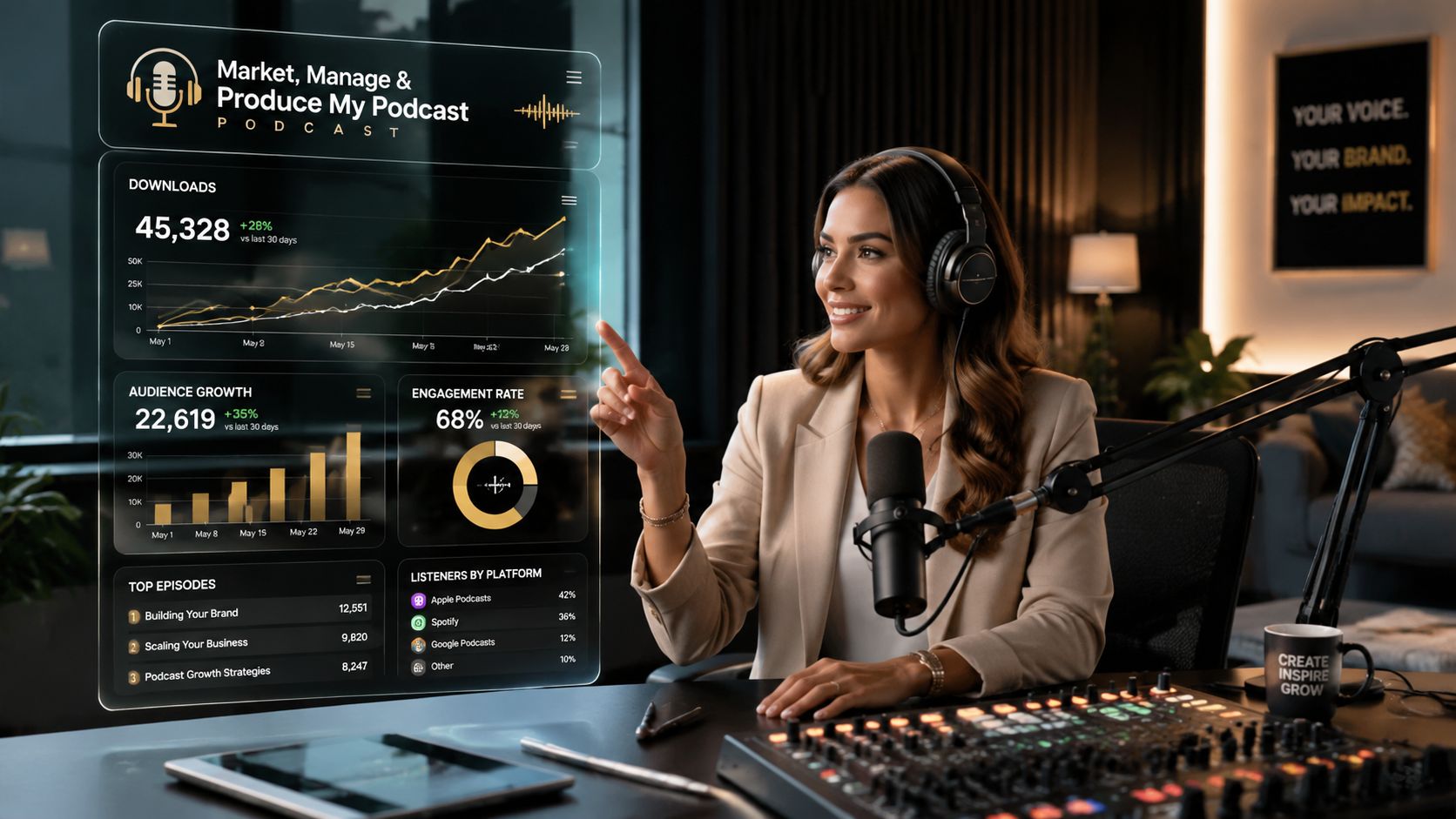
The premium option here is the Market, Manage & Produce My Podcast package. It starts at $1500 per episode with a 20-episode growth commitment.
That package works for creators who don't just want an episode exported. They want the show shaped, produced, edited, positioned, and supported like a brand channel.
What you're really buying
You're not paying for buttons to be pressed. You're paying to remove the mess that slows growth.
- Production discipline: better sessions, cleaner audio, stronger edits.
- Creative consistency: your visuals and episode packaging stop changing week to week.
- Distribution support: the content gets pushed out, not left on a drive.
- Marketing alignment: clips, promotional assets, and positioning work together.
This also matters if your growth plan depends on short-form. Turning one long recording into many usable social assets is a real lever when done well. If that's part of your strategy, this guide on turning podcast clips into TikTok Shorts is worth reading alongside your production planning.
A quick example of how creators think about end-to-end studio support is below.
Don't stop at the episode
If your show supports a business, you also need owned infrastructure. That's where the broader ecosystem matters. Podcast websites are $5000 plus hosting, which makes sense for creators who want a polished home base for episodes, credibility, and conversion instead of relying only on platform pages.
A serious show usually needs three things working together. A premium place to record. A production system that protects quality. A distribution plan that keeps the content alive after publishing.
Book Your Tour And Elevate Your Content
If you searched studio for rent in Kearny NJ, you were probably looking for a place to create. What you found was a pile of apartment listings that answered the wrong question.
The right answer is simpler. Don't rent a living space and hope it behaves like a studio. Don't pour time into acoustic patchwork, inconsistent visuals, and one-off DIY sessions that leave you exhausted. While rental listings around Kearny are confusing and often omit the production details creators need, the average rent in the area requires an annual income of approximately $88,000, which makes the case for more cost-effective, professional production alternatives even stronger, according to Kearny rental data from Rentable.
Three ways to prep for your first studio session
- Clarify the outcome: decide whether you're recording a podcast episode, guest interview, promo clips, or a full content batch.
- Build a shot list: even a short list of talking points, reels hooks, and photo needs keeps your session focused.
- Dress for your brand: choose outfits and props that match the tone of your show, site, and social channels.
Your first studio session should do more than produce content. It should reset your standard for what your brand looks and sounds like.
If you're done guessing and want to see a professional setup in person, schedule a tour. It's the fastest way to stop comparing apartment listings and start building content in a room that's designed for the job.
If you're ready to record in a space built for creators, explore Flexwork Podcast Studios. Book a tour, review the studio rental options, or ask about production packages, Content Days, and podcast websites if you want a polished, end-to-end setup.