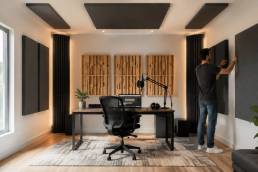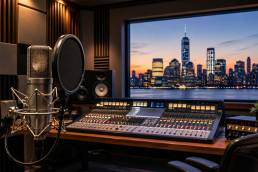

Short Form Video Production a Pro Studio Guide
 July 20, 202627 Minutes
Meta description: Short form video production gets easier in a pro studio. Learn how to plan, shoot, edit, and repurpose premium reels without DIY burnout.
URL slug: /short-form-video-production-pro-studio-guide
Primary keyword: short form video production
Secondary keywords: video content production, studio video shoot, podcast reel production
You're probably feeling it already. The ring light is balanced on a chair. The audio has a soft room echo you can't quite fix. One clip looks sharp, the next looks flat, and somehow a simple 20-second Reel has eaten half your afternoon.
That's the core friction behind short form video production. It isn't usually a lack of ideas. It's the pileup of tiny production problems that drain momentum before the camera even starts rolling. For ambitious creators, founders, and podcast hosts, that friction turns content into a chore instead of an engine.
A professional studio changes that equation. It gives you repeatable lighting, clean audio, controlled framing, and a setting that lets you perform at a higher level because the environment is doing part of the work for you. The difference isn't cosmetic. It's strategic. When the format itself is pulling this much audience attention, production quality and consistency stop being optional.
The End of DIY Video Burnout
Most creators don't quit because they ran out of ambition. They quit because DIY production keeps punishing them for trying to be consistent.
The spare-bedroom setup always sounds workable in theory. Then you fight window glare at noon, HVAC noise at 2 p.m., a cluttered background by evening, and footage that never quite matches from one shoot to the next. That inconsistency shows up on screen. It makes the brand feel smaller than it is.
Short form is no longer a side format, underscoring the increased importance of its production. Short-form video commands an average engagement rate of 5.5%, which is more than three times higher than long-form video at 1.7%. YouTube Shorts also generates over 70 billion daily views according to Tagshop's short-form video statistics. That's why “good enough” production keeps falling short. The format moves too fast, and viewers decide too quickly.
DIY content often fails before the message has a chance to land. The room, lighting, and sound tell the viewer whether to trust what comes next.
That's also why operators building repeatable content systems are getting more serious about workflow, not just creativity. If you're thinking beyond one-off clips, this blog on UGC pipeline automation is useful for seeing how teams turn raw ideas into scalable content output.
A studio doesn't just make things look nicer. It removes variables. When acoustics are controlled, lighting is repeatable, and sets are designed for camera, you stop spending your creative energy on patchwork fixes. If you want a sharp comparison of what changes when you leave the home setup behind, this breakdown of studio vs DIY podcasting and what you gain by going pro is worth reading.
Blueprint for High-Impact Video Content
Strong videos are won before the first take. Planning is what separates a polished content day from a long day of improvisation that produces a folder full of almost-usable clips.
The business case is obvious. The market for short video content was valued at $2.17 billion in 2026, and 73% of consumers prefer learning about products through this format, directly influencing purchase decisions for nearly half of all Millennials according to Clipspeed's short-form video statistics. If your audience wants to learn this way, pre-production can't be casual.

Start with concepts that survive contact with the feed
A weak concept dies fast, even with expensive cameras. The best studio day starts with ideas that can hold attention in a crowded vertical feed.
Use this filter before you approve a concept:
- Clear audience fit: Name who the clip is for before writing it. A founder speaking to first-time buyers needs a different angle than a coach speaking to warm leads.
- One idea only: If a clip tries to teach three lessons, it usually teaches none of them well.
- Visible payoff: The viewer should understand why the clip matters almost immediately.
- Platform realism: Some ideas need speed and personality. Others need authority and clarity. Plan for where the clip will live.
A lot of teams overvalue “topics” and undervalue angles. “Why podcasting matters” is a topic. “The one mistake making your guest interviews feel flat” is an angle. Angles create curiosity.
For creators refining ideation, ClipCreator.ai's short-form insights offer a helpful outside perspective on what makes clips feel native instead of forced.
Script for rhythm, not speeches
Short form scripts should sound spoken, not written. The camera punishes anything that feels like a paragraph.
A practical studio script usually includes:
Hook line
One sentence that interrupts the scroll.Core point
The one lesson, observation, or argument.Proof or example
A specific detail, contrast, or quick story.Closing instruction
What the viewer should do next.
Practical rule: If you need to take a breath in the middle of the sentence, the sentence is probably too long for a Reel.
One more important trade-off. Many first-time clients script every word because they want control. That usually makes delivery stiff. Bullet-point scripts often perform better in studio because they preserve tone, pace, and facial expression.
Build a shot list that earns the studio
The studio is valuable because it gives you options. Don't waste that flexibility by walking in with “we'll figure it out.”
A useful shot list covers more than lines of dialogue. It should define visual variation, props, wardrobe changes, and where each concept lives in the room. That's what makes a Content Day efficient. At $3000 per day, a properly planned shoot can justify itself because it's designed to leave you with 20 edited reels or 60 pro photos rather than a handful of disconnected takes.
Here's the kind of planning grid that keeps a day tight:
| Asset type | What to lock before shoot | Why it matters |
|---|---|---|
| Talking-head reel | hook, core point, CTA, framing | avoids rambling and retakes |
| Podcast promo | guest angle, best quote, intro line | gives editors a clear story spine |
| Lifestyle b-roll | movement path, prop, wardrobe | creates visual texture for multiple edits |
| Educational clip | opening question, proof point, lower-third text | keeps value clear without clutter |
For teams building a stronger narrative approach before a shoot, this article on the art of storytelling and creating compelling content that captivates your audience is a smart companion read.
What to bring into the studio
The simplest productions often come out looking the most expensive because the prep is disciplined.
Bring these with you:
- Finalized topic list: not “ideas,” but approved clip titles.
- Wardrobe options: enough variation to make a batch feel spread out over time.
- Brand references: examples of tone, pacing, and visual style.
- CTA priorities: know whether the ask is booking, subscribing, sharing, or sending a DM.
That level of preparation creates a calm room. Calm rooms produce better performances.
In-Studio Production The Professional Playbook
A professional set should make you better on camera within minutes. If it doesn't, the setup is working against you.
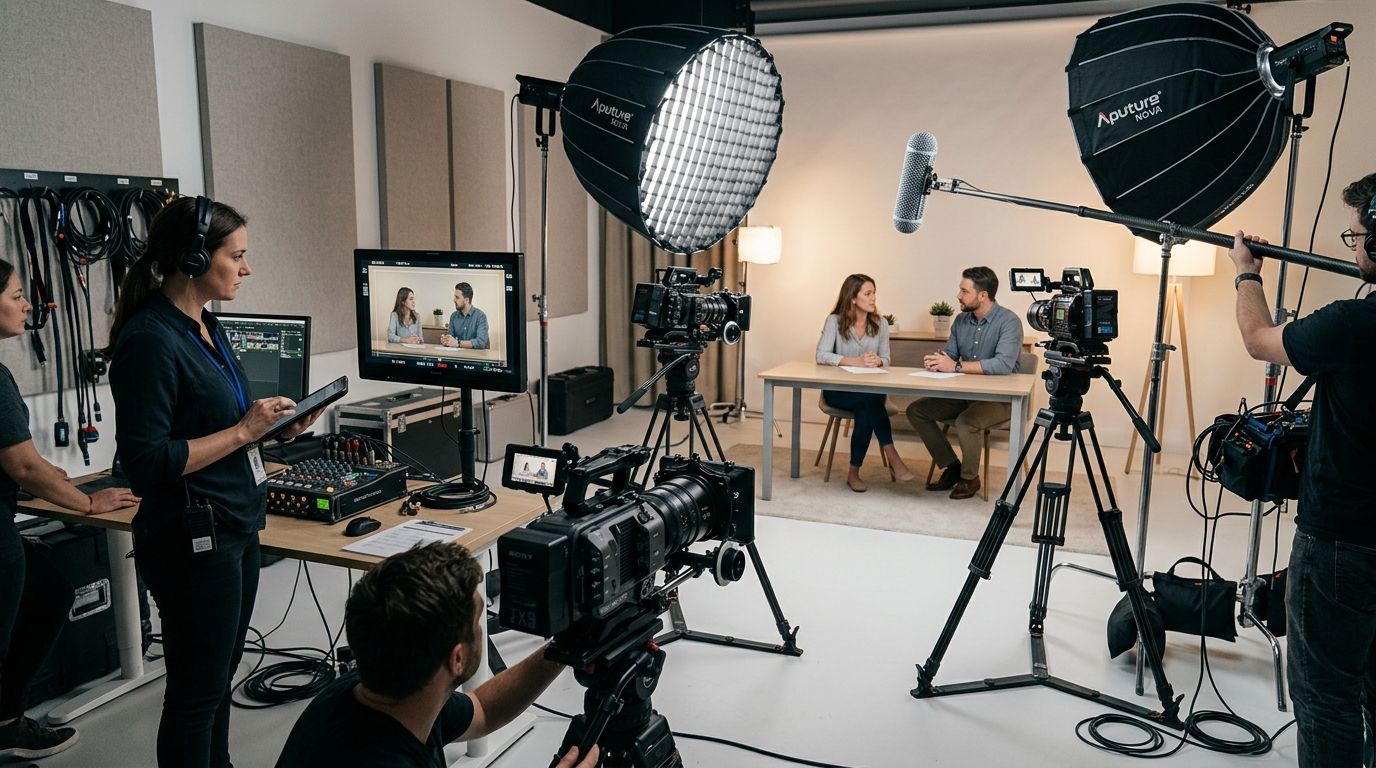
The first thing a studio fixes is visual authority. Good lighting shapes the face, separates you from the background, and makes the image feel intentional instead of accidental.
Lighting that flatters instead of exposing
Most DIY setups blast the face evenly and call it a day. That creates a flat, washed look. In studio, lighting has jobs.
One light defines the face. Another softens shadows. A background light separates the subject from the set. You don't need to memorize lighting theory to benefit from it. You only need to know what it does for the viewer. It makes you look more credible, more focused, and easier to watch.
That shift matters in short form because viewers read production quality as a signal. Crisp lighting says the message is worth hearing.
Multi-angle shooting creates attention without chaos
Single-angle talking heads can work. They just can't carry every concept.
A stronger setup usually captures a clean primary angle and at least one alternate perspective. That gives editors places to cut for emphasis, hide jump cuts, and keep the visual rhythm alive. The result feels dynamic without becoming overproduced.
A useful in-studio decision framework looks like this:
- Primary angle for authority: best for direct teaching and strong eye contact.
- Secondary angle for emphasis: ideal for key phrases, transitions, and emotional variation.
- Detail shots for texture: hands, notes, mic adjustments, product close-ups, or over-the-shoulder moments.
That's also why the room itself matters. Set depth, furniture placement, lens choice, and subject distance all shape the finished look. Consequently, a dedicated video podcast studio gives creators an advantage over spare-room recording.
The set should support the message, not compete with it. If viewers remember the bad glare or the cheap background more than the idea, the production lost.
Audio is where premium content quietly wins
Viewers forgive a lot of things before they forgive bad sound.
The problem with home recording isn't usually volume. It's reflection. Hard walls, desk surfaces, and empty corners bounce sound back into the mic. That echo lowers perceived quality fast. In a treated room, your voice lands cleaner, fuller, and more controlled. You sound closer to the listener, which makes the content feel more trustworthy.
That's particularly important for coaches, hosts, and founders. Voice is part of brand perception. If the audio feels thin or roomy, authority drops.
A quick on-set checklist helps:
| Production element | DIY risk | Studio advantage |
|---|---|---|
| Lighting | uneven skin tones, shadows, glare | consistent cinematic look |
| Camera framing | cluttered background, awkward crop | intentional composition |
| Audio | echo, hiss, room noise | controlled, clean voice capture |
| Performance | distracted by setup issues | focused delivery |
The pace of a real studio day is easier to grasp when you see it in motion:
Native vertical shooting avoids painful fixes later
A lot of creators still record horizontally and assume they'll crop later. That shortcut usually costs them flexibility.
For vertical platforms, the smarter move is to frame vertically from the start and keep text and critical visuals inside the center 80% of the frame, as noted in LTX's guide to short-form video. That protects your captions and key visual elements from platform buttons, captions, and interface clutter.
It sounds technical. In practice, it's simple. Compose for the platform you're publishing to, not the one you wish you had shot for after the fact.
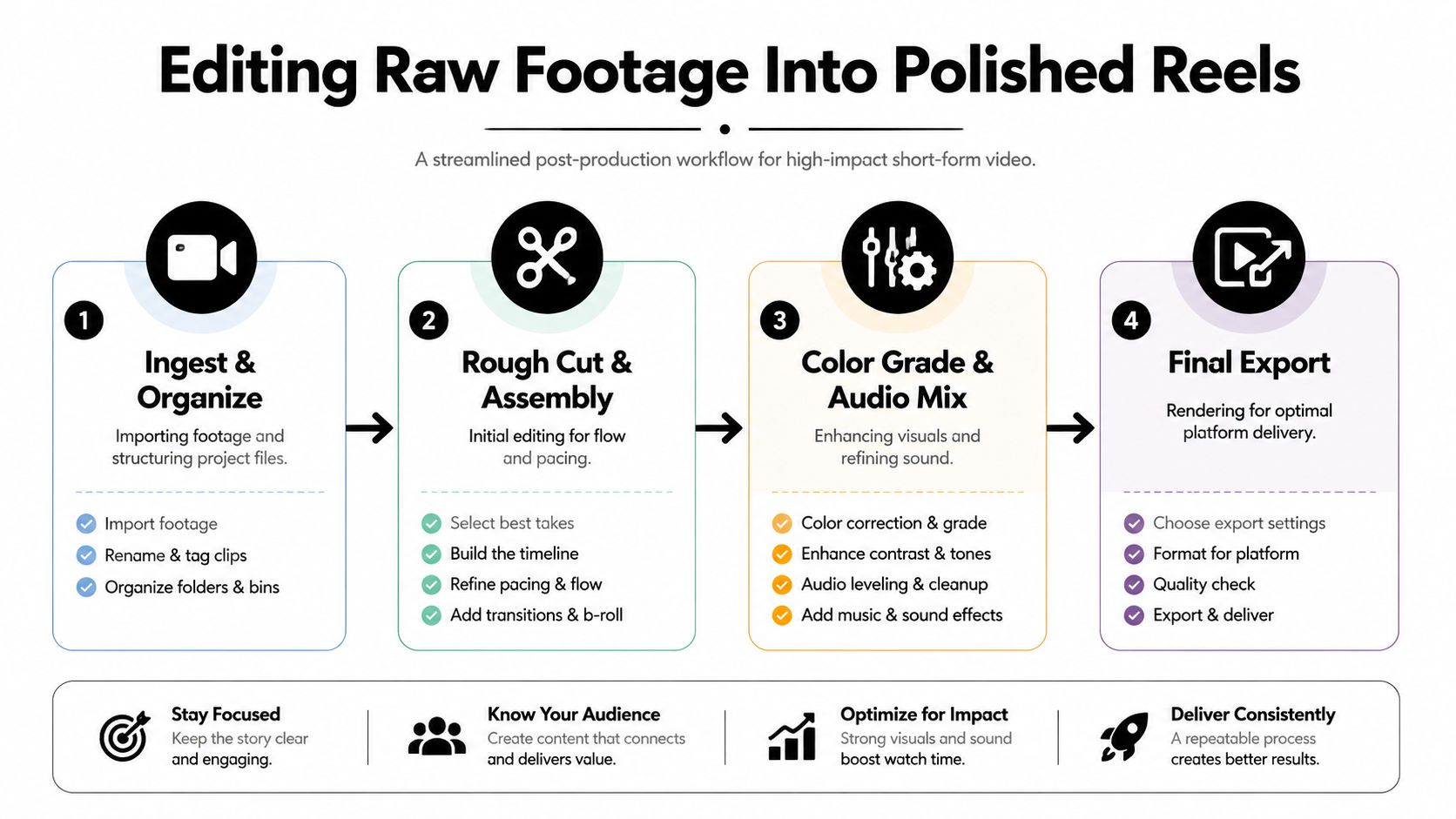
Editing Raw Footage Into Polished Reels
Editing is where short form video production either tightens into a premium asset or collapses into another forgettable clip. Good footage helps, but the edit decides pace, clarity, and conversion.
The strongest short videos follow a disciplined structure. Expert methodology requires a pattern-interrupt hook in the first 2 seconds, value delivery in seconds 3–8, an explanation from 16–45 seconds, and a specific call-to-action in the final 3 seconds according to The Digital Crafts short-form video marketing framework.
Build the cut around function
A lot of mediocre edits are technically clean. They just don't have a job.
Each segment of the reel should do something distinct:
- Hook: stop the scroll fast.
- Value delivery: prove there's substance immediately.
- Explanation: give just enough detail to make the clip useful.
- Specific CTA: ask for one action, clearly.
The keyword there is specific. “Link in bio” is lazy if the clip could instead ask the viewer to book a call, watch a full episode, or send a particular message.
Polish without making it sterile
Over-editing is one of the easiest ways to kill momentum. Too many zooms, sound effects, animated captions, and constant transitions make a brand look like it's trying too hard.
The premium edit is usually cleaner than people expect. It relies on timing, not noise.
A smart post workflow tends to look like this:
Ingest and organize
Label the best takes, b-roll, and selects immediately.Assemble the rough cut
Put the strongest hook first, not the first line recorded.Refine color and audio
Keep skin tones natural. Remove distractions. Let the voice sit forward.Add graphics with restraint
Captions, lower thirds, and motion graphics should clarify, not decorate.
A polished reel feels fast because the editor removed friction, not because they added effects.
Safe zones, captions, and production support
Captions matter, but placement matters just as much. If text sits too high or too low, platform UI can bury it. That's why experienced editors keep overlays inside the center 80% of the frame when preparing vertical exports. The result looks composed on the actual app, not just in the timeline.
This is also the stage where many entrepreneurs lose patience. Editing asks for a completely different skill set than recording. It rewards ruthless trimming, good judgment, and comfort with software. If your value sits in speaking, teaching, or leading, doing all the post yourself often becomes the bottleneck.
That's where producer support earns its keep. A managed editing workflow can handle clip selection, pacing, sound cleanup, graphics, and final exports while you stay focused on delivery and growth. If you're weighing whether to keep editing in-house or hand it off, this guide to best video editing software is a useful starting point for understanding the tools and trade-offs.
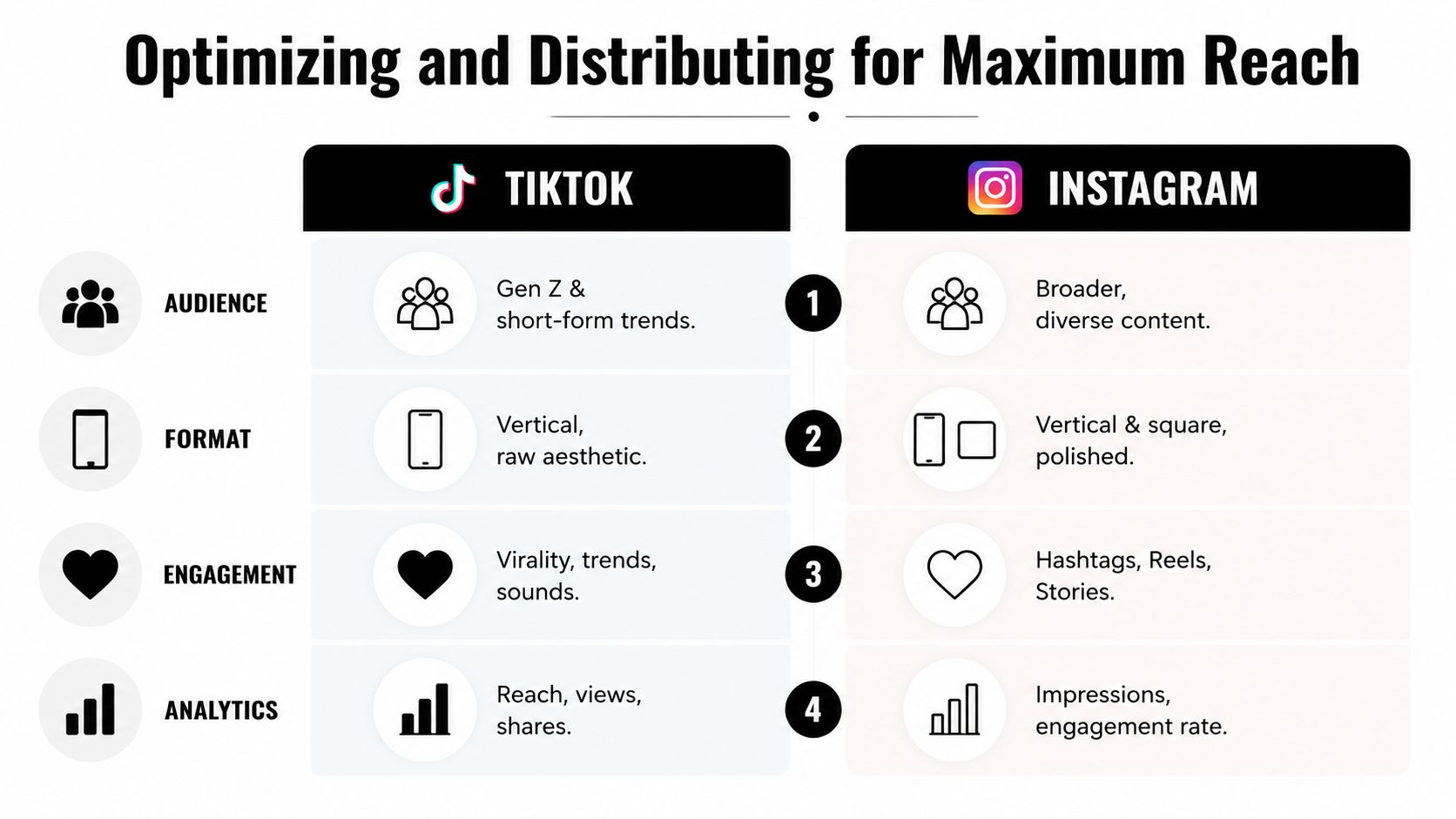
Optimizing and Distributing for Maximum Reach
A strong reel that never gets distributed properly is just expensive footage sitting in a folder.
Distribution starts before the camera rolls. Producers who want more value from a shoot map the content architecture in advance. The best approach is to plan 8–15 specific video atoms before recording one long-form asset, with the goal of creating 10–15 distinct short clips and reels from that single source according to Contently's guide to short-form video planning.
One recording session should feed multiple channels
Professional short form video production proves its worth. A single interview, podcast episode, or founder monologue can become a full content package if it's logged and edited with intent.
The repurposing stack often includes:
- Hero clips: the most emotionally sharp or insight-heavy moments.
- Educational snippets: concise answers to one audience question.
- Quote-led reels: direct statement first, explanation second.
- Sales-enablement assets: clips a team can use in outreach, landing pages, or nurture flows.
Not every platform needs a completely different message. It does need a version adapted for the way people consume on that platform.
Format for the feed you're entering
TikTok, Instagram Reels, and YouTube Shorts all reward clarity, but they don't always reward the same presentation style. Some clips want raw immediacy. Others benefit from stronger polish and framing.
A practical distribution checklist looks like this:
| Platform need | What to adjust |
|---|---|
| Opening seconds | lead with the strongest visual or line |
| On-screen text | keep it concise and easy to scan |
| Caption strategy | support silent viewing without clutter |
| CTA | align it to the platform behavior you want |
If transcript-driven workflows are part of your process, Captapi's guide to Reel transcripts is a helpful reference for turning spoken content into cleaner supporting assets.
Growth requires a system, not random posting
The creators who build momentum don't rely on inspiration. They create repeatable publishing systems. That means tagging clips by topic, saving hooks that worked, spotting recurring audience questions, and building content series instead of isolated posts.
For brands serious about audience development, full-service management proves valuable. A growth-focused workflow can turn one episode into a month's worth of usable assets, then handle scheduling, packaging, and iteration. The economics become even more compelling when the content supports a broader show or brand.
That's why premium support tiers exist. When a service starts at $1500 per episode with a 20-episode growth commitment, the value isn't just editing. It's the operational discipline required to turn production into audience-building. If growing a content engine is the goal, this resource on how to grow social media following gives a solid foundation for the distribution side.
Publishing more content doesn't automatically create reach. Publishing the right assets, in the right format, with a repeatable system does.
Elevate Your Content From Hobby to Empire
There are two paths most creators can take.
The first is the familiar one. You keep filming at home, patching together clips between meetings, redoing takes because the sound changed, delaying posts because editing feels endless, and wondering why the content still looks smaller than the business you're building.
The second path is more deliberate. You prepare the right concepts, step into a controlled studio environment, capture multiple assets in one sitting, and hand the footage into a post-production and distribution process built to scale. That path is calmer, sharper, and much easier to sustain.
What serious creators measure
Short form isn't just about getting a spike in views. Benchmark data shows that sub-15-second videos achieve a 72% completion rate, and the metrics that matter most are completion rate and average watch time rather than simple view counts according to The Auxiliary Co's short-form production benchmark guide.
That distinction matters. A flashy clip can attract curiosity. A well-produced one holds attention. Those are not the same thing.
The premium difference is operational
What makes premium production feel premium isn't only the lens, lights, or set design. It's the reduction of friction at every stage.
You feel it when the room is already dialed in.
You feel it when the audio is clean on the first take.
You feel it when the editor knows exactly how to shape the reel.
You feel it when one content day feeds weeks of output instead of a single post.
That's how brands stop acting like they're “trying content” and start operating like media properties.
A modern creator stack
If you want a cleaner workflow, these are the pillars worth protecting:
- Strategic prep: better concepts, tighter scripts, smarter shot lists.
- Professional capture: consistent visuals, real audio control, native vertical framing.
- Editorial discipline: cuts built for attention, clarity, and action.
- Distribution logic: repurposing, sequencing, and platform-fit publishing.
The creators who treat those pillars seriously tend to build more than a content calendar. They build a recognizable presence. Over time, that presence becomes an asset across sales, partnerships, reputation, and audience trust.
You don't need more hustle around content. You need a production system that matches your ambition.
If your brand is ready to look like the level you're already operating at, the next move is simple. Stop building your video strategy around limitations that a professional setup can remove in one day.
Ready to create content that looks premium from the first frame? Flexwork Podcast Studios gives creators, founders, and podcast hosts a sharper path from idea to finished asset with studio rentals, Content Days at $3000/day that include 20 edited reels or 60 pro photos, podcast websites at $5000 plus hosting, and growth-focused support through the Market, Manage & Produce tier starting at $1500 per episode with a 20-episode growth commitment. If you're done wrestling with DIY production, explore the studio, review the packages, and book your next session through Flexwork's contact and booking options.