
What Is Sound Mixing: Essential Guide for 2026
 May 31, 202621 Minutes
Meta title: What Is Sound Mixing Essential Guide for 2026
Meta description: Learn what sound mixing is, why it shapes brand trust, and how polished podcast audio turns strong ideas into credible content.
URL slug: what-is-sound-mixing
Primary keyword: what is sound mixing
Secondary keywords: podcast sound mixing, audio mixing for podcasts, professional podcast production
You've probably felt this already. Your camera looks sharp, your ideas are strong, your guest lineup is solid, and then you press play on the final episode and the audio sounds smaller than your ambition.
That gap hurts more than most creators admit. Listeners forgive a lot, but they don't forgive strain. If your host track is harsh, your guest sounds distant, or your music keeps stepping on the conversation, people don't think, “This creator just needs post-production help.” They think, “This brand isn't fully dialed in.”
That's why understanding what is sound mixing matters. It isn't a niche engineering task. It's the layer that turns recorded material into a credible listening experience. If you're building authority, selling expertise, or trying to hold attention long enough for your audience to trust you, this is the next step. If you need a quick primer on cleaner recordings before you even get to mix, Flexwork's guide on how to improve audio quality is a smart place to start.
Your Audio Is Your Digital Handshake
A founder records a smart interview in a beautiful office. A coach launches a podcast with a polished logo and a clean website. A creator invests in great lighting and clips strong vertical video. Then the episode opens with uneven levels, room echo, and music that sits on top of the voice instead of underneath it.
That first impression lands fast. Audio quality tells people whether you're careful, current, and worth listening to. It signals whether your brand pays attention.
Sound mixing is the bridge between “I recorded something” and “I sound like I belong in this space.” That distinction matters because audiences use production quality as a proxy for trust. If the sound feels chaotic, the message feels less reliable, even when the ideas are excellent.
The Hidden Costs of DIY Audio Quality
DIY audio doesn't just create technical problems. It creates brand friction.
When listeners hear volume jumps between speakers, a muddy voice track, or a hiss that never goes away, they have to work to stay engaged. That effort is expensive. It drains attention from your message and redirects it toward the flaws in your delivery. If your show is tied to consulting, coaching, thought leadership, recruiting, or partnerships, that distraction undercuts the whole point of publishing.
Bad sound makes strong ideas feel weaker
Most creators think poor audio is a cosmetic issue. It's not. It changes how your authority is perceived.
A great conversation with uneven sound can make the host seem unprepared. A smart interview with buried dialogue can make the guest seem less compelling than they are. An intro that slams in too loudly can make the production feel careless. None of those outcomes reflect your actual expertise, but your audience won't separate the content from the presentation.
You don't get credit for what the audience can't comfortably hear.
DIY creators often get stuck at this point. They keep trying to solve a credibility problem with better talking points, stronger thumbnails, or more posting frequency, when the core issue is that the show still sounds homemade in the wrong way.
For a grounded comparison of what you're trading away when you keep everything in-house, Flexwork's breakdown of studio vs DIY podcasting and what you really get for the price is worth reading.
DIY burnout is real
There's also the operational cost. Every hour you spend chasing hum, balancing guest levels, or trying to make different microphones sound like they belong in the same episode is an hour you're not scripting, selling, researching, or recording the next piece of content.
A lot of ambitious hosts hit the same wall:
- They become the bottleneck. Recording is manageable. Editing and mixing pile up.
- They start delaying releases. Not because they lack ideas, but because finishing takes too long.
- They lower their standards. They publish episodes that are “good enough” just to stay consistent.
That cycle is brutal for momentum.
The audience hears more than you think
You may already know what you meant the episode to sound like. Your listeners don't. They only hear what came out.
Here's where the history of the craft matters. Practical sound measurement became more reliable in 1917, when Western Electric engineers combined four inventions into a machine for acoustic measurement, and recorded-audio workflows accelerated after 1945, when magnetic tape recording became available to commercial music production following Allied access to German tape technology, according to the history of audio and sound measurement. This field has always been about control, repeatability, and better listener experience. Professional sound didn't happen by accident then, and it doesn't happen by accident now.
The Pillars of Professional Sound Mixing
A listener gives you a few seconds to decide whether you sound credible. Mixing shapes that verdict.
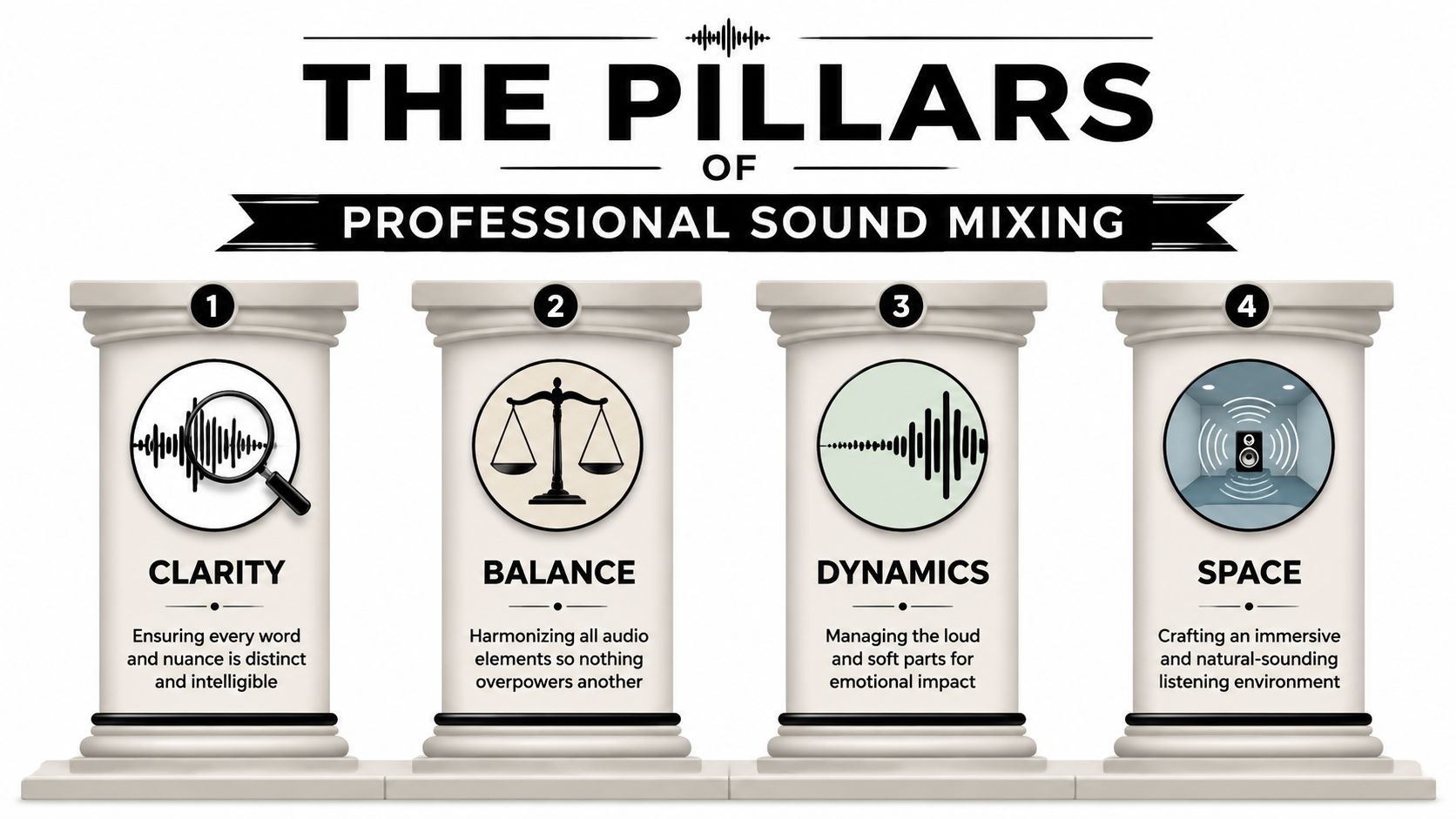
Sound mixing means turning separate recorded elements into one controlled listening experience. The mixer sets the level relationship first, then shapes tone, dynamics, and placement so the episode feels clear and intentional, as explained in Berklee's overview of mixing music and audio mixing.
For a creator, that matters far beyond audio polish. A strong mix makes your show sound organized, trustworthy, and worth returning to. That is a brand signal.
Clarity comes first
If the words are hard to follow, the episode fails. The listener does not admire your effort. They leave.
Good mixing protects the voice above everything else. It reduces mud, softens harsh frequencies, and removes distractions that pull attention away from the message. If you want a plain-English reference for one of the most common cleanup jobs, this BlitzReels explanation of noise is a useful read.
The right priority is simple. Build around the spoken word, because your voice carries your expertise, your authority, and your offer.
Balance makes the show sound intentional
Balance decides whether a podcast feels professionally produced or loosely assembled.
The host should not overpower the guest. Music should support the moment, not compete with it. Transitions should feel controlled. Ads should sit naturally inside the episode instead of arriving like an interruption. Those choices affect how polished your brand feels to a first-time listener.
Recording quality still matters. If your source audio is fighting you from the start, the mix takes longer and the result suffers. If you are still sorting out your setup, this guide to the best microphone for podcast recording will help you make smarter recording decisions before post-production begins.
Dynamics keep attention steady
Podcast listeners should not have to keep adjusting their volume.
A professional mix controls the gap between quiet and loud moments so the episode feels consistent without sounding flat. That usually involves EQ to reduce overlap, compression to control peaks, and automation to smooth out level changes across the conversation. The goal is control, not loudness for its own sake.
Many creator-led shows often lose authority. A sudden spike in volume feels amateur. A guest who drops too low to hear feels careless. Both send the same message: the production was not finished.
Space creates the premium feel
Space gives audio shape. It helps a voice feel present instead of boxed in, and it keeps music, effects, and dialogue from piling on top of each other.
Here is the simplest way to judge the four pillars:
| Pillar | What the listener notices |
|---|---|
| Clarity | Every word feels easy to catch |
| Balance | No voice or music bed dominates unfairly |
| Dynamics | The episode feels steady, not jumpy or crushed |
| Space | The sound feels natural, not flat or crowded |
When those four pillars work together, the result sounds expensive. That perception matters. Audiences connect clean, controlled audio with professionalism, and professionalism drives trust. Trust keeps people listening, subscribing, sharing, and buying.
From Raw Recording to Polished Episode
Most raw podcast sessions have the same problems. One mic is too hot. Another speaker sounds like they leaned back halfway through the interview. There's a low HVAC hum under the whole track. The intro music comes in strong, but instead of creating energy, it crowds the opening line.
That's normal. Raw audio is not the final product.

What the before version sounds like
The host sounds confident in the room, but brittle in the recording. The guest has good insights, yet feels physically farther away than the host. Every time the music returns, it brushes up against the dialogue instead of framing it. Nothing is catastrophic. It just doesn't feel finished.
That unfinished quality is what separates content that gets tolerated from content that gets replayed, shared, and taken seriously.
If you want a broader sense of how audio brands position themselves in the market, the Landr brand profile on SponsorRadar is an interesting snapshot of how post-production tools and services are talked about commercially.
What the after version feels like
A polished mix changes the experience immediately. The host and guest sound like they belong in the same sonic world. The room noise drops out of the way. The music supports transitions instead of fighting them. The conversation gains pace because listeners no longer have to decode the sound.
Here's a quick visual example of that transformation in action:
The big shift isn't just technical. It's emotional. A strong mix makes the episode feel trustworthy. It tells the audience that someone cared enough to finish the work properly.
For a closer look at the workflow behind that finish, Flexwork's article on post-production best practices for perfecting podcast episodes offers a helpful overview.
The Flexwork Solution From DIY to Done-For-You
A founder records a strong interview, posts it on schedule, and still sounds smaller than the brand they are trying to build. That gap usually is not the idea. It is the finish. If your podcast supports sales, partnerships, recruiting, or authority in your market, audio quality belongs in operations, not in your late-night to-do list.
DIY editing makes sense at the start. It stops making sense once the show has a job to do.
Choose the level of support that matches your goals
The right question is simple. Do you need help finishing episodes, or do you need help running the show like a business asset?
Some creators already handle guest outreach, prep, and hosting well. Their weak point is post-production consistency. In that case, the smartest move is to hand off the finishing work to a team that does it every day. Flexwork Podcast Studios offers an audio editing service for creators who need voice tracks, guest audio, music, and supporting elements shaped into a finished episode that sounds ready for a serious audience.
Other creators need more than cleanup. They need a production system that protects quality and keeps the show moving without draining internal time.
- Be My Podcast Producer fits creators who want hands-on production support without hiring an internal team.
- Market, Manage & Produce My Podcast is for operators who want the show treated like a growth asset. That package starts at $1500 per episode with a 20-episode growth commitment.
- Content Day sessions cost $3000/day and include 20 edited reels or 60 pro photos.
- Podcast websites are $5000 plus hosting.
These are business purchases. They should be judged by business outcomes.
Why this is an investment, not an expense to trim
Cheap production sends an expensive message. It tells listeners, sponsors, and potential clients that the brand behind the mic accepts uneven quality in public.
That matters more than creators want to admit. A polished show helps your expertise sound credible the first time someone hears you. It shortens the distance between discovery and trust. It also protects the value of every interview, insight, and story you worked to capture.
Good mixing does more than clean audio. It turns your podcast into something that sounds established, reliable, and worth returning to.
What a done-for-you workflow gives your brand
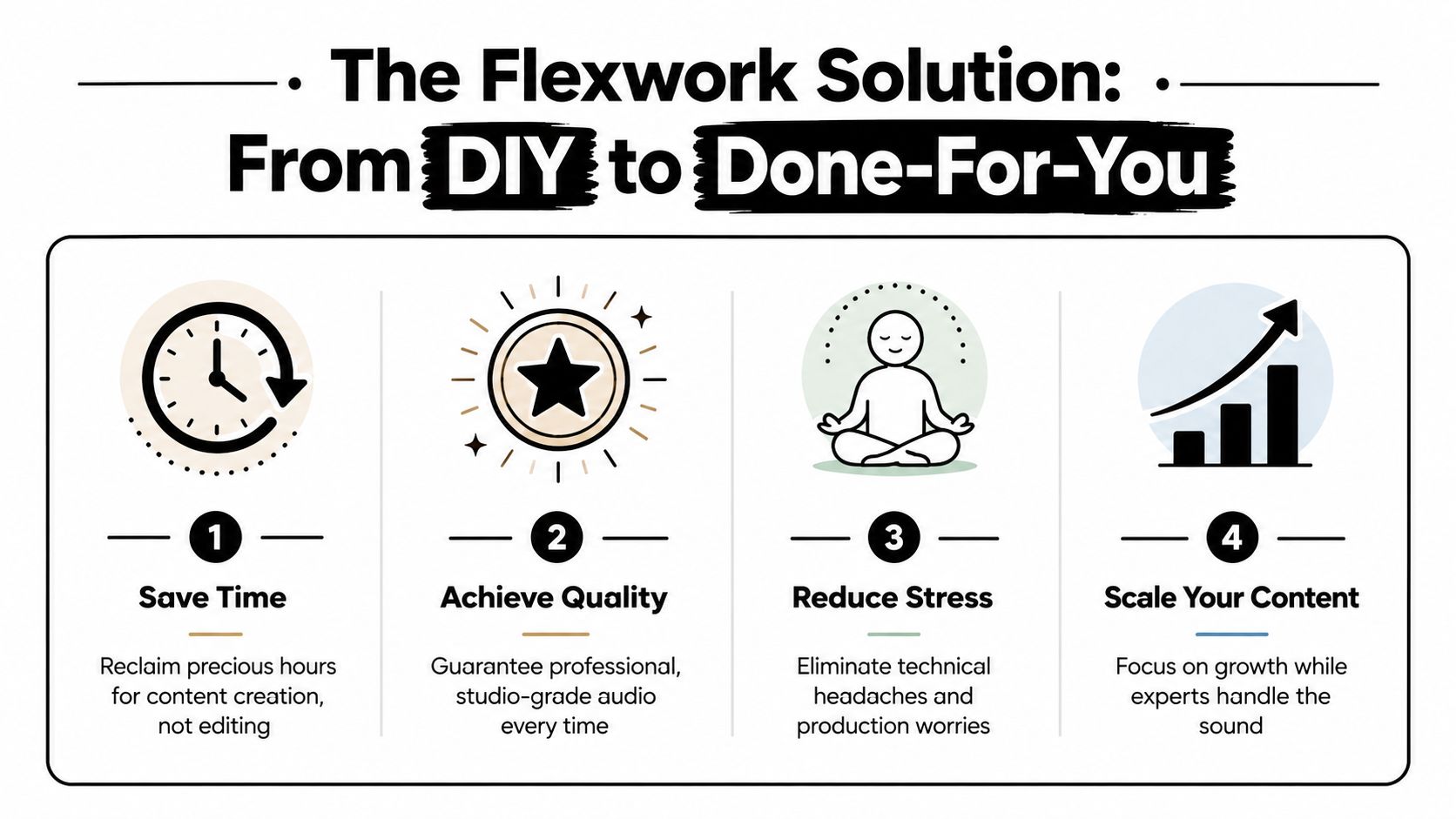
A real production workflow gives you clear operational benefits:
- Consistency: Every episode carries a recognizable sonic identity.
- Time back: Your team spends more time creating and less time fixing exports, levels, and edits.
- Stronger repurposing: Clean source audio makes clips, trailers, ads, and social content easier to produce.
- Brand alignment: Your show starts to match the standard set by your website, visuals, and offers.
That is the shift serious creators are after. They are not buying fewer editing headaches. They are buying a show that sounds like it belongs beside the rest of the business.
Three Common Mixing Mistakes Holding Creators Back
A new listener finds your show through a guest appearance, presses play, and hears audio that feels harsh, distant, or strangely squashed. They do not think, "this mix needs work." They think, "this brand is not ready."
DIY mixes usually break in three predictable places. Each one makes your show sound smaller than the business behind it.
Over-compressing the life out of the episode
Compression should steady a voice and keep the episode easy to follow. It should not trap every word at the same intensity.
Creators often push compression too hard because louder feels more polished at first. It is a bad trade. The voice loses movement, emotion, and authority. Instead of sounding confident, it sounds strained and tiring.
A strong podcast mix keeps the speaker controlled but still human. Listeners should hear nuance, not pressure.
Using effects to fake polish
Reverb, delay, and vocal enhancers are easy to overuse. They create the impression of production value while subtly damaging clarity.
Podcast dialogue needs to sound close, present, and believable. If the listener notices the effect, the effect is already getting in the way. Your audience came for a clear point of view, not a dramatic vocal chain.
A polished voice sounds close, controlled, and believable.
Never checking the mix in real listening environments
A mix that only works on studio headphones is not finished. Your audience listens on earbuds, laptop speakers, phones, and in the car. If your dialogue disappears under road noise or turns brittle in cheap earbuds, the episode fails where it counts.
Use a simple review routine:
- Check earbuds first. They expose harshness and uneven levels fast.
- Play it through laptop speakers. If the voice thins out or music takes over, the balance is off.
- Test the car. Road noise reveals weak dialogue and poor transitions immediately.
These checks catch problems. They do not replace judgment built from mixing hundreds of hours of spoken-word audio. Serious creators should stop treating that judgment like an optional production step.
If you're ready to stop sounding self-produced and start sounding established, book a tour or start a conversation with Flexwork Podcast Studios. They provide acoustically treated recording spaces, production support, and end-to-end podcast services for creators who want cleaner audio and a more credible final product.