Video Production Services NYC: Smart Choices for 2026
 April 24, 202630 Minutes
Meta title: Video Production Services NYC Smart Choices for 2026
Meta description: NYC video production is crowded and expensive. Learn the smarter path to premium studio, editing, and social-first content.
URL slug: /video-production-services-nyc-smart-choices-2026
Primary keyword: video production services nyc
Secondary keywords: podcast production nyc, video studio rental nyc, social-first video production
If you're searching for video production services nyc, you're probably already past the hobby stage. The ideas are strong. The brand is gaining traction. The problem is the content still looks like it was made in a rush between meetings, with a light that never hits right and audio that somehow sounds smaller than your actual presence.
That gap matters more than most creators want to admit. In a market as crowded as New York, mediocre production doesn't read as “authentic.” It reads as unfinished. The smarter move isn't automatically booking the first Manhattan studio with a sleek website. It's choosing a setup that gives you better execution, tighter logistics, and a cleaner path from recording to distribution. For creators in the NJ and NY orbit, that usually means thinking beyond the obvious zip code and choosing a production partner built for consistency, not chaos.
The Creator's Dilemma When DIY Video Hits a Wall
One creator I know had all the right raw materials. Sharp point of view. Good guests. Solid audience response whenever she posted clips. But every recording day turned into the same grind. She'd stack books under a camera, wrestle with window light, lose time fixing echo, and then spend her night trimming pauses in editing software instead of planning the next release.
That setup works for a while. Then it doesn't.
The wall shows up in small ways first. Your clips don't match each other. One episode sounds clean, the next sounds hollow. Your visual brand shifts every week because your room, gear, and energy keep changing. Soon you're spending more time solving production problems than making content people want.
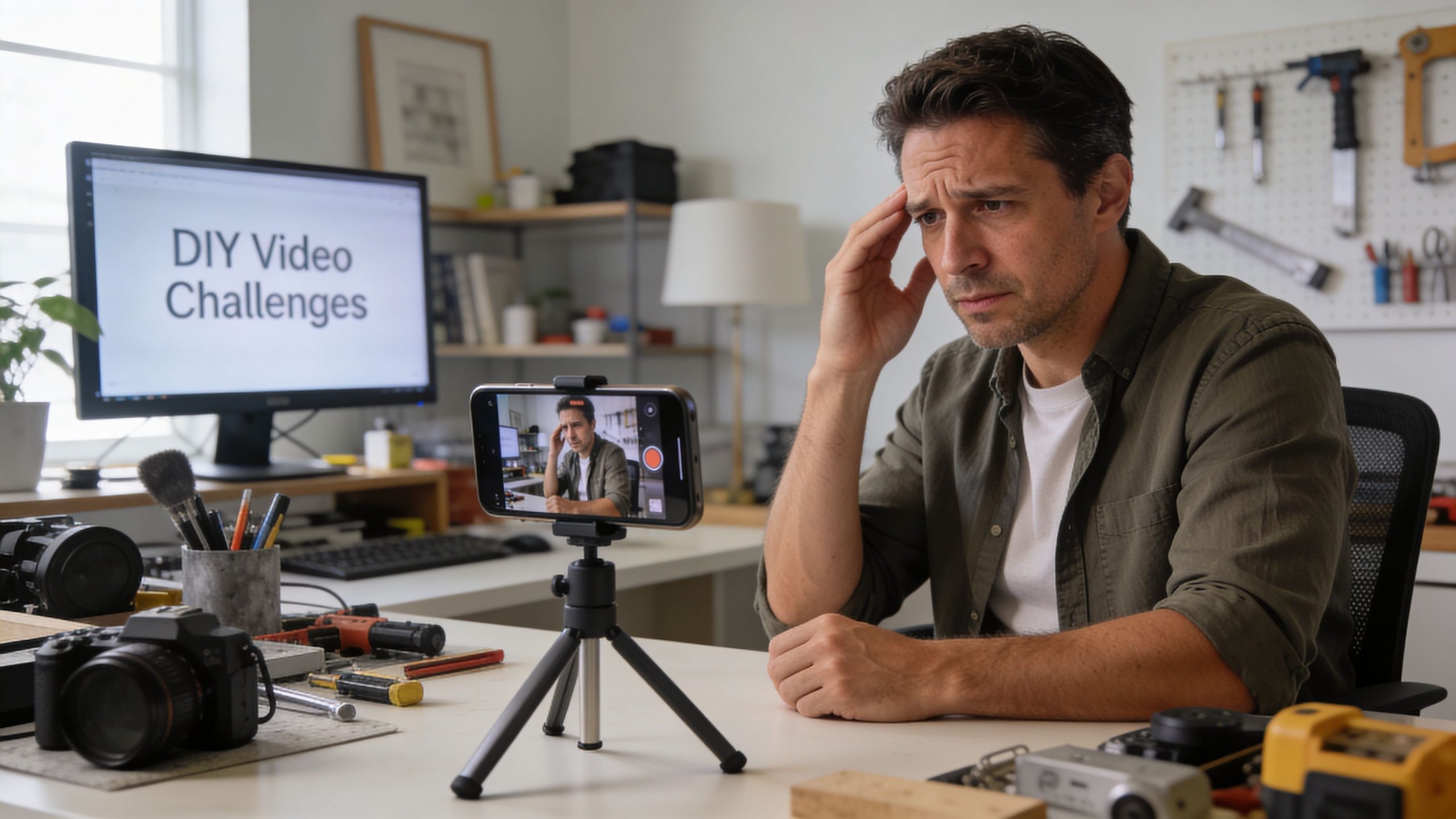
DIY stops being cheap when it starts costing momentum
Most rising creators misread the problem. They think they need a better camera. Usually they need a better system.
A weak workflow creates hidden drag:
- Recording fatigue: You redo takes because traffic noise, bad mic placement, or inconsistent framing ruins usable footage.
- Editing bottlenecks: Raw footage piles up because the post-production load is heavier than expected.
- Brand mismatch: Your expertise feels premium in person, but your content doesn't carry the same authority on screen.
- Release inconsistency: You miss posting windows because every episode becomes a mini rescue mission.
Practical rule: If production keeps delaying publishing, the issue isn't creativity. It's infrastructure.
There's a reason more creators eventually move toward a studio environment. They want repeatability. They want every episode, interview, reel, and short to feel like it came from the same brand. They want content that looks intentional.
Ambition changes the math
Once content starts driving leads, partnerships, audience trust, or speaking opportunities, production isn't a side task anymore. It's part of your business. That shift is exactly why so many creators start comparing DIY with a professional setup and realize the difference isn't cosmetic. It's operational.
A good place to pressure-test that decision is this breakdown on what you gain by going pro instead of staying DIY. The true upgrade isn't just prettier footage. It's getting your time back and finally making your output match your ambition.
Decoding Video Production Services in the NYC Area
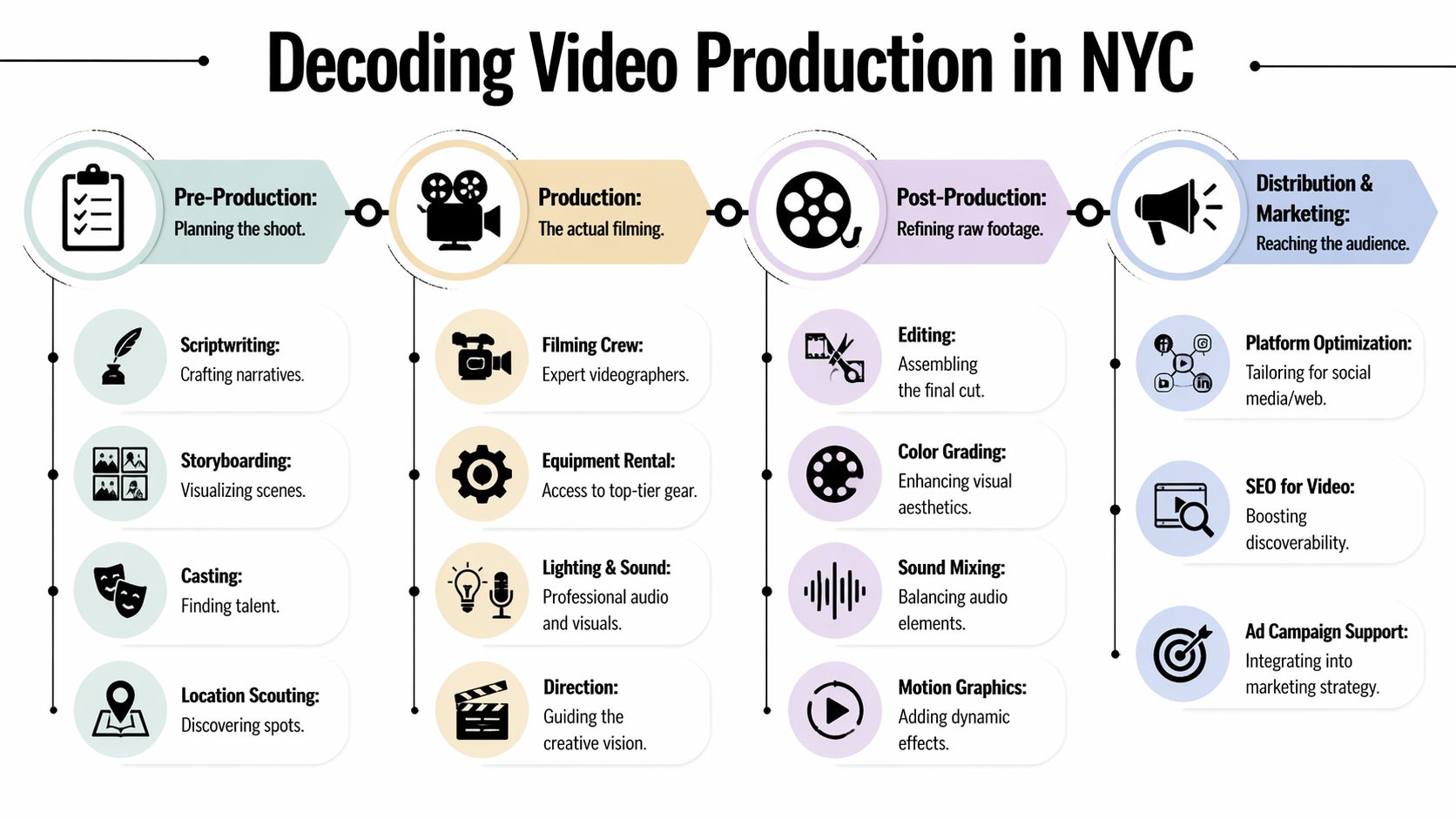
Clients often use the phrase video production services nyc as if it's one thing. It isn't. In this market, you're choosing between very different service models, and if you don't know the categories, it's easy to overpay for the wrong solution.
Some teams are built for sleek commercial shoots. Some are optimized for podcasts and recurring branded content. Others are good at filming but weak at editing and distribution. You need to know what you're buying before you book.
In-studio production
This is the cleanest option for repeatable content. Think video podcasts, founder interviews, talking-head lessons, product explainers, and panel conversations. The controlled environment matters because lighting, framing, and audio don't have to be reinvented every time.
For most creators, in-studio work is where quality becomes predictable. You show up, record, leave with footage that already has structure. If you're comparing options, start with a video studio rental near you and look closely at acoustics, camera setup, set design, and whether the studio is designed for ongoing content or just occasional shoots.
On-location production
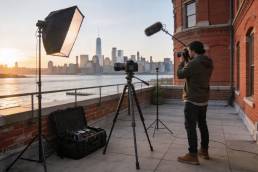
This works when the setting is part of the story. Office tours, customer interviews, event coverage, behind-the-scenes footage, and local brand campaigns all benefit from location context. The tradeoff is complexity.
You have to manage travel, room tone, lighting changes, permits in some cases, setup time, and the unpredictability of New York itself. That's fine when location adds real value. It's wasteful when you're shooting a simple conversation that could have looked better in a controlled studio.
Livestream and hybrid recording
Some creators need live delivery. That could mean a live podcast taping, webinar, virtual panel, or branded event stream. In those cases, production isn't just about capture. It's about timing, switching, sound reliability, and clean delivery while people are watching in real time.
Livestream production requires a team that understands pressure. A polished replay means nothing if the live experience falls apart.
If you're building a recurring show, don't choose a provider based only on a cinematic demo reel. Choose based on whether they can deliver consistent episodes on schedule.
Short-form content and social cutdowns
Many NYC production companies often get vague. They'll promise reels, shorts, and clips, but frequently treat short-form as leftover material instead of a planned output. That approach is backwards.
If shorts are part of your strategy, they need to be planned during the shoot. That affects framing, pacing, camera coverage, topic flow, and how cleanly moments can be clipped later.
What post-production really includes
Post isn't just “editing.” It often includes several layers of work that shape how professional your content feels:
- Multi-camera editing: Switching angles so interviews and podcasts feel dynamic instead of static.
- Color grading: Giving footage a consistent look across episodes and formats.
- Sound mixing: Cleaning and balancing dialogue so people don't click away because the audio feels rough.
- Motion graphics: Adding branded intros, lower thirds, title cards, captions, and visual emphasis.
- Distribution prep: Exporting versions for long-form platforms, websites, and vertical social formats.
A production partner should be able to explain these pieces in plain English. If they can't explain the process clearly, they probably can't make it feel easy for you either.
What to Demand from a Production Partner in 2026
The standard needs to be higher now. New York is too competitive for “pretty good” production. If a studio or agency can't deliver clean sound, controlled lighting, and footage built for modern distribution, move on.
The easiest mistake creators make is confusing aesthetics with competence. A stylish website doesn't tell you whether the team can run a tight shoot, rescue a weak take with smart coverage, or deliver edits that hold attention.
Demand capture quality that survives post-production
One fact matters here. 4K footage preserves sharpness up to 400% better than 1080p during post-production scaling and editing, and professional crews in NYC use multi-camera 4K setups with lighting and sound engineering to produce polished content that can achieve 20-30% higher conversion rates in marketing videos, according to Filmless on NYC video production.
That doesn't mean every project needs cinematic excess. It means your raw footage should be flexible enough to crop, repurpose, reframe, and color-correct without falling apart.
Ask direct questions:
- Are you shooting in 4K? If clips are going to be cut into vertical formats later, that matters.
- Is it multi-camera? One locked-off angle gets stale fast.
- How is audio treated at capture? Great visuals can't save weak sound.
- Is lighting part of the setup or an afterthought? Good lighting does more for perceived quality than most creators realize.
Demand a room that sounds finished
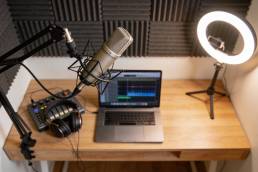
For podcasts, interviews, and thought-leadership content, acoustics are not a luxury item. They're the floor. A reflective room gives you echo, inconsistent tone, and extra cleanup in post. An acoustically treated room gives you voice clarity and less editing friction.
That's why creators looking for a serious team should review a guide on finding a podcast production company near them before signing anything. You want a partner who thinks about room sound, not just cameras and furniture.
A bad-looking clip can sometimes be reframed. Bad audio usually gets skipped.
Demand process, not just gear
A lot of providers rent equipment and call it a production service. That's not enough. You need workflow. Someone should own scheduling, shot planning, file handling, edit rounds, deliverables, and turnaround expectations.
Use this checklist when you evaluate vendors:
| Standard | What to ask |
|---|---|
| Studio readiness | Is the room designed for recording or just available for rent? |
| Editorial depth | Do you handle editing, sound mixing, graphics, and social cutdowns in-house? |
| Turnaround clarity | When do I get drafts, finals, and social assets? |
| Content strategy fit | Are you producing for YouTube, podcasts, reels, or all three? |
| Client experience | Who manages the process once the shoot ends? |
If the answers feel fuzzy, expect fuzzy results.
The Flexwork Solution for Ambitious Creators
The better path for most growing podcasters and founder-creators is simple. Stop assembling five different freelancers every time you want one polished episode. Use one production system that handles capture, post, and rollout without forcing you to quarterback every detail.
That all-in-one model matters more in the NYC area because fragmentation is expensive. One team shoots. Another edits. Someone else does graphics. Then you're chasing revisions across text threads while your release date slips. A single production hub cuts that friction fast.
What an integrated studio model fixes
An integrated setup solves three problems at once. First, it improves consistency. Second, it reduces the amount of decision-making you have to do before every shoot. Third, it makes your content easier to repurpose.
That's why some creators choose Flexwork Podcast Studios. The studio offers acoustically treated rooms, multi-camera production, editing, motion graphics, distribution support, and booking flow details through its production process page. For a creator producing recurring content, that kind of setup is less about luxury and more about operational sanity.
Production choices affect discoverability
This is the gap a lot of providers still miss. They focus on getting footage in the can, then leave you to figure out whether it performs on TikTok, Reels, or Shorts. That's outdated.
As noted by johnnypuetz.com on the social-first content gap, many NYC production companies emphasize filming but don't explain how frame rates, aspect ratios, and sound mixing profiles at the recording stage affect social platform performance. That gap matters. Social distribution starts during production, not after export.
So if short-form visibility is part of the goal, your production partner should think about:
- Vertical-safe framing so clips can be cut cleanly later
- Tighter segment structure that creates natural hook moments
- Clean dialogue capture for captions and mobile viewing
- Set design that reads well on small screens
- Edit planning for multiple formats, not one master file dumped everywhere
Here's a quick look inside that kind of environment:
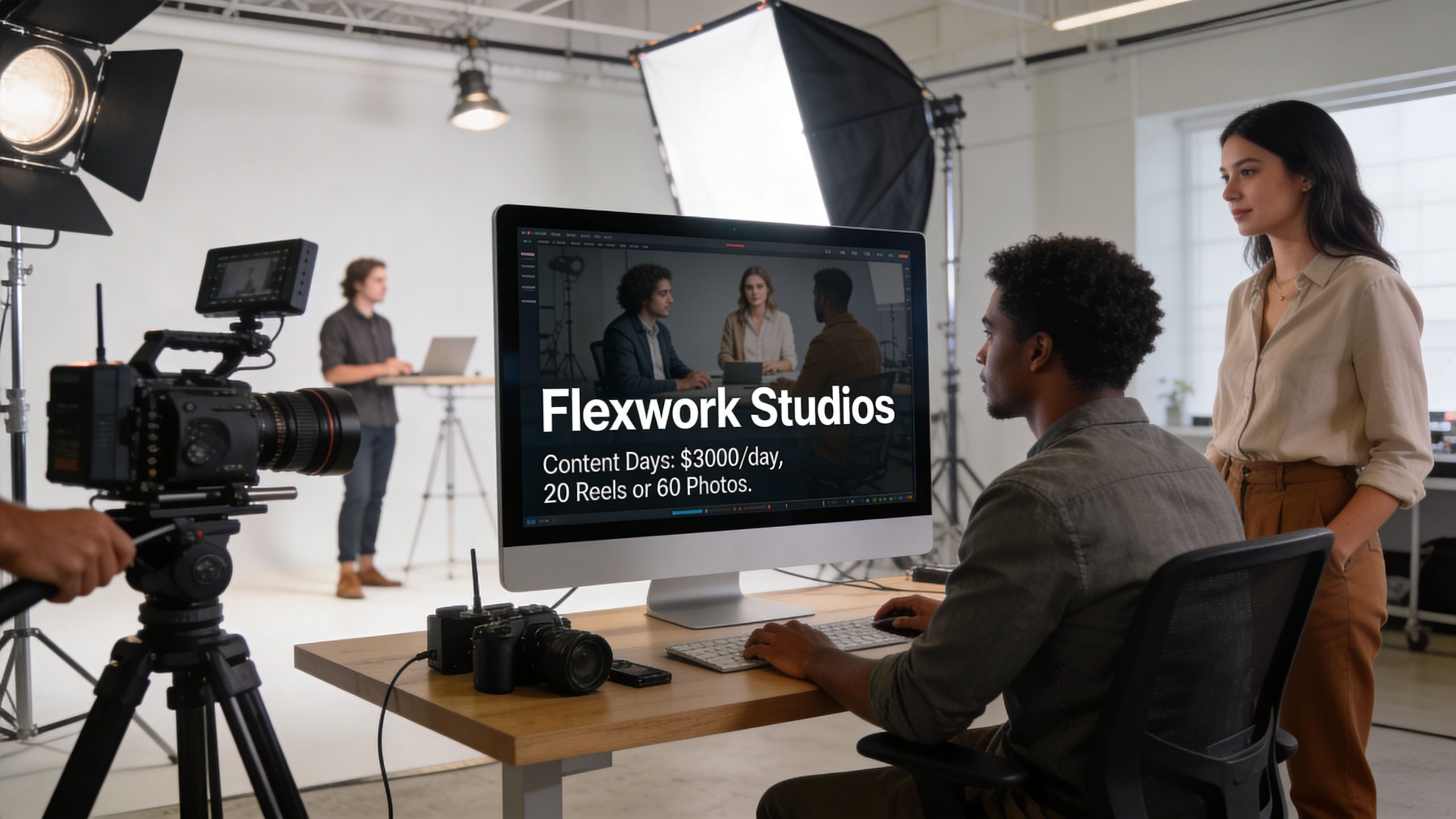
Content Day is the practical answer to batch creation
For creators who are tired of scrambling for posts every week, batching is the move. A dedicated Content Day lets you record long-form material and turn it into a bank of social assets in one controlled session. That's cleaner than piecing together random content from your camera roll and hoping it feels coherent.
The smartest production day isn't the one with the most footage. It's the one that creates the most usable assets with the least rework.
The Production Process from Concept to Launch
A strong production experience should feel organized, not mysterious. If you're hiring help, you shouldn't be guessing what happens after the booking email. The process needs to be visible from the first call to final delivery.
New York has a deep post-production bench. As of 2026, New York's Video Postproduction Services industry comprises 573 businesses and employs 4,520 professionals, with the market growing at 4.6% annually since 2021, according to IBISWorld's New York video postproduction industry data. That talent pool is useful only if your workflow is tight enough to use it well.
Pre-production
Smart projects get simpler when you lock the format, clarify the audience, decide what you're recording, and plan for deliverables before cameras turn on.
That usually includes:
- Strategy call: Nail the purpose of the shoot and the platforms it needs to serve.
- Creative alignment: Decide on topics, segments, visual tone, and guest flow.
- Scheduling: Group recording efficiently so you don't waste a day on setup drift.
- Asset planning: Identify what needs to become full episodes, promos, vertical clips, or stills.
The shoot day
A well-run shoot feels calm. That's a sign the prep was done correctly.
You arrive, get mic'd, settle into the set, and record with a team that already knows the coverage plan. Good production crews keep the room focused without making the energy stiff. They watch framing, audio, pacing, continuity, and pickup moments so you don't have to.
Post-production
Raw footage becomes something people will watch all the way through. Editors shape timing. Sound teams make dialogue feel clear and even. Graphics add structure and brand recognition.
A practical post workflow often looks like this:
| Phase | What happens |
|---|---|
| Assembly edit | Best takes are organized into a coherent cut |
| Refinement | Pacing, angle switches, trims, and narrative tightening |
| Audio and color | Dialogue cleanup, balancing, and visual polish |
| Versioning | Long-form exports, trailer clips, and short-form derivatives |
Good post-production doesn't just make content cleaner. It makes your message easier to trust.
Delivery and launch
The final handoff should be simple. You should know what files you're receiving, where they're meant to go, and what gets published first. If a provider only hands over a download folder and disappears, that isn't end-to-end production. That's file transfer.
The right process closes the loop between concept, recording, edit, and release.
Beyond the Recording How We Market Your Show
Recording is only half the job. Plenty of creators have polished episodes sitting online with no real audience movement behind them. That's usually not a content problem. It's a distribution problem.
In New York, you're competing inside a media economy with real scale. New York City's film and television industry supports 185,000 jobs and generates $81.6 billion in economic output, with direct jobs growing 3% annually over the last 15 years, according to the New York State motion picture industry analysis. In a market that large, strong content still needs deliberate promotion to get noticed.
Marketing has to be built into production
A smart growth plan doesn't begin after editing. It starts with deciding what each episode is for. Is it authority-building content? A lead-generation asset? A guest-driven audience play? A social discovery vehicle?
When creators treat all episodes the same, they flatten their upside. Some episodes should feed YouTube. Others should be clipped aggressively for short-form. Some should anchor newsletter content, landing pages, or outreach campaigns.
The strongest marketing systems usually include:
- A dedicated show website so your content lives somewhere you control. Podcast websites are $5000 plus hosting.
- Social cutdowns and posting strategy aligned to the platforms that fit your audience.
- Guest amplification so appearances bring reach, not just credibility.
- Visual consistency across thumbnails, clips, show art, and web assets.
One episode should create multiple paths to attention
A single recording can fuel more than one channel if it's planned correctly. One strong conversation might become a full episode, several vertical clips, quote graphics, a blog post, email content, and a guest follow-up sequence.
If you're repurposing video across platforms, this guide on how to post YouTube videos on Instagram is a useful tactical reference. It helps close the common gap between long-form publishing and short-form distribution.
The serious option for growth-minded hosts
For creators who want more than production help, the marketing layer needs to be formalized. That's where a package like Market, Manage & Produce My Podcast makes sense. It combines ongoing production with distribution and audience-building support, instead of leaving you to stitch together a strategy after every release.
If you're evaluating what that kind of support should include, review this guide on how to market your podcast. The main point is straightforward. Great recording quality gets attention for a moment. Distribution systems build momentum over time.
Choosing Your Path Sample Packages and Investment
Not every creator needs the same level of support. Some need a room, gear, and a clean setup. Others need a producer, editor, social clip pipeline, and a marketing engine behind the show. The mistake is buying too little help when your workflow is already breaking.
This matters even more in the NYC area because location affects cost. As noted in this analysis of NYC production geography, many Manhattan-based agencies don't explain the hidden travel time and logistical costs that come with fragmented tri-state production. That's why a regionally based all-in-one studio can be the more efficient move for many podcasters and businesses.
Flexwork Studios Production Packages
| Package | Best For | Key Deliverables | Investment |
|---|---|---|---|
| Hourly Studio Rentals | Creators who already have a team or editor | Studio access, professional recording environment, efficient capture | Custom based on session scope |
| Be My Podcast Producer | Hosts who want hands-on production support | Recording support, production guidance, polished episode workflow | Custom based on needs |
| Content Day | Brands and creators batching short-form assets | One full production day plus 20 edited reels or 60 pro photos | $3000/day |
| Podcast Website Build | Shows that need a polished home base | Custom podcast website | $5000 plus hosting |
| Market, Manage & Produce My Podcast | Serious growth-focused shows | Production plus ongoing marketing and management support | Starts at $1500 per episode with a 20-episode growth commitment |
Which package fits your stage
If you're still testing your format, hourly rental is usually enough. You get a professional environment without overcommitting.
If your issue is consistency, production support makes more sense. If your issue is volume, Content Day is the obvious answer because it compresses weeks of social asset creation into one planned shoot. If your issue is reach, the market-and-manage route is the one to consider because making good work is no longer your main bottleneck.
Cheap production often becomes expensive once delays, travel, reshoots, and fragmented editing start stacking up.
The smartest investment is the one that removes your actual constraint.
Your Questions on NYC Video Production Answered
How much lead time should I give before booking?
More than you think. If your project includes strategy, guest coordination, set planning, or batch recording, don't wait until the week you want to shoot. Earlier booking gives you better schedule options and a cleaner prep process.
Can I bring my own producer or team?
Yes, and serious studios should be able to work with that. Some creators want full turnkey support. Others already have a creative director, producer, or social lead. A good production environment should accommodate both models without turning the day into a turf war.
What does acoustically treated actually mean?
It means the room is built or adjusted to control reflections, echo, and unwanted noise so voices sound clean at capture. That's a major difference for podcasts, interviews, and education content because poor room sound creates distractions that editing can't fully erase.
Do I need a full agency for a podcast or creator show?
Usually no. You need the right production system, not unnecessary layers. Many creators are better served by a specialized studio and post-production partner than by a broad agency that treats content as one service among many.
Is a New Jersey location a disadvantage if I want NYC-level production?
Not if the setup is designed properly. For many creators, it's the smarter choice because it cuts down travel friction, simplifies logistics, and avoids some of the unnecessary overhead tied to Manhattan-first production models.
Can one recording day really produce enough content for multiple platforms?
Yes, if the shoot is planned that way from the start. That's the key. Random filming creates random results. Structured recording creates a library of usable assets.
If you're ready to stop improvising and build a cleaner content system, book a tour or start a conversation with Flexwork Podcast Studios. The right setup should make production easier, not heavier.