
41 1st Street Hoboken NJ: Top Podcast Studios 2026
 April 23, 202620 Minutes
Meta title: 41 1st Street Hoboken NJ for Creators
Meta description: Considering 41 1st street hoboken nj for podcasting? Learn what the address offers, where home studios fall short, and what to do instead.
URL slug: /41-1st-street-hoboken-nj-podcast-studio
Primary keyword: 41 1st street hoboken nj
Secondary keywords: hoboken podcast studio, creator condo hoboken, podcast production nj
You’re probably doing what a lot of ambitious creators do. You scroll listings, spot a sharp downtown Hoboken address, and start building a fantasy around it. Great light. Charming details. Quick PATH access. Maybe this is the apartment that doubles as your set, your editing room, your guest space, and your brand headquarters.
That’s the appeal of 41 1st street hoboken nj. It looks like the kind of place where a modern podcaster could live well and create consistently.
The problem is simple. A beautiful apartment and a professional production environment are not the same thing. If you’re serious about building authority, landing better guests, and publishing polished content on schedule, you need to separate lifestyle desire from production reality. If you’re comparing your options, start by looking at what a real podcast space for rent in New Jersey is designed to solve.
The Search for the Perfect Creator Space
A high-potential podcaster finds a listing in downtown Hoboken and instantly sees the storyline. Record in the morning, grab coffee around the corner, hop on the PATH, and live inside the same polished brand image you post online. It feels efficient. It feels elevated. It feels like the next level.
That instinct isn’t wrong. Creative people want environments that push them forward.
But the smartest creators ask a tougher question. Does the space only look good, or does it help you ship better episodes, stronger clips, and cleaner interviews every single week? That’s where most live-work dreams start to wobble. Residential spaces inspire. Professional spaces remove friction.
The right room doesn’t just match your aesthetic. It protects your consistency.
The Allure of 41 1st Street Hoboken
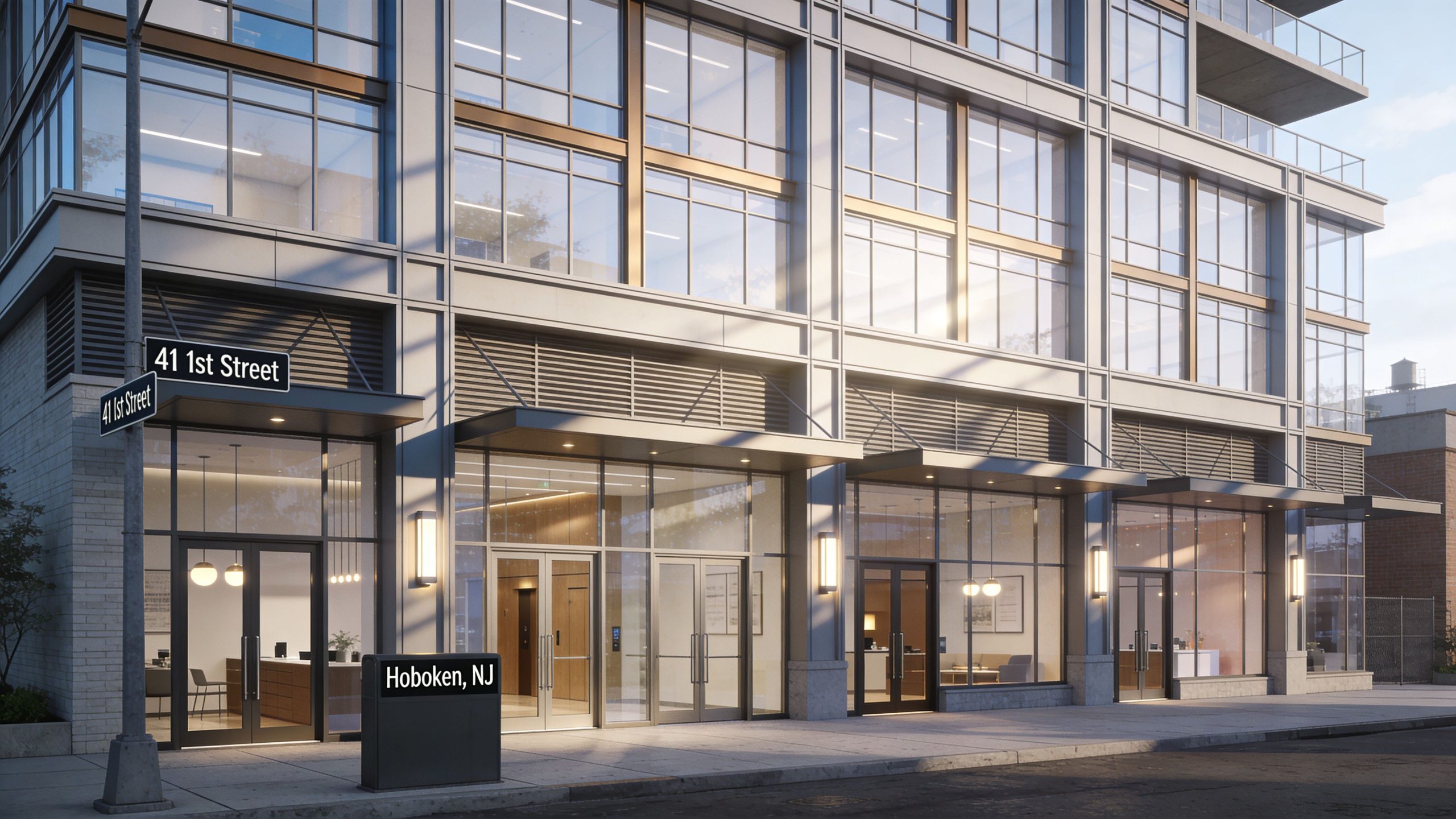
A creator looking up 41 1st street hoboken nj is usually chasing a specific outcome. Live in a place that feels sharp, central, and credible. Work nearby. Keep New York within reach. Build a brand from an address that already carries some cachet.
That appeal is real.
The address sits in one of Hoboken’s older, more established downtown corridors, which fits the city’s long arc from industrial port town to polished residential hub, as outlined by the Hoboken Historical Museum’s overview of Hoboken’s development. For a podcaster or media entrepreneur, that kind of setting has obvious pull. You get character instead of sterile luxury-box energy.
The building itself adds to the attraction. Public listing history shows a mix of layouts, from compact units to larger two-bedroom homes, plus features that read well to creative buyers: high ceilings, hardwood floors, fireplaces in some units, and rooftop access. That mix matters because it lets people project a live-work setup onto the space fast. A solo host sees a clean home base. A growing team sees a place for recording, editing, and planning.
The market has also treated the address like a premium downtown asset. One recent example is a 2-bed, 2-bath condo, Unit 1F, sold for $775,000 on February 12, 2026, according to the Realtor.com listing for 41 1st St Apt 1F. Older sales at the property show the same pattern. Interest holds because the address checks boxes people care about.
For creators, those boxes are easy to name. Transit access helps with guest coordination. Walkability keeps the day compact. The residential feel gives your brand a more personal, designed backdrop than a generic high-rise unit.
But here is the smart read. A desirable address and a productive studio are not the same purchase. 41 1st Street sells the lifestyle version of creative work. Serious production needs a room built for repeatable output, clean audio, and client-ready sessions. If you want to compare the appeal of a residential setup with a purpose-built creator environment, study what a dedicated podcast studio in Hoboken at Flexwork gives you instead.
Hoboken’s Creative Vibe and Hidden Hurdles
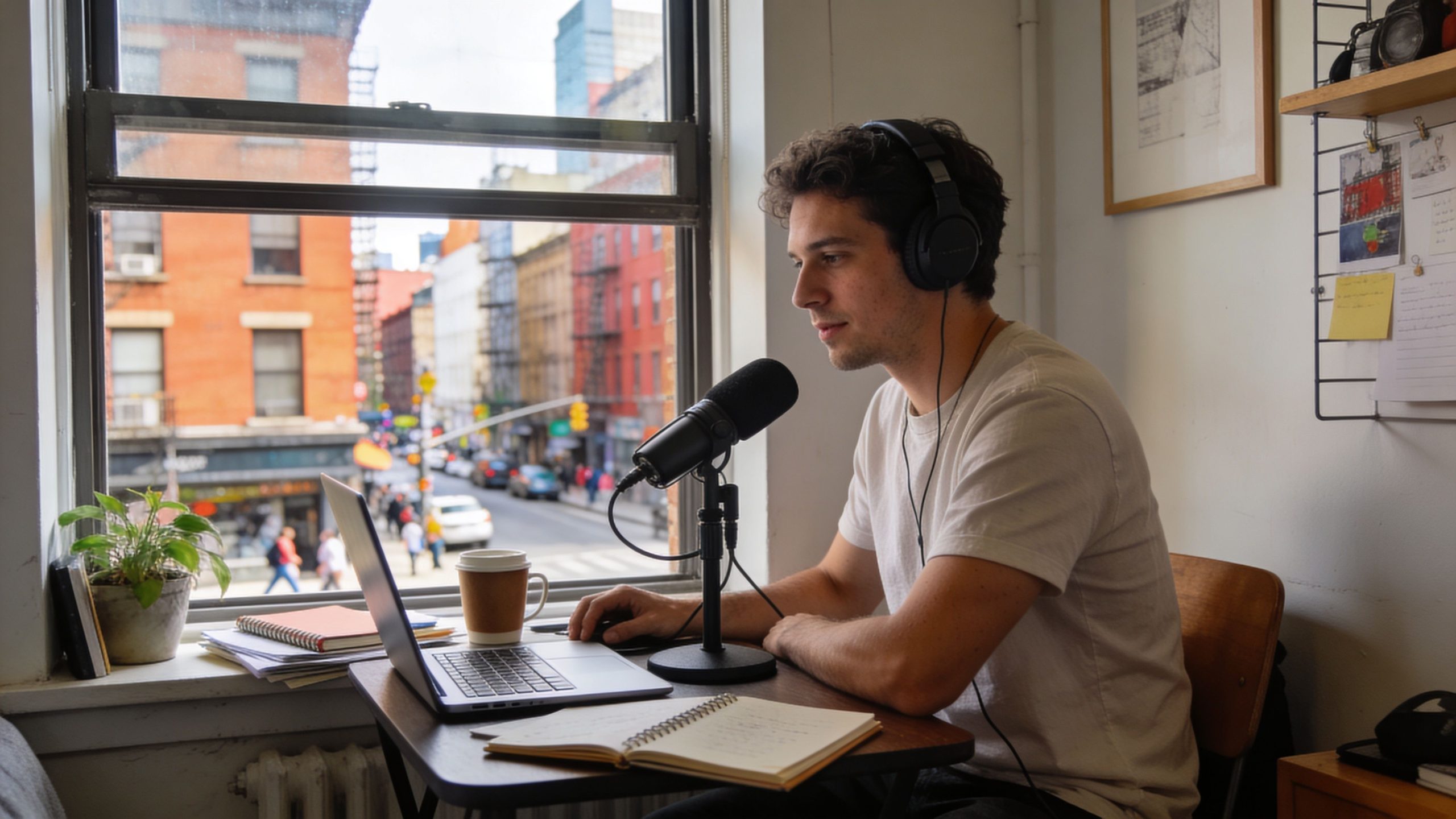
Downtown Hoboken gives creators a lot of what they want. It’s social, compact, easy to move through, and close enough to New York to keep your network active without forcing you into Manhattan pricing. You can absolutely understand why someone would want to build a brand from there.
The vibe helps. Coffee meetings are easy. Dinner meetings are easy. Guest access is easier than most New Jersey locations because transit is part of daily life, not a special workaround.
The part people underestimate
A creative neighborhood can still be operationally annoying. The same features that make Hoboken attractive also create friction when you’re trying to produce at a high level from home. Tight logistics, building rules, shared walls, and general downtown bustle aren’t theoretical problems. They show up in your calendar.
And if you’re an entrepreneur, your housing costs don’t sit neatly in one bucket while your content costs sit in another. They compete.
One of the practical warnings tied to this address is financial, not aesthetic. Some units have seen a 26% value increase, but a $435 per month HOA that only covers water can cut into the ultimate financial advantage for an owner, a point noted in the earlier market analysis around this address. That’s the kind of detail creators ignore when they’re fixated on the dream setup.
Practical rule: If your apartment is also your studio, every hidden housing cost becomes a business cost too.
Why this matters for creators
Three issues tend to surface fast in Hoboken:
- Budget pressure. High-demand neighborhoods push you into premium living costs before you’ve spent a dollar on cameras, microphones, editing, branding, or guest prep.
- Transport friction. Bringing in gear, moving stands, or coordinating multiple people in a no-parking environment gets old fast.
- Mental spillover. When your home also has to function as your production floor, you never fully clock out and you never fully lock in.
That doesn’t mean Hoboken is a bad place to live. It means creators should stop pretending that a desirable neighborhood automatically makes a smart production base. Lifestyle and output are connected, but they aren’t the same decision.
The Home Studio Dilemma A Space Versus A Studio
The home studio fantasy usually falls apart on the boring details. Not because the apartment is bad. Because residential design and production design solve different problems.
A duplex at 41 1st Street can look compelling on paper. High ceilings, hardwood flooring, a fireplace, a private entrance, and a layout that feels flexible. But that same setup creates echo and sound bleed, making it a poor fit for professional recording unless you’re willing to spend heavily on modifications, according to the Zillow profile for 41 1st St Apt 1F.
Why attractive rooms often record badly
High ceilings can feel expansive. Hard surfaces can look premium. Open layouts photograph well. None of that guarantees clean sound.
Podcasting punishes compromise fast. The mic hears what your eye ignores. Room reflections. Footsteps. Exterior noise. HVAC presence. A little echo that seems harmless in person can make your show feel amateur the second you put headphones on.
Here’s what creators usually run into:
- Acoustics fight back. Hardwood, stone, glass, and tall ceilings create reflections that casual listeners read as lower quality.
- Your setup takes over the room. Mic arms, lights, tripods, cables, chargers, and backup gear don’t disappear because your apartment has good styling.
- Every session needs labor before the labor. You’re not just recording. You’re repositioning furniture, checking batteries, testing levels, softening the room, and hoping nothing goes wrong.
The hidden cost isn’t only money
The bigger issue is attention. DIY setups pull your brain away from performance and into maintenance mode. You stop thinking like a host and start thinking like a part-time engineer, set dresser, location manager, and troubleshooter.
That drain is real even when the room is “good enough.”
A room that requires constant work before you hit record will eventually reduce how often you publish.
There’s also a brand perception issue. Guests notice when a setup feels improvised. So do sponsors. So do viewers deciding whether your show belongs in the serious category or the hobby category.
If you’re still debating the tradeoff, this breakdown of studio versus DIY podcasting is worth reading because it puts the actual production gains in plain English.
The Professional Solution The Flexwork Advantage
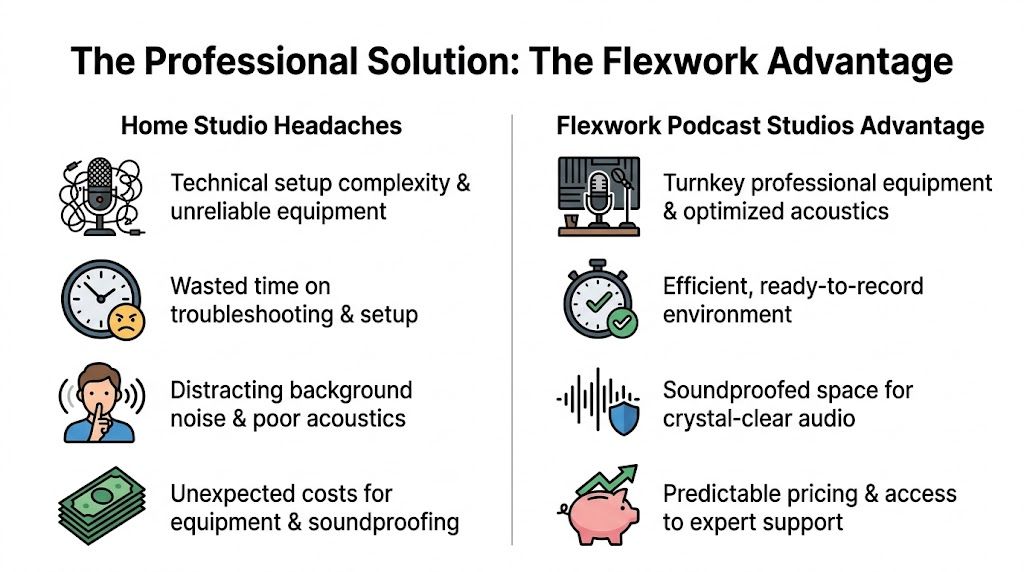
You can love the idea of 41 1st Street and still make a bad production decision.
A desirable Hoboken address solves lifestyle. It does not solve studio requirements. Even listings tied to the building’s creator-friendly appeal, including Trulia’s 41 1st Street property coverage, point back to residential value, not purpose-built recording performance. If your goal is a premium show, Flexwork is the upgrade because it is designed for output, consistency, and brand presentation.
Home space versus professional space
The difference is simple. An apartment asks you to make compromises. A studio removes them.
| Factor | Home Studio (e.g., 41 1st St) | Flexwork Pro Studio |
|---|---|---|
| Room design | Built for living | Built for recording |
| Sound quality | Vulnerable to echo and bleed | Acoustically treated and controlled |
| Setup time | Repeated before each session | Ready to record |
| Visual consistency | Depends on your apartment layout | Deliberate, camera-ready environment |
| Support | You handle problems yourself | Production support is available |
| Scale | Fine for casual output | Better for serious publishing cadence |
That gap matters more as your ambitions grow. One occasional recording at home is manageable. A repeatable show with guests, clips, sponsors, and a real release calendar needs a room that performs the same way every time.
Why Flexwork wins for serious creators
Flexwork improves more than audio quality. It protects your attention.
You show up, record, and leave with assets that match the standard your audience expects. That changes how you operate. You spend less time troubleshooting and more time hosting well, directing better conversations, and building a brand that looks established from day one.
A smart production system usually includes three parts:
- A controlled recording environment that keeps your episodes and video content consistent.
- A batching plan that turns one session into long-form episodes, clips, and promotional assets.
- A distribution workflow that keeps those assets publishing on schedule. If you want help after the cameras stop, this guide on how to automate social media posts is a practical next step.
If you are weighing studio options across the state, this comparison of what you really get for the price at different NJ podcast studios makes the choice clearer. Flexwork gives serious podcasters what a live/work address never can. A room built to produce.
From Studio Time to Strategic Growth

A serious creator hits a predictable wall. You can record a decent episode in a nice apartment. You cannot build a premium media brand on scattered sessions, inconsistent assets, and whatever setup happens to work that week.
That is the shift from a desirable Hoboken address to a purpose-built studio. A live/work space gives you convenience. Flexwork gives you production capacity you can build a business around.
As noted earlier, 41 1st Street sits in a premium part of town. That matters because every creative decision starts costing more once your home is expected to be your set, control room, guest lounge, editing bay, and content warehouse. Serious podcasters stop asking whether a home setup can work. They ask whether it can keep pace with the brand they want to build.
Best-fit offers for ambitious podcasters
Use Flexwork based on the constraint that is slowing you down.
Content Day is the right move when your problem is volume and consistency. At $3000 per day, with 20 edited reels or 60 professional photos, it turns one focused session into a backlog of assets your team can publish for weeks. That is how smart creators batch. They stop burning time every few days trying to recreate momentum.
Market, Manage & Produce My Podcast fits the host who already has a show but needs stronger execution. It starts at $1500 per episode with a 20-episode growth commitment. That package makes sense for founders, consultants, and subject-matter experts who want production tied to audience growth, not just cleaner audio.
A podcast website becomes the next smart investment once your content starts attracting guests, referrals, and sponsor interest. At $5000 plus hosting, it gives your show a home base that feels credible, searchable, and easy to evaluate.
The point is simple. Buy the service that removes the bottleneck.
- Miss deadlines constantly? Book a Content Day and batch.
- Publishing regularly but still not growing? Move into managed production and marketing support.
- Sound credible on mic but look small online? Build the website and fix the brand presentation.
Clean production gets attention. Strategic packaging keeps it.
That is also where Flexwork separates itself from the apartment fantasy behind searches like 41 1st street hoboken nj. A residential address can support your lifestyle. It cannot replace a studio partner that helps turn each recording session into clips, transcripts, distribution assets, and a sharper market position.
For creators building a searchable content library, this guide on how to transcribe a podcast is worth saving. Transcripts make episodes easier to repurpose, easier to index, and easier to turn into written content that keeps working after publication.
If revenue is the next target, read Flexwork’s guide on how to get podcast sponsors. Sponsorship usually follows consistency, positioning, and presentation. Flexwork helps you get all three right.
Your Next Move For A Premium Creative Brand
41 1st street hoboken nj is a strong address. It offers the kind of downtown lifestyle that ambitious creators want around them. Good location, appealing units, real neighborhood energy.
But don’t confuse a desirable apartment with a production advantage.
The creators who move fastest are the ones who stop forcing their homes to do a studio’s job. They live where they want, then record in an environment built for authority, consistency, and clean execution. That choice sharpens your brand and protects your time.
If you’re refining your content strategy, it also helps to study what other high-performers are listening to. This roundup of podcasts discussing AI agents and productivity is a smart example of the kind of adjacent media that can shape better episode angles, guest choices, and positioning.
Choose the setup that lets you sound bigger than your square footage. That’s the move.
If you’re ready to create in a space built for premium audio, strong visuals, and serious brand growth, book a tour or explore the production options at Flexwork Podcast Studios.