
Short Video for YouTube: Studio-Grade Shorts Guide
 July 31, 202620 Minutes
Short Video for YouTube: Studio-Grade Shorts Guide
YouTube's own viewing mix has changed the conversation. In 2025, 77% of global YouTube views came from videos under one minute, up from 70% in 2024 and 66% in 2023 (Tubular Labs via TVRev). That makes short video for YouTube less of a side tactic and more of the main stage. For creators, podcasters, and entrepreneurs, the challenge isn't posting more clips, it's turning those clips into subscribers, long-form views, and a channel that grows. Flexwork Studios in Springfield, NJ fits into that gap as a place where rough ideas become clean, conversion-ready Shorts without the usual DIY drag.
Why Short Video for YouTube Matters in 2026
The biggest shift is simple. Short-form now leads viewing behavior on YouTube, not long-form as a default, and that changes how creators need to think about every second of a clip (Tubular Labs via TVRev). If your opening frame is weak, if the pacing drifts, or if the topic is vague, you're not just losing attention. You're losing the chance to become the channel someone remembers later.
A lot of Millennial creators get stuck here. They can make a decent clip on a phone, but the clip doesn't convert because it feels like content, not a clear invitation to go deeper. That's why the smartest short video for YouTube strategy is built around a hook, a clean visual, and a next step that leads somewhere useful. Flexwork Studios enters that workflow as a creator-led production hub, so the idea doesn't die in the edit app.
For a broader strategy lens, Flexwork's video content marketing approach connects short-form production to actual channel outcomes, not just uploads.
The DIY Creator Burnout Problem
The scale of Shorts makes inconsistency expensive. Independent industry summaries report over 70 billion daily views and more than 2 billion monthly active users on YouTube Shorts worldwide, with one estimate putting the U.S. audience at 164.5 million users (DemandSage). That's a huge audience, but it also means average-looking clips get buried fast. The marketplace rewards clarity, speed, and a clean point of view.
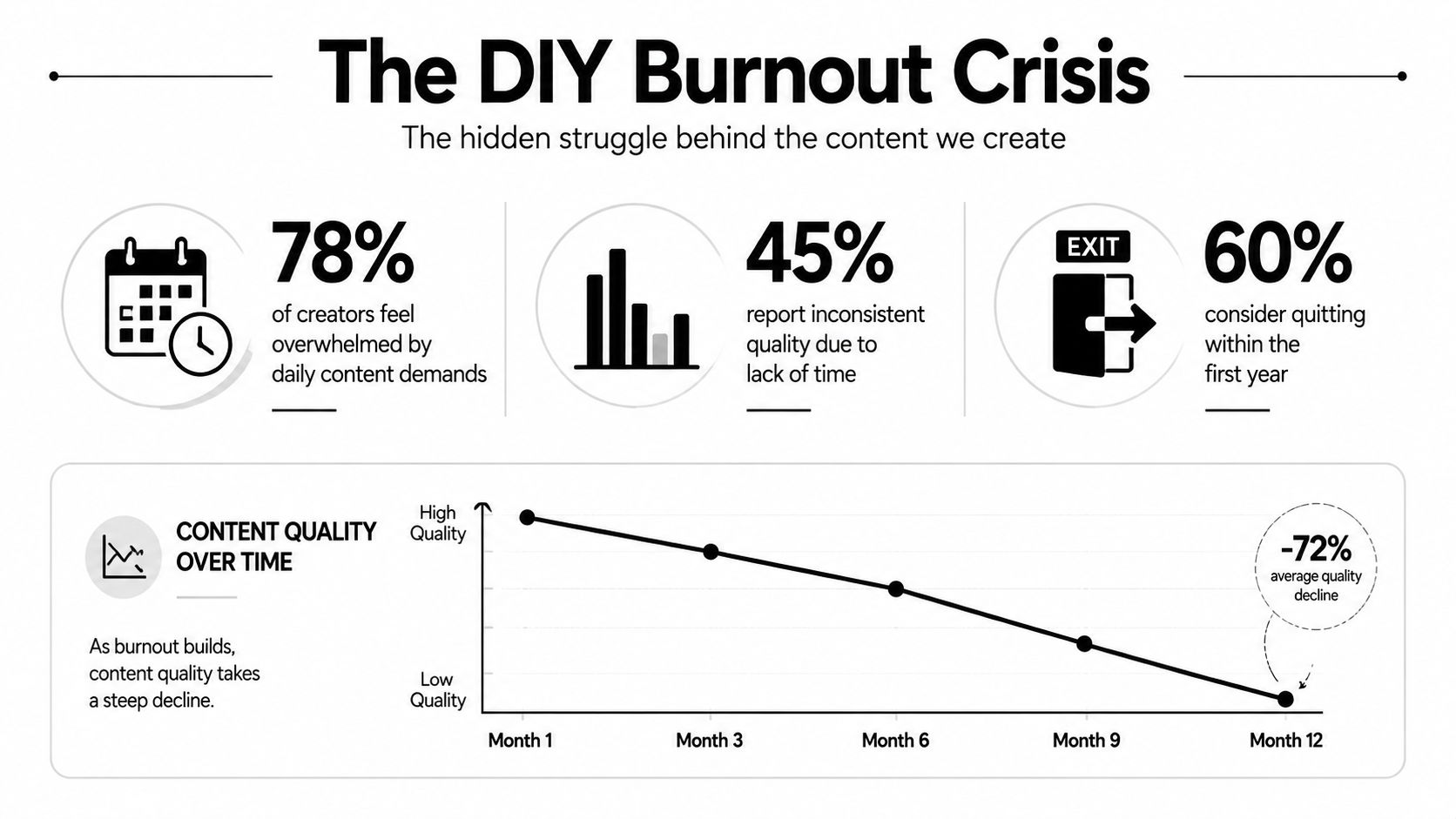
What DIY burnout usually looks like
The first sign is creative exhaustion. You start with enthusiasm, then every new Short feels like another small production crisis, especially when you're filming after work or between client calls.
The second sign is low retention. The clip looks fine to you, but the opening doesn't earn the next second, so the viewer leaves before the point lands. YouTube's creator guidance is clear that the first frame and opening seconds matter for retention, which is why rushed clips often underperform even when the idea is strong (YouTube Help).
The third sign is brand ambiguity. One Short feels polished, the next feels improvised, and the channel stops looking like a reliable place to subscribe. That inconsistency makes it harder for expert-led channels, coaches, and local businesses to feel premium, even when the underlying offer is strong.
Strong ideas don't fix weak execution. On Shorts, the viewer sees the packaging first.
The issue isn't that DIY creators lack talent. It's that fragmented workflows force them to choose between speed and quality. A noisy apartment, uneven lighting, and late-night editing sessions can still produce something watchable, but they rarely produce something that feels intentional enough to build a channel around. If you want a more complete picture of what changes when you stop doing everything alone, Flexwork's studio vs. DIY podcasting comparison maps the difference in outcome, not just effort.
Flexwork Studios Short Video Solution
There's a reason studio support matters even in a mobile-first format. A good Short is still built on a strong angle, but the recording environment can either protect that angle or muddy it. Recent creator guidance also points to a useful tradeoff, the angle and audience pain point usually matter more than production complexity, which means polished video is most valuable when it removes friction and lets the message land cleanly. That's exactly where a controlled space helps.
Packages that map to different creator goals
| Package | Investment | What You Receive |
|---|---|---|
| Content Days | $3000/day | 20 edited reels or 60 pro photos |
| Podcast Websites | $5000 plus hosting | A custom podcast website built for your show |
| Market, Manage & Produce My Podcast | Starting at $1500 per episode | A 20-episode growth commitment |
| Hourly Rentals | Varies by session | Fast access to a studio for quick recording blocks |
| Producer Packages | Varies by scope | Production support for stronger visual storytelling |
For creators who want a single place to record and move fast, studio rentals can be the simplest route. For those who care about the full pipeline, a booked session becomes more than a shoot, it becomes a content asset day.
Why this setup removes friction
The practical value is not just nicer footage. It's fewer decisions, fewer distractions, and fewer reasons to delay posting. Soundproof rooms reduce outside noise, professional cinema gear tightens the visual, and the workflow is built to get you from concept to export without rebuilding the whole process every week.
The more advanced services matter too. Flexwork's editing, motion graphics, and branded post-production support mean you're not stuck trying to splice together captions at midnight. If you want to turn a single recording session into a wider content system, booking a production session is a more efficient move than rebuilding the same setup at home every time.
What the right studio buy actually solves
- Cleaner audio means the viewer focuses on your point, not your room.
- More consistent visuals help your channel feel deliberate.
- Faster turnaround keeps ideas moving before they go stale.
- Less post-production drag makes publishing feel sustainable.
For expert-led channels, the choice is rarely between “raw” and “polished” in a vacuum. It's between content that looks like an afterthought and content that signals trust from the first second.
Plan and Script Your High Retention Short
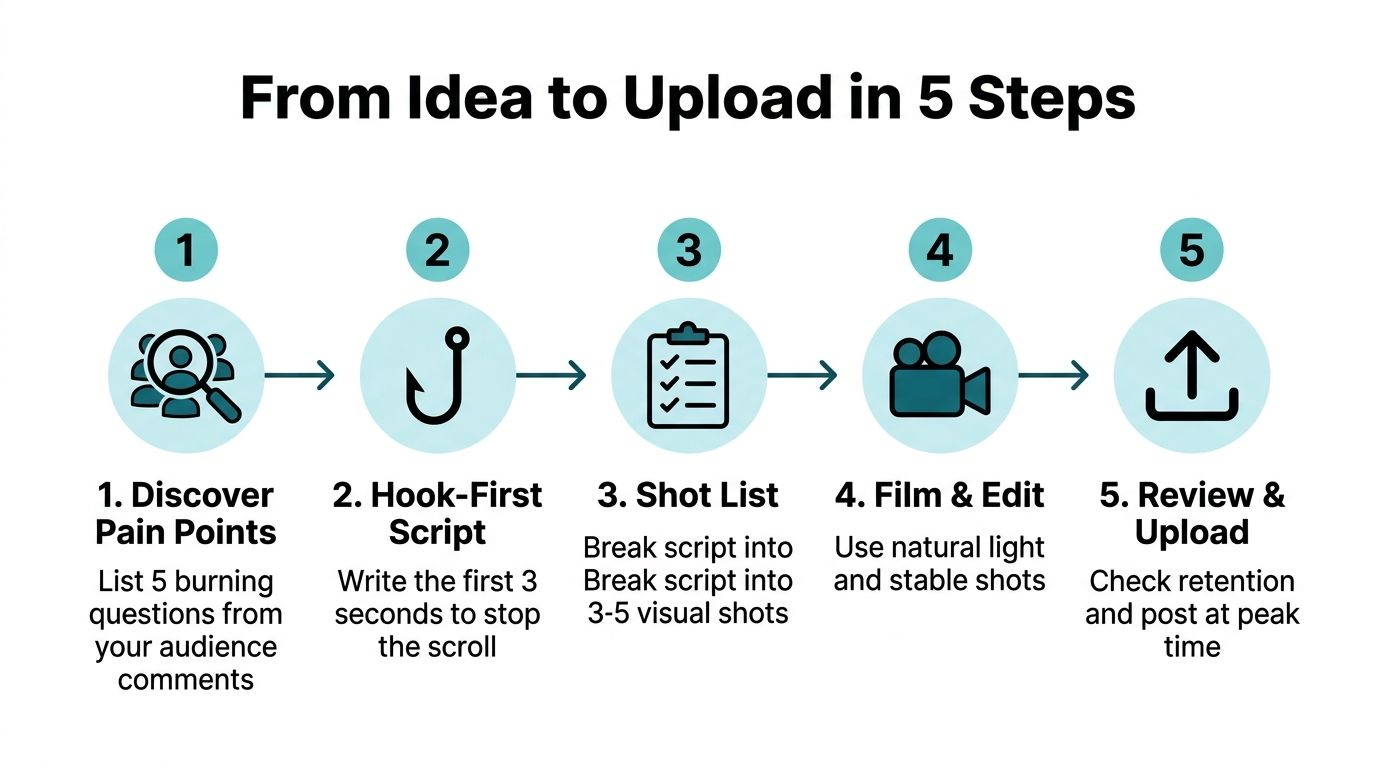
A strong Short starts before the camera turns on. The best ideas usually come from audience pain points, repeated questions, or the one objection people keep raising in calls, comments, or DMs. If the topic doesn't solve something specific, the viewer has no reason to keep watching.
Build the idea around the viewer's problem
Start with the question your audience already wants answered. That could be a booking objection, a client mistake, a gear question, or a fast tip tied to a bigger result. The tighter the problem, the easier it is to script a hook that feels relevant instead of random.
For structure, keep the promise concrete. A Short works better when the viewer knows what they'll get quickly, and that's why the opening should not wander. YouTube's current Shorts guidance also makes the technical rule straightforward, vertical format, up to 3 minutes, and auto-identification based on format rather than a manual hashtag or checkbox (YouTube Help, YouTube Help).
Script for the first three seconds
Write the hook first, not last. Those opening words need to stop the scroll by naming the problem, the result, or the tension immediately. Then build the rest of the script so every line earns the next visual.
If the first three seconds don't create curiosity, the rest of the Short rarely gets a fair shot.
A simple script flow works well for most creator brands. Open with the pain point, move into the quick answer, then close with a next step that points to a longer video, a booking page, or a related offer. That closing move matters because short video for YouTube should do more than entertain, it should create momentum.
Match the script to a shot list
A good shot list keeps the visual moving without making the edit chaotic. Break the script into 3 to 5 beats, then assign each beat a visual action. That can be a talking-head segment, a screen recording, a cutaway, or a b-roll insert that proves the point.
For a studio day, planning pays off. A concise script makes it easier to film in sequence, capture supporting visuals, and avoid dead air. Flexwork's storytelling and content planning approach fits naturally here because a short script is only as strong as the story arc behind it.
Film and Edit With Mobile or Studio Workflows
Production quality on Shorts is less about looking cinematic and more about looking intentional. A phone can absolutely work, especially if the angle is sharp and the lighting is decent. But once your channel starts representing a business, a podcast, or a premium personal brand, the gap between “posted quickly” and “published well” becomes obvious.
Mobile setup that still looks clean
Use a tripod. That sounds basic because it is, and it fixes one of the fastest ways amateur Shorts lose credibility, shaky framing. Pair that with natural light near a window, and keep your background simple enough that the viewer stays on your face and your message.
If you're filming in the field, record a second pass of b-roll. Hands on a keyboard, a notebook, a product close-up, or a hallway walk can save the edit later and keep the pacing lively. One practical workflow used by technical creators is to write a concise script, record a speaking take, capture matching screencast or b-roll, then tighten the edit with speed-ups, freeze frames, and cuts that follow the beat of the script (DEV.to).
Studio workflow when consistency matters
A studio becomes useful when you want repeatable quality. Controlled light, cleaner audio, and a fixed visual setup make it easier to batch record without re-solving the same problem each time. That matters for creators who need a dependable look across podcasts, thought-leadership clips, and branded Shorts.
Audio deserves special attention. A lapel mic can carry a mobile recording, but studio mixing gives you a more finished sound with less post-fiddling. Clean audio also lifts perceived quality, which is why viewers often describe a video as “more professional” even when the camera upgrade is modest.
Edit for pace, not decoration
Use speed-ups when a section drags. Freeze a frame when you need emphasis. Cut on the beat if music is present, or cut on meaning if it isn't. Captions should be readable, not crowded, and motion graphics should support the point instead of turning the Short into a tiny billboard.
If you want fewer editing headaches, video editing guidance helps you choose tools that fit your actual workflow. For creators who'd rather hand off the grind, Flexwork Podcast Studios can handle the post-production layer, including video editing and motion graphics, so the Short gets finished without draining the rest of the week.
The cleanest edit is the one that still feels like a person, not a template.
Publish and Promote for Channel Growth
Publishing a Short is not the finish line. It's the start of a conversion path, and that's where many channels leave money and attention on the table. A viewer may enjoy the clip and still never become a subscriber unless you make the next step obvious.
Make the metadata do some of the work
Use a title that includes the target phrase naturally, but keep it readable. The description should reinforce the topic and point viewers toward the next relevant piece of content. If your Short is part of a larger series, the link between the clip and the deeper video needs to be obvious.
Shorts are also a discovery format, which means your job is to convert interest while it's warm. The gap is often not the content itself, but what happens after the view. A short clip can earn attention quickly, yet the channel grows only when that attention has somewhere to go.
Build the bridge to long-form
The cleanest move is to connect the Short to a fuller video, a related playlist, or a subscriber-friendly next step. The official YouTube strategy guidance on turning Shorts into long-form growth emphasizes matching viewer intent, using the related video feature, and giving a direct call to action instead of assuming clicks will happen on their own (YouTube Official Blog).
That matters more than people admit. A viewer who got a quick win from a Short is much more likely to watch a deeper explainer if the transition feels immediate and useful. If the long-form video starts with slow branding or unrelated fluff, the bridge collapses.
A promo checklist that keeps things moving
- Link the next best asset so the Short points somewhere useful.
- Say the next action aloud near the end of the clip.
- Keep the long-form intro tight so the promise pays off quickly.
- Repurpose the same topic across formats without changing the core message.
- Use studio output for consistency when the channel needs a premium look across multiple posts.
Flexwork's marketing support can help turn those pieces into an actual campaign instead of a pile of exports. When the studio, the edit, and the distribution all line up, the Short works like a doorway instead of a dead end.
Elevate Your Brand With Flexwork Studios
The strongest short video for YouTube strategy is not about chasing trends. It's about building a repeatable system that makes your channel easier to trust, easier to watch, and easier to subscribe to. That usually means better planning, cleaner production, and a smarter path from one clip to the next.
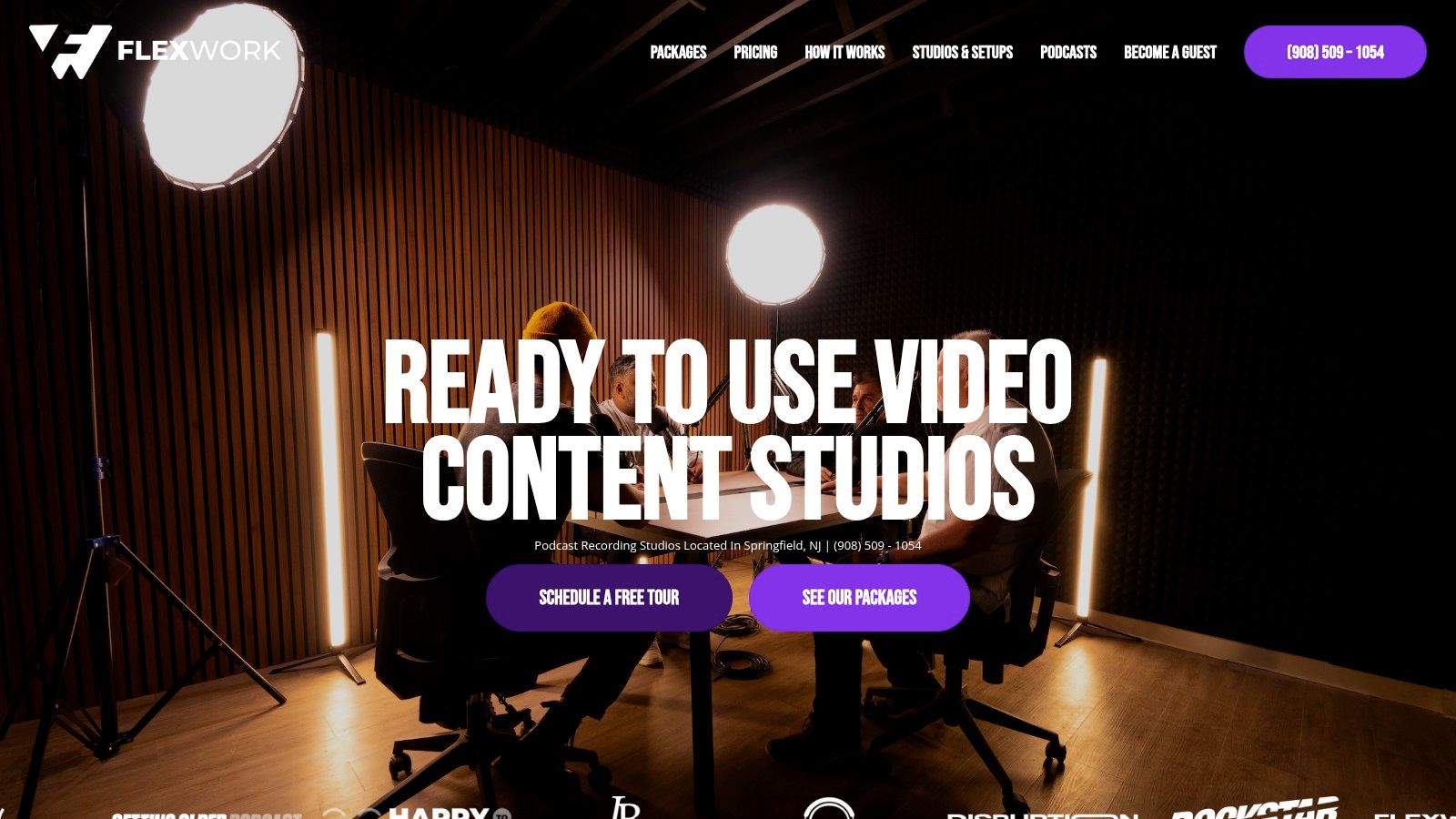
Flexwork Studios in Springfield, NJ gives creators a place to record with less friction and more polish, whether they need a studio rental, a production package, or a full content day. The point is to stop losing time on setup, second-guessing, and unfinished edits, and start shipping content that looks like it belongs on a serious channel. If you're ready to move from DIY scramble to a cleaner process, explore a creator-focused studio near you and treat your Shorts like part of a real growth engine.
The channels that grow are the ones that stay consistent. The ones that feel premium tend to convert better because the audience sees a brand that knows what it's doing.
If you want your Shorts to do more than collect views, Flexwork Podcast Studios can help you build the recording, editing, and distribution workflow around them. Visit Flexwork Podcast Studios to book a session, explore production packages, and turn your next Short into something that actually moves your channel forward.