Social Media Marketing Strategy for Small Business
 September 18, 202620 Minutes
More than three-quarters of small businesses say social media positively affects business performance, and 82% use Facebook to promote products and connect with customers. The right social media marketing strategy for small business turns that widespread activity into a repeatable system built around focused channels, useful content, and measurable sales conversations.
That shift matters for entrepreneurs, creative professionals, and podcast teams. Social media is no longer a digital billboard you update when inspiration strikes. It's the visible layer of your business infrastructure, the place where prospects evaluate your expertise, customers ask questions, and your next booking may begin.
The hard part isn't opening an account. It's producing enough strong content to stay present without letting DIY editing, scheduling, captions, and analytics consume every productive hour. Flexwork Studios helps creators and small businesses close that gap with studio rentals, podcast production, Content Day sessions, and podcast websites designed to turn scattered ideas into a professional content engine.
Why Social Media Is Your New Growth Engine
Small businesses have already voted with their time and budgets. A 2025 survey summarized by Marketing Dive found that more than three-quarters said social media positively affects business performance, while 82% used Facebook for product promotion and customer connection. That combination reveals the role of social channels. They support acquisition and retention, not just awareness.
Historical comparisons point in the same direction. A 2019 survey reported that 63% of small businesses invested in social media to expand brand reach, with 56% managing accounts in-house and 37% using software to oversee multiple channels, according to ZipDo's small-business social media statistics. Later compilations report social media use ranging from 90% to 96% among small businesses in their marketing strategies, while another source reports 70% using it as part of marketing efforts. The exact figures vary by survey design, but the strategic conclusion is consistent: social media has moved from optional experiment to standard operating capability.

Build the system before increasing the volume
Resource scarcity creates the familiar trap. One person records a podcast, edits clips, writes captions, answers messages, and tries to interpret performance data between client calls. The business appears active, but the workflow stays fragile. A missed week breaks momentum, and rushed content makes the brand look less established than it is.
Start with three decisions:
- Choose one or two priority platforms: Match the channel to customer behavior and your available production capacity. A podcast serving professional buyers may need LinkedIn and YouTube, while a visual local brand may prioritize Instagram and Facebook.
- Define three to five content pillars: Use recurring themes such as education, behind-the-scenes access, customer questions, founder perspective, and direct offers. Pillars prevent every post from becoming a last-minute sales pitch.
- Create a monthly calendar: Assign each recording, clip, photo, email, and call to action before the month begins. Your team should know what gets published, where it goes, and what action it should encourage.
A practical small business social checklist can help turn those decisions into a working routine. For deeper guidance on converting an audience into a consistent community, review Flexwork's social media following growth guide.
Practical rule: Treat content production like inventory. If you only create when demand arrives, you'll always be operating from shortage.
The professional standard isn't daily posting at any cost. It's reliable output with a clear job. A useful clip should teach, establish authority, start a conversation, or move someone toward a booking page, product page, or direct message. Vanity metrics can signal attention, but the business needs a path from attention to action.
Organic Reach vs. Paid Advertising Balance
Organic content builds familiarity and reveals what your audience values. Paid advertising buys controlled distribution. A strong social media marketing strategy for small business assigns each approach a clear role instead of treating them as interchangeable.
A 2026 small-business marketing report identifies unpaid social media as a top channel for 66% of businesses and social media ads for 56%, alongside SEO and email, according to LocaliQ's small-business marketing trends report. The report also says more than 90% of surveyed businesses use Facebook, 74% use Instagram, and 48% use LinkedIn. Those figures show where businesses operate. They do not justify spreading your budget evenly across every platform.
Give each channel a job
Facebook remains useful for promotion and direct customer interaction. Instagram suits brands that can communicate through visual storytelling, short-form video, and polished brand moments. LinkedIn fits businesses whose sales depend on expertise, partnerships, referrals, or professional credibility.
Short-form video deserves attention, but “make more Reels” is not a strategy. Recent trend coverage identifies it as a high-performing format and notes that social platforms increasingly function as search destinations for products, tutorials, and reviews, according to DMP Agency's social media trends coverage. Produce videos around searchable subjects, clear titles, useful spoken language, and captions that answer real customer questions.
Use organic content as the testing ground:
- Publish an educational clip, customer answer, or founder insight.
- Track meaningful signals, including saves, shares, comments, profile visits, and direct messages.
- Promote only content that already demonstrates audience relevance.
- Send paid traffic to a specific destination, not a generic homepage.
- Review inquiry quality before increasing spend.
Paid promotion performs best when the creative already has a clear point of view. It can increase visibility, but it cannot repair an indistinct message or weak offer. Tie every budget decision to the next business action, such as booking a consultation, requesting a quote, or visiting a product page.
Avoid the channel-sprawl tax
Multiple accounts are manageable. Thin, inconsistent work across every account is not. Copying one post everywhere may save distribution time while reducing relevance. Creating unique content for every platform can drain a small team before the campaign has room to mature.
Set one primary channel, one supporting channel, and a repurposing path. A podcast can become a full YouTube episode, a short Instagram clip, a useful LinkedIn post, and a Facebook discussion prompt based on a customer question. Flexwork's guide to content distribution channels provides a framework for assigning each asset its next destination.
Professional production infrastructure turns that workflow into a repeatable engine. Instead of burning out on scattered DIY posting, capture one well-planned recording and build several platform-specific assets from it. That consistency gives organic content more chances to prove its value, then gives paid media stronger creative to distribute.
Building a Content Calendar That Converts
A content calendar should do more than prevent an empty feed. It should make every production decision answerable. Before recording, you should know which audience problem the content addresses, which format carries it best, and what a qualified viewer should do next.
Most small businesses should post three to five times per week on their main platforms, according to OnePoint Solution's posting-frequency guidance. That range is a practical baseline, not a quota to hit blindly. Instagram guidance commonly sits at three to five feed posts weekly, Facebook at four to seven, TikTok at three to five, and LinkedIn at two to five, but your capacity and audience response should determine the final rhythm.
Build around repeatable pillars
Use a monthly planning session to assign content across three to five themes. Keep the themes specific enough to guide production:
- Teach the buyer: Answer a recurring question in a concise video, carousel, or podcast segment.
- Show the process: Reveal the preparation, decisions, or craft behind the finished service.
- Prove the outcome: Share a testimonial, client lesson, audience question, or before-and-after explanation without exaggerating results.
- Develop the point of view: Let the founder or host address an industry tension in a clear, memorable voice.
- Make the offer: Explain who the service fits, what it includes, and how to inquire.
A podcast professional might record a single interview, mark the strongest teaching moments, and assign each clip to a different pillar. The calendar then becomes a production map instead of a list of disconnected captions.
Separate attention from intent
Reach and impressions tell you whether distribution occurred. They don't prove that the content created a business opportunity. The practical strategy guidance from Brandlogg's small-business social media framework recommends measuring engagement rate, click-throughs to the website or DMs, and cost per lead or sale.
Track each post with a simple record:
| Content question | Useful signal |
|---|---|
| Did the audience respond? | Engagement rate |
| Did interest move somewhere useful? | Website clicks or DMs |
| Did promotion create commercial value? | Cost per lead or sale |
| Did the message earn attention beyond existing followers? | Reach and impressions, used as awareness context |
The calendar earns its keep when it tells you what to create next, not just what you published last month.
A sustainable baseline matters more than daily volume. Current guidance frames two to five posts per week on key channels as a workable range for small teams, according to Scalio's publishing-frequency guidance. If the process keeps breaking, reduce the number of formats, batch the recording, and protect the quality of the strongest weekly assets.
The calendar should also reserve time for replies. A polished clip without conversation is incomplete social marketing. Assign someone to answer comments, respond to DMs, collect recurring questions, and feed those questions back into the next recording session. Flexwork's content repurposing strategies can help turn one substantial recording into a broader publishing system without forcing the team to invent from scratch every morning.
Leveraging Professional Production Services
The overwhelmed creator usually doesn't lack ideas. She has too many ideas trapped behind setup time, uneven lighting, unreliable audio, editing queues, and an ever-growing list of clips that still need captions. Her business may have a strong podcast, but the public feed looks sporadic because production happens only after everything else is finished.
That's where professional infrastructure changes the economics of attention. A controlled studio environment removes the repeated friction of setting up cameras, checking sound, framing shots, and rebuilding the same visual identity for every recording.
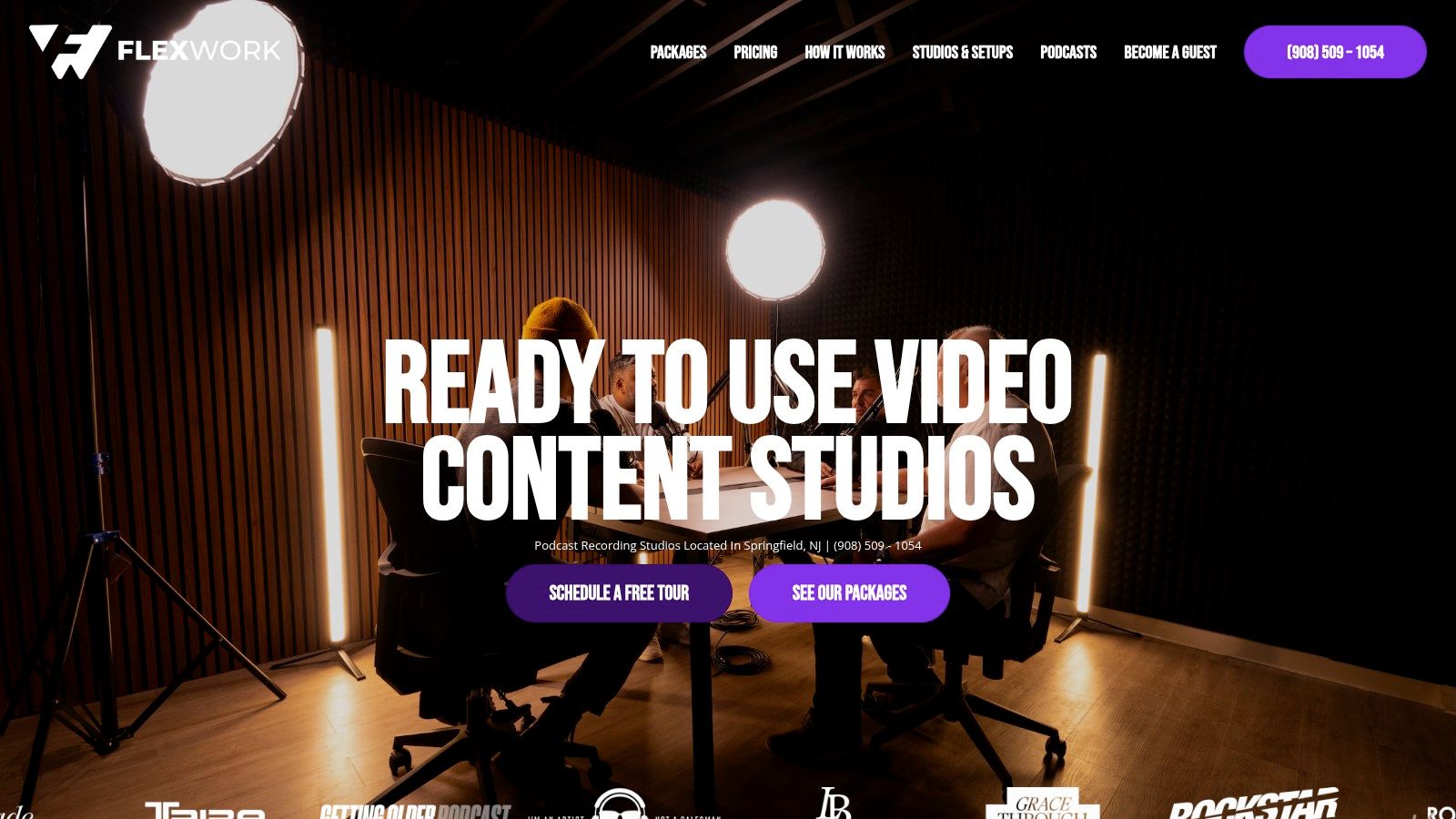
Flexwork Podcast Studios is one option for creators and small businesses that need a production home for podcasts, video series, livestreams, or branded content. Its Springfield, New Jersey facility combines acoustically treated rooms, modern sets, professional audio, and cinema equipment. The service model extends beyond the room, with editing, sound mixing, motion graphics, show branding, distribution, and marketing support available for teams that need execution rather than another tutorial.
Turn one recording day into a campaign
Flexwork Studios offers Content Days priced at three thousand dollars per day, including twenty edited reels or sixty professional photos, alongside podcast websites starting at five thousand dollars plus hosting, as stated on the Flexwork Studios website. That structure gives a small business a defined production event, a clear asset target, and a usable library for the calendar.
Before a Content Day, prepare:
- A question bank: List customer objections, myths, decisions, and opinions that can become short-form hooks.
- A visual brief: Choose wardrobe changes, set variations, product placements, and the tone each platform requires.
- A distribution plan: Decide which assets support organic publishing, paid campaigns, email, landing pages, and sales follow-up.
A studio day should not become a glamorous version of improvisation. Bring a content brief, record in batches, and capture alternate openings and calls to action while the camera is already rolling. A social media video templates guide can help organize recurring formats before production begins.
Video support also becomes valuable after the shoot. Editors can identify usable moments, trim for different platform behaviors, add captions, build motion graphics, and maintain consistent visual treatment. A small internal team can then focus on audience replies and commercial conversations instead of spending every afternoon moving files between editing apps.
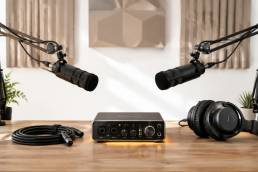
Here's a closer look at the kind of production environment that supports that workflow:
For businesses that need a sharper visual pipeline without building an internal production department, Flexwork's video content creation services connect recording and post-production to the publishing needs established in the calendar. The point isn't to outsource your voice. It's to protect the time required to develop it.
Measuring Success and Scaling Your Strategy
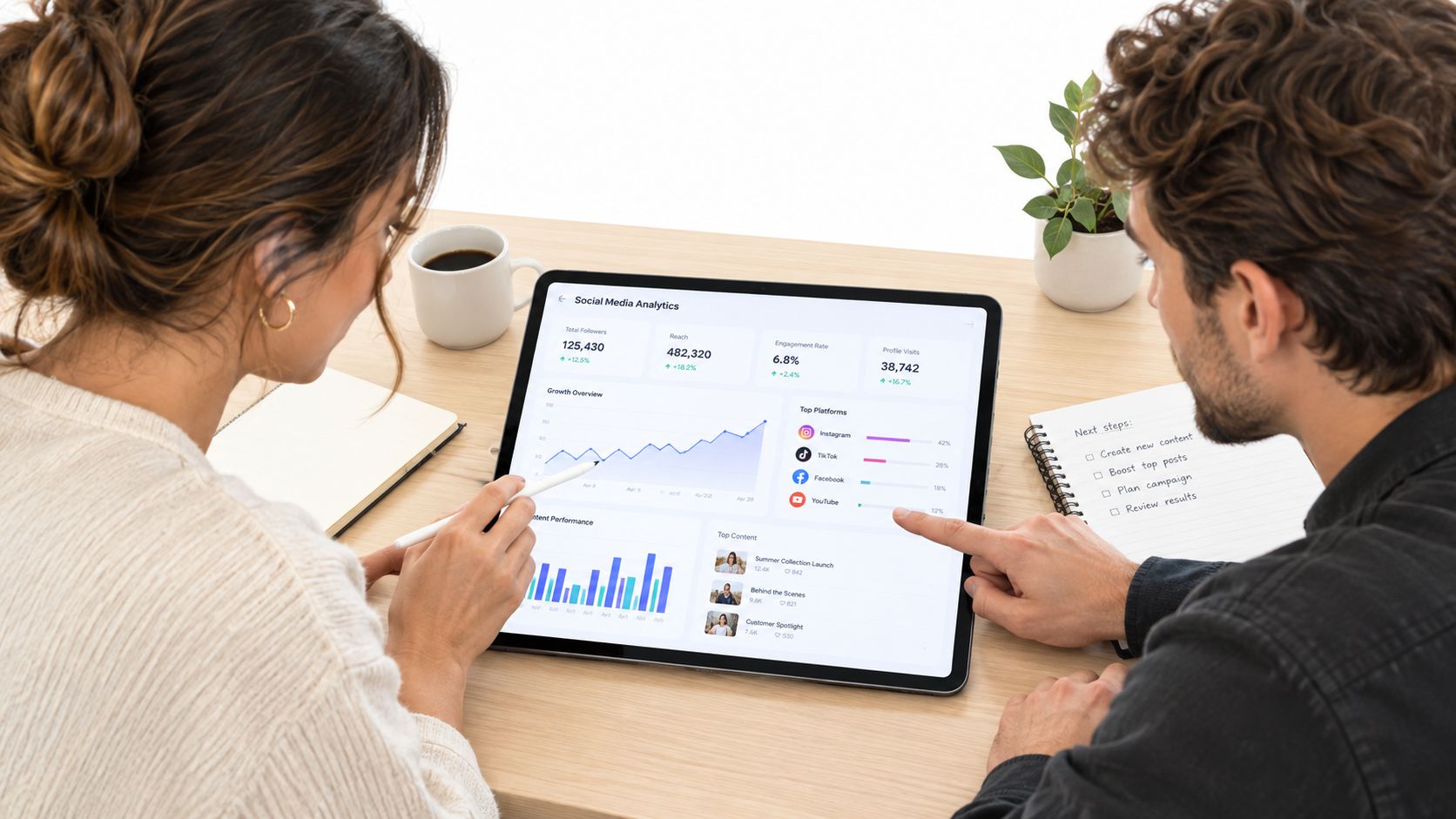
A social media marketing strategy for small business needs to withstand a spreadsheet review. Connect each post to engagement quality, website activity, direct conversations, leads, or sales. Otherwise, content can entertain an audience without contributing to the business.
Start with three revenue-linked measures. Track engagement rate to assess meaningful response, click-throughs to your website or DMs to measure intent, and cost per lead or sale once paid promotion enters the mix. Reach and impressions still matter, but they indicate awareness rather than commercial performance.
Audit the content, not just the dashboard
Review the calendar on a regular schedule and ask precise questions:
- Which subjects created conversations? Produce more around questions that generate thoughtful comments and useful DMs.
- Which formats produced action? Compare podcast clips, photos, carousels, founder posts, and customer-led content by what people do next.
- Which offers attracted qualified interest? A post with fewer reactions but stronger inquiries may deserve more production attention.
- Where did the workflow fail? If content arrived late, lacked clarity, or stalled in approval, repair the process before blaming the platform.
A separate survey found that businesses often experience social results as unpredictable, while fewer describe them as highly consistent. That pattern points to an operational problem as much as a creative one. Inconsistent outcomes usually follow inconsistent inputs, unclear channel roles, weak tracking, or content that lacks enough repetition to teach the team anything.
Scale the workflow before scaling the spend
Professional production makes testing cleaner. The team can compare consistent formats instead of judging a polished episode against a rushed phone clip. A dependable asset supply also gives paid campaigns stronger creative options and gives organic channels enough material to maintain the planned cadence.
For B2B creators and professional podcasters, LinkedIn analytics tools can support channel-specific review. Software cannot choose the business question for you. Define the channel's job, record the relevant action, and cut formats that do not support the goal.
Creators refining their process can use Flexwork's content creator tips as a practical reference, then set a production rhythm that matches actual capacity. A repeatable system turns scattered posting into a marketing engine and reduces the burnout created by DIY production.
Flexwork Podcast Studios offers studio rentals, podcast production packages, Content Day sessions, professional editing, distribution support, and podcast websites for creators and small businesses building a consistent social presence. Visit Flexwork Podcast Studios to review production options and discuss a repeatable content workflow.