
Podcast Production Workflow: Master Your Show
 June 22, 202623 Minutes
Meta title: Podcast Production Workflow Master Your Show
Meta description: Build a podcast production workflow that saves time, improves quality, and turns your show into a scalable brand asset.
URL slug: /podcast-production-workflow
Primary keyword: podcast production workflow
Secondary keywords: podcast workflow, podcast post-production, podcast recording studio
Your podcast probably started the right way. You had a sharp idea, a real point of view, and enough momentum to hit record before overthinking it. Then reality showed up. Guest scheduling got messy. Editing swallowed your evenings. Your clips looked rushed. Your audio sounded fine one week and off the next. The bigger your brand became, the stranger that gap felt.
That gap is the issue. Not talent. Not ambition. Not even consistency, at first. It's the absence of a podcast production workflow that can support the level you're trying to reach. If you're building a serious business, your show can't run on scattered notes and late-night exports. It needs structure, standards, and support. If you need a baseline for building the show itself, start with this guide on how to start a podcast from scratch.
From Passion Project to Polished Production
You're good on the mic. Your ideas are strong. Guests say yes. But every episode still feels harder than it should.
That usually looks like this: you record in a room that wasn't meant for sound, promise yourself you'll edit tomorrow, then spend the weekend trimming dead air and writing show notes when you should be working on the business behind the show. The podcast becomes a bottleneck instead of an asset.
The fix isn't more hustle. It's a system. If you already think strategically about your audience, offers, and publishing cadence, the same thinking should shape your show. A smart place to sharpen that broader lens is this resource on content strategy for solo creators and businesses. Podcasting works better when it's tied to a larger content engine.
A polished show doesn't come from trying harder episode by episode. It comes from deciding that your process matters as much as your message.
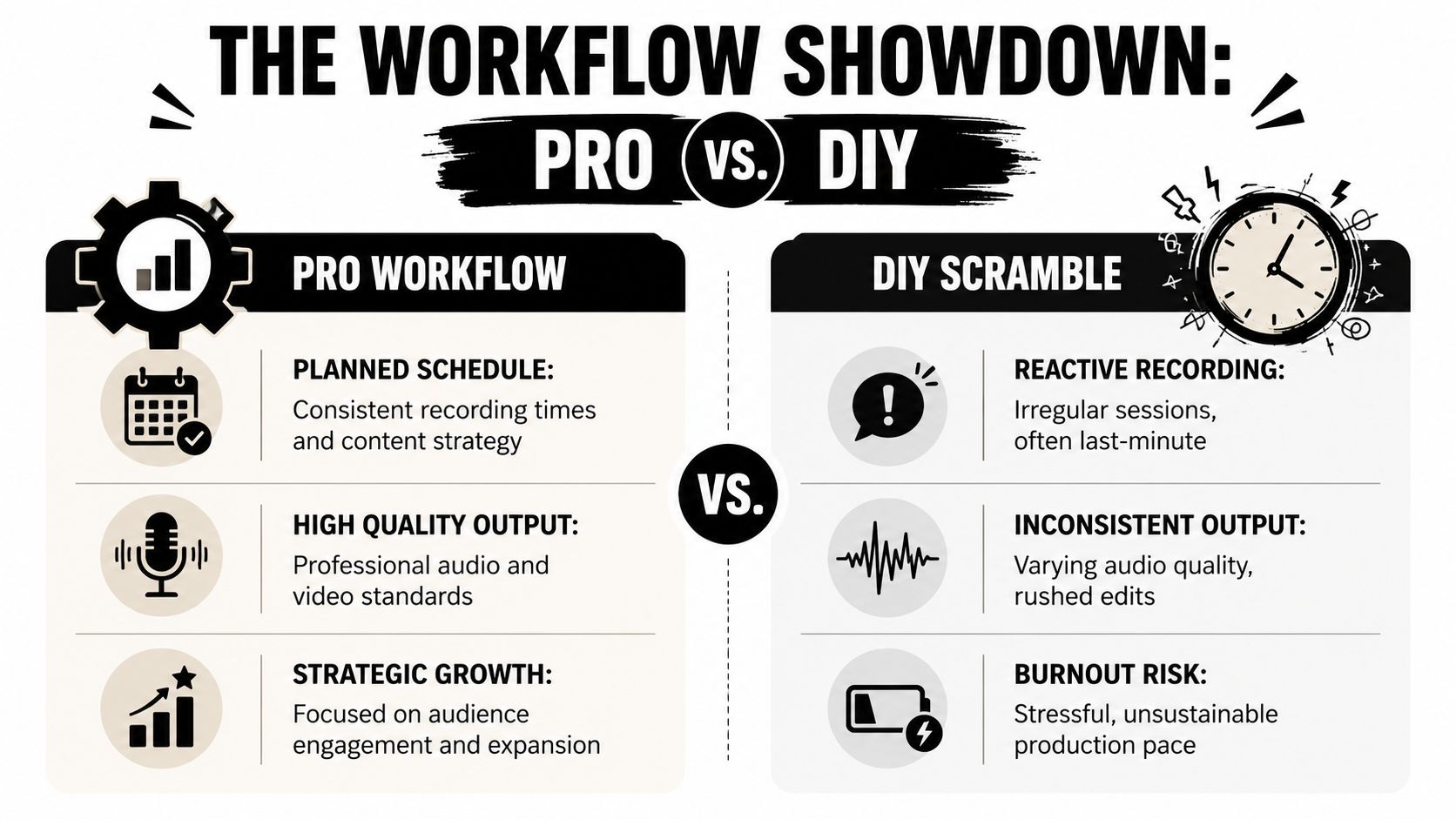
The Pro Workflow vs The DIY Scramble
Most podcasts don't break down because the host lacks ideas. They break down because the workflow is fragile.
The DIY scramble feels productive at first. You book a guest when you have time. You record when calendars line up. You edit when deadlines get uncomfortable. You publish because you have to. That cycle creates avoidable stress, uneven quality, and a show that always feels one missed week away from stalling.
A professional workflow is different. It treats the show like a pipeline with clear handoffs, fixed stages, and repeatable decisions. Industry guides consistently divide podcasting into three core phases, pre-production, production, and post-production, with promotion as a fourth operational layer, which is why serious teams don't treat podcasting as a simple record-and-publish task (Uncommonly More's podcast production process).
Why the DIY model burns you out
Time is the cost of a loose process. A typical interview-style podcast requires about 3–4 hours of work for every 1 hour of polished audio, and for a standard 30-minute episode that often means 30–60 minutes of prep, 45–60 minutes of recording, and 2–3 hours of post-production before promotion even begins, according to Fame's podcast production workflow guide.
That's the number creative founders routinely underestimate.
You're not just recording. You're researching, scheduling, setting up, editing, exporting, writing, clipping, posting, and following up. If you do all of that manually for every single episode, your show becomes a part-time job.
Practical rule: If your process depends on your last available hour of the week, you don't have a workflow. You have a rescue mission.
What the pro model does instead
A solid podcast production workflow removes decision fatigue. It gives each part of the process its own lane.
Here's the difference in plain terms:
| Approach | What it looks like | What it creates |
|---|---|---|
| DIY scramble | Last-minute booking, reactive recording, solo editing | Inconsistency and fatigue |
| Professional workflow | Planned topics, batched sessions, delegated tasks | Quality and repeatability |
Batching is the key shift. When you plan ahead, you stop rebuilding the machine every week. You can prepare several episodes at once, group similar tasks, and protect your creative energy for the part only you can do well.
The standard worth aiming for
If your show supports your brand, then your workflow has to support your schedule. That means documented prep, reliable recording conditions, consistent post-production, and clear distribution steps.
If you're still debating whether the jump from solo DIY to professional support matters, this breakdown of studio vs DIY podcasting and what you gain by going pro is worth reading. The right setup doesn't just make your podcast sound better. It makes the entire operation lighter.
Phase One Strategic Pre-Production
Great episodes are built before anyone says “welcome back to the show.”
Pre-production is where you decide what the episode is for. Not the vague version. The specific version. What's the listener supposed to learn, feel, or do by the end? Why is this guest the right voice for that topic? What's the angle that makes the conversation worth publishing?
That level of clarity changes everything downstream. It tightens the interview, cuts down editing pain, and gives your promo team better raw material to work with.

Build the episode before you record it
Most hosts do too little here. Then they wonder why the conversation wanders.
Your prep should cover three things:
- Topic discipline: Decide the central idea in one sentence. If you can't summarize the episode cleanly, the episode isn't ready.
- Guest positioning: Know what perspective the guest brings. Don't book someone because they're available. Book them because they sharpen the episode.
- Conversation architecture: Map the opening, middle, and close. You don't need a script for every line, but you do need a sequence.
That sequence matters. If the strongest insight arrives at the end of an unstructured ramble, your audience may never hear it.
Run a clean guest process
Guest management is part brand experience, part logistics. Sloppy communication creates weak interviews.
Use a simple operating rhythm:
- Invite with context. Tell the guest why they fit this episode.
- Confirm the format. Audio only, video, remote, in studio, length, tone.
- Send prep notes. Include recording details, themes, and a short question list.
- Brief before recording. Remind them how the conversation will flow.
If you need help shaping better prompts and a cleaner episode arc, this guide on how to write a podcast script gives you a practical framework without making the show sound robotic.
Strong pre-production is invisible to the audience. They don't notice the prep. They notice the confidence.
Keep your prep repeatable
Don't reinvent your process for every episode. Create a lightweight system you can reuse.
A workable pre-production stack usually includes:
- A guest intake doc for bios, links, and talking points
- An episode outline template for hooks, segments, and closing CTA
- A scheduling workflow that keeps confirmations in one place
- A content calendar so themes build on each other instead of competing
Many creators should stop pretending they need more spontaneity. They need more structure. Spontaneity performs better when the frame is strong.
Phase Two Flawless Recording Sessions
Recording day should feel calm. If it feels chaotic, the problem started earlier.
A clean session comes from two things. First, proper prep. Second, an environment designed to capture usable sound and video without constant troubleshooting. You can record from home, of course. Plenty of people do. But most home setups add friction you don't notice until you're editing around it: room echo, HVAC noise, inconsistent lighting, bad framing, dead batteries, unstable connections, and awkward camera height.
That friction is expensive because it shows up later.
Record where performance gets your full attention
Your job as the host is not to monitor every technical variable in real time. Your job is to lead the conversation well.
That's why a controlled environment matters. Acoustically treated rooms, reliable microphones, proper camera placement, and someone handling setup give you something more valuable than gear. They give you focus. If you want to improve the technical side of your sessions, these advanced recording techniques for better podcast sound quality are a useful reference.
A studio setup also changes guest behavior. People sit differently, speak more clearly, and take the conversation more seriously when the environment signals professionalism.
Use a session checklist every time
You don't need a dramatic ritual. You need consistency.
Before you hit record, confirm:
- Microphones are tested: No guessing, no “we'll fix it later.”
- Camera framing is locked: Eye line, crop, and background should be intentional.
- Notes are accessible: Not scattered across tabs and text threads.
- Water is nearby: Dry mouths sound bad. Simple fix.
- Guest expectations are set: They should know the pace and tone before the first question.
Those details sound small. They're not. Small misses compound into a session that feels off, and “off” is hard to edit into premium.
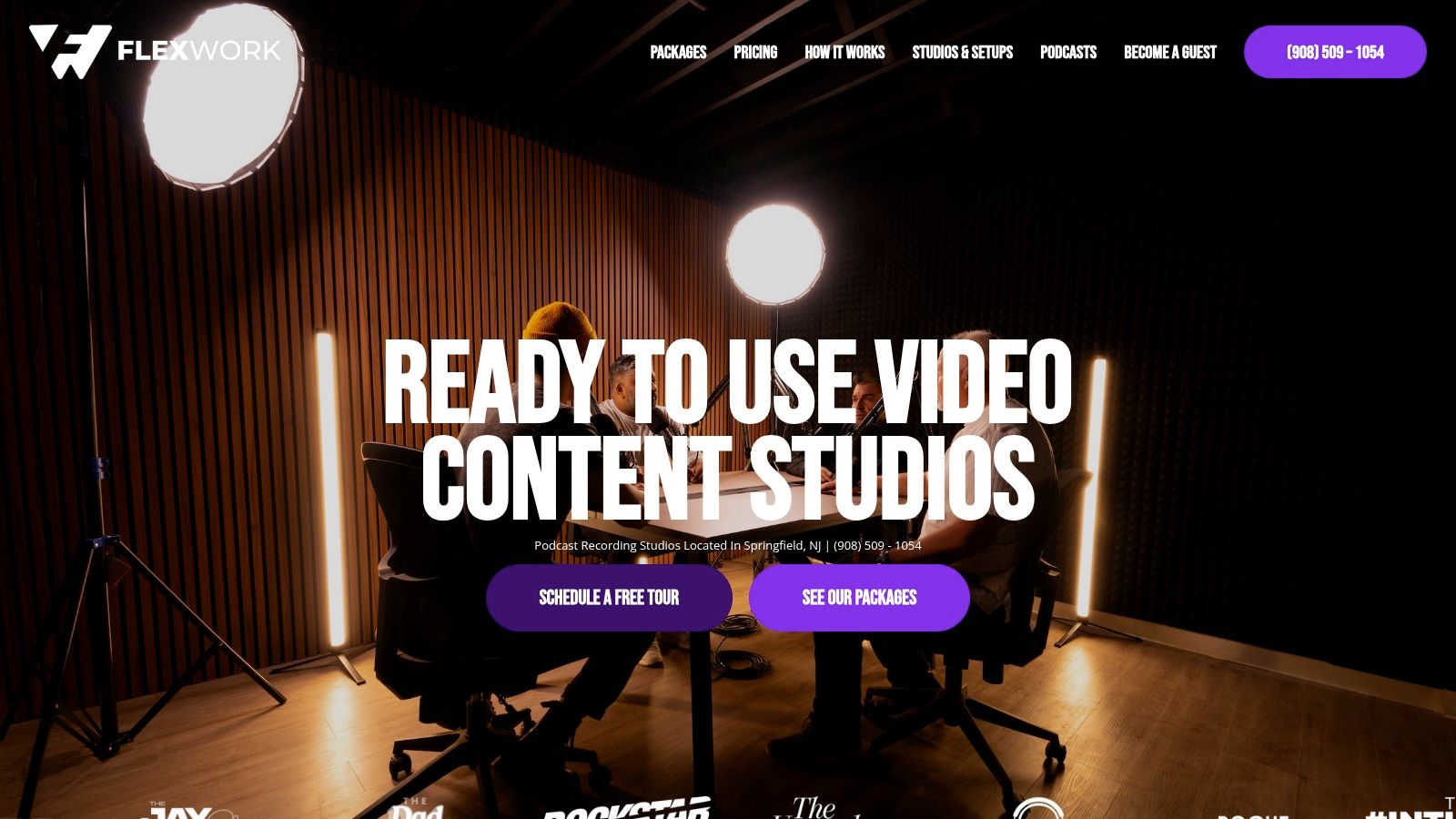
Here's a look at what a more polished production environment can support in practice:
The smartest shortcut for most creators
If your show is strong but your setup is holding it back, renting a studio is often the cleanest upgrade. It lets you improve quality without building a full in-house production operation.
One option creators use in the NJ area is Flexwork Podcast Studios, which offers studio rentals and production support inside an acoustically treated setup designed for podcast and video capture. That matters if you want a professional recording day without managing every technical detail yourself.
The point isn't luxury. It's reliability. Recording should produce momentum, not recovery work.
Phase Three Mastering Post-Production and Assets
At this stage, most creators lose the week.
Post-production is the longest shadow in the podcast production workflow because it mixes technical work with editorial judgment. You're cleaning audio, shaping pacing, trimming repetition, adjusting visuals, exporting files, naming assets, writing supporting copy, and trying to squeeze short-form content out of the same raw session.
If you do this casually, it drags. If you do it properly, it becomes one of the strongest growth levers in your entire content operation.

Editing is brand management
Listeners don't separate your ideas from your presentation. If the pacing is loose, the cuts are clumsy, or the audio feels thin, they experience the episode as less authoritative.
Post-production should handle at least these layers:
- Audio cleanup: Remove distractions, level voices, and create a clean listening experience.
- Narrative tightening: Cut what slows the episode down, not just what sounds imperfect.
- Video polish: If you filmed the session, switch angles cleanly and keep visual energy intentional.
- Delivery prep: Export the final files in formats that suit your host, social platforms, and archive.
Music also matters more than many hosts admit. If you're choosing intro beds or transitions, this guide to crafting podcast mood with music is a useful reference for making those choices intentionally.
Post-production shouldn't rescue weak raw material. It should refine strong material into something memorable.
One episode should create more than one asset
A lot of founders still think in single-output terms. They record one podcast episode and treat the finished upload as the whole product. That's wasteful.
A modern workflow pulls multiple assets from one session:
| Raw session output | Practical use |
|---|---|
| Full episode | Long-form publishing on podcast platforms and video channels |
| Short clips | Reels, Shorts, TikTok, LinkedIn snippets |
| Quote moments | Social graphics, emails, landing pages |
| Show notes and summaries | SEO support, episode pages, audience retention |
That repurposing layer is where consistency starts to feel scalable. You're no longer creating from scratch every day. You're extracting more value from a session you already paid for with time and attention.
When to stop doing this yourself
If post-production is blocking your release schedule, it's not a badge of honor anymore. It's a bottleneck.
A done-for-you service can offer a sensible solution. Flexwork's Content Day is priced at $3000/day and includes 20 edited reels or 60 pro photos, which makes it useful for creators who want one concentrated recording day turned into a broader content package. If you need the editorial side tightened too, their production support also extends into editing and delivery workflows. For creators refining their own process, these post-production best practices for perfecting podcast episodes are a strong starting point.
You should stay close to creative direction. You should not stay buried in export queues if that's keeping the show inconsistent.
The Final Mile Distribution Promotion and Growth
Publishing is not the finish line. It's the handoff.
A lot of talented hosts do all the hard parts, then sabotage the episode in the final stretch. They upload the file, write a rushed description, post one clip, and move on. Then they wonder why the show feels invisible. Distribution and promotion need the same discipline as recording and editing. Otherwise the workflow stops at production and never becomes growth.
Treat publishing like distribution, not storage
Uploading an episode is administrative. Distributing it well is strategic.
Your release process should include:
- A clear episode title: Not vague, not clever for the sake of clever.
- Useful show notes: Summaries, takeaways, links, and language aligned with what listeners would search for.
- Platform consistency: Your episode should look intentional wherever it appears.
- A home base: Don't rely only on third-party platforms to hold your audience relationship.
That last point matters. A dedicated podcast site gives your show a place to live beyond listening apps. It can host episode pages, collect leads, organize archives, and support search visibility. Flexwork offers podcast websites for $5000 plus hosting, which is relevant if your show is becoming a meaningful business asset rather than a side channel.
Promotion needs a real system
One post isn't promotion. It's an announcement.
A serious growth workflow usually includes a content calendar around each release. Clips are scheduled. Guest assets are prepared. Captions are adapted by platform. Comments get responses. Good episodes stay in circulation longer than a launch day.
If you want outside ideas for distribution tactics, this article on grow your podcast audience is a practical companion to your internal workflow planning.
The best promotion plan is the one your team can execute every week without improvising.
Decide what kind of show you're actually building
There are two honest paths here.
The first is a lightweight show that supports your brand occasionally. In that case, keep the workflow lean. Record in batches. Publish consistently. Repurpose what matters. Don't overbuild.
The second is a category-building show designed to attract attention, authority, and opportunity. That requires a more complete operating model. Strategy, production, distribution, and marketing all need owners. Flexwork's Market, Manage & Produce My Podcast package starts at $1500 per episode and includes a 20-episode growth commitment, which signals the kind of sustained process serious creators usually need when they want the show to become a long-term growth channel.
Neither path is wrong. What's wrong is wanting business-level outcomes from hobby-level systems.
Conclusion Build Your Legacy Not Your To-Do List
A strong podcast production workflow does more than keep you organized. It protects your standards. It gives your ideas a cleaner path from recording to release. It turns your show into something dependable enough to support your brand instead of draining it.
You don't need to keep proving you can do everything yourself. At a certain level, DIY stops looking scrappy and starts looking misaligned. If your podcast matters, the process behind it matters too.
Build a workflow that respects your time, sharpens your message, and gives each episode the production quality your brand already demands.
If you're ready to stop patching together your show and start producing it with intention, take a look at Flexwork Podcast Studios. You can explore studio rentals, production support, Content Day sessions, and podcast website options based on how hands-on or hands-off you want your workflow to be.