Masque Sound NJ: Your A/V & Podcast Studio Guide
 June 29, 202621 Minutes
Meta description: Searching Masque Sound NJ for podcast help? Learn when a legacy A/V company fits, and why a creator-first studio is the smarter move.
URL slug: /masque-sound-nj-podcast-studio-guide
Primary keyword: Masque Sound NJ
Secondary keywords: podcast studio New Jersey, studio rental NJ, podcast production packages
You're probably in the same spot a lot of ambitious creators hit. You search for professional audio in New Jersey, find a respected name like Masque Sound, and think, “This looks serious. But is this what I need for a podcast, branded show, or YouTube channel?” That confusion is normal. “Professional sound” covers very different worlds, and the wrong partner can slow you down, overcomplicate your process, and pull your budget toward needs you don't even have.
The better question isn't whether a company is impressive. It's whether it's built for your format, your workflow, and your growth goals. If you're still sharpening your setup, this practical piece on how to improve your audio quality is worth reading alongside this guide. For creators comparing local options, this breakdown of where to record a podcast in NJ also helps frame the decision.
The Search for Professional Sound in New Jersey
A creator in North Jersey wants to stop recording in a spare bedroom. The clips look uneven. The audio changes from episode to episode. Guests notice the echo. So they start searching terms like Masque Sound NJ, hoping to find a serious production partner that can make the show feel polished.
What they find is a company with deep roots, a real reputation, and major credits. That part is impressive. The confusion starts right after that, because a company built for Broadway and large live events isn't automatically the right fit for a creator making weekly episodes, short-form clips, and branded media.
That distinction matters more than is commonly realized.
A podcast isn't a touring production. A content studio isn't a live event vendor. If you're building a modern media brand, you need a partner that understands recurring production, fast turnaround, platform-ready assets, and a workflow that doesn't eat your week.
Who Is Masque Sound and What Do They Really Do
Masque Sound deserves respect. It isn't a random local vendor trying to look bigger than it is. It's a legacy company with a long track record in professional audio.

According to Masque Sound's company history, Masque Sound was founded in 1936 by three Broadway stagehands and has since operated from its 70,000-square-foot facility in East Rutherford, NJ. The company has provided sound for legendary productions like The Book of Mormon and Harry Potter, cementing its 90-year legacy in large-scale theatrical sound.
That tells you almost everything you need to know about their lane. They serve productions where failure isn't an option, where audio has to cover large spaces, and where crews need systems that can handle the pressure of live performance.
What Masque Sound is built to deliver
Masque Sound's core identity comes from live sound reinforcement, installation, rentals, and technical support for major productions and events. Think Broadway. Think touring shows. Think corporate events, sports, television broadcasts, and conventions that need serious infrastructure.
That kind of work requires a very specific mindset:
- Venue-first planning: The room, the audience size, and the physical environment drive the system design.
- Crew-based execution: These productions rely on specialists who install, route, test, and support complex setups.
- High-stakes reliability: If a live event goes wrong, there's no editing it later.
If you want a good feel for what a creator-focused environment looks like by contrast, this look behind the scenes at NJ's premiere podcast studio shows a very different type of production setup.
Practical rule: Don't choose a sound partner based on brand prestige alone. Choose based on the kind of problem they solve every day.
Why that legacy matters, and why it can still be the wrong fit
A lot of creators make a simple mistake. They assume the most advanced audio company must also be the best choice for intimate spoken-word content. That's not how production works.
Masque Sound's experience is real. Their legacy is earned. But expertise in one audio category doesn't automatically transfer into the best workflow for another. A Broadway system has to fill a theater. A podcast has to capture voice cleanly, consistently, and efficiently in a controlled space.
Those are different jobs, different priorities, and different buying decisions.
Why a Live Sound Giant Is Not Built for Your Podcast
As a result, many creators lose time and money. They search for “professional audio,” see a major name, and assume all high-end sound companies solve the same problem. They don't.
For major theatrical tours, Masque Sound deploys complex systems like the L-Acoustics dV-DOSC line array, which is covered in this report on Masque Sound's work for Joseph and the Amazing Technicolor Dreamcoat. That type of system is engineered for massive venues and live sound reinforcement. Capturing pristine podcast audio is a different technical challenge entirely.
Live reinforcement and content capture are not the same craft
A live event team asks questions like these:
- How do we cover the room evenly?
- How do we maintain intelligibility across a large audience area?
- How do we build redundancy for a one-shot performance?
A podcast team asks a different set of questions:
- How do we make your voice sound consistent every episode?
- How do we record clean audio and video without setup drama?
- How do we turn one session into clips, reels, and branded assets?
Those aren't small differences. They shape everything from room design to staffing to pricing.
The wrong partner creates hidden friction
If you hire a giant live A/V operation for a creator workflow, you're forcing a square peg into a round hole. You may get technical competence, but that doesn't mean you'll get speed, simplicity, or a process built around recurring content.
Here's what creators usually need instead:
- Turnkey recording: You walk in, record, and leave with confidence.
- Consistent visual presentation: Your set, lighting, and framing should feel like your brand.
- Repurposing support: One recording session should feed multiple platforms.
- Repeatable workflow: Weekly or monthly production has to be sustainable.
If you're evaluating spaces built around that creator-first model, this guide to in-house studios gives you a better benchmark.
Hiring a Broadway-scale audio company for a podcast is like hiring a touring concert crew to build your home office. The talent is real. The fit is wrong.
Cost structure matters even when no one shows you a menu
Large-scale live audio companies are designed around custom scopes, event logistics, specialized labor, and production complexity. That isn't a criticism. It's just the business model.
Creators usually don't need that machinery. They need a studio, an efficient session, and help converting raw recordings into finished media. If your goal is to publish regularly and grow a show, your budget should go toward output and consistency, not toward infrastructure designed for a different market.
That's why DIY burnout happens so often. People either try to do everything themselves or they hire a vendor built for another category. Both paths create drag. Neither one helps you publish better content faster.
The Modern Studio Solution Designed for Creators
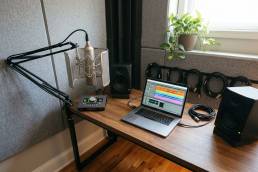
A modern creator studio should remove friction, not introduce more of it. That means acoustically treated rooms, gear that's ready when you arrive, a clean visual environment, and services that extend beyond the recording itself.

The strongest studios in this category aren't trying to be everything for everyone. They're built for podcasters, founders, coaches, agencies, and modern content teams that need repeatable production. If you're comparing options, this guide to top podcast studio features creators in NJ should look for in 2025 is a smart checklist.
What a creator-first studio should give you
You shouldn't have to piece together five vendors to make one show work. The right studio setup usually includes:
- A controlled room: Good audio starts before the mic is even turned on.
- A camera-ready set: If you're filming, the background and lighting need to match your brand.
- Session efficiency: The best studios reduce decision fatigue.
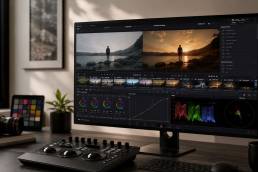
- Post-production support: Editing, clipping, and distribution planning should be close to the recording workflow.
That's the difference between “we have gear” and “we help creators ship.”
Flexwork Studio in Springfield, NJ offers rates starting at $75 per hour for both video and audio production. That matters because it gives creators an accessible starting point without pushing them into large-scale A/V overhead.
The services that actually move a show forward
Hourly studio access is useful, but serious creators usually outgrow simple room rental. They need packages that save time and produce more assets from each recording block.
The sharpest model looks like this:
- Hourly rentals: Best for experienced hosts who already know how they want to run a session.
- Producer support: Best for creators who want help shaping the conversation, tightening production, and keeping the session efficient.
- Content Days: Best for brands and creators who want a batch-production engine instead of one-off recording.
At Flexwork, Content Days are $3000/day and include 20 edited reels or 60 pro photos. That's not just a recording day. That's a media production system.
If your current challenge is getting more mileage from every session, this guide to content repurposing is one of the better ways to think about asset planning before you book.
A quick look at the studio experience helps make the difference concrete:
When to move beyond studio rental
Some shows need more than a room and a microphone. They need a growth system.
That's where premium production support becomes worth it:
- Market, Manage & Produce My Podcast starts at $1500 per episode with a 20-episode growth commitment.
- Podcast websites are $5000 plus hosting.
- Producer-led support helps clients stay consistent without becoming full-time operators of their own media business.
A good studio records your episode. A smart production partner helps you build a repeatable content machine.
If you're building a serious branded show, those services make more sense than stretching a live-event vendor into a role they weren't built to play.
Masque Sound vs Flexwork A Side by Side Look
The easiest way to make this decision is to stop asking which company sounds more impressive and start asking which one fits your actual workflow.

Industry pricing gives you a useful baseline. According to this podcast studio cost guide, typical audio-only podcast studio rentals in major U.S. markets range from $75 to $150 per hour, with half-day and full-day pricing also structured around studio sessions rather than large-event production. That aligns with specialized creator studios, not with the economics of Broadway-scale A/V support.
Service Comparison Live A/V vs Podcast Studio
| Criterion | Masque Sound | Flexwork Studios |
|---|---|---|
| Ideal client | Production companies, event organizers, theatrical teams | Podcasters, founders, creators, branded content teams |
| Core service | Live sound reinforcement, installations, event audio support | Podcast and video studio production |
| Workflow | Custom production scope built around live events | Turnkey recording and creator-focused content workflow |
| Pricing approach | Likely custom quote structure tied to scope and logistics | Transparent studio entry point and packaged creator services |
| Best use case | Broadway, tours, corporate events, broadcasts | Podcasts, reels, interviews, short-form content, content days |
| Key deliverable | Live audience experience | Edited media assets and recurring content output |
If you want a pricing-focused comparison in the local market, this article on what you really get for the price is worth reviewing.
How to read this table the right way
This isn't about declaring one company “better.” It's about matching the tool to the task.
Masque Sound wins when the assignment is complex live production. A creator-focused studio wins when the assignment is repeatable media production. Those are separate categories.
Here's the blunt version:
- Choose a live A/V company if your project depends on venue coverage, event logistics, and live-performance reliability.
- Choose a creator studio if your project depends on consistent episodes, batch content, short-form clips, and brand presentation.
The smartest spend isn't the biggest name. It's the partner built around your output.
What creators often overlook
Many founders and hosts judge a studio by gear first. That's backwards. Start with the end product.
Ask these questions instead:
- Will this environment make me publish more consistently?
- Can this team support clips, edits, and distribution-ready assets?
- Does the pricing make sense for recurring production?
- Will the final content look and sound like my brand belongs in the market I want to reach?
If the answer to those questions is fuzzy, keep looking.
Making the Right Choice for Your Brand's Growth
Here's the cleanest way to decide.
Masque Sound operates at a scale that serves theatrical, broadcast, and corporate event needs. ZoomInfo lists the company at $17.4 million in annual revenue, which reinforces that it's built for bigger-budget production environments rather than the focused needs of individual creators and branded podcasts, as noted in this Masque Sound company profile.
That scale is impressive. It's also your clue.
You need a large-scale A/V company if
- Your production is live and public: You're responsible for what an audience hears in real time.
- Your project involves venues or touring: You need installation, reinforcement, and event-ready technical support.
- Your workflow depends on crew coordination: Multiple operators, logistics, and production management are part of the job.
You need a dedicated content studio if
- You publish episodes regularly: Consistency matters more than production spectacle.
- You want more than raw footage: You need clips, edits, social assets, and polished deliverables.
- You're building a brand, not just recording a file: Set design, sound quality, and speed all affect how your audience judges you.
- You're tired of DIY drag: The setup, troubleshooting, and post-production are eating time you should spend on strategy and performance.
My recommendation
If you searched Masque Sound NJ because you wanted professional audio for a podcast, interview series, or video show, don't overbuy the wrong category. Respect the legacy company for what it does well, then choose the partner built for your actual format.
That means looking for a studio that understands creator economics, recurring production, and modern content packaging. The right decision won't just improve your sound. It'll make your publishing process cleaner, faster, and easier to sustain.
If your brand is ready to look polished instead of improvised, stop treating studio choice like a gear decision. It's a growth decision.
If you want a production setup built for podcasts, video, short-form clips, and branded content, explore Flexwork Podcast Studios. Book a studio session, review the production packages, or schedule a tour and see what a creator-first workflow looks like in practice.