Podcast Production Services: NJ/NY Creators Thrive
 July 10, 202624 Minutes
Meta description: Plateaued show? Professional podcast production services help NJ and NY creators save time, sharpen quality, and scale with Flexwork.
URL slug: /podcast-production-services-nj-ny-creators
Primary keyword: podcast production services
Secondary keywords: podcast studio New Jersey, podcast producer packages, podcast website design
Your show isn't early anymore. You've already proved the concept. People listen, guests say yes, and you know how to hit record without panic. But the same success that got you here can keep you stuck. You're spending too much time fixing details that shouldn't need your attention, and not enough time shaping a stronger show, building partnerships, and making your podcast feel like the premium brand asset it should be.
That plateau is common for ambitious creators in New Jersey and New York. It's also expensive. The fix isn't more hustle. It's better infrastructure, cleaner workflows, and a production partner that can turn your show into a polished media property. If you're still wearing every hat, start with the fundamentals in this guide to launching from zero. If you're already established, the next move is different. You need momentum.
From Passion Project to Polished Production
You've probably lived some version of this already. The episode itself goes well. The conversation is sharp, the guest is strong, and you leave the session feeling like you made something worth sharing. Then the second job begins.
You review audio. You trim dead air. You chase a thumbnail. You message your editor or become your own editor. You rewrite a description three times. A clip should go out today, but the lighting looked uneven, so now you're debating whether to post it at all. By the time the episode is live, your momentum is gone.
That's the line between a passion project and a polished production. It isn't talent. It's systems.
The creators who break through don't just get better on mic. They stop building the plane in public. They move from improvising each episode to running a repeatable media operation. That shift changes the show, the audience experience, and the way potential sponsors, collaborators, and clients read your brand.
Practical rule: If production work keeps stealing your creative energy, you've outgrown DIY.
The Hidden Costs of the DIY Ceiling
DIY podcasting feels smart at first because it gives you control. Then it starts taxing the exact qualities that made your show work in the first place. You become the bottleneck. Not because you're careless, but because no serious creator should be handling every production, editing, publishing, and promotional task alone for long.
That cost shows up in three places, and each one chips away at your brand.
Quality starts to wobble
Your audience doesn't grade on effort. They react to experience. If your audio sounds uneven, your video framing changes every week, or your edits feel rushed, listeners and viewers notice. They may not email you a complaint, but they do form a conclusion about the level of your show.
Premium positioning depends on consistency. Consistency comes from process, not mood.
A professionally produced show sounds stable, looks intentional, and feels reliable. A DIY show often feels one small technical issue away from compromise. If you want a sharper side-by-side on that difference, read what you gain by going pro instead of staying DIY.
Your calendar gets hijacked
The most dangerous cost isn't software or gear. It's attention. Every time you troubleshoot a hum, recut a clip, or manage a release by hand, you're burning energy on tasks that don't require your voice, judgment, or relationships.
Your highest-value work usually looks more like this:
- Booking better guests: The right guest can reshape a season.
- Sharpening your angle: Strong shows know exactly what they stand for.
- Building partnerships: A podcast should open business doors, not just fill your week.
- Performing well on mic: Hosts get better when they're not mentally juggling ten backend tasks.
A plateaued creator rarely has a content problem. They have an operations problem.
Growth slows before you notice
A late episode here, a skipped promo push there, a week where no short-form assets go out. None of that feels catastrophic in isolation. Together, it creates drag.
Here's what usually follows:
| DIY pattern | What it signals |
|---|---|
| Inconsistent release timing | The show isn't built on a dependable workflow |
| Uneven audio or visuals | The brand experience changes too much episode to episode |
| Minimal repurposing | One recording is doing too little work |
| Delayed approvals and uploads | The host is managing too many moving pieces |
You don't need more content ideas. You need a system that lets each recording turn into a complete release package.
DIY isn't wrong. It's just temporary for anyone with larger ambitions.
Deconstructing Podcast Production Services
Most creators hear “podcast production services” and think editing. That's too narrow. Editing matters, but it's only one layer. A real production partner builds the full environment around your show so every episode leaves the studio ready to strengthen your brand.
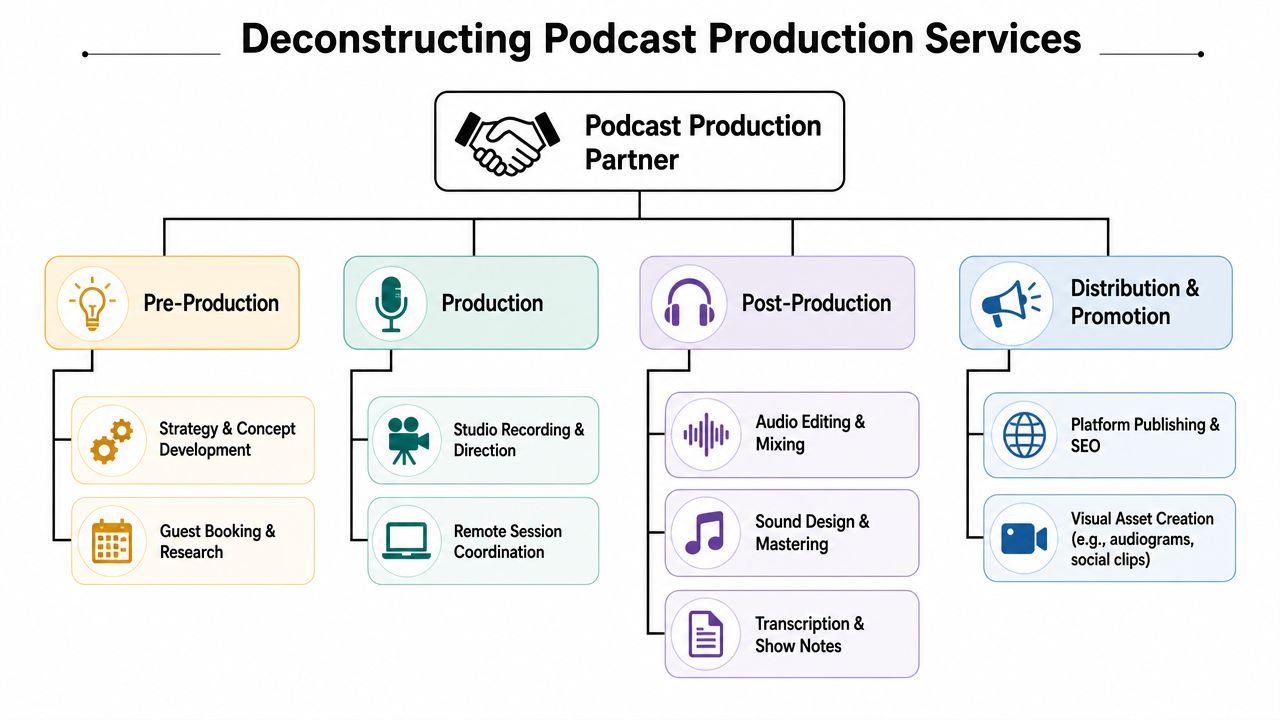
Pre-production shapes the outcome
A strong episode starts before anyone says a word on camera. In these initial moments, professionals save creators from preventable mediocrity.
Pre-production usually includes:
- Format decisions: Solo, interview, roundtable, or hybrid. Your format should support your goals, not your habits.
- Guest planning: Good producers help structure conversations so guests sound strong and the host sounds prepared.
- Episode briefs: Key talking points, segment flow, brand mentions, and intended takeaways.
- Session logistics: Timing, set choice, remote coordination, and run-of-show planning.
The benefit is simple. You stop showing up hoping the episode works and start showing up knowing what it needs to accomplish.
Production creates the raw authority asset
Recording is where many creators underinvest because they assume post can save anything. It can't. The better the capture, the better the final show.
A professional recording setup gives you:
- Acoustically treated sound: Cleaner raw audio means less repair later.
- Cinematic camera setups: Better framing instantly changes how credible your show feels.
- Producer direction: Someone catches the details you miss while you host.
- Reliable technical control: Levels, backups, switching, and pacing stay handled.
A premium brand starts looking premium, not because of flashy gear, but because every technical decision supports clarity.
Post-production is where polish becomes identity
Editing isn't just cleanup. Good post-production creates rhythm, tone, and trust. It turns a solid conversation into a finished media product that feels intentional.
That includes:
- Audio editing and mixing for clarity and balance
- Video editing for pace, structure, and visual flow
- Sound design and mastering so your show has a distinct feel
- Show notes and transcription that extend the usefulness of each episode
- Graphics and motion elements that make clips look complete, not improvised
A polished show doesn't feel overproduced. It feels easy to consume.
Distribution and promotion turn episodes into assets
Publishing an episode is not the finish line. It's the handoff point from production into brand growth.
A useful production stack should support:
- Platform publishing with clean metadata and organized episode packaging
- Short-form repurposing so each recording feeds reels, shorts, and social posts
- Visual brand continuity across covers, clip templates, and channel art
- Website integration so your podcast lives on a platform you control
For creators who want more than a cleaned-up audio file, this is the key distinction. You're not buying edits. You're building a media engine.
The Professional Production Workflow Explained
An episode produced well feels smooth because the complexity is organized before you see it. The host experiences focus. The team handles movement.

A single episode, handled correctly
Start with a topic that deserves the platform. Maybe it's a guest interview tied to your niche, or a solo episode that answers the question your audience keeps asking. Before recording day, the episode gets shaped. The angle is set. Questions are prepared. Talking points are trimmed so the conversation doesn't sprawl.
Then recording day arrives, and your only job is performance.
You walk into a ready room. Cameras are framed. Audio is checked. Someone is tracking details while you focus on timing, energy, and connection. That's what serious hosts need. Not more dashboards. More headspace.
After that, the raw files move into post. Audio gets cleaned and balanced. Video gets tightened. Clips are selected based on moments worth sharing, not random snippets. Show notes are prepared. The release is scheduled.
If you want to sharpen your own systems outside podcasting too, RedactAI has a useful take on crafting high-impact posts with a solid workflow. The principle is the same. Great content becomes repeatable when the workflow is clear.
What the creator stops doing
The biggest change isn't visible to your audience. It's visible on your calendar.
With a professional workflow, you stop:
- Chasing files across drives, inboxes, and text threads
- Re-deciding your process every episode
- Fixing basic technical issues after the fact
- Publishing reactively whenever assets are finally ready
Instead, you review, approve, and perform.
That's why reliable post matters so much. If you want a closer look at what separates average edits from clean final delivery, review these post-production best practices for podcast episodes.
What the audience actually feels
Your audience doesn't see the Trello board, edit timeline, or file naming conventions. They feel the result:
The show sounds calm. The pacing feels intentional. The host seems more prepared. The brand feels more expensive.
That's the payoff. Professional workflow creates a better audience experience while reducing the amount of chaos required to produce it.
Elevate Your Show with Flexwork Production Packages
If your show has plateaued, the answer isn't to buy one more mic or patch together another freelancer stack. You need a package that matches the stage you're in and the ambition you have.
The smart move is to choose support strategically. Some creators need a cleaner recording environment and reliable post. Others need a full content machine that can feed a podcast, short-form channels, and a premium website. Different problem, different package.
If your show needs polish and consistency
This is where producer support matters most. Packages like Be My Podcast Producer or Manage and Produce My Podcast make sense when you're done acting as your own engineer, editor, and project manager.
These packages are a fit when:
- Your show already has a point of view: You don't need help inventing the concept. You need help executing it well.
- You care about visual storytelling: Video podcasts rise or fall on framing, pacing, and presentation.
- You want a dependable release rhythm: Premium brands don't publish like side projects.
At this level, the value is operational. You show up, record, review, and move forward.
If you need a month of assets in one session
A lot of creators don't have a podcast problem. They have a distribution problem. They record long-form content, then fail to turn it into enough usable assets to stay visible between episodes.
That's where Content Day sessions make financial and creative sense. Content Days are $3000/day and include 20 edited reels or 60 pro photos.
That package works especially well if you:
- Batch content aggressively: Record once, distribute for weeks.
- Need visual variety: Your audience expects more than a static talking-head feed.
- Run a personal brand alongside the podcast: Reels, promos, guest intros, and lifestyle shots all support the show.
A strong Content Day should be planned like a campaign, not a casual shoot. Build around launches, recurring themes, guest appearances, and branded talking points.
If audience growth is the actual goal
Some creators don't need help recording. They need help building a show that behaves like a business asset. That requires production plus marketing support.
The Market, Manage & Produce My Podcast package is built for that level. It starts at $1500 per episode with a 20-episode growth commitment.
That's the right move if you're serious about:
- Consistent publishing with less founder involvement
- Growth-focused execution instead of random promotion
- A multi-channel rollout where production and marketing work together
At that stage, hiring disconnected freelancers usually creates drag. One person edits. Another posts. Nobody owns the bigger system. A coordinated package fixes that.
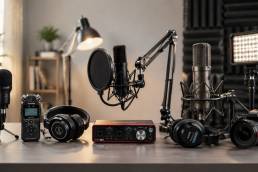
Here's a closer look at the kind of studio environment and setup creators are buying into when they stop piecing production together:
If your podcast needs a real home base
A premium show also needs a digital hub. Social platforms help with reach, but they shouldn't be the only place your brand lives. A podcast website gives your episodes structure, discoverability, and a more credible first impression.
Podcast websites are $5000 plus hosting.
That investment makes sense when you want:
- A branded archive for episodes, clips, and guest features
- A cleaner path to inquiries if the show supports a business
- A central platform that isn't dependent on algorithm changes
Here's the blunt recommendation. If your show is a side experiment, keep your setup lean. If your show supports your reputation, network, or revenue, stop making decisions like a hobbyist. One option creators in the region use for turnkey studios, content production, and package-based support is Flexwork Podcast Studios.
Decision test: If missed episodes, uneven quality, or weak repurposing are already costing you momentum, a professional package isn't indulgent. It's overdue.
The Advantage of a Local NJ and NY Production Hub
Remote production is useful. It is not always enough. For ambitious creators in the NJ and NY market, local access changes speed, quality control, and creative chemistry in ways Zoom never will.
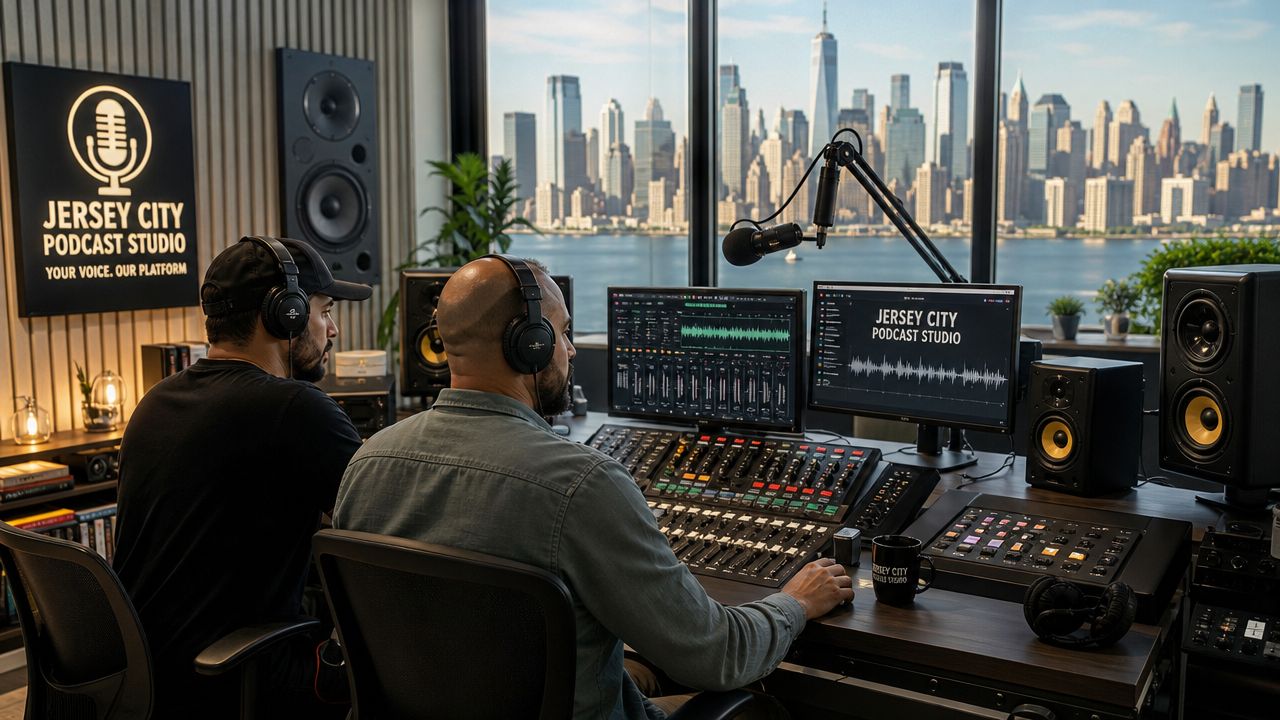
In-person production removes friction
A local studio hub solves practical problems fast. You don't spend your morning checking whether the guest's mic is acceptable or wondering if your lighting will betray you again. The environment is already built to carry the session.
That matters more in a crowded media corridor like New York and North Jersey because brand perception moves quickly. If your show looks improvised while your peers look composed, the gap feels larger than it is.
A physical production base gives you:
- Reliable sound and visuals every time you record
- Faster decision-making because the team is in the room
- Batching opportunities for episodes, clips, and branded content
- A better guest experience when you're hosting founders, creators, or executives
Local networks create better content
The strongest local production hubs don't just provide rooms. They sit inside an ecosystem. That means access to engineers, producers, marketers, and often a wider orbit of creators and guests.
For a show trying to level up in this region, that has real strategic value. Better local recommendations lead to better guests. Better in-person collaboration leads to stronger set choices, sharper pacing, and more useful feedback in the moment.
If you're weighing convenience against quality, convenience usually loses in the long run. A nearby professional studio can do both. Start with podcast studios near you in the NJ area and judge based on workflow, not just aesthetics.
Why Springfield works for serious creators
Springfield gives NJ and NY creators something rare. Access without Manhattan chaos. You can get a premium session without treating recording day like a cross-city endurance test.
That's a strategic edge for:
- Entrepreneurs who need recording to fit inside a packed workweek
- Marketing teams producing branded series with multiple stakeholders
- Creators and coaches who want studio quality without losing half a day to logistics
The easier it is to record at a high standard, the easier it is to stay consistent.
A local hub won't replace good strategy. But it will remove a lot of excuses, and most plateaued shows have too many of those already.
Book Your Tour and Plan Your Next Season
At some point, more research stops being productive. You already know whether your current setup is carrying your ambition or capping it. If every release feels heavier than it should, if your show quality depends on how exhausted you are that week, or if your audience experience still changes from episode to episode, it's time to change the operating model.
Start simple. See the room. Meet the people. Look at the sets, the cameras, the acoustics, and the way the workflow is handled from session to final delivery. A studio tour does more than answer technical questions. It shows you what your next season could feel like when production stops draining your attention.
Use this straightforward path:
- Audit your current show. Be honest about where your bottlenecks are. Recording, editing, promotion, or all three.
- Decide what level of support you need. Hourly studio time, a producer package, a Content Day, or full growth support.
- Book a visit. Touring the space will tell you quickly whether the setup matches your standards.
- Map the season, not just the next episode. Serious creators think in batches, campaigns, and arcs.
If you're ready to take that step, schedule a studio tour. The creators who keep growing aren't always more talented. They're usually more decisive.
If your podcast is ready to look and sound like the brand you're building, explore Flexwork Podcast Studios and book a tour. The right production partner won't just clean up your show. It will give you the structure to scale it.