

How to Build a Personal Brand: NJ/NY Creator Guide
 April 27, 202633 Minutes
Meta description: Learn how to build a personal brand that drives clients, trust, and revenue for NJ/NY podcasters with a clear content and monetization plan.
URL slug: how-to-build-a-personal-brand-nj-ny-creators
Primary keyword: how to build a personal brand
Secondary keywords: personal branding for podcasters, creator brand strategy, podcast monetization NJ NY
You’re talented. You’re publishing. You’re showing up online. And still, your content isn’t turning into the kind of opportunities you expected.
That’s the reality for a lot of creators in New Jersey and New York. You record episodes at home, cut clips on your laptop, post when you can, and hope consistency will eventually solve everything. It won’t. The problem usually isn’t effort. It’s positioning.
A personal brand isn’t your logo, your font pack, or a polished headshot. It’s the system people use to understand why you matter. If you want to learn how to build a personal brand that leads to clients, guests, speaking invites, and revenue, you need more than output. You need strategy, proof, and a repeatable content engine. If you want a useful outside perspective before you tighten your own positioning, this guide on RedactAI for developing your brand is a solid companion read.
Introduction
Most creators in the NJ/NY scene don’t have a talent problem. They have a signal problem.
They sound like everyone else, look inconsistent across platforms, and treat content like a weekly task instead of a business asset. Then they wonder why the audience is shallow and the leads are weak. That’s what happens when branding is reactive.
A serious personal brand creates recognition before the first DM, trust before the first sales call, and authority before the first pitch. It gives your podcast, your clips, your website, and your social presence one clear job. Move the right people closer to working with you.
The foundation is simple. Berkeley Executive Education points to the Four C’s Framework: Clarity, Consistency, Content, and Communication as the core of sustainable personal branding in its guidance on creating a purpose-driven personal brand. That’s the standard. Anything less turns your brand into noise.
Defining Your Brand Foundation
Trying to build a personal brand without a foundation is how creators waste a year posting content that looks active but says nothing.
Your brand foundation has to answer four questions fast. Who are you for. What do you believe. Why should anyone trust your point of view. Why should they remember you instead of the next creator in their feed.

Start with clarity
Clarity is the part many skip because it doesn’t feel glamorous. It’s still the work that matters most.
Do a personal SWOT analysis, but make it creator-specific. Don’t write corporate filler. Write what shows up in your actual content and conversations.
- Strengths that people notice: Are you sharp on interviews, strong on solo takes, great at simplifying complex topics, or unusually good at reading local business culture?
- Weaknesses that hold the brand back: Do you ramble, avoid taking a stance, blend into your niche, or hide behind generic “value” posts?
- Opportunities in your market: Is there a gap in local business coverage, founder storytelling, wellness content, culture commentary, or B2B education in the NJ/NY corridor?
- Threats you can’t ignore: Are there bigger creators with stronger production, tighter positioning, better guests, or more disciplined publishing systems?
That exercise gives you the raw material for a real brand statement. If you need help pressure-testing the wording, these brand statement examples for creators can help you sharpen the language without sounding scripted.
Practical rule: If your positioning could fit five other creators in your category, it isn’t positioning yet.
Consistency is not optional
Consistency doesn’t mean boring repetition. It means your audience gets the same signal every time they encounter you.
Your podcast intro, episode titles, thumbnails, short-form clips, guest selection, talking points, captions, and visual tone should feel like they came from one brain. If your Instagram says polished strategist, your podcast says casual rambler, and your LinkedIn says generic business coach, people won’t know what to trust.
That’s especially costly in the metro market, where everyone is busy and attention is thin. Recognition has to happen quickly.
A simple brand consistency audit looks like this:
| Brand element | What to check |
|---|---|
| Bio | Does it clearly say who you help, what you talk about, and why people should care? |
| Visual identity | Do your colors, photos, set, and typography feel aligned across platforms? |
| Audio identity | Does your show sound intentional, or like it was recorded wherever you found an outlet? |
| Topic selection | Are your themes reinforcing one clear expertise area? |
| Call to action | Do people know what step to take after consuming your content? |
If you want a practical extension of this thinking, Flexwork has a useful read on how to brand your business that applies well to creator-led brands too.
Content and communication shape your reputation
Content is how you prove your thinking. Communication is how you make people feel understood.
A lot of creators publish information. Very few publish identity. That’s the difference between being useful and being chosen. People follow the creator who helps them see the world a certain way.
For this, authentic polarization matters. Research discussed in Dan Koe’s piece on building a better personal brand argues that creators with above-average growth lean into core beliefs that strengthen audience connection and differentiation. That doesn’t mean fake outrage. It means saying what you believe, clearly enough that the right people lock in.
Examples of authentic polarization:
- Against hustle theater: You can be ambitious without pretending burnout is a badge of honor.
- Against generic interviews: A podcast should reveal perspective, not just stack names.
- Against polished emptiness: High-end production should sharpen your message, not hide the lack of one.
Go see a real studio, a real set, and a real production environment at least once. A professional room tends to force honest questions. Do I want to look like a hobbyist, or do I want to look like the person clients trust with meaningful work?
Crafting Your Signature Message and Visuals
A founder in Hoboken records a sharp podcast episode on Tuesday. By Friday, nothing from that episode has turned into a sales conversation, a referral, or a booked call. The problem usually is not effort. It is message drift and weak visual positioning.
If you want your personal brand to produce business in the NJ and NY market, people need to grasp three things fast. What you stand for. Who you help. Why your show is worth trusting with real attention and real money.
Build a message people can repeat
Your signature message should survive outside your presence. If a listener cannot describe you clearly after one clip, your brand is still too vague.
Write three lines and refine them until they sound like you on your best day:
- What you help people achieve
- What you believe about the work
- Who should care right now
For a local podcaster, that can sound like this: I help NJ and NYC service founders turn their expertise into clients through sharp podcast content and credible on-camera positioning. I believe authority should lead to revenue, not empty reach. My work is for experts who want to be known and hired.
That is stronger than a stack of titles. It gives people language they can repeat in a referral, an intro email, or a DM.
Use these questions to tighten it:
- Would a prospect know whether I am relevant to their business?
- Does my message state a belief, or just name a category?
- Would the right guest, client, or collaborator feel pulled in?
- Can I say this naturally on camera and in conversation?
A strong message creates recall. A sharp message creates demand.
Pick a point of view with commercial value
Plenty of creators have opinions. Fewer know how to turn those opinions into positioning that attracts buyers.
Your point of view should shape who hires you, who invites you on stage, who shares your clips, and who assumes you are the obvious fit before you ever pitch. That means your message cannot stop at personality. It needs a commercial edge.
For NJ and NY podcasters, that often means taking a clear stance on how business gets built. You might argue that podcasting should generate trust with buyers, not just rack up downloads. You might reject guest collecting and focus on interviews that open doors to partnerships. You might insist that production quality matters because serious clients judge seriousness fast.
Say it plainly. Repeat it often. Let it sort the room.
Your visuals should support the sale
Visual identity is not decoration. It is proof.
Before a prospect listens to your show, they see your clip framing, your studio environment, your photos, your thumbnails, and your wardrobe choices. Those cues tell them whether you operate like a hobbyist, a media brand, or a founder with real market position. In a crowded regional market, that decision happens quickly.
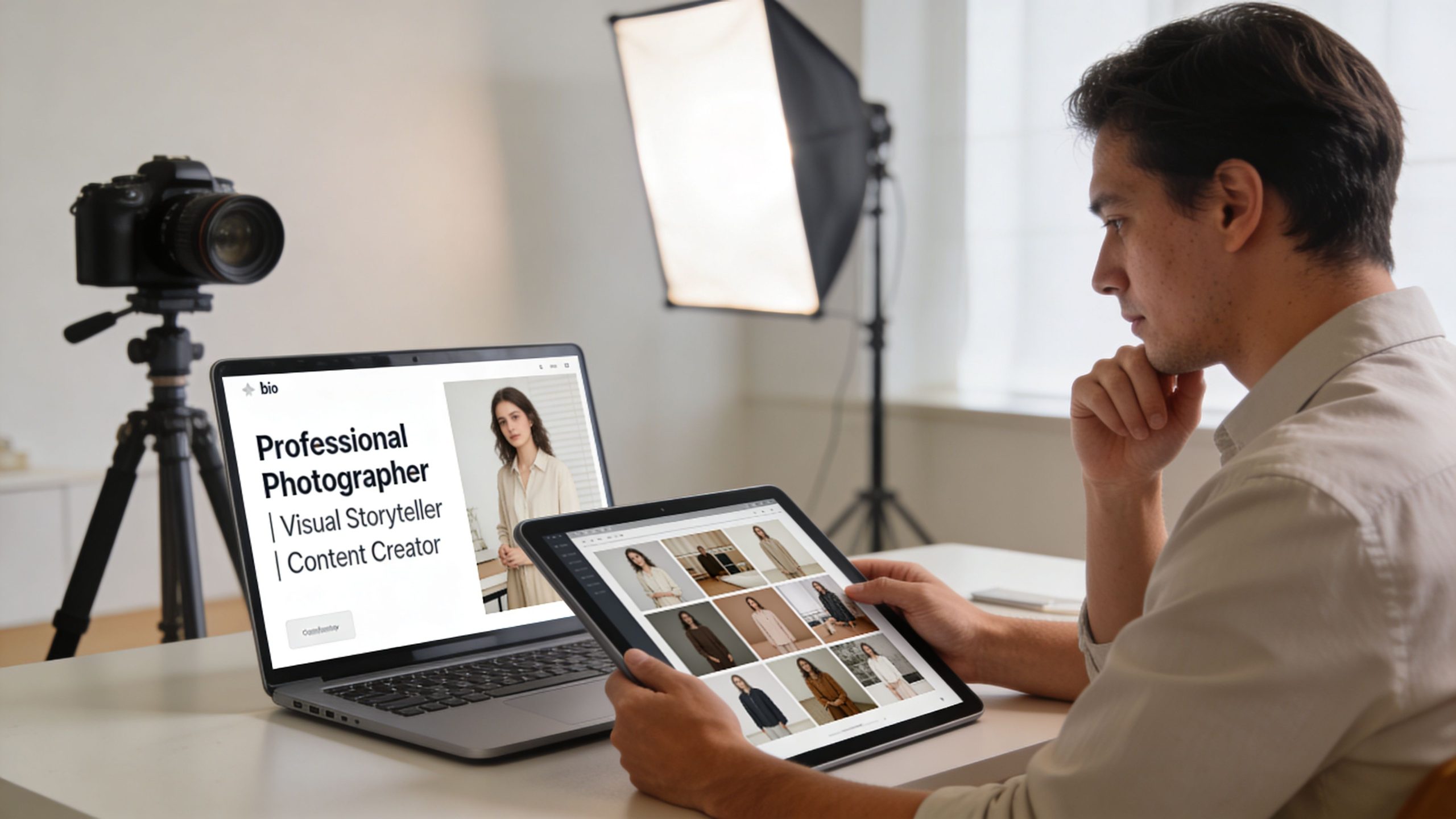
Set four visual rules and keep them consistent:
| Visual area | Decision to make |
|---|---|
| Color tone | Clean and minimal, warm and human, or bold and editorial |
| Set style | Founder office, modern studio, lounge conversation, or cinematic interview |
| Wardrobe direction | A signature uniform or a defined range that still feels cohesive |
| Image use | Headshots, behind-the-scenes, guest moments, speaking-style poses, or service-focused visuals |
Consistency matters because repetition builds recognition. Recognition builds trust. Trust gets meetings.
This is one reason Flexwork Studios matters in the process. It gives rising creators a physical place to record, shoot, and shape a brand that looks credible enough to win business in this market.
Build assets with a purpose
Every recording session should create assets tied to a business goal. Awareness. Guest authority. Speaker positioning. Lead generation. Partnership outreach.
Your long-form episode is the source material. From that, pull short clips for discovery, quote graphics for social proof, polished portraits for speaker pages, and homepage video for conversion. A well-planned shoot gives you a usable library instead of another folder full of random files.
Flexwork’s Content Day service is a practical way to build an on-brand visual library in one focused production session.
If your message is strong but your content still feels flat, study how to create compelling content that captivates your audience through stronger storytelling. Good storytelling keeps attention long enough for your positioning to do its job.
Write a bio that gets the right response
A bio should help someone understand your value in seconds. It should not read like a résumé pasted into Instagram.
Use this order:
- Who you help
- What result you help them get
- What platform or format you are known for
- What makes your angle different
A strong bio does more than describe you. It pre-sells the next step. For a podcaster, that next step might be a guest invitation, a discovery call, a collaboration, or a referral from someone in your network.
If your current bio sounds broad, polished, and safe, cut it down until it sounds specific, useful, and expensive.
Building Your Sustainable Content Engine
You book a guest, record a strong episode, post one clip, then disappear for two weeks because editing, posting, and distribution all depend on your energy that day. That is how promising personal brands stall in the NJ/NY market. The creators who turn attention into clients build a repeatable production engine.
A sustainable brand needs an operating system. Inspiration fades. Free time disappears. A system keeps your show visible, credible, and tied to business outcomes.
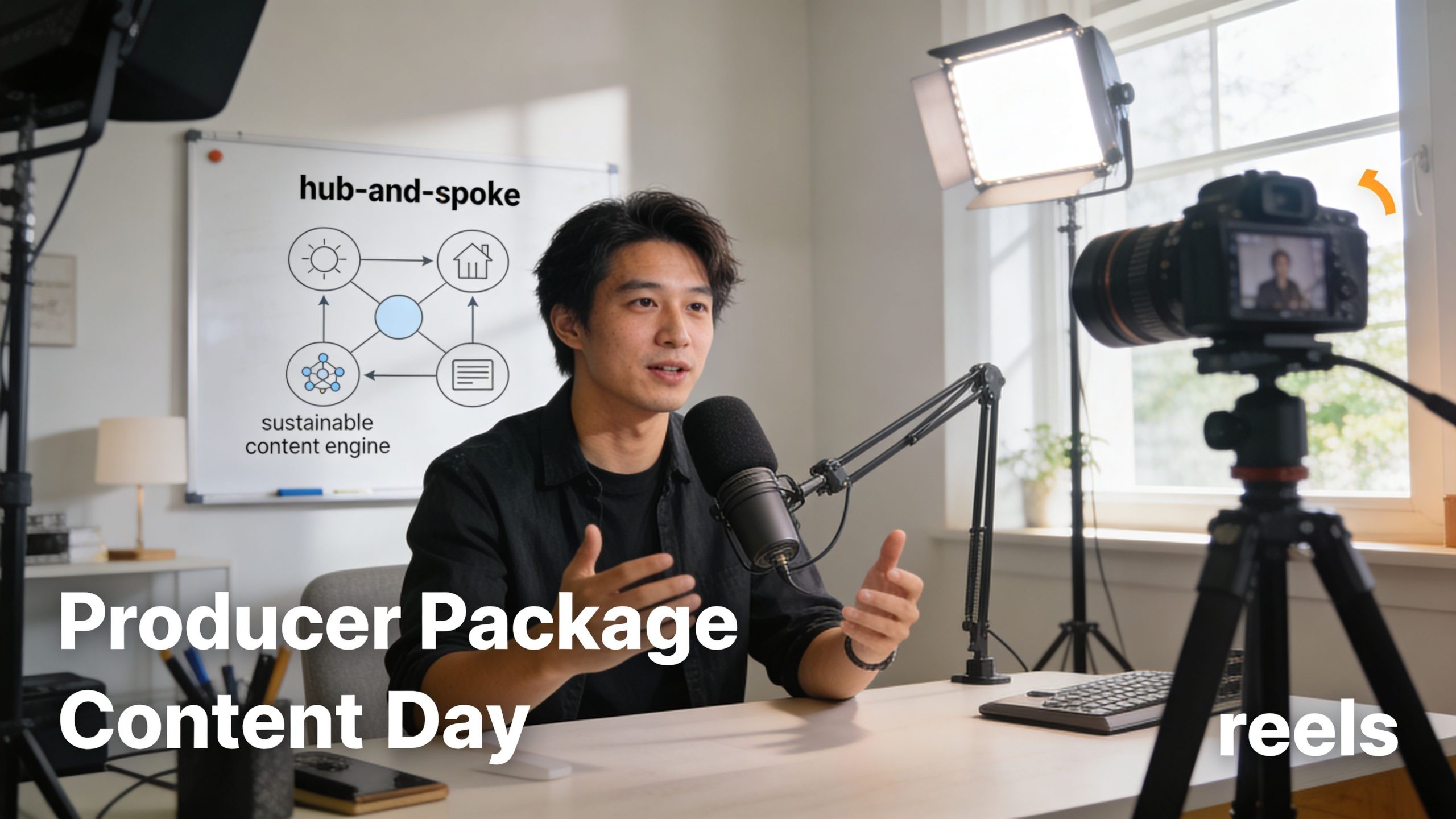
Build around one core show
For podcasters, consultants, founders, and service-based creators, one flagship format is enough. In fact, it is better.
Pick a format you can sustain for a year, not a format that feels exciting for three weeks. Your core show might be:
- An interview show with founders, operators, or creatives
- A solo commentary series where you break down industry ideas
- A hybrid format with solo insights and select guest episodes
- A video-first series that also works as an audio podcast
That core show becomes your content source. One recording session should produce the full stack. Short clips for discovery. Email content for nurturing. Website video for conversion. Sales follow-up assets for trust. If your weekly output starts from random posts instead of a central recording, your brand stays scattered.
Busy creators still stay stuck
A lot of creators post constantly and still fail to generate leads. As noted in Tenet’s roundup of personal branding statistics, many professionals say personal branding matters, but far fewer have a defined strategy or see consistent lead flow from the effort.
That gap matters more than follower count.
Publishing without a production plan creates noise. Publishing from a clear system creates recall, trust, and inbound interest. For a local podcaster in Newark, Jersey City, Hoboken, or Manhattan, that difference shows up in booked calls, guest quality, referral volume, and sponsor conversations.
Reality check: If your content does not support inquiries, partnerships, bookings, or sales conversations, you are maintaining visibility, not building a brand asset.
Record in batches, not under pressure
Batch production is the fastest way to improve consistency without lowering quality.
Record multiple episodes or segments in one session. Keep the lighting, set, framing, audio, and talking points aligned. Then move editing, clipping, formatting, and scheduling into a post-production workflow instead of treating each episode like a separate event.
The environment matters more than many creators want to admit. A noisy apartment, inconsistent daylight, and improvised gear produce content that feels temporary. A controlled studio session produces content that feels investable. That difference affects how prospects judge your authority before they ever reach out.
Flexwork Podcast Studios gives NJ/NY creators a physical base to execute that system properly. You get a reliable recording environment, stronger footage, and a smoother path from raw episode to usable business content.
What your weekly content workflow should actually look like
Keep the workflow simple enough to repeat and strong enough to support growth.
Before recording
- Choose one clear episode promise: The audience should understand the value in one sentence.
- Outline beats, not full scripts: Structure keeps the episode sharp. Overwriting kills delivery.
- Prep your CTA: Each episode should point to one next step.
- Set the business objective: Decide whether this session is meant to drive leads, guest requests, speaking opportunities, or audience growth.
- Organize support assets: Topic notes, guest context, hooks, and clip angles should be ready before you hit record.
During recording
Strong episodes do not wander. They move.
Use this structure:
| Segment | What it should do |
|---|---|
| Opening | Earn attention quickly with a clear premise |
| Middle | Deliver a useful idea, story, or challenge |
| Proof | Show lived experience, results, or examples |
| Close | Direct the audience to one next step |
The key is conviction. Local creators who win attention in crowded markets do not sound neutral, vague, or overly polished. They sound clear.
After recording
A single episode should turn into a complete content set, not a single upload.
Use the recording to create:
- Reels and shorts from your strongest opinion clips
- Audiograms from clean insight moments
- Quote graphics from sharp one-liners
- Carousels from frameworks and breakdowns
- Blog content from recurring themes
- Email notes from one key lesson
- Website updates that keep your platform current
If you need a sharper distribution plan, Flexwork’s guide to video content marketing strategy lays out how to turn one recording into multi-channel output without watering down the message.
Your 5-point prep for a pro studio session
A polished session starts before you walk into the room.
Know your angle
Show up with a claim, a story, or a problem you can own. Broad themes create forgettable episodes.Dress for repeatability
Wear pieces that fit your brand and still look current months from now. If you are batching, bring coordinated options.Bring title ideas
Better episode framing leads to better delivery. You should know the headline direction before recording starts.Plan your clip moments
Identify the two or three opinions, stories, or hard truths most likely to turn into short-form content.Decide the business goal
Be specific. Are you trying to attract clients, get booked on other shows, start sponsor talks, or drive traffic to an offer? Your delivery improves when the target is clear.
This walkthrough is useful if you want to see the mindset behind stronger on-camera delivery and production rhythm:
Your content engine should create trust before the sale
The job of your content engine is not to keep you busy. The job is to make the next business conversation easier.
When a prospect sees your clips, hears your show, visits your site, and notices a consistent point of view across every channel, they stop wondering whether you know your craft. They start deciding whether to work with you.
That is what a personal brand should do for NJ/NY podcasters. It should create familiarity that leads to revenue. Flexwork Studios helps make that process real by giving creators both the place and the production discipline to turn content into a serious business asset.
Growing Your Audience and Monetizing Your Influence
A founder in Newark records sharp episodes for six months, posts clips every week, and gets polite engagement. Then a real buyer reaches out after hearing one episode, visits the show page, understands the offer in under a minute, and books a call. That is the difference between audience growth and business growth. Your personal brand has to produce the second result.

Trust is the monetization layer
Visibility creates awareness. Trust creates revenue.
For NJ and NY podcasters, trust comes from repetition, clarity, and proof. People need to hear your point of view, see that you show up consistently, and understand what working with you leads to. Analysts at DSMN8 found that 82% of people are more likely to trust a company when its senior executives are active on social media, and 99% of B2B buyers view thought leadership as essential in its roundup of personal branding statistics.
Treat your podcast like a business asset. Every strong episode should make a prospect more certain that you know your craft, understand their problems, and can help them get a result.
Grow with proximity, not just platforms
The NJ and NY market still rewards closeness. Relationships move faster here when people keep seeing your name, your face, and your work in the right circles.
That means your growth plan should include local visibility, not just content distribution. Record with operators your audience already trusts. Show up in rooms where clients, partners, and sponsors already gather. Use your podcast to turn warm market access into recurring attention. Flexwork Studios gives local creators a place to do that with production quality that matches the business they want to build.
A practical audience plan looks like this:
- Guest with intent: Choose shows your ideal buyers already respect
- Build local collaborations: Bring on founders, service providers, and creators with adjacent audiences in NJ and NYC
- Create repeatable series: Consistent formats help people remember what you stand for
- Publish clips with a job: Some clips should drive reach. Others should drive inquiries
- Stay easy to contact: Every profile and landing page should make the next step obvious
For a broader look at platform habits that support audience building, you can learn from PostPlanify on social media growth.
Turn attention into inquiries
A lot of podcasters lose money here. They create strong content, then leave people guessing about what to do next.
Fix that with a clear conversion path.
What a simple brand funnel looks like
| Stage | Audience action | Your job |
|---|---|---|
| Discovery | Someone finds a clip, guest appearance, or post | Make your positioning clear fast |
| Engagement | They watch, listen, follow, or subscribe | Give them a distinct point of view worth returning to |
| Consideration | They visit your profile or website | Show proof, relevance, and a clear offer |
| Conversion | They book, inquire, reply, or refer | Remove friction and give them one direct next step |
Your brand needs a home base you control. Social platforms are distribution channels. They are not where serious buyers make final decisions.
That home base can be a podcast site, a creator site, or a focused landing page. The format matters less than the job. It should explain who you help, show your best episodes, display proof, and make contact easy. If you want practical tactics for growing reach without losing that business focus, Flexwork’s guide on how to grow social media following is worth reading.
Use your show to create revenue paths
A well-run podcast can support several revenue paths at once.
It can bring in clients who hear your thinking before they ever speak to you. It can open sponsor and partner conversations when your audience is specific and credible. It can also create referral momentum because people know exactly how to describe what you do.
That only happens when the show is built with intent. Each episode should support one of three commercial outcomes. Attract a buyer. Strengthen a referral relationship. Start a partnership conversation.
For local creators, this is where execution matters. Recording in a professional studio, tightening the message before the session, and publishing with consistency changes how the market perceives you. Flexwork Studios serves as both the physical production hub and the strategic operating base for podcasters who want their brand to lead to clients, partnerships, and paid opportunities.
Build a feedback loop around buyer response
Monetization improves when you study what pulls qualified interest, not what gets casual applause.
Use a monthly review built around three questions:
- Which topics led to real business conversations?
- Which guests or clips brought in the right kind of attention?
- Which call to action got people to reply, book, or ask for details?
Then adjust with discipline.
If founder interviews bring partnership opportunities, keep them in rotation. If solo clips convert better for client work, publish more of them. If local business content outperforms broad commentary, commit to that angle and own it. The strongest personal brands in this region are not the loudest. They are the clearest, the most consistent, and the easiest to hire.
Measuring What Matters for Brand Growth
If you judge your brand by followers alone, you’ll make bad decisions.
A serious creator tracks signals tied to business outcomes. That means engagement quality, profile visits from the right people, website traffic from content, inquiry volume, booked calls, guest invitations, and direct messages that mention a specific episode or clip.
Use a monthly review that forces honesty.
Run a simple monthly brand review
Ask:
- What content pulled real response: Not likes. Replies, saves, shares, referrals, and qualified conversations.
- What channel sent the best traffic: Your audience might discover you on one platform and convert on another.
- What business result followed: Did content lead to meetings, leads, partnerships, or sales conversations?
Keep one dashboard, even if it’s simple. You don’t need complexity. You need consistency.
A helpful way to support that review is to tighten the tools around your workflow. Flexwork’s roundup of best tools for content creators is a useful place to start if your current process is scattered.
Track what changes behavior. Ignore what only flatters you.
Your personal brand should be treated like any other business asset. If it’s working, it should create clearer positioning, stronger trust, and more opportunities that match the direction you want.
Conclusion
Building a personal brand isn’t optional if you want to compete seriously in New Jersey and New York. It’s the operating system behind your visibility, your authority, and your ability to turn content into business.
Get the foundation right. Define your point of view. Tighten your visuals. Build a content engine you can sustain. Then create a path from audience attention to actual revenue. That’s how to build a personal brand that lasts.
Professional polish matters because perception matters. People decide whether to trust you long before they fully understand your offer. If your presentation is uneven, your opportunities will be too.
Your story deserves structure. Your expertise deserves a better stage. Your brand deserves a real home.
If you’re ready to stop winging it and start creating with a professional system, explore Flexwork Podcast Studios for studio sessions, production support, content days, and podcast growth services that help turn your brand into a working business asset.