Unlock Growth with Video Content Creation Services
 April 26, 202628 Minutes
Meta description: DIY video can only take your brand so far. Learn how video content creation services help NJ and NY creators scale with polish and speed.
URL slug: /video-content-creation-services
Primary keyword: video content creation services
Secondary keywords: podcast production services, content creation studio, professional video production
You’ve probably already proven you can create. The problem is that your setup still looks like you’re testing the waters.
The camera angle shifts. The lighting changes halfway through a shoot. The audio has that faint room echo you keep hoping nobody notices. Then the editing drags into your weekend, and suddenly the content engine that was supposed to grow your brand starts draining it instead.
That’s the ceiling a lot of ambitious creators hit. You’re no longer struggling to start. You’re struggling to scale without looking small.
Professional video content creation services exist for this exact moment. They’re not just for giant brands with giant budgets. They’re the practical next move for creators, podcasters, founders, and experts who need their content to look as credible as their business already is. The opportunity is real too. The global digital content creation market is valued at USD 37.05 billion in 2025 and projected to reach USD 137.59 billion by 2035, with video identified as the fastest-growing format, according to Precedence Research’s digital content creation market analysis.
Introduction
A lot of successful creators are running a premium brand through a bargain-bin production workflow.
You might have strong ideas, a real audience, and a business that’s gaining traction. But every time you record, you still have to play videographer, sound engineer, lighting tech, editor, social clip producer, and project manager. That works for a while. Then it starts costing you more than money. It costs you consistency, authority, and momentum.
Professional video production stops being a luxury when your content becomes part of your sales process. That’s where boutique studio support makes sense. It sits in the gap between doing everything yourself and hiring a bloated agency that treats your show like another ticket in a queue.
Practical rule: If your content drives reputation, leads, partnerships, or sales, production quality is no longer a side issue. It’s part of your business model.
Hitting the Creator's Ceiling Why DIY Video Is Not Enough
DIY is useful at the beginning. It’s not a long-term growth strategy for a serious brand.
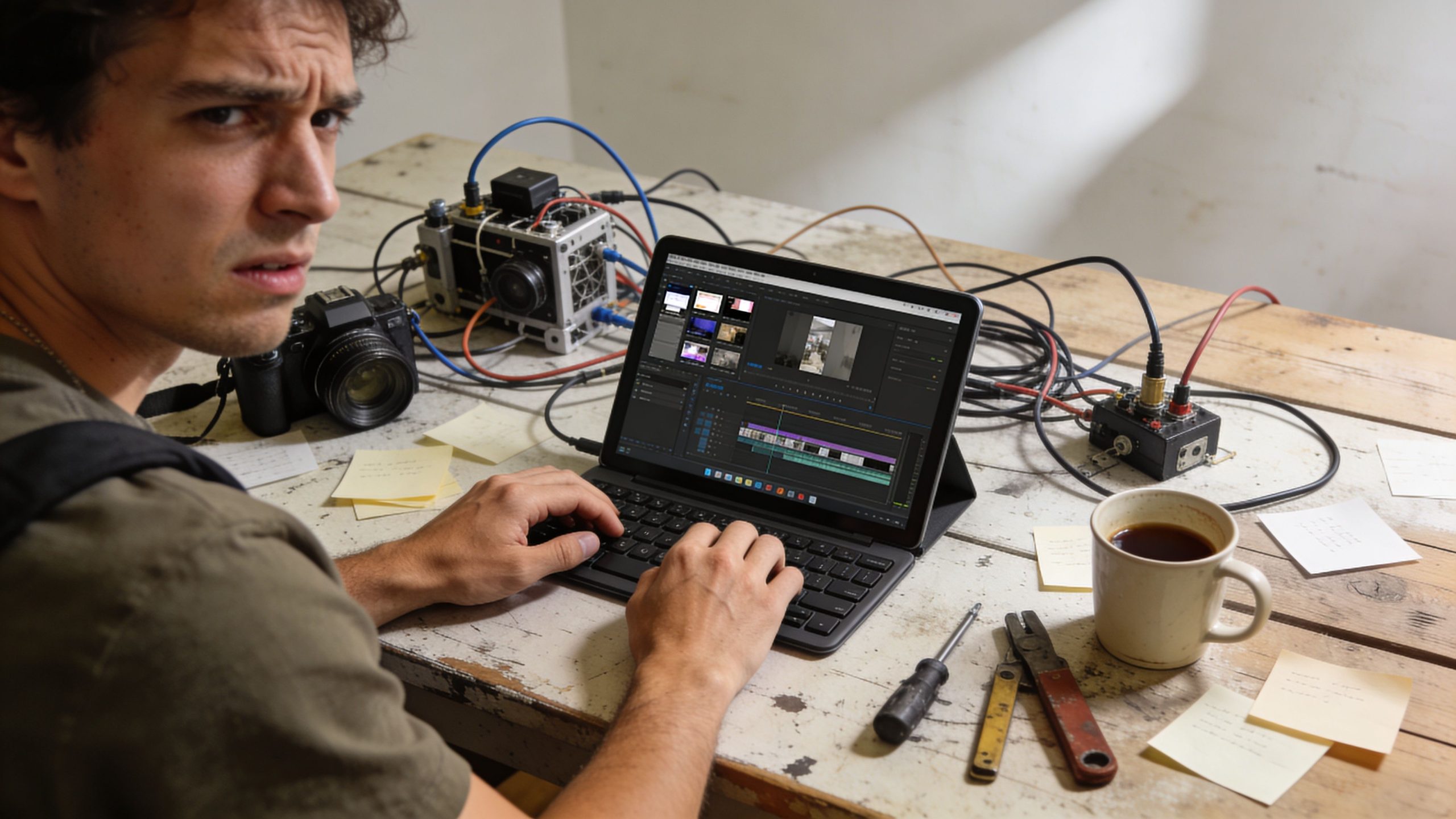
Most creators start with whatever they have. A mirrorless camera, a USB mic, a ring light, maybe some editing in CapCut, Final Cut Pro, or Adobe Premiere Pro late at night. That scrappy phase is valuable because it builds taste and discipline. But eventually, “good enough” starts reading as “not ready.”
Quality problems become brand problems
Your audience might forgive imperfect production once. They won’t keep rewarding it forever.
Low-grade audio is the fastest way to lose trust. Weak lighting makes your content feel accidental. Sloppy edits make expertise look unpolished. That matters because video doesn’t just communicate information. It signals standards.
And the commercial stakes are obvious. 89% of people say watching a video has convinced them to buy a product or service, and social video generates 1,200% more shares than text and images combined, according to SundaySky’s 2025 video marketing statistics. If video influences buying decisions and sharing behavior that strongly, poor execution isn’t neutral. It actively limits reach and conversion.
The time cost is worse than the gear cost
Most creators miscalculate the actual expense of DIY. They focus on equipment and ignore labor.
The setup itself becomes a drag. You’re checking batteries, moving lights, killing background noise, restarting takes, syncing files, exporting drafts, resizing clips, writing captions, and building thumbnails. Then you still have to publish, promote, and follow up.
That’s not creative freedom. That’s operational clutter.
A better question is this: what would happen if the hours you spend troubleshooting production went back into revenue work?
- Guest outreach: Better guests usually create stronger authority and more reusable clips.
- Offer development: Your program, service, or product gets neglected when editing eats your evenings.
- Distribution strategy: Most creators don’t need more footage. They need smarter rollout.
If you’re still managing clips by hand, it helps to streamline your video distribution with a cleaner clipping and repurposing workflow before your content backlog gets out of control.
DIY usually fails at scale
One polished episode is manageable. A repeatable content machine is different.
The moment you need long-form episodes, social cutdowns, guest promos, YouTube assets, vertical clips, thumbnails, and a consistent visual identity, your home setup starts showing its limits. That’s why so many creators stall right when they should be accelerating.
There’s also a perception issue. Sponsors, partners, and higher-end guests notice the difference between “made at home” and “produced with intention.” They may not say it directly. They still respond to it.
If your content looks improvised, people assume your operation is improvised too.
That’s the point where going pro stops being vanity and starts yielding real value. If you want a sharper breakdown of what changes when you upgrade your production environment, this comparison of studio versus DIY podcasting and what you gain by going pro is worth reviewing.
The Professional Production Blueprint What Is Included
You hit record, get a usable take, and still end up with content that looks smaller than your brand.
That gap usually has nothing to do with talent. It comes from missing production structure. The jump from DIY to professional content is not about hiring a giant agency or overcomplicating your process. For creators and founder-led brands in NJ and NY, the smart middle ground is a boutique studio that gives you a real system without burying you in overhead.

Pre-production sets the business case for the shoot
Professional production starts before the camera turns on. That is the part DIY creators usually skip, and it is why so many shoots produce a lot of footage but very few assets that help the brand grow.
A strong pre-production process includes clear content goals, episode or campaign angles, scripting or outline support, shot planning, set direction, wardrobe guidance, and a run-of-show that keeps the day tight. If you are recording a podcast, founder interview, sales video, or educational series, every one of those decisions affects how much usable content you get from the session.
Boutique studio support beats both extremes. Doing everything yourself creates waste. Hiring a large agency often adds layers you do not need. A focused studio team gives you enough strategy to sharpen the message without slowing down the production.
Production captures authority, not just footage
The camera package matters. The room matters more.
Professional production means controlled lighting, clean audio, intentional framing, producer feedback, and a set that supports the brand you are building. That changes how you show up on screen. You stop splitting your attention between hosting, troubleshooting, and checking whether the mic is clipping.
A proper production day may include multi-camera recording, live monitoring, teleprompter support, guest coordination, B-roll capture, and direction on pacing and delivery. Those details create content that feels credible from the first few seconds. That matters if you want stronger guests, stronger partnerships, and a stronger position in your market.
If you want a clearer sense of how capture decisions affect the final edit, this guide to video editing software and post-production workflows gives useful context.
Post-production turns raw footage into brand assets
Editing is where the return shows up.
A skilled post-production team cuts for pace, removes friction, improves sound, balances color, adds branded graphics, formats versions for each platform, and pulls short-form clips from long-form recordings. One recording session can become a YouTube episode, vertical reels, guest promos, social teasers, and a polished library of evergreen content.
Poor editing makes good footage feel cheap. Strong editing makes a clear brand feel established.
That difference is why boutique production services are such a practical step for professional creators. You get more than a nice-looking shoot. You get a repeatable content engine built to support offers, audience growth, and long-term brand value.
AI speeds up execution. Human judgment still decides quality
Modern production teams use AI for captioning, transcript cleanup, rough organization, clip identification, and repurposing support. That makes the workflow faster and more cost-efficient.
It does not replace taste.
You still need a producer who can shape the right conversation, an editor who understands pacing, and a strategist who knows what your audience should see first. That combination is a key advantage of boutique studio services. You get a professional process that sits between DIY chaos and bloated agency retainers, which is exactly where many serious NJ and NY creators should be investing next.
Finding Your Perfect Fit Inside Flexwork's Production Packages
The smartest production investment is the one that matches your current stage.
Some creators need a clean room, quality cameras, and reliable sound so they can finally stop recording in a bedroom. Others need a producer, an editing team, a clip strategy, and a growth plan because the show is already tied to business goals. Those are different needs, and they shouldn’t be sold the same package.
Start with the level of support you actually need
If you still like being hands-on, hourly studio rentals are the right bridge. You keep creative control, but you remove the biggest friction points: setup, acoustics, lighting, and gear limitations. That’s often the right move for creators who already know how to host but are tired of making their home double as a production space.
If you need a more efficient way to batch content, a Content Day is the stronger play. Flexwork Studios offers Content Days at $3000 per day, including 20 edited reels or 60 pro photos, which makes sense for founders, coaches, podcasters, and brands that want to capture a month or more of usable content in one focused session.
For creators who are tired of piecing together freelancers, producer-led support is where things get serious. The “Be My Podcast Producer” type of service model works for hosts who want planning, recording support, and polished post-production without building their own mini agency behind the scenes.
Then there’s the growth-minded tier. The Market, Manage & Produce My Podcast package starts at $1500 per episode with a 20-episode growth commitment. That’s for people who are done treating their show like a side project and want a real operating system behind it. Add-on services matter too. Podcast websites are $5000 plus hosting, which is often a smarter investment than creators think because a real content hub gives the show a home outside rented social platforms.
For a local option that combines studio access with production support, this content creation studio page outlines what that kind of setup looks like in practice.
Flexwork Studios Production Packages at a Glance
| Service | Best For | Key Deliverables | Starting Price |
|---|---|---|---|
| Hourly Studio Rentals | Creators who want pro gear without full production support | Studio access, professional recording environment, production-ready setup | Contact for pricing |
| Content Day | Founders, podcasters, and brands batching content efficiently | Full-day shoot, 20 edited reels or 60 pro photos | $3000/day |
| Be My Podcast Producer | Hosts who want hands-on creative and production support | Producer guidance, recording support, polished episode production | Contact for pricing |
| Market, Manage & Produce My Podcast | Brands serious about growth and consistent output | Production, management, marketing support | Starts at $1500 per episode |
| Podcast Websites | Creators building a real brand hub | Branded podcast website, platform-ready home base | $5000 plus hosting |
Don’t buy more service than your process can support
A lot of creators either underbuy or overbuy.
They underbuy when they book a room but show up without a strategy. They overbuy when they sign for complex growth support before they’ve clarified the show’s positioning, audience, or offer. The right package should remove your current bottleneck, not create a more expensive one.
Use this filter:
- Need a cleaner recording environment? Rent the studio.
- Need a month of assets fast? Book a Content Day.
- Need a team behind the scenes? Choose producer support.
- Need audience growth tied to business outcomes? Go with management plus production.
Buy the package that solves today’s operational problem and supports tomorrow’s visibility goal.
That’s how you treat production like strategy, not decoration.
How to Choose Your Video Production Partner
A lot of production companies can film. Fewer can think.
That distinction matters more than gear specs. You’re not hiring someone to press record. You’re choosing a partner who will shape how your brand looks, sounds, and gets remembered.
Ask questions that reveal the workflow
Most creators ask the wrong first question. They ask about cameras. Ask about process.
A reliable partner should be able to show how an idea moves from planning to shoot to delivery. They should explain revisions clearly. They should know who owns communication. They should have a point of view on clip strategy, content formatting, and publishing readiness.
Use this checklist when you evaluate any provider:
- Ask for relevant samples: Request examples that match your format, audience, or tone.
- Clarify revisions: Know how feedback is handled before the first edit arrives.
- Confirm communication: One clear point of contact saves time and confusion.
- Check distribution thinking: Delivery isn’t enough if you also need cutdowns, formatting, or rollout support.
- Listen for strategic understanding: They should understand why the content exists, not only how to shoot it.
Local matters more than people admit
Remote production sounds efficient until the details start slipping.
A physical studio solves problems that virtual-first services tend to leave on your plate. That includes room sound, lighting consistency, set design, camera placement, guest logistics, and the kind of in-person direction that helps non-actors sound natural on camera.
That local gap is real. A key issue in the market is the lack of localized, physical studio options in hubs like the NJ and NY metro area, while many services focus on remote models. That leaves creators dealing with setup issues like noise and lighting, which 70% of aspiring podcasters report as barriers, based on the analysis tied to Superside’s overview of video creation services.
Choose a partner that understands the room and the audience
Technical competence is the baseline. Brand sensitivity is the differentiator.
A good production partner should understand whether your content needs to feel authoritative, conversational, cinematic, educational, premium, or socially native. They should know when to push for structure and when to preserve spontaneity.
Look for signs of maturity:
- They talk about audience behavior, not just deliverables
- They can explain how content gets reused across formats
- They know the difference between a podcast episode and a branded show
- They’re comfortable directing on-camera talent without flattening personality
The right production partner doesn’t make you sound like them. They make you look more like yourself, at your highest level.
That’s especially important if you’re building a long-term content property instead of posting random clips with no connective tissue.
Preparing for Your First Professional Content Day
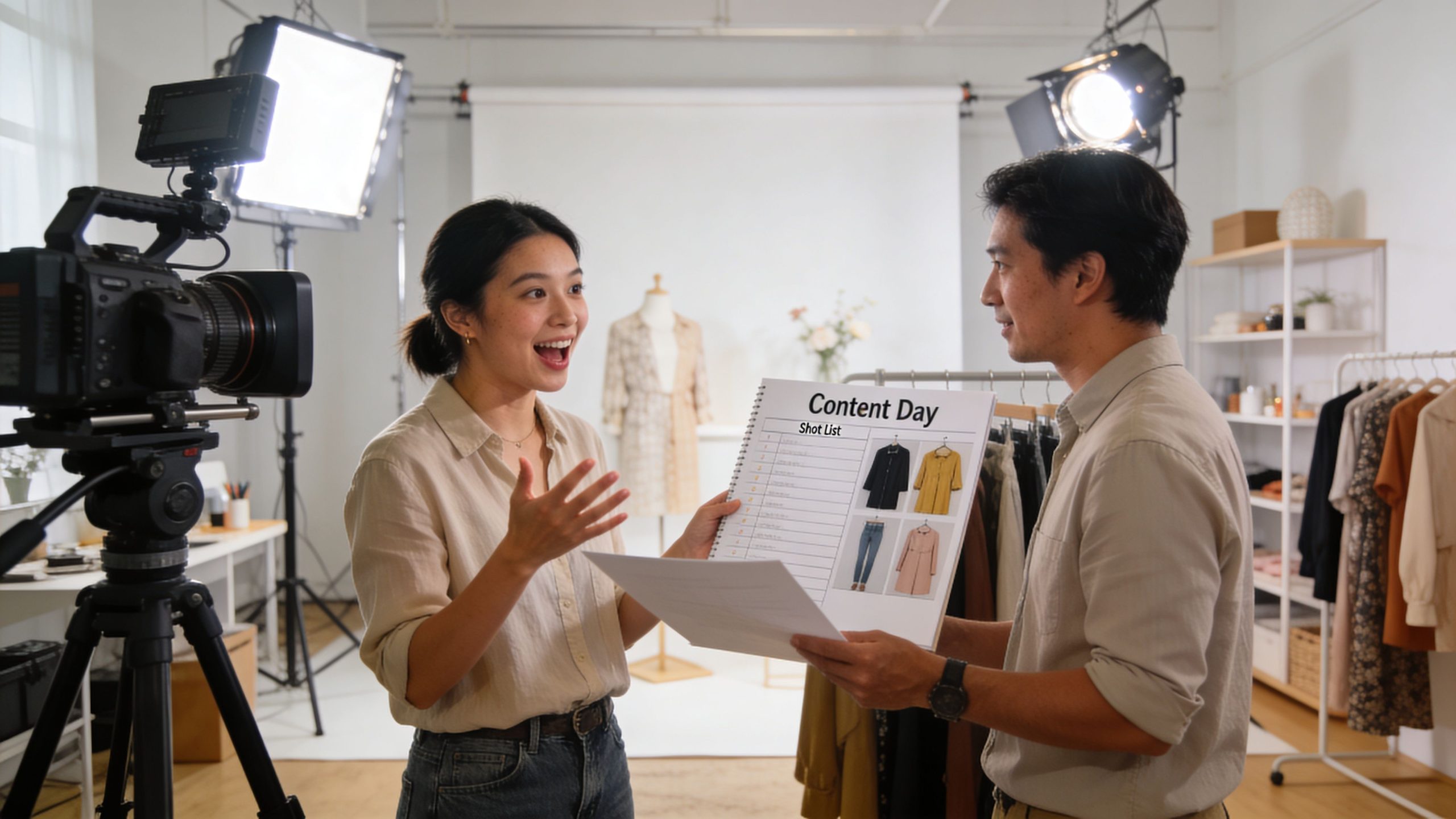
You book a professional content day because your brand has outgrown the spare-bedroom setup, but you still do not need a bloated agency process to get strong results. You need a clear plan, a focused shoot, and a studio team that can turn one day into usable assets across platforms. That middle ground is where boutique production earns its keep, especially for creators and founders working in the NJ and NY market who want higher quality without handing over their entire voice.
Decide what the day needs to produce
Start with outputs, not vibes.
Walking into a studio with a loose goal to “get content” is how creators waste budget, energy, and good camera time. A professional content day should produce specific assets with specific jobs. That might mean one anchor YouTube episode, six short-form clips, a homepage brand video, two ad variants, and a bank of stills for launches.
Write a short prep brief before the shoot. Keep it practical:
- Primary goal: sales, authority, audience growth, or brand visibility
- Content types: long-form episode, reels, interview, promo, testimonial, course lesson
- Distribution plan: YouTube, Instagram, LinkedIn, website, email
- Required talking points: offers, stories, proof points, calls to action, guest beats
That level of clarity is what separates a productive studio day from an expensive guessing session.
Structure beats improvisation
You do not need a full script for every minute. You do need a framework.
Build a simple run of show with segment order, opening lines, key transitions, and the points that must make the final cut. If you are filming educational content, product explainers, or branded interviews, storyboard the moments that matter. Your producer can direct pacing and coverage far better when the shape of the content is already defined.
Clean capture matters because weak production choices are expensive to fix later. As noted earlier in the article, poor audio pushes viewers to leave. Good prep protects sound, pacing, and clarity before the cameras even roll.
If you are still dialing in your visual setup, review this guide on the best lighting for video recording before your session.
A quick visual walkthrough can help you think like a producer before you arrive:
Prepare for camera, not just conversation
Professional shooting days reward energy management as much as ideas.
Choose wardrobe that fits your brand, reads cleanly on camera, and contrasts with the set. Bring backups. Skip tiny patterns, noisy jewelry, and anything that makes you fidget. If you wear glasses, test for glare. If you are filming for several hours, bring water, light touch-up items, and whatever helps you stay sharp through multiple takes.
Then rehearse delivery like a host, not a lecturer.
- Practice transitions so your ideas connect cleanly
- Tighten your openings so you get to the point faster
- Identify clip-worthy lines you will want cut for shorts later
- List supporting shots such as close-ups, B-roll moments, alternate angles, and promo reads
Prepared creators come across as calm, clear, and expensive in the best way.
That matters beyond aesthetics. Better delivery gives your editor more usable takes, gives your audience more reasons to stay, and gives your business more value from every production day. If revenue is part of the plan, this overview of YouTube monetization factors is a useful reference for understanding how quality and consistency support long-term returns.
Investing in Content That Defines Your Legacy
At a certain level, content isn’t just marketing. It’s infrastructure.
It shapes how people understand your taste, your authority, your consistency, and your seriousness. That’s why production quality carries more weight once your business starts growing. Your audience may discover you through a clip, but they decide whether to trust you based on the total experience.
That’s the compelling case for professional video content creation services. You’re not paying for prettier footage. You’re building a system that makes your ideas easier to consume, your brand easier to remember, and your expertise easier to believe.
The creators who level up fastest usually stop trying to do every production job themselves. They protect their energy for the work only they can do. They host. They lead. They sell. They build relationships. They shape the message. The production stack around them gets sharper and more repeatable.
That matters for revenue too, especially on platforms where content quality, consistency, audience retention, and niche positioning affect earnings. If you want a grounded overview of what influences platform-side returns, this breakdown of YouTube monetization factors is a useful companion read.
If you’re building a show, a personal brand, or a content-led business in the NJ and NY area, don’t stay stuck in the middle. DIY got you moving. It won’t always get you to the next tier. The smart move is often the one between homemade and agency sprawl: a boutique production setup that gives you polish, speed, and actual creative partnership.
That’s how you make content that supports the business you’re becoming, not the version of you that was just getting started.
Ready to improve your content? Book a free tour of Flexwork Podcast Studios and explore the production setup, or review the available services to find the package that fits how you create now and where you want your brand to go next.