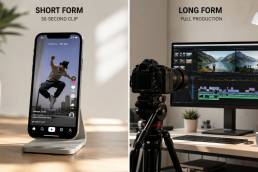

8 Pro Content Creator Tips to Scale Your Podcast in 2026
 August 1, 202628 Minutes
You're probably feeling the same thing a lot of ambitious podcasters feel right now. The episodes are getting made, the calendar keeps moving, but the show still doesn't feel as sharp, efficient, or scalable as it should. That gap between “I can produce this myself” and “this looks like a real media brand” is where most creators stall, and it's exactly where smart content creator tips start to matter.
The creator economy is crowded, but it's also full of opportunity for people who can build a repeatable system. Social media users are active across an average of 6.84 platforms each month and spend about 141 minutes per day on social media, so the audience is already moving constantly between apps, clips, and formats, not waiting around on one channel for your next upload. That's why polished distribution, batch production, and clear positioning matter as much as a good microphone. Flexwork Studios fits into that reality with professional spaces and production support built for creators who want to stop improvising and start operating like a studio-led brand.
1. Master Pre-Production Planning to Eliminate Studio Waste
The most expensive mistake in podcasting is showing up underprepared and paying studio time to figure out what should have been settled before you walked in.
Pre-production is where professional creators protect both budget and energy. A tight episode outline, guest briefing notes, a technical run-through, and a clean content calendar turn a studio session into a production day instead of a guessing game. That matters because HubSpot recommends tracking content performance in a spreadsheet with columns for target keywords, buyer persona, buyer's journey stage, format, main topic, page views, shares, and engagement HubSpot's content creation workflow. The same discipline belongs before recording. If you know what the episode is for, who it serves, and how it will be repurposed, you spend less time searching for the angle in the room. The same planning mindset also shows up in the guide to AI search content workflow, where structure drives better output before production starts.
Practical rule: Build the episode before you build the set.
That means more than a rough topic. Use detailed talking points, guest questions, lighting and audio checks, and visual storyboards if you plan to capture multi-camera footage or B-roll. Good pre-production gives you cleaner interviews, fewer retakes, and a tighter batch-recording day. The trade-off is real, though. Preparation takes time, and if you over-script everything, the conversation can lose its natural rhythm.
A strong workflow starts with the show's outcome, then works backward. If you're recording at a premium facility like Flexwork's Content Day for Podcasters, the goal is to make every minute count. Creators get the most from that kind of session when they arrive with structure, not just ideas. Professional studio services work best when the host has already made the editorial decisions, because the room can then focus on performance, capture, and consistency instead of last-minute planning.
What to prepare before you record
- Episode architecture: Outline the hook, key beats, and closing takeaway before you book the room.
- Guest briefing: Send topics, timing expectations, and a short prep guide so the conversation starts strong.
- Technical verification: Test microphones, camera framing, and room setup before the clock starts.
- Content calendar alignment: Decide which episode feeds which clip, newsletter, or blog post.
Good planning doesn't make the show robotic. It makes the performance cleaner, faster, and easier to scale.
2. Implement a Batch Recording and Content Batching System
Batch recording is where creators stop acting like every episode is a separate emergency. One focused studio day can produce a buffer of content that protects you from missed weeks, last-minute cancellations, and burnout.
The key advantage is not just convenience. It's consistency. If you record multiple episodes in one session, your audio tone, visual style, and hosting energy stay aligned across the slate. That helps the audience experience your brand as deliberate instead of improvised. Flexwork's workflow-driven environment is built for that kind of production rhythm, especially when you're trying to move from scattered uploads to a structured media calendar.
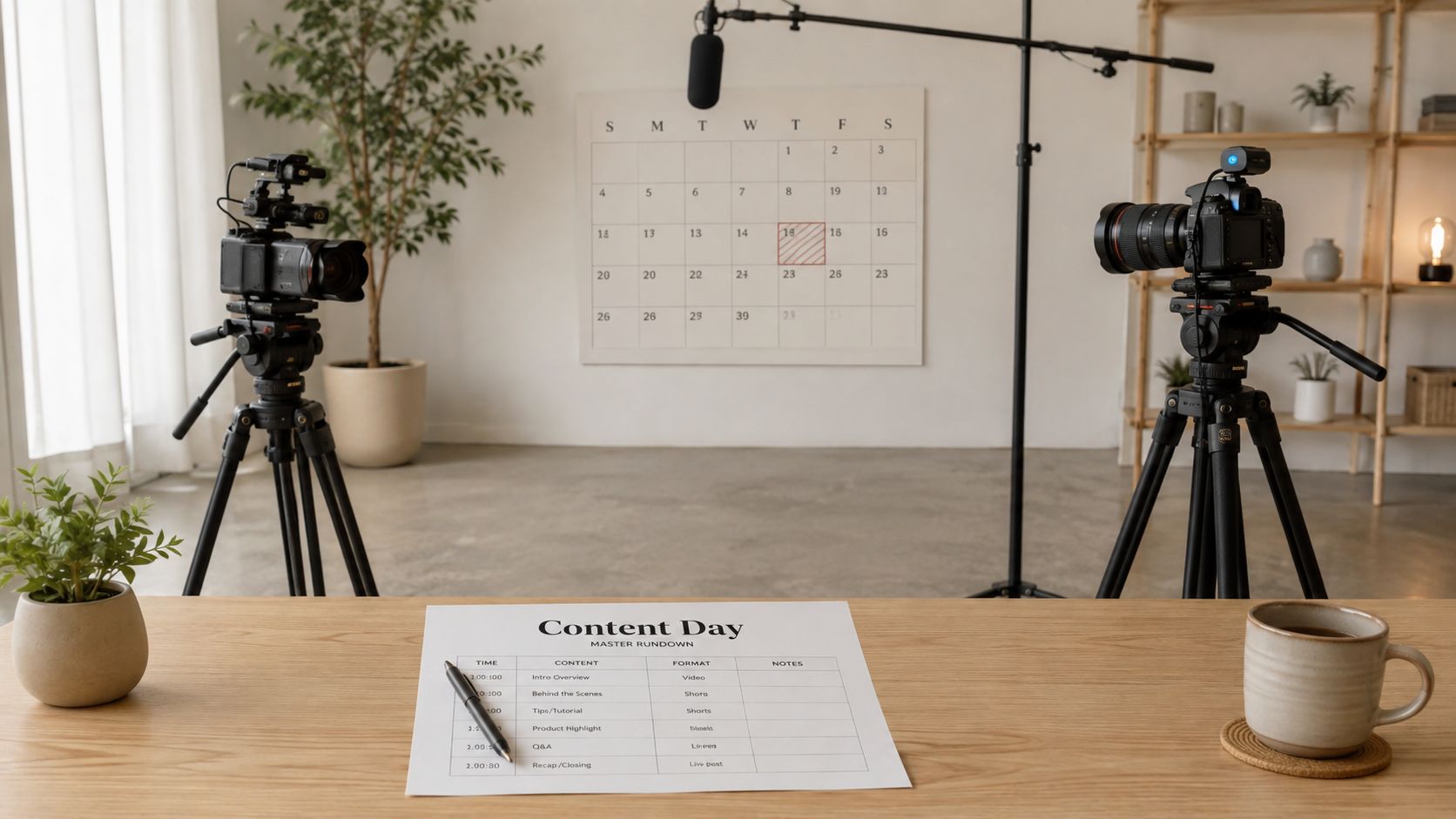
The best batch sessions are planned like a mini production sprint. You don't just stack recordings, you stack outputs. One interview can become the episode, a teaser, a quote graphic, a short-form clip, and a newsletter angle. That kind of repurposing is also where Flexwork's repurposing guidance fits naturally, especially in its podcast episode repurposing workflow.
There's a trade-off, though. Batch recording demands more upfront coordination. You need guest schedules, topic order, and editorial discipline ready before the studio day begins. It also takes stamina. A long session can flatten performance if you don't pace the day correctly.
Batch recording works best when the calendar is designed around production, not when production is squeezed into a random free slot.
That's the mindset shift. Instead of chasing momentum week by week, you create a bank of content and publish from it strategically. For creators balancing client work, travel, or other business obligations, that buffer can be the difference between staying visible and going silent.
3. Optimize Your Audio Quality and Technical Standards
People will forgive a lot of things in a podcast. Muddy audio is not one of them.
Audio is the fastest signal of whether a show feels amateur or professional. Clean capture starts with the room, then the mic, then the mix. When the space is acoustically treated, the host doesn't have to fight echo or room tone. When the microphone is chosen and positioned well, the voice sounds closer, clearer, and easier to listen to. When the mix is handled properly, the final file feels consistent across episodes instead of jumping between too quiet and too hot.
Flexwork's studio setup is designed for that exact difference. If you're comparing DIY recording to a treated room with professional gear, the gap is immediate to listeners even before they notice the set design. That matters because quality audio builds trust quickly. It also gives sponsors, guests, and collaborators a better first impression of the show.
Here's where the work happens:
- Capture: Use the right microphone, manage gain correctly, and record in a room that controls reflections.
- Processing: Clean up noise, shape the voice with EQ, and control volume with compression.
- Delivery: Export in the formats your workflow needs, then normalize loudness for a consistent listening experience.
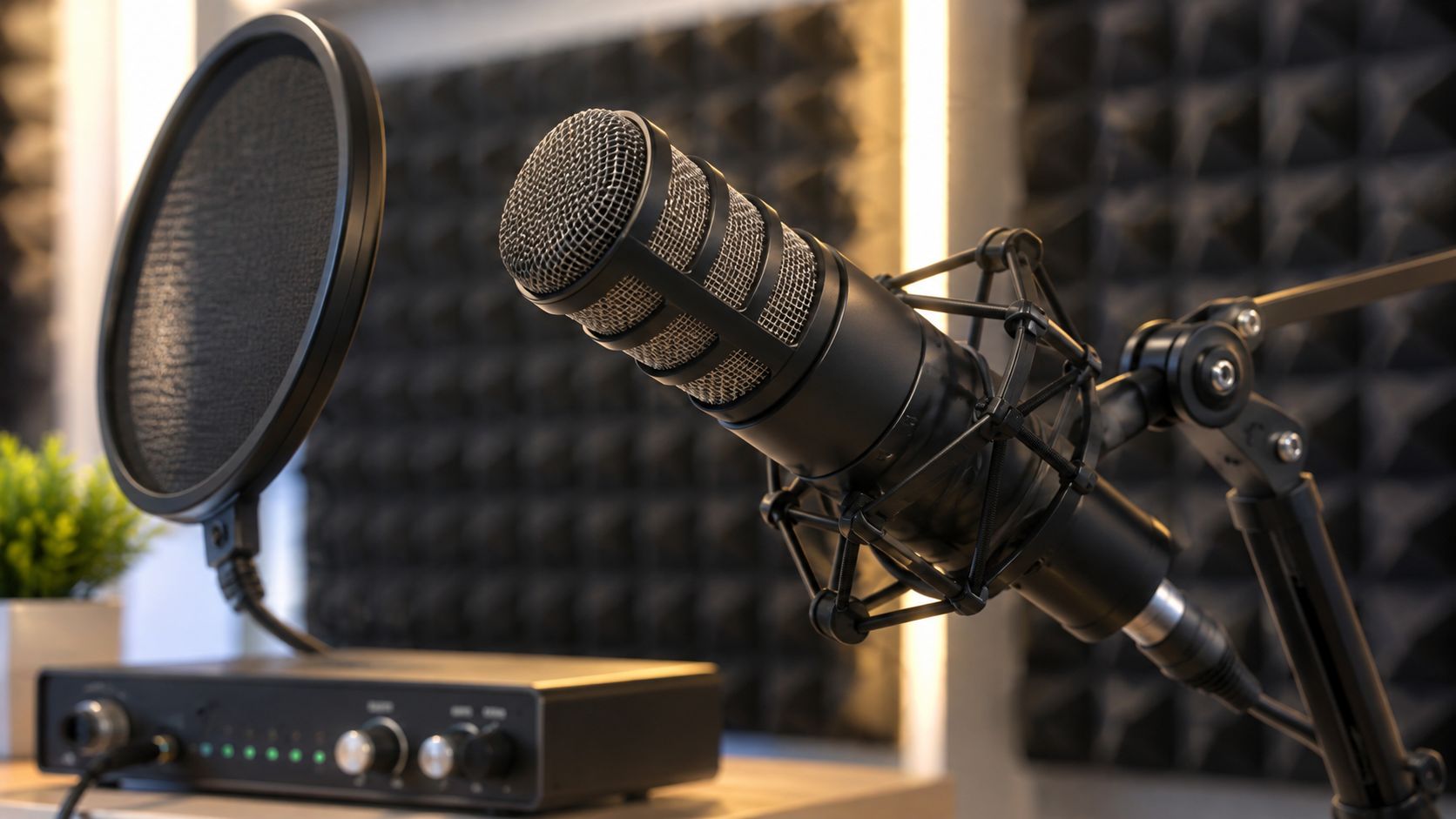
The upside of investing here is clear. Better audio reduces re-recording, speeds up editing, and makes every other part of the show feel more premium. The downside is also clear. Good sound requires equipment, technical knowledge, and sometimes post-production time if you're not recording in a ready-made environment.
If you want the most practical shortcut, work inside a system that already handles the acoustics and the gear. Flexwork's advanced recording techniques for podcast sound quality is the kind of support that lets creators focus on performance instead of troubleshooting. That shift alone can change how confidently you publish.
4. Build a Strategic Guest Strategy and Interview Network
Guest booking is one of the fastest ways to make a podcast feel bigger than the host's personal network.
A strong guest strategy does two things at once. It raises the quality of the conversation and it widens distribution because guests usually bring their own audience with them. That doesn't mean every episode needs a celebrity name. It means the show needs a clear guest mix. Authority figures, rising voices, and complementary experts each serve a different purpose, and a smart host plans for all three.
The best guest-led shows rarely rely on last-minute outreach. They run on a pipeline. That includes a prospect list, a repeatable outreach message, a booking flow, and prep materials that help the guest feel ready before they ever get on camera or on mic. A good guest network also makes future production easier because relationships compound. A guest who had a good experience is more likely to refer someone else, share the episode, or return later.
For creators trying to look and operate like a premium brand, this part matters more than it gets credit for. A messy booking process makes the whole show feel improvised. A clean one makes the show feel established.
One useful principle is to treat each guest as both an episode and a relationship. That means sending prep details, confirming what the guest wants to promote, and making it easy for them to share the final release. It also means saying no to guests who don't fit the show, even if they're available.
A guest roster should reinforce the show's point of view, not just fill a calendar.
Flexwork's podcast guest booking strategy fits this kind of operator mindset. Creators who use a structured booking process spend less time scrambling and more time curating conversations that feel intentional. That's the difference between an interview series and a real platform.
5. Create a Sustainable Posting and Content Distribution Schedule
A podcast grows when people keep encountering it in the right places, in the right formats, and with enough consistency to remember it.
Distribution belongs inside the production workflow. The strongest creators publish the full episode, then turn that recording into clips, posts, email content, and search-friendly show notes. They are building multiple entry points for the same idea, not just feeding platforms for the sake of activity. With social attention spread across many channels and users moving through about 6.84 platforms each month Sprinklr's 2025 social media statistics, one upload rarely carries enough weight on its own.
A sustainable distribution system starts before publish day. Record once. Edit once. Then plan how the episode will travel. The long-form version goes live on podcast platforms, short clips get adapted for TikTok, Instagram Reels, and YouTube Shorts, a blog version or show notes page supports SEO, and an email update reaches people who may never open a podcast app that week.
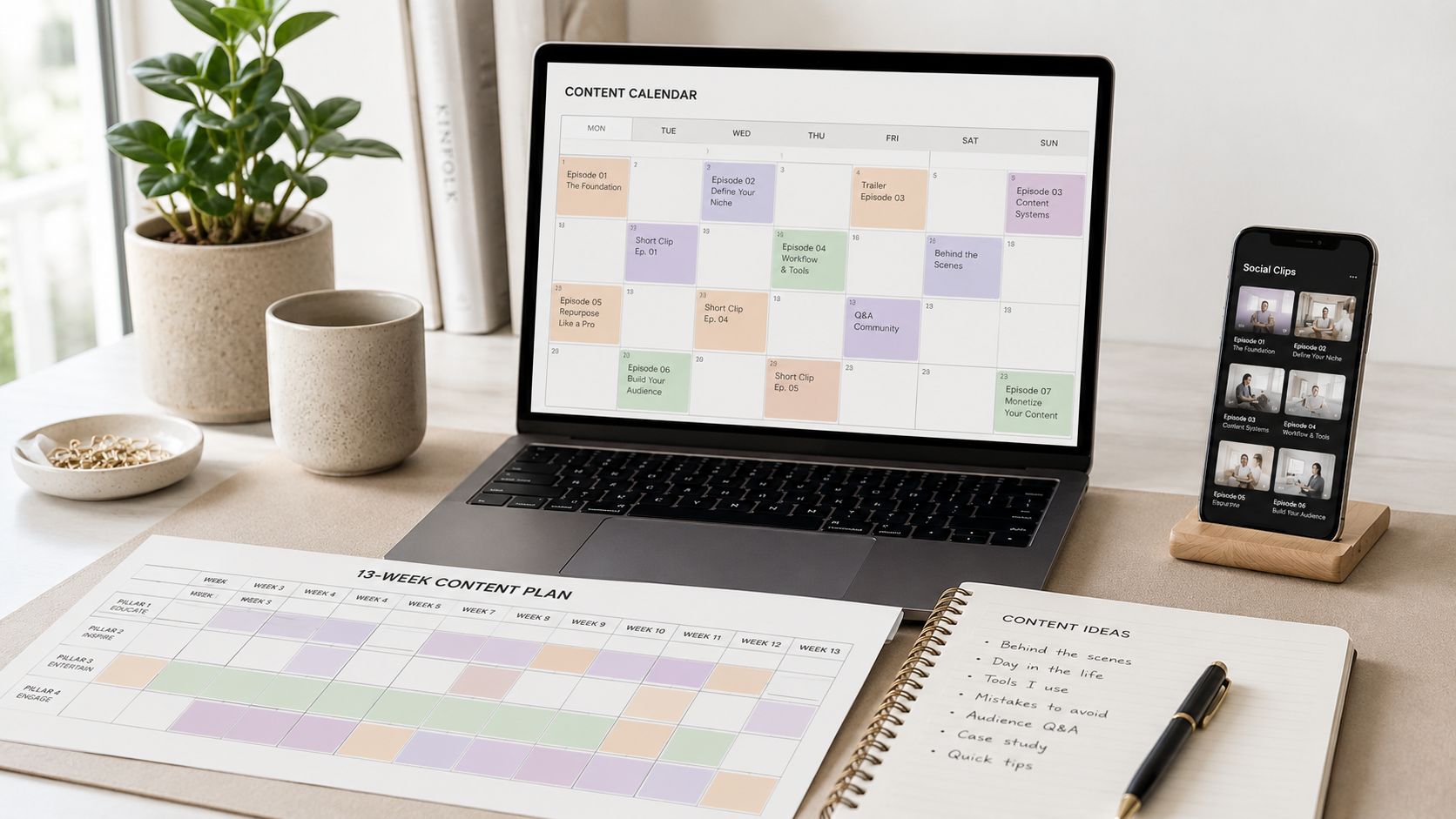
Consistency is where many creators lose momentum. Platforms reward steady publishing, but a workflow built on willpower breaks down fast. Batch creation and staggered scheduling solve that problem by separating creation from release. You work in focused blocks, then publish from a planned calendar instead of rebuilding the process every week.
The trade-off is real. A tighter schedule leaves less room for random ideas, but it also reduces scramble, decision fatigue, and missed publish dates. That is the same thinking behind premium production services such as Flexwork Content Days or Producer Packages, where the goal is not just making one strong episode, but creating a repeatable system that keeps the content pipeline moving. For creators who want a broader workflow framework, Flexwork also publishes Solo AI's content marketing strategy, which fits well with a distribution-first mindset. The point is simple. Build content systems, not one-off posts.
6. Develop Your Unique Podcast Format and Show Structure
The fastest way to disappear in a crowded category is to sound exactly like everyone else.
A recognizable format gives your audience something to latch onto. It also gives your team a working system. When the structure is clear, the host spends less energy deciding what comes next, the editor knows what to cut, and the guest knows how to contribute. That kind of repeatability is a real production advantage.
Format starts with listening context. A commute-friendly show needs a different rhythm than a deep-dive business interview. Segment structure matters too. An opening hook, a clear main section, and a clean outro create expectations the audience can learn. Add signature audio branding, and the show becomes easier to recognize in a crowded feed.
This is also where a lot of creators overcomplicate things. A distinctive format doesn't need to be weird. It needs to be clear, sustainable, and aligned with the value the listener expects every time they press play. That's why many successful shows tighten their episode titles, descriptions, and recurring segments before they chase bigger ambitions.
Format is not a limitation when it makes the show easier to produce and easier to remember.
The trade-off is real. Too much structure can flatten spontaneity, and changing the format after the audience gets used to it can be risky. Still, most creators are not in danger of becoming too rigid. They're in danger of being too vague.
If you're building a podcast that should feel premium, define the rules. How long is the episode? Where does the strongest insight appear? What does the listener learn before the outro? Once those decisions are consistent, everything downstream gets easier.
7. Leverage Data and Analytics to Optimize for Listener Engagement
Creators love feedback when it's flattering. Analytics are better because they're honest.
The smartest podcast decisions come from patterns, not vibes. Downloads, completion behavior, traffic sources, and churn points all tell you where listeners are staying, skipping, or leaving. That makes analytics one of the most practical content creator tips for anyone who wants growth that isn't random. Google's helpful-content guidance also stresses expertise, clear sourcing, and trustworthiness, along with originality and value, which is a good editorial reminder that the best content still needs a clear reason for existing Google's helpful-content guidance.
The trick is not to drown in data. Focus on a few signals that influence decisions. Which topics get replayed or shared? Where do listeners drop off? Which distribution channel sends the strongest traffic? Those questions are more useful than checking every dashboard metric just because it's available.
A simple monthly review can change the shape of the show. If one topic keeps stronger completion, that's a clue. If a guest format holds attention better than a solo episode, that's a clue too. If the traffic source is weak, the problem may be distribution, not content.
A smart measurement workflow also requires discipline. Wharton's marcomm fact-checking guidance says writers should verify dates, spellings of proper names, titles, statistics, and claims, use a primary source whenever possible, and confirm information against a couple of different sources Wharton's fact-checking guidance. For creators, that same habit makes analytics reviews more reliable because you're not overreacting to one noisy datapoint.
Clarity is the true advantage. Data should help you decide what to repeat, what to cut, and what to promote harder.
8. Build Monetization Pathways Beyond Advertising
Advertising is useful, but it's too fragile to carry a show by itself.
The stronger business move is diversification. That can include sponsorships, memberships, affiliate offers, digital products, or strategic partnerships. A creator who only relies on one income source is exposed every time ad budgets shift or a platform changes the rules. A creator with multiple revenue streams has more room to build slowly and more influence when negotiating.
The most practical monetization choices usually match the audience you already have. If listeners trust your judgment, affiliate recommendations may fit. If they want deeper access, a membership tier may fit. If your expertise is the value, a guide, template, or coaching offer may fit. The show becomes the audience engine, and the rest of the business expands around it.
Flexwork's how to get podcast sponsors resource fits nicely here because sponsorship is easier to pitch when the show already looks professional. Good audio, a clean format, and an organized guest strategy all make the pitch stronger. Brands want to associate with shows that feel stable, not experimental.
The trade-offs deserve respect. Sponsorships take outreach. Memberships can alienate casual listeners if the free experience feels stripped down. Affiliate marketing only works if the recommendation is credible. Digital products take time to build.
Monetization gets easier when the audience already trusts the show's taste and consistency.
Creators who treat revenue as an afterthought usually stay dependent on luck. Creators who build the business model alongside the content tend to get more durable results.
8-Point Content Creator Strategy Comparison
| Strategy | Implementation complexity | Resource requirements | Expected outcomes | Ideal use cases | Key advantages |
|---|---|---|---|---|---|
| Master Pre-Production Planning to Eliminate Studio Waste | Medium, requires templates and coordination | Upfront planning time, checklists, communication tools | Fewer retakes, 30–50% less studio time, higher usable take rate | Interview shows, multi-camera shoots, high-cost studio time | Increases efficiency, enables batch recording, scalable workflow |
| Implement a Batch Recording and Content Batching System | Medium–High, complex scheduling and logistics | Long studio days, editors, content calendar, guest coordination | Lower per‑episode cost (40–60%), content buffer, consistent branding | High-volume creators, seasonal series, social-clip driven strategies | Significant cost savings, predictable post‑production, reduced context switching |
| Optimize Your Audio Quality and Technical Standards | High, technical setup and mixing expertise needed | Acoustic treatment, pro microphones, audio engineer, software | Broadcast‑standard audio, attracts sponsors, less rework | Sponsor-focused shows, audio-first podcasts, professional networks | Elevates perceived quality and listener trust, consistent listening experience |
| Build a Strategic Guest Strategy and Interview Network | Medium, sustained outreach and relationship management | Outreach templates, booking tools, research time, network contacts | Audience growth (guest audience pull), more diverse content | Guest-driven growth shows, interview formats, discovery-focused podcasts | Amplifies reach, brings varied perspectives, improves credibility |
| Create a Sustainable Posting and Content Distribution Schedule | Medium, requires platform knowledge and discipline | Distribution platforms, scheduling tools, repurposing workflow | Consistent releases, multi-platform reach, improved retention | Shows aiming for steady growth and multi-format repurposing | Trains audience expectations, boosts discoverability, reduces burnout |
| Develop Your Unique Podcast Format and Show Structure | Low–Medium, design and iterative testing | Format guide, pilot episodes, editorial templates | Strong listener habits, easier delegation, lower decision fatigue | New shows defining identity, hosts seeking repeatable workflows | Differentiates brand, streamlines production, improves shareability |
| Leverage Data and Analytics to Optimize for Listener Engagement | Medium, analytics literacy and monthly review | Analytics platform, reporting templates, time for analysis | Better topic selection, reduced churn, sponsor-ready metrics | Growing shows, data-driven optimization, sponsorship pitching | Removes guesswork, identifies drop-off points, informs content strategy |
| Build Monetization Pathways Beyond Advertising | Medium–High, business development and product work | Sales outreach, membership/platform setup, product creation time | Diversified revenue, predictable income streams, higher LTV | Established shows with audience and trust, creator-entrepreneurs | Reduces ad dependence, creates recurring revenue, higher margins |
Your Professional Content Studio Awaits
Implementing these content creator tips changes the job from reactive to strategic. Instead of scrambling for the next episode, you're building a production system that supports quality, protects your energy, and gives your audience a clearer reason to stay. That's the difference between DIY content and a professional media operation. One is driven by urgency. The other is driven by process.
The creator economy is already operating at scale, with 207 million people identifying as content creators worldwide and 45 million professional creators in the U.S. Tribe Group's creator marketing statistics. That kind of competition rewards creators who can plan, batch, distribute, and monetize without burning out. It also rewards people who understand that a stronger show is rarely just about talent. It's about the system around the talent.
That's where premium studio support matters. Flexwork Studios gives podcasters a place to record with cleaner audio, more polished visuals, and a workflow that supports growth instead of chaos. If you're ready to move from piecing things together to operating with intention, a Content Day or a production package can give your brand the structure it's been missing.
The audience you want is already consuming content across multiple platforms, which means your job is to meet them with sharper execution and better consistency. Use the tips above to tighten your process, then let a professional environment raise the ceiling on what your show can become. Your next level is not about doing more random work. It's about doing the right work in the right system.
Flexwork Podcast Studios helps creators turn ideas into polished episodes, clips, and launch-ready assets without the chaos of a makeshift setup. If your show needs better sound, cleaner visuals, and a more reliable production rhythm, visit Flexwork Podcast Studios to explore the studio, production packages, and Content Day options that fit your next stage.