
What Is Acoustic Treatment? a Guide for Pro Creators
 July 3, 202622 Minutes
Headline: What Is Acoustic Treatment for Pro Creators
Meta description: Learn what acoustic treatment is, how it improves podcast audio, and when to upgrade from DIY fixes to a professional studio.
URL slug: /what-is-acoustic-treatment-for-podcasters
Primary keyword: what is acoustic treatment
Secondary keywords: acoustic treatment for podcasting, podcast studio sound quality, home studio acoustic treatment
You finish a strong episode, hit playback, and hear the room before you hear your voice. The ideas are sharp, the delivery is solid, but the recording sounds hollow, splashy, and a little farther away than it felt in the moment. That gap is where a lot of ambitious creators get stuck.
The frustrating part is that bad room sound makes great content feel smaller than it is. A smart interview can lose authority fast when every sentence bounces off drywall and bare windows. That's why acoustic treatment matters. It shapes the sound inside the room so your voice lands with clarity, control, and presence. If you're building a show, a brand, or a business, that polish isn't cosmetic. It changes how people perceive your work.
Introduction
A podcaster records an episode at home after work. The mic is new, the guest was excellent, and the conversation had real momentum. Then the playback starts. There's a ring after every phrase, a faint slap from the wall behind the desk, and that unmistakable “recorded in a spare room” sound.
That moment is common because most creators start by upgrading gear before they upgrade the space around the gear. A better microphone can capture more detail, but it also captures more of the room. If the room is reflective, the mic tells on you.
That's where acoustic treatment enters the picture. It isn't about making a room look like a studio. It's about controlling reflections so your voice sounds direct, clean, and intentional. For creators who want broadcast-ready audio without wasting sessions fixing room problems later, professional environments become part of the strategy, not just the setup.
The Sound of Success vs The Echo of Amateur Hour
Your audience may not know the term flutter echo, but they know when something sounds off. They hear a voice that feels distant instead of present. They notice a room that sounds bright and splashy instead of controlled. They may not articulate it, but the impression lands fast: this show feels less polished.
That matters because audio quality shapes credibility before your ideas get a fair chance. If your podcast sounds thin, hollow, or tiring to follow, listeners have to work harder to stay engaged. In crowded categories, people rarely reward effort. They reward ease.
Why room sound affects brand perception
A reflective room does more than add echo. It changes the emotional feel of your content. Strong insight can sound tentative. Premium positioning can feel DIY. A founder interview can lose authority because the room wraps every sentence in extra reverb.
For coaches, consultants, founders, and media brands, that's a business issue. You're not only publishing content. You're signaling taste, preparedness, and seriousness. Clean audio says you respect the listener's time. Messy audio suggests the opposite.
Poor sound doesn't just lower production quality. It lowers perceived authority.
There's also a compounding effect. If every episode needs repair, your editing gets slower, your content pipeline gets heavier, and your motivation drops. That's the quiet burnout many creators run into. They spend money on mics, lights, and software, but the room keeps fighting back.
What listeners feel even if they don't know the terms
You're unlikely to hear someone say, “Your early reflections are overwhelming the direct signal.” Instead, they'll say:
- “It sounds echoey.” The room is reflecting your voice back into the mic.
- “It feels kind of harsh.” Repeated reflections are stacking up and creating fatigue.
- “It doesn't sound professional.” The total impression lacks focus and control.
If you've ever tried to solve that in post, you already know the truth. Editing can improve a lot, but it can't fully replace a good recording environment. That's why creators looking to improve audio quality eventually stop treating acoustics like a minor technical detail and start treating it like part of the brand.
What Acoustic Treatment Really Is (And What It Is Not)
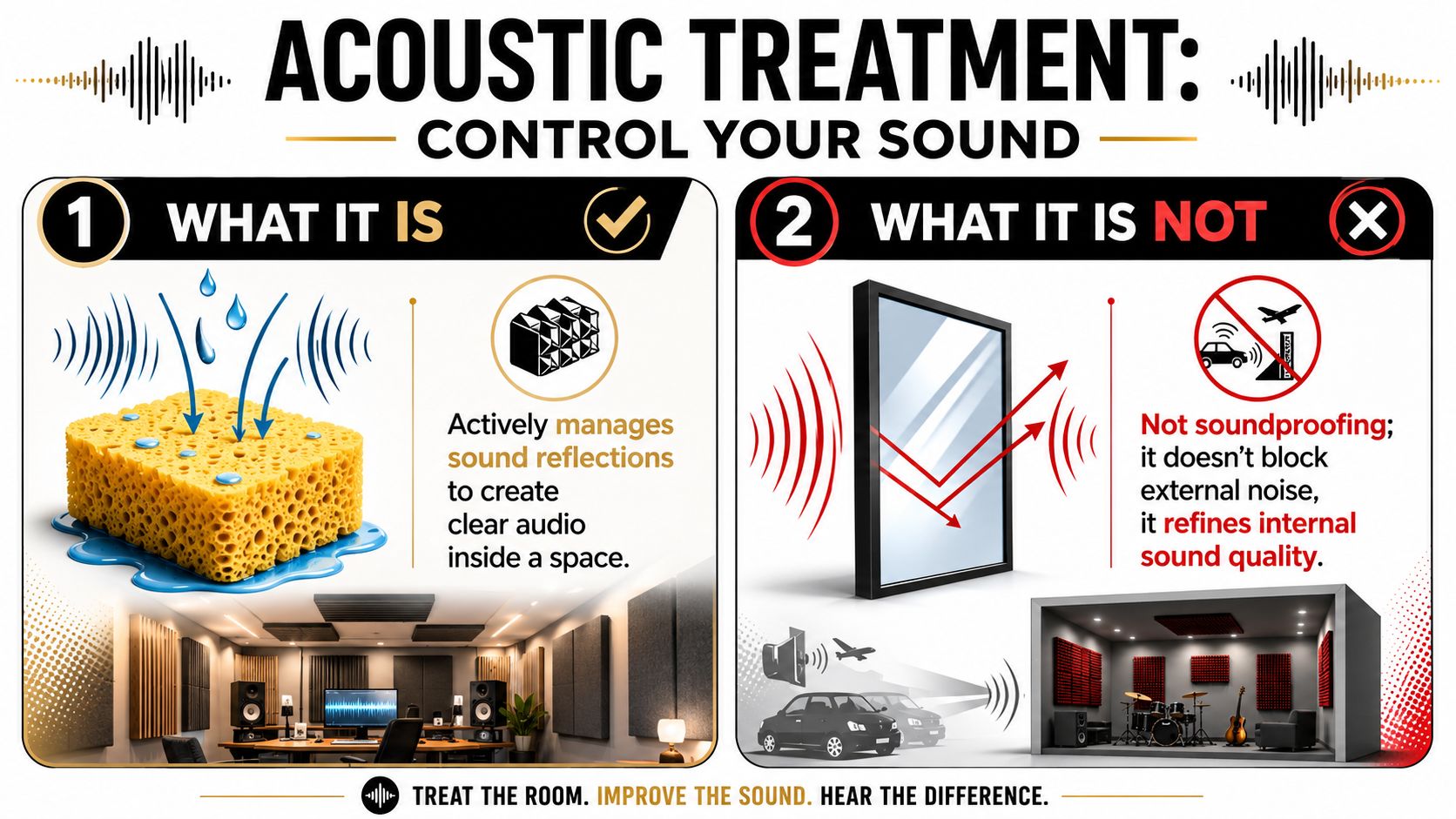
Acoustic treatment is the practice of controlling sound reflections inside a room so recorded audio sounds clearer, tighter, and more natural. It helps the microphone capture more of you and less of the room. That's the simplest useful answer to what is acoustic treatment.
A good analogy comes from visual production. In a photo or video shoot, a lighting director uses modifiers to shape light. They don't change the subject. They control how the environment affects the subject. Acoustic treatment does the same thing with sound. It shapes the room so your voice arrives cleaner.
What acoustic treatment does
Inside most homes and offices, sound bounces off hard surfaces. Walls, desks, windows, ceilings, and floors all reflect energy back into the room. Your microphone captures the direct voice plus those reflections. The result is smear. Words lose edge and intimacy.
Acoustic treatment reduces those reflections and manages how sound behaves after it leaves your mouth. That's why treated rooms sound more controlled without sounding unnatural.
What acoustic treatment does not do
A common misunderstanding leads many creators to waste money. People frequently confuse acoustic treatment with soundproofing. The former controls reverb and reflections inside a room, while the latter prevents sound escaping, but existing content rarely explains why acoustic panels alone fail to contain noise, leading creators to waste resources. That distinction is explained in this acoustic treatment and soundproofing guide.
If your issue is traffic noise, loud neighbors, or sound leaking into another room, acoustic panels alone won't solve it. Soundproofing is about isolation. It involves construction choices, sealing, mass, and barriers. If you want a deeper look at that side of the equation, this guide on how to soundproof a room is the right next step.
Practical rule: Acoustic treatment improves what happens inside the room. Soundproofing controls what gets in or out.
A treated room can still let outside noise in. A soundproofed room can still sound terrible inside if reflections aren't controlled. Serious creators need to know the difference because each problem requires a different fix.
The Science of Clear Audio Absorption Diffusion and Bass Trapping
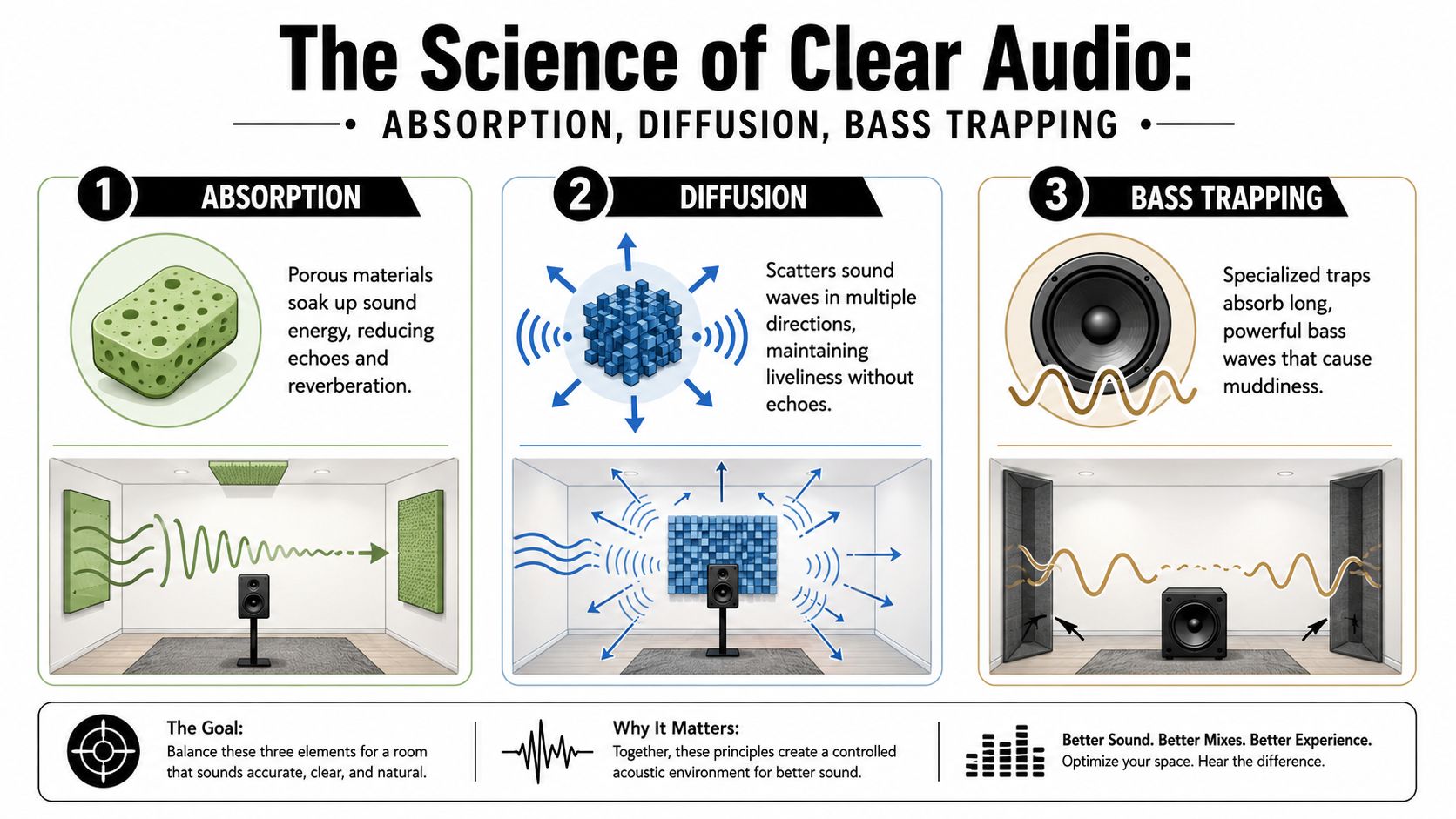
The art of a polished recording room comes down to three main tools. Absorption, diffusion, and bass trapping. Each one handles a different part of the sound picture.
Absorption cleans up the obvious reflections
Absorption is the easiest concept to hear. It's comparable to a high-quality towel soaking up spilled water before it spreads. In a room, porous materials capture sound energy instead of letting it bounce right back at the microphone.
That's why absorptive panels reduce echo and shorten reverb. They're especially useful around speech frequencies, where clarity and intelligibility matter most for podcasts, interviews, and talking-head video.
A technical benchmark helps separate real treatment from decorative foam. For effective broadband absorption down to 125 Hz, technical specifications require at least 2-inch thick fiberglass panels (6 PCF density), as 1-inch panels only achieve an NRC of 0.70–0.80 and lose effectiveness below 500 Hz. A standard 2-inch fiberglass acoustic panel typically delivers an NRC of 1.00, meaning it absorbs all sound energy striking it at speech frequencies, according to this technical guide to acoustic treatment.
Diffusion keeps a room from sounding flat
Diffusion works differently. Instead of soaking up sound, it scatters reflections in multiple directions. A useful visual analogy is a prism breaking light into a spread rather than sending one harsh beam straight back.
In practice, diffusion helps a room keep some life and openness without preserving the ugly, direct reflections that make recordings sound cheap. That's why well-designed studios rarely aim for a dead, padded-box sound. They aim for balance.
Bass trapping handles the part most beginners miss
Low frequencies are where casual treatment plans usually fall apart. Bass waves are longer, heavier, and much harder to control than upper mids and highs. If they build up unchecked, voices and mixes start sounding muddy, boomy, or uneven.
Corners matter because low-frequency energy piles up there. Bass traps are built to absorb that buildup and reduce the low-end problems that regular thin panels miss.
Here's a quick way to think about the three roles:
| Tool | What it does | What you hear |
|---|---|---|
| Absorption | Reduces direct reflections | Cleaner, tighter speech |
| Diffusion | Scatters reflections | More natural space |
| Bass trapping | Controls low-end buildup | Less boom and muddiness |
A creator can piece this together at home, but a purpose-built room gets the interactions right at the system level. That includes panel type, depth, placement, and balance across the room. If you want to see how those pieces come together in a recording environment, this look at what makes a great podcast studio breaks down the setup decisions that shape the final sound.
Good acoustics don't remove personality from a voice. They remove the room's interference with that personality.
From DIY Setups to Pro-Level Results
If you're recording from home, you can improve your room without turning it into a construction project. The goal isn't perfection on day one. It's getting the biggest audible improvement from the right materials and the right placement.

Start with material choice, not aesthetics
A lot of creators buy foam because it looks like studio gear. The problem is that appearance and performance aren't the same thing. Dense fiberglass or mineral wool panels usually do more useful work, especially when you're trying to control a wider range of frequencies.
Placement matters too. Practical implementation of acoustic treatment requires covering 15–25% of the wall surface area with panels to hear a noticeable difference in reverberation control, with expert placement guidelines mandating positioning panels at ear level and targeting corners for bass management, as outlined in this acoustic treatment placement guide.
Use the mirror trick for first reflection points
One of the smartest DIY moves is the mirror trick. Sit where you record. Have someone slide a mirror along the side wall. Wherever you can see the microphone position or speaking position reflected back, that's a first reflection point. Treat those spots first.
That approach beats random panel placement because it follows how sound travels.
A practical order looks like this:
- Side walls first: These reflections often hit the mic quickly and make speech sound splashy.
- Rear wall next: Reflections from behind you can create a roomy, delayed feel.
- Corners after that: Bass buildup tends to collect there, so traps belong in those pressure zones.
- Ceiling if needed: A cloud above the desk can help tame overhead reflections.
A quick visual walkthrough can help if you want to see room treatment ideas in action:
Set realistic expectations
DIY treatment can produce a real, noticeable improvement. It can make your room less echoey, your speech more focused, and your editing process easier. That's worth doing.
But there's a ceiling. Home spaces come with compromises like room dimensions, windows, reflective furniture, HVAC noise, and layout limitations. At a certain point, creators stop asking, “Can I make this better?” and start asking, “Is this still the best use of my time?”
That's usually the moment to compare your current setup against a treated production environment. This breakdown of studio vs DIY podcasting is useful when you're deciding whether the next step is more tinkering or a more reliable recording workflow.
The Measurable Impact on Your Content and Brand
The biggest payoff from acoustic treatment isn't that your room sounds more technical. It's that your content sounds more finished. Voices feel closer. Conversations feel more intentional. Editing gets lighter because the recording starts in a cleaner place.
That has practical value for creators who publish often. A strong recording environment reduces the amount of rescue work in post, which helps teams turn around episodes, reels, and clips faster. It also raises the floor on every piece of content, so your brand sounds consistent across long-form interviews, social cutdowns, and guest features.
Why this is an investment, not a studio accessory
The market itself reflects how established acoustic treatment has become. The global acoustic panel market was valued at USD 8.6 billion in 2025 and is projected to grow to USD 16.4 billion by 2035, according to this acoustic panel market analysis. That scale points to a simple reality. Acoustic treatment is standard infrastructure in professional environments, not a niche add-on.
For creators building a visible brand, sound quality and digital presence should work together. If you're also tightening your positioning online, this guide on how to create an online presence is a practical companion to the production side.
Where packaged production starts to make sense
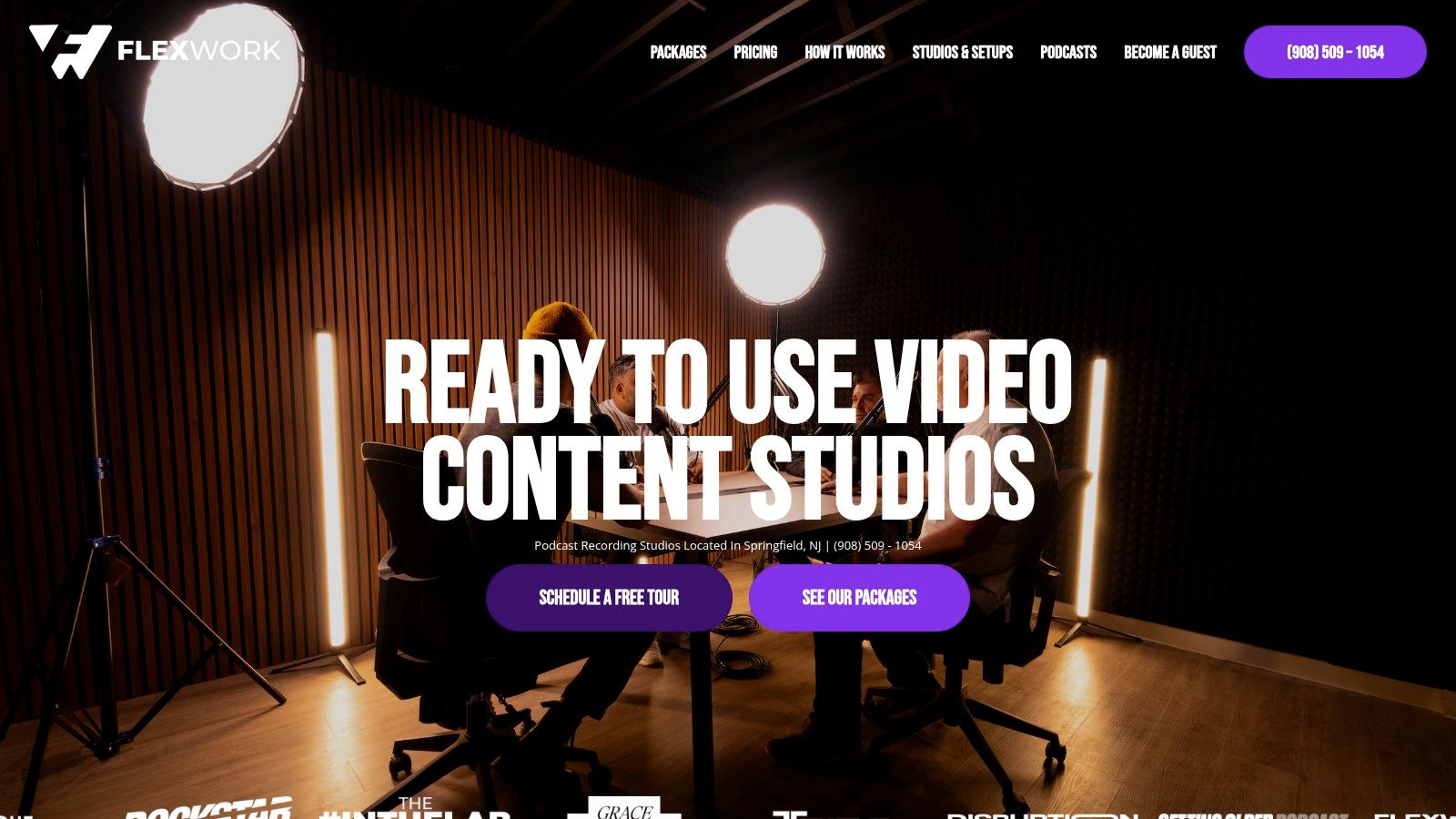
Services can transition from convenience to providing strategic advantage. A creator may book a studio session to capture a flagship episode, then realize the same environment also supports shorts, reels, and polished video assets in one run. At Flexwork Podcast Studios, Content Day sessions are $3000/day and include 20 edited reels or 60 pro photos. Podcast websites are $5000 plus hosting. For creators focused on growth execution, the Market, Manage & Produce My Podcast tier starts at $1500 per episode with a 20-episode growth commitment.
Those numbers matter less as line items than as workflow choices. When the room, production, and distribution support are aligned, creators spend less energy compensating for technical problems and more energy publishing work that sounds as credible as their ideas.
When to Go Pro Your Guide to Studio Booking
There's a point where upgrading a home setup stops being a creative challenge and starts becoming drag. You move a panel, test a take, tweak the gain, hang a blanket, re-record the intro, and still hear the room. That cycle is fine for experimentation. It's not ideal for momentum.
The signs you've outgrown trial and error
Going pro usually makes sense when one of these is true:
- You're launching a flagship show: First impressions matter more when you're introducing a new brand or concept.
- You're pitching sponsors or partners: Audio quality affects perceived readiness.
- You're adding video: Once cameras are involved, the room has to work sonically and visually.
- Your time is expensive: If each recording session creates cleanup work later, the hidden cost keeps growing.
There's also a physical reality to serious low-end control. For high-precision applications like mixing and home studios, experts recommend that acoustic treatment panels must be at least 3.5 to 4 inches deep to effectively manage low-end issues, with deeper treatments of 5.5 to 6 inches preferred for ultimate low-frequency control, as explained in this guide to acoustic treatment depth. In other words, proper treatment gets demanding fast.
Choosing the right level of support
Not every creator needs the same entry point. Some only need a clean room and a fast session. Others want help producing, packaging, and scaling the show.
A simple framework works well:
- Book hourly studio time if you already know your format and need a strong environment fast. You can start with podcast studio rental.
- Use producer support if you want help tightening delivery, visuals, and workflow.
- Choose the Market, Manage & Produce My Podcast package if you're treating the show as a growth asset and want a longer runway.
The main shift is mental. Stop fighting a room that wasn't designed for content creation. Record in a space built for the job, or build your setup with the same level of intention.
If you're ready to make your show sound more polished, book a tour or start a conversation with Flexwork Podcast Studios.