
Recording Studio Rules: Essential Etiquette for 2026
 July 28, 202625 Minutes
You can hear the difference before you can explain it. One creator walks into a session ready to make something sharp, focused, and release-ready, while another burns half the booked time fixing avoidable problems, calming guests, and chasing missing files. That gap is why recording studio rules matter. They aren't about policing creativity. They're the habits that protect your budget, your momentum, and your final sound. Flexwork Studios was built for creators who want a polished process as much as a polished result, and the rules below are the clearest way to turn studio time into real output.
1. Arrive Early and Set Up Before the Clock Starts
The smartest sessions begin before the session starts. Punctuality is operational discipline in a professional studio, and recording-session guidance is direct about it, because studios can start billing once the first car arrives, and late arrivals waste paid time (BMI's session rules). If you want a clean take, arrive with enough buffer to test levels, confirm routing, and handle any last-minute details before the clock is working against you.
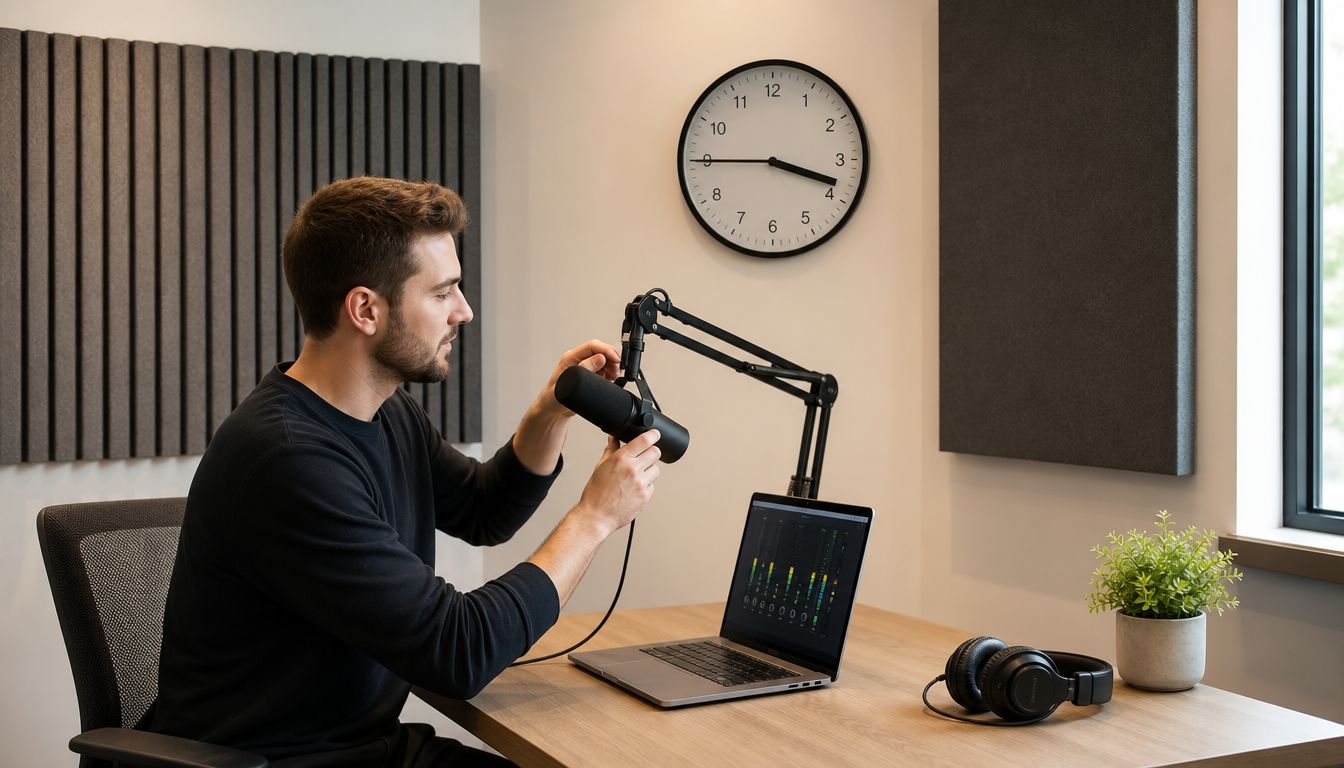
At Flexwork, that mindset matches how the rooms are built to work. If you're booking a studio rental through Flexwork's podcast studio rental page, use the first minutes for a fast systems check, then move straight into the content. Do not spend paid studio time learning where the gain knob is or asking where the backup drive lives.
A strong arrival routine keeps the whole team calm. It also helps you sound like someone who belongs in the room, not someone hoping the room will save the session.
Build a pre-session routine that sticks
A professional pre-roll routine should be simple enough to repeat every time.
- Confirm the session goal: Know the episode angle, guest names, segment flow, sponsor mentions, and any clean-capture lines before you walk in.
- Check your gear at home: Test your audio interface, cables, headphones, and recording software before the booking, so the studio is not your first rehearsal.
- Protect the clock: If you have guests, confirm dial-in details and time zones the day before, not when the recorder is already armed.
- Use producer support when speed matters: Flexwork's Be My Podcast Producer package is the cleaner move when you want setup handled for you and your energy reserved for performance.
- Tour the room early: A walkthrough before the session helps you move faster when the actual booking starts.
- Choose the right microphone before you arrive: A solid microphone for podcast recording keeps your setup predictable and cuts down on avoidable troubleshooting once the session begins.
Practical rule: If the first ten minutes of your booking are still administrative, you arrived late in practice even if you showed up on time.
2. Keep Your Mic Technique Consistent
The fastest way to make a session sound expensive is to stay steady at the microphone. Independent education sources treat equilateral triangles, the 38% listening position, and monitor aiming as rules of thumb, not laws, because room shape, desk placement, and boundary reflections matter more than a rigid formula (recording setup guidance). That same logic applies to vocal technique. Keep your distance, keep your posture stable, and stop treating every emphasis as a reason to lean in or pull away.
Flexwork's acoustically treated spaces reward discipline at the source. A clean voice captured well is easier to edit, easier to mix, and easier to turn into clips, reels, and polished episodes. If you're using a Content Day session, this matters even more, because the same disciplined take can be repurposed across multiple deliverables.
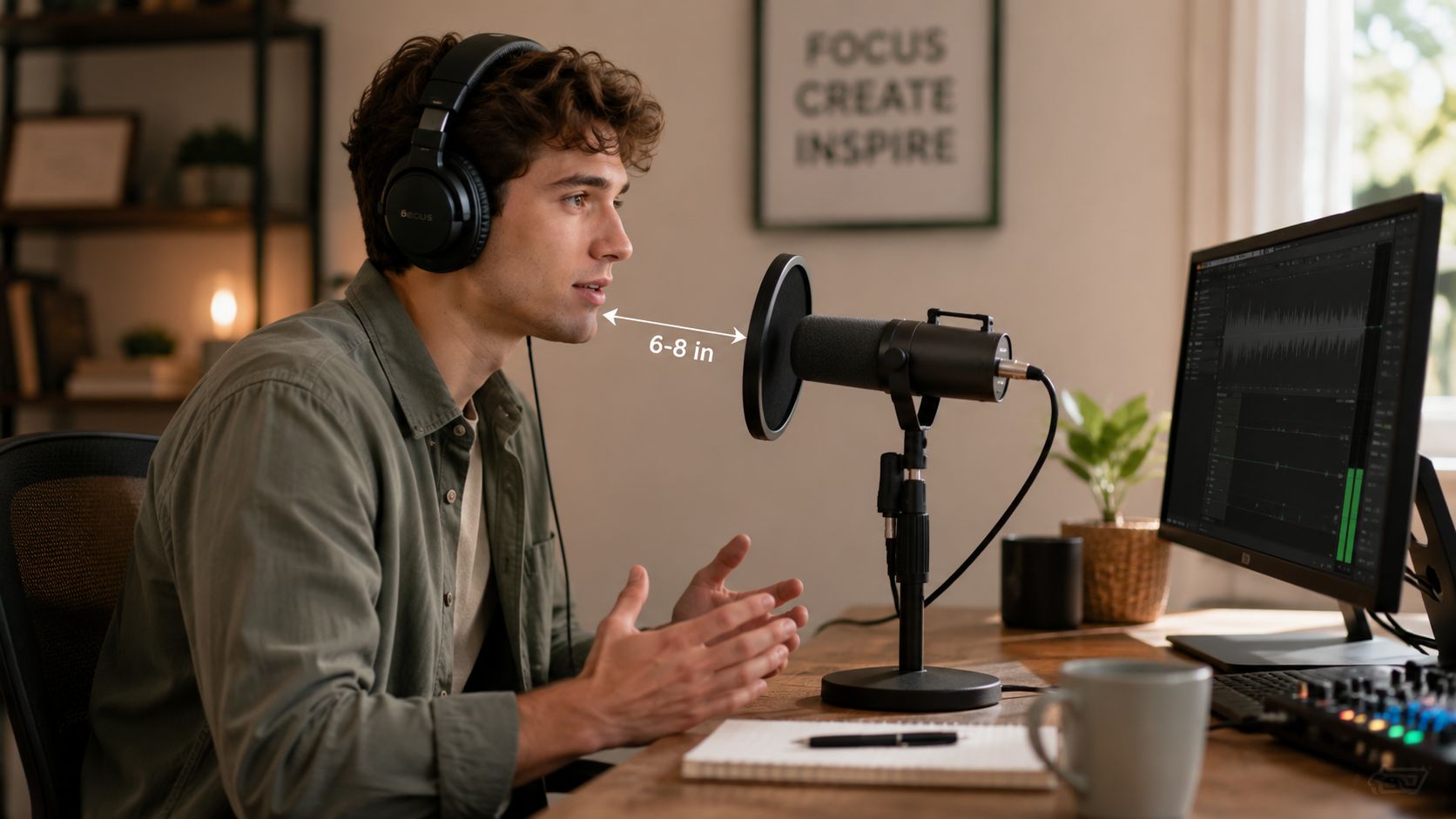
A lot of creators think strong delivery means bigger volume. It doesn't. Strong delivery means control. The best hosts sound composed when they want to land a point, then relax again without creating level spikes that force the engineer to rescue the take.
Practical rule: Pointing the mic toward your mouth is not enough. Your job is to hold the same position long enough for the engineer to work cleanly.
For creators serious about output quality, one bad habit at the mic can ripple into the edit, the master, the clip, and the final release. If you want a better reference point, Flexwork's podcast microphone guidance is the kind of resource that helps you show up ready instead of improvising under pressure.
Keep your delivery stable from first take to last
Use these habits every time.
- Stay at a fixed distance: Keep your mouth in the same zone instead of drifting during punchlines or emphasis.
- Use your body, not volume, for energy: Inflection beats shouting.
- Wear headphones the whole session: You'll catch breathing, plosives, and level jumps before they become expensive.
- Brief guests before they sit down: A quick mic reminder saves a lot of cleanup later.
- Bring in producer help when needed: Flexwork can smooth the session with the kind of coaching that keeps everyone sounding consistent.
3. Kill Phone Noise and Unplanned Interruptions
A notification can ruin more than a take. It can break concentration, flatten performance, and force everyone to rebuild the room's energy from scratch. Recording guidance for modern podcast and video sessions keeps returning to the same basics, silence the phone, move with deliberate care around cameras and stands, limit the people in the room, and respect the shared environment (creator session etiquette). That's not outdated advice. It's production discipline.
At Flexwork, this rule protects more than sound quality. It protects the schedule. Shared studios live on tight handoffs and back-to-back bookings, so every interruption costs time. If you're recording at home, the same rule still applies, because you don't just lose the moment, you lose the tone, the rhythm, and sometimes the whole section.
For hybrid podcast-video work, interruptions are even more expensive. A camera shake, a phone buzz, or a door opening mid-thought can make a clean conversation feel fragmented. The listener notices instantly, and the editor ends up patching around preventable noise.
Silence is a creative tool. Treat it that way.
Make the room interruption-proof
- Put your phone on airplane mode: Do it before the session starts, not after the first ring.
- Tell everyone nearby what's happening: Use a direct line like, “Recording from 2 to 4, please don't interrupt.”
- Shut down extra tabs and apps: Notification popups are just digital interruptions with a louder personality.
- Limit room traffic: Keep guests, staff, and friends out unless they're needed in the room.
- Use a private studio: Flexwork's soundproof rooms give you a cleaner lane than a shared office or living room ever will.
Flexwork's session etiquette guidance is worth reading before you book, because good behavior in the room keeps the production moving.
4. Treat Studio Gear Like It Belongs to the Next Creator Too
Professional equipment is a shared asset, not a prop. Handle it like it matters, because it does. In any serious studio, microphones, headphones, cables, cameras, and interfaces are part of the facility's operating system. If you force a connector, twist a setting you don't understand, or toss headphones wherever there's space, you're creating problems for the next booking as well as your own.
There's also a business reality behind the etiquette. The recording industry sits inside a commercial production system built around production, promotion, and distribution, and studios have become standard infrastructure in major markets rather than rare specialty spaces (recording studio industry background). That scale only works when clients respect the gear and the workflow around it.
Flexwork's approach is built for creators who want premium results without treating the room like a repair shop. If you're new to pro equipment, ask for an orientation. If you're not confident with gain staging, EQ, or routing, let the producer handle it. If you're doing a higher-intensity session, use Flexwork's production help and keep your attention on performance.
Practical rule: Don't learn on the studio clock if you can learn before the booking or hand the technical side to a producer.
Use gear with discipline, not bravado
- Handle microphones by the body: Never grab the capsule.
- Keep cables cleanly routed: Strain on a connector is how avoidable damage starts.
- Return headphones to the stand: Don't leave them crushed under papers or bags.
- Report glitches immediately: Strange behavior is a warning, not a challenge.
- Book producer support when you need it: Flexwork's Be My Podcast Producer package removes the pressure of operating the room alone.
5. Communicate Schedule Changes Before They Become Problems
A session runs clean when everyone speaks up early. If you need to reschedule, say it right away. If a guest is late, flag it before the delay spreads. If your setup is running behind, tell the studio team before your slot starts eating into someone else's time. Studio etiquette guidance is clear on this point, because disorganized sessions waste time and put pressure on shared rooms (studio etiquette guidance).
Flexwork treats booking changes as part of the production workflow, not an afterthought. That matters because every studio day is a chain of scheduled work, client expectations, and room availability. Clear communication protects the session, protects the relationship with the team, and keeps you in the category of creators who are easy to book again.
The strongest creators make the calendar boring. Everyone knows who is attending, when they are arriving, and what each session is supposed to accomplish. They also ask for help before confusion turns into a missed recording window.
A shared calendar keeps guest coordination, sponsor deadlines, and repeat bookings under control. Without it, small errors turn into expensive resets.
Run your session like a real production
- Confirm availability in advance: Don't assume guests remember the time or the plan.
- Send reschedules early: The studio can only release a slot or offer it to someone else if it knows the change before the booking starts.
- Protect recurring bookings: If you record weekly or monthly, keep standing time locked in and follow the studio's cancellation policy.
- Use a managed package when the admin is heavy: Flexwork's Market, Manage & Produce My Podcast service keeps scheduling, guest coordination, and production in one place.
- Keep one person responsible for the calendar: Too many people editing bookings creates avoidable mistakes.
- Plan for clean handoffs: If your session creates waste or cleanup needs, follow a hygienic waste management guide so the room is ready for the next creator.
6. Leave the Studio Cleaner Than You Found It
Clean rooms produce cleaner thinking. That sounds simple because it is. If you leave behind wrappers, spilled drinks, tangled cables, or gear scattered across the set, you're signaling that the next creator's time matters less than your convenience. That's amateur behavior, and it shows.
Professional studios in major creative markets have always understood that atmosphere is part of the product. Recording history shows how studios evolved from basic capture rooms into controlled production environments shaped by process and technology, especially as the field moved from acoustic methods to electrical recording, tape, and digital workflows (history of sound recording). Cleanliness is part of that control. So is how you pack up.
Flexwork's premium look only stays premium if the people using it treat the space with care. That includes wiping surfaces, coiling cables, and returning borrowed items where they belong. It also means leaving the room ready for the next creator, not just acceptable for yourself.
For creators who book content-heavy sessions, this matters even more. A tidy set keeps the vibe sharp on camera and keeps the team moving.
Pack out like a professional
- Bring minimal food and drink: Keep the room focused on production, not lunch.
- Wipe down shared surfaces: A soft dry cloth goes a long way.
- Coil cables properly: Tangles create hazards and wear.
- Return borrowed gear to the right place: Don't make staff hunt for missing pieces.
- Report spills immediately: Transparency beats silent cleanup attempts.
For a practical reference on cleanup habits and shared-space hygiene, the waste management guide is a useful reminder that post-session care is part of professional behavior, not an afterthought.
7. Protect Guest Privacy and Honor What People Agree To On Mic
A guest can make or break a session, and privacy is where professional rooms prove their value. If someone says a topic is off the record, keep it off the record. If they want their name, voice, or image handled a certain way, settle that before you release anything. Studio etiquette around privacy is part of the trust that brings strong guests back, and Flexwork supports that standard with private rooms, producer discretion, and podcast guest booking strategy support that keeps expectations clear from the start.
This applies to interview podcasts, branded content, and executive sessions alike. Serious guests pay attention to where their words end up, who can access the files, and how clips may be reused. Flexwork's controlled environment gives creators a cleaner way to handle sensitive conversations without turning the session into a negotiation.
Confidentiality does not limit reach. It makes better guests willing to speak candidly. When people trust the process, they give you sharper answers and more useful material. When they do not, the recording gets guarded fast.
Set the rules early, keep the paperwork organized, and make consent easy to verify. That protects the guest, protects the show, and keeps the production moving without awkward follow-up.
Make privacy part of your production habit
- Send a simple agreement before recording: Spell out editing, distribution, credit, and any limits on reuse.
- Ask direct permission on the record: Confirm whether clips, reels, and promotional excerpts are allowed.
- Keep notes in one place: Names, dates, and consent details should stay in a single file your team can check quickly.
- Honor removal requests quickly: Fast responses protect long-term trust better than clinging to a recording decision.
- Use producer support for guest management: Flexwork's Be My Podcast Producer package helps keep coordination clean, discreet, and organized.
7-Point Recording Studio Rules Comparison
| Practice | Implementation Complexity | Resource Requirements | Expected Outcomes | Ideal Use Cases | Key Advantages |
|---|---|---|---|---|---|
| Arrive 15 Minutes Early and Complete Technical Setup Before Session Start | Low, simple habit but needs planning | Time buffer; basic equipment checks; studio tech support if needed | Fewer delays; optimized levels; maximized billable time | Hourly rentals, guest interviews, Content Day sessions | Minimizes setup delays; enables troubleshooting; projects professionalism |
| Maintain Consistent Microphone Technique and Avoid Sudden Volume Changes | Medium, requires training and sustained discipline | Pop filter, headphones, level monitoring, occasional coaching | Consistent levels; less post-production; more usable takes | Multi-guest episodes, long-form recordings, high-volume edits | Reduces editing time; improves perceived audio quality |
| Silence Cell Phones and Minimize Unexpected Interruptions During Recording | Low, simple but requires communication and discipline | Phone settings (airplane/do not disturb), signage, soundproof room | Uninterrupted takes; preserved conversational flow; fewer re-records | Live streams, back-to-back bookings, interviews | Protects takes and schedule; reduces cleanup and rework |
| Respect Studio Equipment and Follow Usage Guidelines for All Gear | Medium, needs knowledge and careful handling | Equipment orientation, handling guidance, possible producer assistance | Reduced damage risk; consistent equipment performance; fewer fees | First-time users, rental studios, sessions with expensive gear | Protects assets; ensures reliability; builds trust with staff |
| Communicate Session Changes, Cancellations, and Schedule Conflicts with Advance Notice | Low–Medium, requires proactive calendar management | Scheduling tools (Calendly, calendar), studio contact, producer support | Fewer conflicts; better resource allocation; preserved goodwill | Recurring bookings, Content Day, multi-stakeholder shoots | Prevents fees; enables priority booking and flexibility |
| Keep the Studio Clean and Dispose of Waste Properly Before Leaving | Low, small extra effort at session end | 5–10 minutes of cleanup; basic wipes/trash disposal | Clean, welcoming space; reduced spill/damage incidents | Shared studios, frequent turnover sessions, professional shoots | Preserves ambiance; speeds turnover; earns studio goodwill |
| Honor Guest Agreements and Protect Privacy and Confidentiality of Session Content | Medium–High, requires documentation and legal care | Signed agreements/NDAs, consent forms, record-keeping, producer or legal support | Legal protection; maintained trust; access to higher-caliber guests | Executive interviews, NDA-sensitive content, branded/corporate projects | Safeguards privacy and reputation; reduces legal risk; attracts top guests |
Turn Studio Rules Into Your Creative Advantage
These recording studio rules are not restrictions, they're advantages. The creators who respect the room, the gear, the schedule, and the people around them get more from every session because they spend less time correcting avoidable mistakes. That's the professional edge. It's not about being fussy, it's about protecting the investment you made in your content.
Flexwork Studios is built around that mindset. The point isn't just to rent a room, it's to work in a system that helps you produce cleaner audio, better video, and stronger content without the usual DIY drag. If you're ready to upgrade from improvisation to a repeatable workflow, the right package makes the difference. Market, Manage & Produce My Podcast starts at $1,500 per episode, and a Content Day is $3,000 per day. Both are built for creators who want premium output and a team that knows how to keep the day moving.
There's a reason polished creators feel easier to scale. They arrive ready, they communicate clearly, and they leave with assets worth using. That's how a studio booking becomes a content engine instead of a one-off expense.
If you want a cleaner process, better episodes, and a space that matches your ambition, book the session, bring your plan, and let the studio do what it's built to do. Flexwork can support the whole workflow, from rental to production to growth, and the right next step is to put your ideas in a room that can handle them.
Flexwork Podcast Studios gives creators in Springfield, NJ a premium place to record with structure, speed, and support. If you're ready to work by professional recording studio rules instead of guessing your way through another session, visit Flexwork Podcast Studios and book the setup that fits your show.