
Your 2026 Podcast Launch Checklist: 10 Essential Steps
 July 12, 202635 Minutes
Meta description: Launch smarter with this podcast launch checklist for NJ and NY creators. Build a polished show with pro studio support, strategy, and growth tools.
URL slug: /podcast-launch-checklist-nj-ny
Primary keyword: podcast launch checklist
Secondary keywords: podcast studio New Jersey, podcast production packages, podcast launch strategy
Launch Your Podcast with Polish and Purpose
You have a strong concept, a clear point of view, and probably a running note on your phone packed with episode ideas. Then the practical aspects emerge. Mic choices, room echo, editing timelines, hosting platforms, cover art, guest scheduling, clips, websites, launch timing. What started as a creative move suddenly feels like a second full-time job.
That's where most promising shows lose their edge. DIY production drains energy that should go into the message, the guest chemistry, and the brand you're building. A podcast doesn't win attention on ideas alone. It wins on consistency, clarity, and the quality people hear and see from the first episode.
This podcast launch checklist is built for ambitious creators in the NJ and NY metro who want to launch like professionals, not hobbyists. Flexwork Studios gives that ambition a real-world home, with acoustically treated studios in Springfield, NJ, plus production support, Content Day sessions, podcast websites, and growth-minded packages that help you move faster without looking rushed. If you want a polished launch that feels premium from day one, start here.
1. Define Your Show Format and Content Pillars
A good podcast sounds effortless because the structure is decided before anyone hits record. Lock in your format first. Decide whether you're running solo commentary, interviews, co-hosted conversation, narrative storytelling, or a hybrid. Then set the rules. Choose your target listener, typical episode length, publishing cadence, and the promise each episode makes.
Most standout shows are simple on the surface. The Tim Ferriss Show built its identity around deep interviews with high performers. Stuff You Should Know leans into educational conversation with two hosts and reliable chemistry. The lesson isn't to copy them. It's to make your own format easy to recognize.
Build a show bible
Your content pillars are the recurring themes your audience can count on. Keep that list tight. Three to five pillars usually gives you enough range without turning your show into a grab bag of unrelated opinions.
- Define the listener clearly: Write one paragraph describing who the show serves, what they want, and why they'll return.
- Name your recurring themes: Pick three to five categories you can talk about for the long haul.
- Set your release rhythm: Weekly is clean and credible if you can maintain it.
- Map your opening run: Plan your first five episodes before you book studio time.
Practical rule: If your show can't be explained in two sentences, it isn't ready for launch.
In the NJ and NY market, this matters even more because your audience is surrounded by sharp media. They've heard polished shows. They expect them. Flexwork's production team works best when you arrive with a clear show identity, because format decisions influence everything from studio setup to intro scripting to clip strategy for social distribution.
2. Invest in Professional-Grade Audio Equipment and Studio Space
Your first guest sits down. The cameras are up. You press record. Then the room gives you away. Echo, HVAC rumble, bad mic technique, and flat lighting make a new show look cheaper than it is. In the NJ and NY market, that mistake costs you faster because your audience already knows what polished media sounds and looks like.
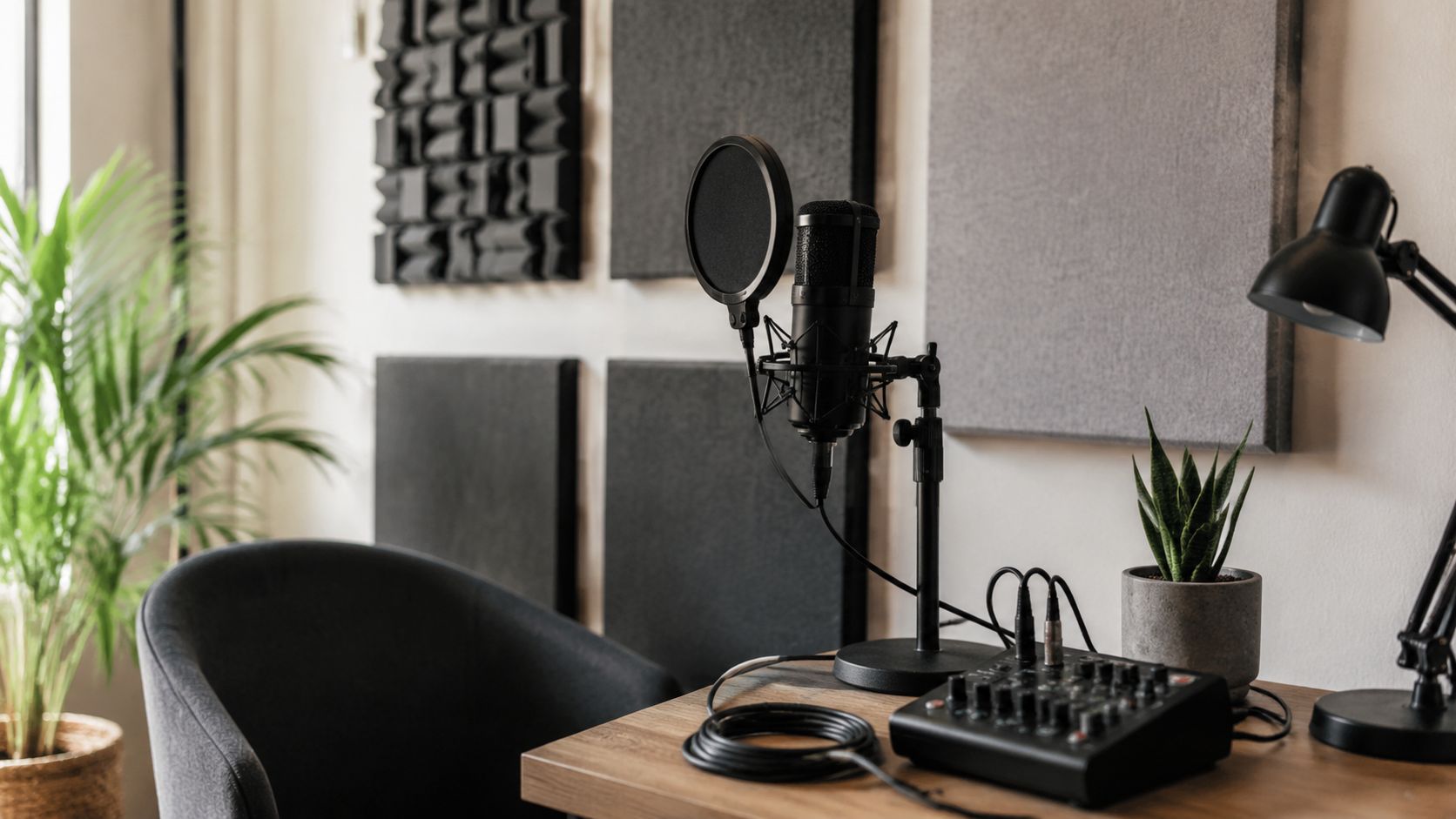
A premium podcast needs a room built for performance. That means controlled acoustics, reliable microphones, proper camera placement, clean lighting, and an engineer who catches problems before they ruin a take. You can assemble that at home over time. Serious creators usually get to launch faster by recording in a studio that already has the setup dialed in.
That choice affects more than sound quality.
It affects how you show up on mic, how confidently guests settle into the conversation, and how much usable video you get from a single session. For aspirational creators across North Jersey, Manhattan, and the wider NY metro area, Flexwork Studios gives you a practical way to launch with a professional standard instead of spending months testing gear, room treatment, and camera setups on your own.
What to prioritize before your first recording day
Choose a space that gives you four things from the start:
- Acoustic control: Voices should sound close, clear, and consistent.
- Engineer support: Someone should be monitoring levels, mic position, and technical issues in real time.
- Video readiness: If you plan to promote clips, your framing, lighting, and set design need to look intentional.
- Batch-production capacity: The best studios let you record multiple episodes or supporting assets in one session.
If you want a higher-end launch workflow, Flexwork also offers Content Days with pricing and deliverables, including edited reels or professional photos. That matters if you want your first month of podcast promotion captured in the same session as your episodes.
Submission timing matters too. According to The Podcast Host's guide to starting a podcast, Apple Podcasts and Spotify can take up to 24 hours to approve a feed after RSS submission. Submit your trailer or first episode at least two days before your public launch date so directory approval does not hold up the release.
Before you book, watch how a polished setup changes the room dynamic:
Book the room that makes your show look established on day one.
3. Secure and Vet Your First Guest Lineup
Your opening guests shape how people interpret your show. They signal taste, access, and standards. If the first run feels random, the show feels random. If the guest list feels intentional, listeners assume the brand is intentional too.
Start with five to ten people who fit your positioning. In the NJ and NY area, that can mean founders, creative directors, operators, coaches, local media personalities, and subject matter experts who already speak to the audience you want. Warm introductions work better than cold outreach, especially for launch.
Treat guest booking like brand curation
Don't just ask whether someone is impressive. Ask whether they're right for episode one. A guest can be accomplished and still be a poor fit if they don't match your show's tone, pace, or values.
Use a simple vetting filter:
- Audience fit: Will your ideal listener care about this person's perspective right now?
- Conversation quality: Can they tell stories, answer directly, and speak with energy?
- Brand alignment: Do they strengthen the identity you're trying to build?
- Promotion potential: Are they likely to share the episode after it goes live?
A one-page guest brief makes the whole process cleaner. Include the episode angle, sample questions, wardrobe notes if you're filming, arrival instructions, and mic guidance. Then schedule a short pre-call. That call does more than confirm logistics. It lowers tension and gives you better chemistry on camera.
The first guest run shouldn't chase fame. It should establish trust.
Flexwork can support that polish behind the scenes. If you're producing in-studio, the team can help coordinate recording flow, prep the room for interview format, and build a smoother arrival experience that makes guests feel like they've stepped into a serious media operation.
4. Build a Professional Podcast Website and Brand Identity
A founder records a polished first episode in North Jersey, posts it to Spotify, and then sends prospects to an Instagram page with a link tree. The audio may be strong, but the brand still feels unfinished. If you want your show to attract serious guests, sponsors, clients, or press attention in the NJ and NY market, give it a real home.
Your podcast website is that home. It gives your show a place you control, where every episode lives alongside your positioning, your host story, your guest roster, and your contact path. It also changes perception fast. A clean site, sharp cover art, consistent typography, and polished episode visuals signal that this show belongs in a professional media environment.

Build a brand people can recognize in one glance
Consistency does more than make the show look good. It makes the show memorable. Your cover art, color palette, typography, intro music, host bio, episode thumbnails, and social templates should all feel like they came from the same creative direction.
That standard matters even more if you are building a podcast around your business, personal brand, or public profile in the NJ and NY corridor. Local creators have access to a real advantage here. Flexwork Studios gives you more than recording space. It gives you a physical, premium setting where your visual brand, guest experience, and website presence can all be built to match.
Flexwork also offers professionally built podcast websites for creators who want the infrastructure handled properly. Pricing starts at $5,000 plus hosting. For coaches, founders, operators, and experts using a podcast as a serious growth asset, that is often a better decision than stitching together a site yourself after hours.
Your site should include:
- Dedicated episode pages: Give each episode its own page with a title, summary, embedded player, and key links.
- Guest bios: Add credibility and make each page easier for guests to share.
- Listening platform links: Point visitors clearly to Apple Podcasts, Spotify, and your preferred platforms.
- Email capture: Start building a direct audience on day one.
- Clear contact options: Make it easy for sponsors, media contacts, and future guests to reach you.
Premium shows feel coherent before listeners can explain why. Build that standard from the start.
5. Establish a Distribution and Syndication Strategy
Recording is only half the launch. Distribution decides how discoverable the show becomes. At minimum, your podcast should be structured for Apple Podcasts, Spotify, and other major directories through a hosting platform that handles RSS cleanly. Beyond that, you need a syndication plan that turns one episode into a full week of attention.
Launch with more than one episode. Podbean recommends releasing 3 to 5 full episodes on launch so new listeners can binge immediately, and many beginner guides reinforce having 3 to 5 additional episodes in reserve to maintain consistency in the early weeks, as outlined in Podbean's podcast launch checklist.
Think beyond the feed
Many creators stall at this step: They upload the audio, post once, and assume launch week is done. It isn't. Your distribution strategy should include short clips, email, social cutdowns, guest assets, and branded graphics that keep the episode circulating.
Use a clip calendar tied to each release:
- Launch day clip: Pull the strongest line or moment.
- Midweek clip: Publish a useful insight or bold opinion.
- Guest clip: Give the guest a clean branded asset they'll share.
- Evergreen clip: Extract a segment that still works weeks later.
Flexwork's Content Day model supports this beautifully because it turns one recording block into multiple assets. That's how polished podcasts stay visible without creating content from scratch every day.
6. Create a Content Calendar and Production Schedule
Consistency builds trust faster than intensity. A creator who releases on time every week will outperform a creator who disappears for three weeks and returns with excuses. Your content calendar protects the show from your own schedule.
Build your calendar around themes, not just dates. Group episodes by seasonal relevance, campaign timing, audience interests, and guest availability. If you're producing a business or brand-led podcast in the NJ and NY market, align episodes with real moments in your industry calendar.
Batch production beats reactive production
The smartest launch calendars are built around buffers. Produce ahead so you're never editing tonight for tomorrow's upload.
Most new shows only get 27 to 32 downloads per episode in their first week, according to Vida's podcast launch checklist. That's exactly why your production schedule matters. Early momentum won't come from huge volume. It comes from showing up consistently, learning fast, and improving episode by episode.
A working calendar should cover:
- Recording dates: Book studio sessions in blocks.
- Edit deadlines: Give post-production enough room to breathe.
- Promotion timing: Schedule social and email support around each release.
- Backup inventory: Keep evergreen episodes ready in case a guest cancels.
- Approval windows: Decide who signs off on titles, thumbnails, and clips.
For busy founders and creators, Flexwork's Content Day is especially effective because it compresses production into one focused session. You can record multiple episodes while your hair, wardrobe, set design, and creative energy are all aligned. That's a better use of time than trying to recreate launch-level polish every week.
7. Develop an Audio Branding and Production Standard
A listener in Hoboken or Manhattan should know your show within seconds. That recognition does not come from a clever first line. It comes from a consistent sonic identity. Your intro lands the same way every time, your voice sounds polished, your transitions feel intentional, and the final mix never drifts from episode to episode.
That standard matters more in a crowded regional market, where founders, creatives, and executives are deciding whether your show feels premium or amateur in the first 30 seconds.
Build a sound people can recognize
Pick your intro music once. Pick your outro once. Set the tone of your voice processing, guest levels, transitions, ad placements, and calls to action. Then document the rules and use them every time.
A strong production standard should define:
- Intro and outro structure: Short, repeatable, and unmistakably yours.
- Mixing approach: Clear vocals first, balanced music, and no muddy low end.
- Transition style: Keep the same pacing and audio cues across segments.
- Loudness target: Make episodes feel consistent across headphones, cars, and laptop speakers.
- File delivery workflow: Naming, exports, approvals, and handoff steps should be fixed from the start.
For aspirational creators in NJ and NY, this is one of the clearest places to choose a professional path instead of patching together a home setup. If you record at Flexwork Studios, set your audio chain once and keep it locked. The room, microphones, monitoring, and production support stay consistent, which protects your brand far better than bouncing between borrowed offices, kitchen tables, and remote recordings with mismatched sound.
Studio note: Test your final mix on headphones, laptop speakers, and in the car. If your voice drops back, sounds thin, or fights the music in any one setting, it is not ready to publish.
Do not treat production quality as cleanup work. Treat it as brand design for the ears. The best new shows in this market sound established on day one because they commit to a standard and record in an environment built for it.
8. Plan Your Monetization Strategy and Sponsorship Approach
A founder in Hoboken or Brooklyn can launch a polished show, book credible guests, and still end up with a podcast that sounds expensive but has no commercial plan behind it. Set the revenue model before episode one. That decision shapes your format, your offers, your sponsor pitch, and the calls to action you place inside each episode.
The opportunity is large, and serious brands are already treating podcasting as a real ad channel. Grand View Research projects the global podcast advertising market will reach USD 38.52 billion by 2030, up from USD 19.36 billion in 2024, and reports rising marketer adoption in Grand View Research's podcast advertising market report.
Choose the business model before you choose the sponsor script
Start with one primary outcome. If you try to chase sponsors, sell services, grow a paid community, and push products all at once, your show turns unfocused fast.
Use one of these paths as the lead strategy:
- Client acquisition: Best for consultants, agencies, attorneys, coaches, and service businesses that want sales conversations from the audience.
- Sponsorship revenue: Best for niche shows with a defined listener profile that brands want to reach.
- Products or paid offers: Best for creators with courses, memberships, events, or premium content already in place.
- Brand authority: Best for founders and executives who want the show to support speaking, partnerships, recruiting, or broader market visibility.
For NJ and NY creators, local positioning matters here. A show recorded consistently at Flexwork Studios signals a higher standard to both sponsors and premium clients. If you want a brand to pay for placement, or a buyer to trust your expertise, your show needs to feel established from the start.
Plan the sponsor approach early too. Decide how many ad slots you will allow, where they will appear, what categories fit your audience, and which brands you will refuse. Strong shows protect the listener experience. They do not cram in irrelevant reads for quick cash.
If your goal is growth tied to revenue, professional support is often the right move. Flexwork's Market, Manage & Produce My Podcast service starts at $1500 per episode and includes a 20-episode growth commitment. That structure fits creators who want a real media asset, not a hobby with a logo.
Revenue follows attention. If you need sharper promotion tactics after launch, study practical ways to boost audience engagement so your show becomes more valuable to sponsors, partners, and buyers.
9. Build an Audience Engagement and Growth Strategy
Raw downloads can distort your judgment in the early days. Focus on the people who listen, respond, share, and return. A smaller engaged audience is more valuable than a larger passive one, especially when you're building a premium show.
There's also a practical reason to prioritize engagement early. Some industry commentary points to a post-launch drop-off period when shows lose momentum if they don't sustain activity after release. Whether you're launching a personal brand show or a company podcast, the answer is the same. Stay present after day one.
Create touchpoints outside the apps
You need direct channels that don't depend entirely on platform algorithms. Email is the strongest one. Community spaces, text lists, live events, and social replies all help, but your list gives you control.
Use every episode to invite action:
- Ask for one next step: Newsletter signup, review, DM, or reply.
- Feature listener input: Read questions or comments on air.
- Create share assets: Give guests and fans polished clips and graphics.
- Respond consistently: Set aside time each week for community touchpoints.
If you want stronger ideas for how to boost audience engagement, start with habits you can sustain. A clean weekly reply routine beats a big burst of launch-week energy followed by silence.
Stay visible for the first month after launch. That's when listeners decide whether your show is part of their routine or just another trial listen.
For NJ and NY creators, Flexwork's advantage is tangible. You're not building alone on scattered apps. You can record, produce, clip, and refine from one premium home base.
10. Establish Analytics and Performance Tracking from Day One
A podcast becomes a business asset when you can read what's working and act on it. That starts on day one. Don't wait until episode ten to wonder why listeners leave halfway through or why one guest episode outperformed another.
Choose a small dashboard and review it weekly. Keep it focused. Too many metrics create noise.
Track the metrics that matter first
For the first 90 days, select 3 to 5 primary KPIs. Podmuse recommends tracking metrics such as total downloads per episode, unique listeners, average consumption rates, subscriber growth, and in-episode drop-off points, then documenting targets and sharing an initial performance snapshot after the first 30 days in its podcast launch checklist guide.
That approach keeps your decisions grounded. It also gives you a clearer story for partners, sponsors, or internal stakeholders.
Start with these:
- Downloads per episode: Your basic reach signal.
- Unique listeners: A clearer view of audience size.
- Average consumption: A direct read on episode quality and fit.
- Subscriber growth: Whether people want more after listening.
- Drop-off points: Where attention fades inside the episode.
If you want deeper support while your show grows, Flexwork's higher-touch packages are built for creators who care about both production and performance. The strongest podcast launch checklist doesn't stop at publishing. It creates a repeatable system for improvement.
Podcast Launch: 10-Item Comparison
| Item | Implementation complexity | Resource requirements | Expected outcomes | Ideal use cases | Key advantages |
|---|---|---|---|---|---|
| Define Your Show Format and Content Pillars | Low–Medium: planning, audience research | Moderate: time for research and documentation | Clear episode structure, improved retention, focused content | New shows, rebrands, teams needing editorial clarity | Cohesive brand identity; predictable episodes; simpler production |
| Invest in Professional-Grade Audio Equipment and Studio Space | Medium–High: technical setup and booking coordination | High: studio rental, pro mics, engineers, upkeep | Broadcast-quality audio, faster editing, professional guest experience | Shows targeting high production value or monetization | Superior sound quality; efficient workflow; guest confidence |
| Secure and Vet Your First Guest Lineup | Medium: outreach, scheduling, pre-interviews | Moderate: booking time, coordination, vetting processes | Built-in audience reach, credibility, stronger conversations | Interview formats, launch seasons, audience growth focus | Audience amplification; elevated authority; referral network |
| Build a Professional Podcast Website and Brand Identity | Medium: design, SEO, content integration | Moderate–High: design/development, hosting, maintenance | Owned hub, better discoverability, monetization channels | Shows seeking brand extension, email capture, sponsors | Direct audience control; credibility; centralized content & assets |
| Establish a Distribution and Syndication Strategy | Medium: platform submissions and repurposing workflow | Moderate: hosting platform, video editing, clip production | Broader reach, cross-platform discovery, traffic redundancy | Shows aiming for multi-platform presence and growth | Increased discoverability; clip-driven acquisition; revenue diversification |
| Create a Content Calendar and Production Schedule | Low–Medium: planning discipline and coordination | Moderate: scheduling tools, time for batching | Consistent releases, reduced last-minute work, higher efficiency | Regular cadence shows, teams, batch-recording workflows | Reliability; cost/time efficiency through batching; clearer delegation |
| Develop an Audio Branding and Production Standard | Medium: commissioning music and setting mix standards | Moderate: music licensing/composition, mixing/mastering services | Sonic consistency, higher perceived value, easier editing | Shows pursuing premium positioning or sponsorships | Brand recall; professional polish; consistent listener experience |
| Plan Your Monetization Strategy and Sponsorship Approach | Medium–High: business planning, pitch materials, negotiations | Moderate: analytics, media kit creation, outreach effort | Predictable revenue streams, sponsor relationships, monetization roadmap | Shows ready to monetize or attract advertisers | Diversified income; sponsor alignment; clearer ROI for partners |
| Build an Audience Engagement and Growth Strategy | Medium: community-building and engagement routines | Moderate–High: community platform, moderation time, content for engagement | Higher retention, stronger word-of-mouth, improved sponsor appeal | Niche shows, community-led creators, long-term growth plans | Loyal, engaged listeners; direct communication channels; better conversions |
| Establish Analytics and Performance Tracking from Day One | Medium: analytics setup and dashboarding | Moderate: analytics tools, reporting time, technical setup | Data-driven content decisions, sponsor proof points, optimization | Shows seeking growth optimization and sponsor-ready metrics | Insight-led improvements; audience attribution; early course correction |
Your Studio Awaits From Checklist to Launch
You can spot a rushed podcast launch fast. The host is talented, the idea is strong, but the show arrives unevenly. The audio shifts from episode to episode, guest scheduling is messy, the website lags behind, and promotion becomes an afterthought. What should feel like a serious media debut ends up feeling improvised.
That outcome has very little to do with ambition. It comes from broken execution.
A strong launch requires all ten pieces working together. Clear format. Good recording conditions. Vetted guests. A credible brand. A real release schedule. Audio standards. Distribution. audience growth. monetization planning. performance tracking. When those parts are set up properly, the show feels sharp from day one, and that standard shapes how listeners, guests, and sponsors judge it.
For creators in New Jersey and New York, the smartest move is to stop building a launch out of scattered tools, borrowed gear, and one-off freelancers. Use a studio partner that can support the full process in one place. Flexwork Studios gives aspirational creators a practical path to launch with a professional room, polished visuals, production support, website execution, and high-output recording options such as Content Days.
That local advantage matters. A polished studio in the NJ and NY market does more than improve sound quality. It changes the way you prepare, the way guests respond to your invitation, and the way your show looks when clips, photos, and branded assets start circulating. Your podcast stops feeling like a side project and starts reading like a premium creative property.
Professional support also protects your time. You should spend your energy hosting well, refining your point of view, and building relationships that strengthen the show. You should not be troubleshooting room echo at midnight or scrambling to patch together branding a week before launch.
Treat the checklist like a production standard, not a casual suggestion.
If your goal is to build authority, attract better opportunities, and launch with the level of polish your idea deserves, record the first run properly. Book the room. Build the episode buffer. Launch with confidence instead of correction.
Flexwork Podcast Studios is where NJ and NY creators turn strong ideas into polished shows. If you're ready to record in a premium studio, plan a high-output Content Day, build a custom podcast website, or get hands-on production support, book a tour or start your project with Flexwork Podcast Studios.