
6 Marketing Agency Websites to Inspire Your Podcast’s Site
 June 25, 202626 Minutes
Your podcast can sound polished, thoughtful, and high-value in every episode, then lose momentum the moment someone clicks over to your site. That's the disconnect a lot of creators are living with right now. The show feels premium. The website feels patched together. And when that happens, your brand starts looking smaller than it really is.
The best marketing agency websites fix that instantly. They make their positioning clear, prove capability through design, and move visitors toward action without friction. Flexwork Studios treats your website the same way. It isn't a side asset. It's your digital front door, your pitch deck, and your credibility engine in one place. In this list, you'll see six agency websites worth studying, plus the exact lesson each one offers podcasters and creators who want a better brand presence. If you're serious about the visual side of growth, start with this digital marketing website design process.
1. WebFX The Model of Transparency

A listener finishes a strong episode, clicks your website, and starts looking for the obvious next step. Sponsor the show. Book you to speak. Hire your team. Ask about production. If those paths are unclear, interest fades fast.
WebFX gets this right. Its website brings service structure and pricing logic closer to the surface than many large agencies are willing to. That decision builds trust fast because visitors do not have to decode vague positioning before they can evaluate the offer.
That is the lesson for creators.
If you host a podcast, run a media brand, or sell creative services around your show, present your offers like a buyer would expect to find them. Clear pages. Clear outcomes. Clear next steps. A strong agency website does not just look polished. It reduces hesitation.
What podcasters should copy
WebFX works because it answers commercial questions early. What do you do? Who is it for? How does someone buy? That structure matters for creators because your website has to convert more than casual listeners. It also needs to serve sponsors, collaborators, event organizers, and premium clients who want confidence before they reach out.
For a podcaster or creator, that means:
- Name each revenue stream clearly: Create distinct pages for sponsorships, consulting, speaking, branded content, guest appearances, or production services.
- Write buyer-focused page titles: “Work With Me” is weak. “Podcast Sponsorship Packages” or “Founder Interview Consulting” is stronger.
- Make inquiries easy: Put a visible call to action on every key page so visitors can contact you without hunting through navigation.
- Explain your process: Buyers want to know what happens after they click. A short process section removes friction and filters weak leads.
Practical rule: If a serious buyer cannot understand your offer in under a minute, your site is underperforming.
WebFX also shows why transparency is a brand decision, not just a UX choice. Creators often spend serious energy refining the show itself while leaving the business side vague online. That gap costs real opportunities. The site should carry the same level of clarity as the content.
Execution matters here. If you promise a premium brand, your backend workflow has to support it, from episode polish to delivery standards. Flexwork covers that clearly in these post-production best practices for podcast episodes.
If your current website only asks visitors to “listen now,” use WebFX as the correction. Build a brand hub that explains the value, packages the offer, and makes buying feel easy.
2. SmartSites The Regional Powerhouse

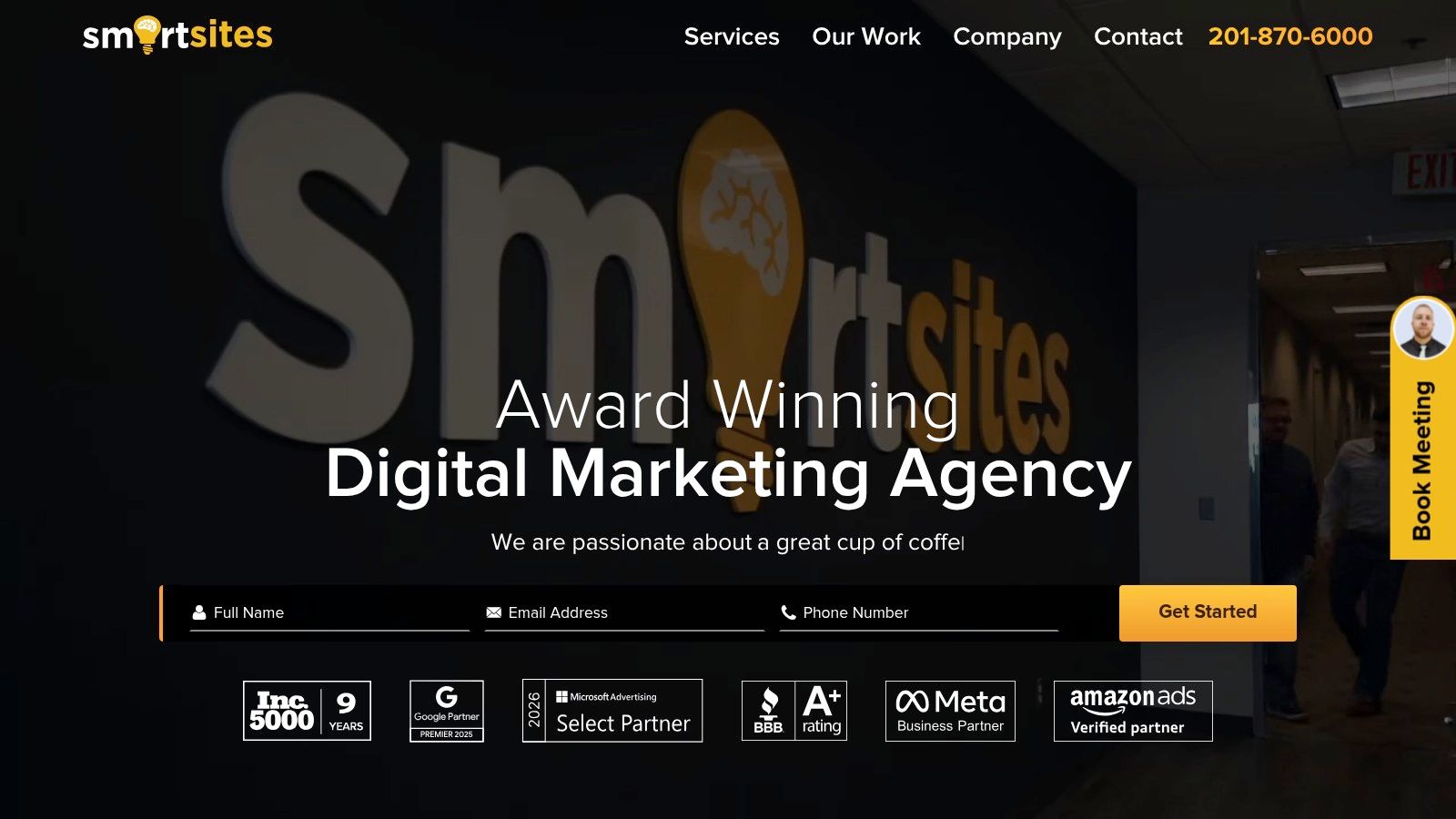
A founder in Newark hears your show, lands on your site, and decides in seconds whether you feel like a serious local media brand or a hobby with good taste. SmartSites gets that decision point right. Its website presents regional relevance with enough polish to compete far beyond its home base.
That combination matters for podcasters and creators building in New Jersey, New York, or any strong local market. Regional identity should sharpen your positioning. It should not shrink it. If your audience, guests, or clients live in a defined geography, your site should say so with confidence and back it up with sharp design, clear structure, and proof that you understand the market.
Why this works for creator brands
SmartSites is effective because it feels established without feeling distant. The site signals credibility through clear service categories, trust markers, and organized navigation. For a creator, that translates into a brand hub that shows where you record, who you serve, and why your perspective carries weight in that market.
Structure does the selling here. Webflow's guidance on services and offerings for marketing agency websites reinforces the same point. Visitors should see your main specialties immediately, then find deeper detail on dedicated pages without friction. A creator site should work the same way.
Here's the lesson to apply:
- State your market clearly: If you serve founders in Jersey City, culture audiences in Brooklyn, or business owners across the NJ/NY corridor, put that context on the page.
- Turn geography into authority: Local references, recognizable city names, and region-specific messaging make your brand feel credible fast.
- Build separate journeys: Give sponsors, guests, and collaborators their own paths instead of forcing everyone through an episode archive.
SmartSites also shows how to make a website feel easy to work with before a conversation starts. That matters more than many creators realize. A scattered site creates doubt. A clear one tells a prospect you run the brand with discipline.
For podcasters, this often extends beyond the website itself. Your regional presence should connect to clips, interviews, and platform-specific distribution. Flexwork covers that in this guide to a video content marketing strategy for creators and brands.
Your site should make a nearby prospect think, “They know this market, and they know how to present it.”
A key insight from SmartSites. A creator in the NJ/NY metro area does not need a generic online brochure. You need a polished home base that feels rooted, credible, and commercially ready. Flexwork builds that kind of presence for creators who want local trust and national-level brand standards.
3. Wpromote The Integrated Strategist
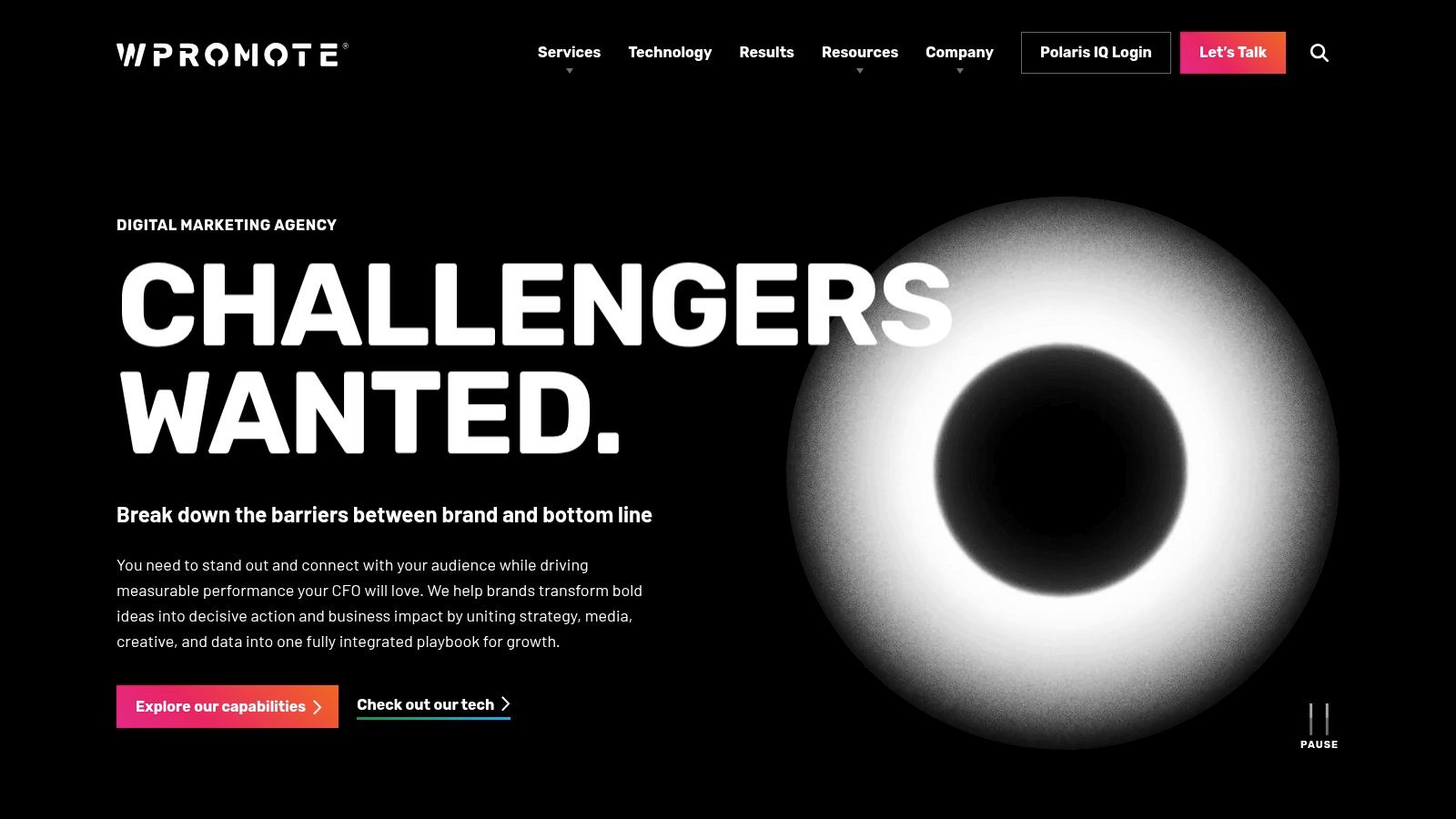
Wpromote is a strong example for creators because its website presents growth as an interconnected system. Media, creative, data, and technology are positioned as parts of one strategy. That is the right model for a podcaster who wants to build a serious brand, not just publish episodes.
A listener lands on your site after hearing a clip, a guest mention, or a social post. If they find nothing but an episode archive, you lose momentum. Wpromote avoids that trap. Its site tells visitors how the whole machine works, which makes the brand feel bigger, sharper, and more commercially mature.
The branding lesson behind the design
The core lesson here is integration. Your podcast should sit at the center of a brand system that includes video, email capture, sponsor pages, guest credibility, community touchpoints, and premium offers. Wpromote communicates that kind of strategic coordination clearly, and that is exactly what many creator websites lack.
The design supports the message. Motion, hierarchy, and page structure create a sense of momentum. For creators, that means your site should do more than describe your brand. It should demonstrate it through trailers, clips, visual pacing, and clear pathways to the next action.
Apply that standard in three areas:
- Show the brand ecosystem: Connect your show to YouTube, short-form content, newsletter signup, speaking, and services or products.
- Create sponsor-ready paths: Build dedicated pages for partnerships, audience fit, and brand collaborations instead of hiding everything on an About page.
- Use visuals to prove quality: Feature video snippets, show branding, and polished layouts that signal you take production and presentation seriously.
This matters most when you start monetizing. A strong show can still look small online if the website fails to frame the business around it. If you want better deals, clearer positioning, and stronger inbound interest, your site needs to reflect a real growth strategy. Flexwork helps creators build that strategy with a clear podcast monetization strategy for creators that connects content, audience attention, and revenue.
Wpromote gets one thing exactly right. High-value brands present the full system. Your podcast website should do the same.
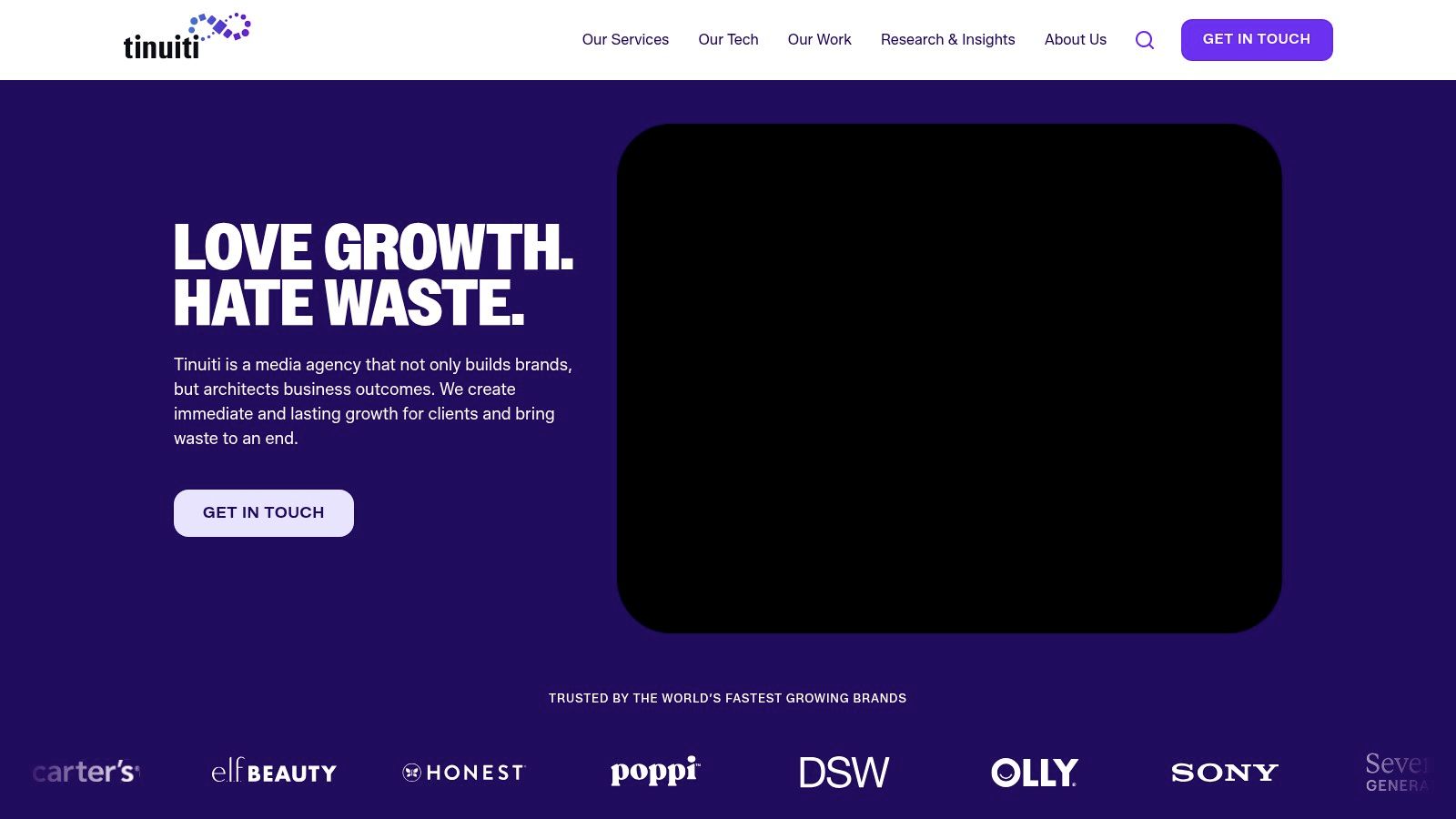
4. Tinuiti The Commerce and Monetization Expert
A creator lands a great sponsor lead, sends them to the website, and loses the deal because the site has no clear sponsorship page, no audience framing, and no obvious next step. That is the gap Tinuiti helps expose.
Tinuiti earns attention because the site is built around revenue. Commerce, acquisition, and monetization are not side notes. They shape the structure. That is the lesson for podcasters and creator-led brands. Your website should not stop at introducing the show. It should show how the business works.
Many creator sites underperform. They look polished enough for listeners, but not credible enough for buyers. A sponsor, affiliate partner, or premium client should be able to understand your commercial value in minutes.
Build for buyers, not just browsers
Tinuiti organizes pages around business outcomes. That is the strategic takeaway. For a podcaster, every core page should support a monetization path, whether that means sponsorships, affiliate sales, premium products, live events, or services.
Execution matters. Mannix Marketing notes in its guide to important agency website features that strong agency sites need clear contact paths and forms that route inquiries into the right system quickly. Apply that standard to your creator brand. If a sponsor has to search for a contact option, your site is blocking revenue.
Use Tinuiti's approach in three concrete ways:
- Create a real partnership page: List sponsorship formats, campaign options, audience alignment, and past brand work.
- Frame your audience in commercial terms: Explain who pays attention, what they care about, and why that trust converts.
- Write stronger calls to action: “Book a sponsorship conversation” or “Request media kit” will outperform a vague contact prompt.
One more point matters. Monetization pages should connect directly to growth pages. If you want brands to take your inventory seriously, prove that your audience is expanding and your attention is compounding. Flexwork helps creators turn that into a practical system with a plan for getting more podcast listeners consistently.
Monetization move: Your website should work like a sales asset that qualifies leads before they ever email you.
Flexwork builds creator sites with that standard in mind. Strong monetization starts with clear positioning, strong page architecture, and a visible revenue story. If your brand is ready to tighten that side of the business, pair the site with a real podcast monetization strategy and make every page support it.
Tinuiti gets the priority right. A polished website should not just look credible. It should make buying from you feel obvious.
5. KlientBoost The Conversion Machine
A listener lands on one of your episode pages after hearing you on another show. They skim the title, maybe press play, then leave. No email capture. No next step. No reason to stay in your world.
KlientBoost builds against that failure point. Its site is designed to convert attention into action, and that is the right lesson for creators. Your website should not behave like a content archive. It should direct visitors toward the next commitment.
Turn episode pages into growth pages
For podcasters, this matters at the page level. Every episode page should have a job. Get the subscribe. Get the inquiry. Get the email signup. If a page only hosts audio and transcript, it is underperforming.
KlientBoost also gets the proof layer right. Strong case studies use clear outcomes and visual evidence to make the result feel concrete, as noted in Upload Digital's guide on how to evaluate case studies and testimonials for a digital marketing agency. A creator site can apply the same principle without forcing fake business metrics onto the page. Show category rankings, audience testimonials, notable guests, sold-out events, press mentions, and screenshots that validate momentum.
That is how stronger creator branding works too. Your site needs a point of view, a clear promise, and visual proof that people trust your work. Flexwork covers that in this guide on how to brand your business.
Use the KlientBoost model in practical ways:
- Assign one primary conversion goal to every episode page: subscribe, book, apply, or join your list.
- Add proof blocks near the call to action: guest logos, press features, listener feedback, or rankings.
- Test the page language: stronger headlines and button copy change behavior.
- Link each episode to a next step: related episodes, your newsletter, a guest application, or a sponsorship page.
Creative entrepreneurs often assume growth comes from publishing more. Usually, the bigger win comes from packaging the work better and building pages that channel attention. Flexwork sees this with podcasters all the time. The show is good. The website just is not doing enough with the traffic it gets. If that is your bottleneck, tighten the funnel around your content and study these tactics on how to get more podcast listeners.
KlientBoost gets the priority right. Traffic matters. Conversion matters more.
6. Disruptive Advertising The Authority Builder
A founder lands on your site after hearing one strong interview clip or seeing your work shared by a guest. They are interested for about ten seconds. If your credibility is buried across social posts, old press hits, and random screenshots, you lose the moment.
Disruptive Advertising gets this right. Its site puts reviews, reputation signals, and proof in plain view, so trust forms before a visitor ever opens a contact form. That is the lesson for podcasters and creator-led brands. Authority needs a home base.
Build trust before anyone clicks contact
Authority is not your bio. It is the full record of why someone should take you seriously. For a creator, that includes notable guests, listener testimonials, media mentions, event appearances, brand partnerships, rankings, and platform features. Put those assets on the site in organized blocks designed for the people who matter most, whether that is listeners, sponsors, guests, or collaborators.
Good agency sites also make proof specific. The PixelThis overview of agencies with real case studies shows a common pattern. Strong firms use named examples, recognizable brands, and concrete outcomes instead of vague claims. Apply that standard to your own brand. Use real names, real logos, real screenshots, and clear context whenever you can verify them.
Build an authority stack. Listener praise, notable guests, media recognition, brand partnerships, and a polished visual identity should all live on your site.
Many creator websites underperform. They publish content, but they do not package authority. A podcast page with no press, no guest logos, and no visible endorsements feels smaller than the brand's genuine scale.
Fix that with structure. Add a featured credibility section to your homepage. Create a press page. Add sponsor-ready proof near inquiry forms. Build an identity system that makes every page feel like it belongs to the same serious brand. Flexwork breaks that process down in this guide on how to brand your business.
Disruptive Advertising proves the point. Authority compounds when you organize it well. If your site still feels anonymous, your brand is leaving trust on the table.
Top 6 Marketing Agency Website Comparison
| Agency | Implementation complexity | Resource requirements | Expected outcomes | Ideal use cases | Key advantages |
|---|---|---|---|---|---|
| WebFX: The Model of Transparency | Moderate, packaged SMB to enterprise workflows | Low–moderate for packaged offerings; scalable for larger deals | Measurable SEO/PPC results with clear ROI tracking | SMBs and creators wanting transparent pricing and turnkey digital services | Public pricing, broad in-house capabilities, measurement focus |
| SmartSites: The Regional Powerhouse | Moderate, regionally tailored full-funnel builds | Moderate, scoped projects; requires discovery for estimates | Local market growth and ecommerce site performance | Regional SMBs and ecommerce brands seeking local dominance | Strong regional presence, ecommerce integrations, full-funnel services |
| Wpromote: The Integrated Strategist | High, enterprise-grade integrated programs | High, mid-market to enterprise budgets and commitments | Full-funnel growth, brand ecosystem and data-driven scaling | Mid-market/enterprise brands wanting tech-enabled, AI-integrated marketing | Proprietary tech and AI workflows, mature processes, strategic positioning |
| Tinuiti: The Commerce & Monetization Expert | High, specialized retail media and commerce implementations | High, enterprise orientation and custom engagements | Marketplace monetization, retail media performance and measurement | Commerce-heavy brands and creators focused on marketplace revenue streams | Deep retail/Amazon expertise, multi-channel commerce, thought leadership |
| KlientBoost: The Conversion Machine | Moderate, iterative CRO and paid media testing | Moderate, ad spend plus CRO retainers; custom scopes | Improved conversion rates and landing page performance | Teams prioritizing conversion optimization and paid acquisition testing | Strong CRO focus, iterative experimentation, extensive case studies |
| Disruptive Advertising: The Authority Builder | Moderate–high, multi-channel acquisition plus lifecycle programs | Moderate–high, multi-channel budgets and custom proposals | Increased acquisition and strengthened social proof/authority | Brands ready for multi-channel investment and reputation-building | Centralized reviews hub, broad performance stack, analytics-driven creative |
Build Your Definitive Brand Hub with Flexwork
A listener hears one strong episode, opens your site, and decides in seconds whether your brand feels established or amateur. That moment shapes subscriber growth, sponsor interest, and premium positioning more than another round of social posts ever will.
That is the key lesson behind the agency sites in this list. The best marketing agency websites do three things extremely well. They clarify the offer fast, prove credibility without friction, and direct the visitor to the next action. If you are a podcaster, creator, or founder building a media brand, your website should do the same job. It should sell the value of your show, organize your offers, and make partnership opportunities obvious.
Flexwork Studios builds for that standard. You are not buying a decorative homepage. You are building a definitive brand hub that houses your episodes, brand story, services, media assets, sponsorship information, and community touchpoints in one polished system. The result is a site that works harder for your business every day.
The offer is clear. Flexwork builds podcast websites for a flat $5000 plus hosting. That gives creative entrepreneurs a serious web presence without the drag of piecing together designers, developers, copywriters, and brand assets on their own.
Flexwork also covers the content engine behind the site. Content Days start at $3000 per day and include 20 edited reels or 60 professional photos. Those assets give your website visual proof, not placeholder design. If you want a team that handles production and growth with you, the Market, Manage & Produce My Podcast package starts at $1500 per episode with a 20 episode growth commitment.
That matters because a premium website is not a side asset. It is your sales platform, your credibility layer, and your archive of proof.
For podcasters and creators, the execution path is simple. Build a site that presents the show clearly. Add offers that turn attention into revenue. Support it with strong visuals and consistent production. Then make sure every page reflects the level of ambition behind the brand. Flexwork gives you all four.
Book time with Flexwork Podcast Studios if you are ready to replace a DIY website with a brand hub built to attract listeners, impress sponsors, and support the next stage of your growth. Explore studio rentals, podcast production packages, Content Days, and custom podcast websites, or schedule a tour of the Springfield, NJ studio.