Best Place to Record a Podcast: Your Pro Studio Guide
 August 5, 202617 Minutes
You can keep patching the spare-room setup, or you can admit the show has outgrown it. Once you're spending more time moving blankets, checking levels, and fixing distractions than recording, the best place to record a podcast stops being a creative preference and becomes a brand decision. That's where a professional studio changes the math. Flexwork Studios gives NJ and NY creators a controlled place to record, capture video, and leave with assets that look like they belong in a serious content business, not a temporary side project.
| Recording option | Sound quality | Video readiness | Brand feel | Workflow speed |
|---|---|---|---|---|
| Untreated home room | Unstable | Weak | Casual | Slow |
| Optimized home setup | Better, but limited | Possible | Mixed | Mixed |
| Portable booth | Focused, but cramped | Limited | Functional | Fast |
| Coworking space | Unpredictable | Varies | Generic | Inconsistent |
| Professional studio | Controlled | Strong | Premium | Efficient |
Your Podcast Has Outgrown the Spare Room
The classic growth story starts in a bedroom, office, or walk-in closet. That works until the podcast starts pulling real attention, and the room starts leaking it back out through fan noise, echo, and inconsistent delivery. At that point, the problem isn't effort. It's the environment.
A creator who's serious about the show usually notices the shift first in the editing timeline. More fixes. More pauses. More retakes. Less time spent on the actual ideas that make the show worth listening to. If that sounds familiar, the next move isn't another home-setup hack. It's a better room, a cleaner workflow, and a production space that treats the podcast like a real media asset.
Flexwork's guide on 5 signs you're ready to upgrade to a professional podcast studio in New Jersey is the right gut-check if you've been wondering whether you've outgrown DIY.
Practical rule: when the room starts forcing creative compromises, your setup is no longer saving time.
The strongest podcasts don't just sound good. They feel intentional from the first minute. That's the standard worth aiming for.
The Real Cost of Inconsistent Audio Quality
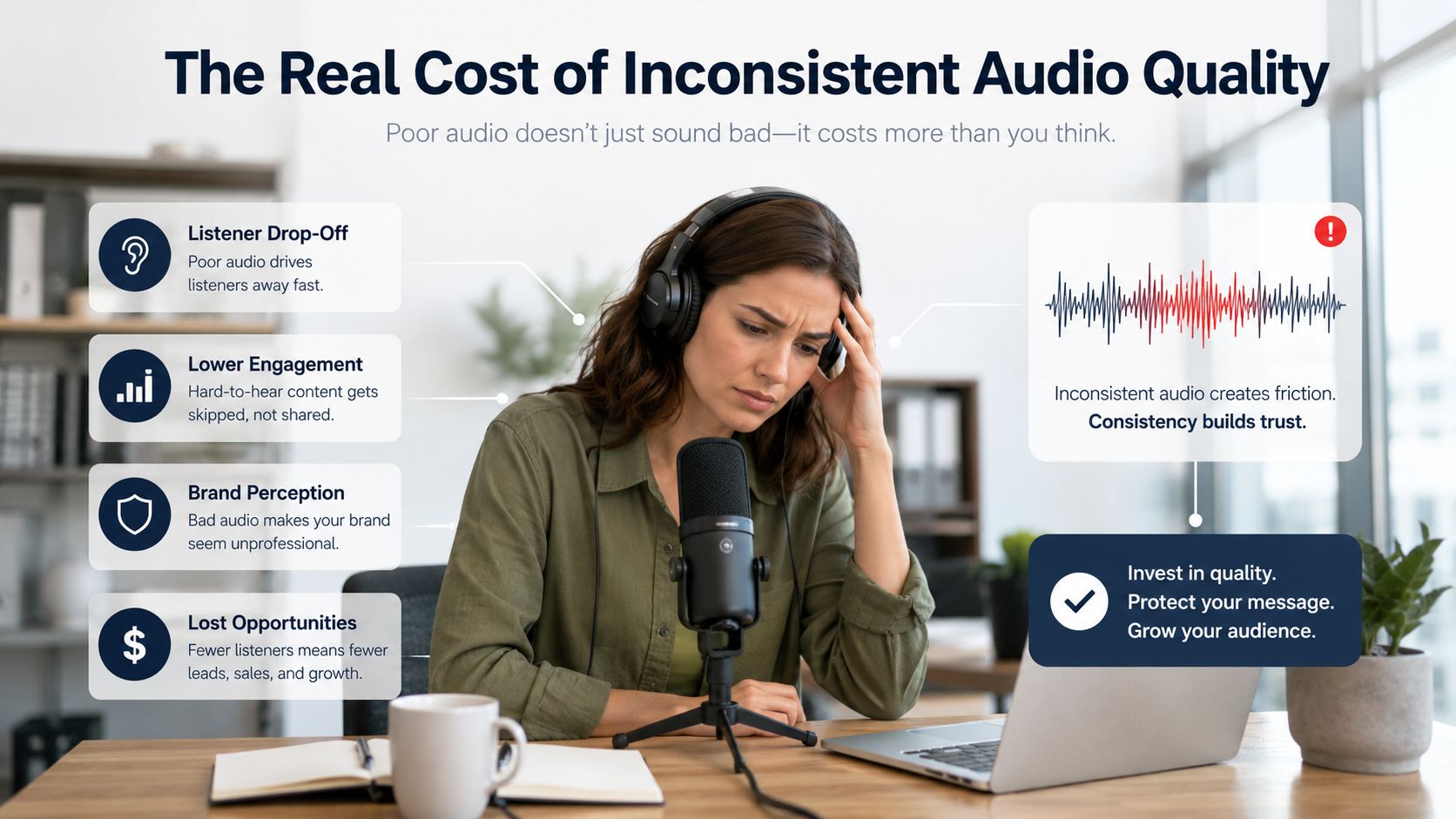
Bad audio is only the visible problem. The cost is what it does to trust, patience, and momentum. Podnews reported in May 2026 that the average podcast gets just 28 downloads in its first month, and that about 13% of podcast downloads are never played. In practical terms, that means your first impression is happening fast, and it's being judged through audio clarity, editing polish, and whether the show feels easy to listen to. Podnews's podcast statistics report makes the point clearly.
A sloppy recording environment signals more than technical weakness. It tells listeners, guests, and potential sponsors that the production process is improvisational. If your voice jumps in and out of focus, if the room rings, or if the background keeps interrupting the message, you're asking people to work harder than they should.
DIY burnout shows up in the edit
The worst part of a home setup is often the hidden labor. You're not just recording, you're troubleshooting lighting, fixing gain, muting background noise, and trying to rescue a session that should've been clean from the start. That grind adds up, and it can drain the energy you need to make a show that grows.
The audience doesn't separate your message from your production. They experience them together.
If you're also building a local brand, the quality of the show matters beyond the podcast feed. A practical guide from The Pulse Morristown is useful here because it shows how consistency and discoverability work together, the same logic that applies when your podcast content becomes part of your brand presence.
For a deeper fix, Flexwork's how to improve audio quality page is worth bookmarking, but the bigger takeaway is simple. At some point, better gear at home still leaves you with a home environment. A professional room removes that ceiling.
Comparing Your Recording Environment Options
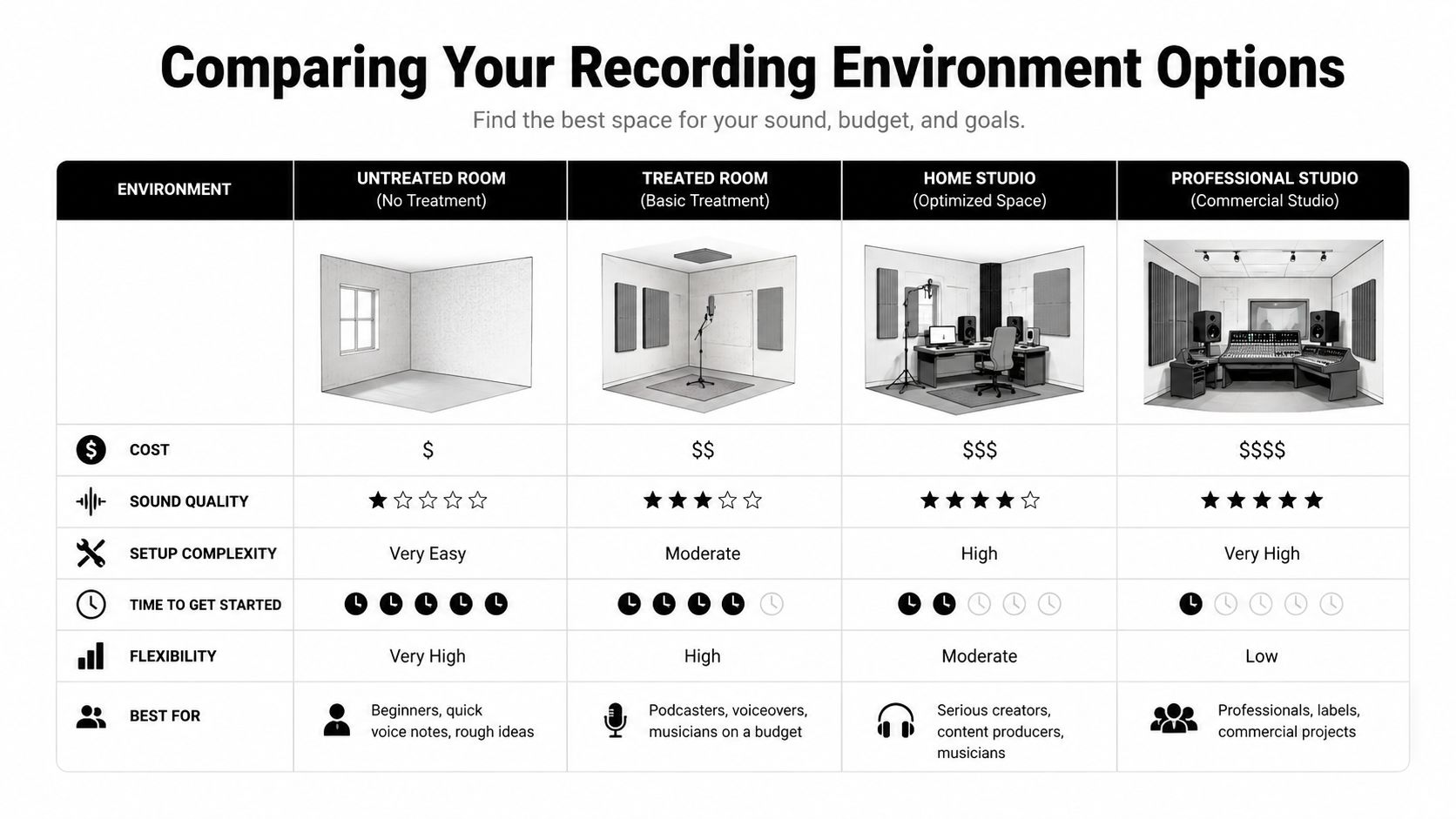
The right recording space depends on what you're producing, but the trade-offs are easy to see once you stop thinking like a hobbyist and start thinking like a publisher.
| Option | Acoustic control | Video capability | Scheduling flexibility | Brand alignment |
|---|---|---|---|---|
| Optimized home setup | Moderate | Limited | High | Inconsistent |
| Professional studio | Strong | Strong | Medium | Strong |
| Portable podcast booth | Focused | Weak | High | Functional |
| Coworking space | Variable | Variable | Medium | Generic |
| Remote recording service | Depends on each side | Strong for distributed shows | High | Depends on execution |
The home setup wins on convenience, especially if you're working solo and want to move fast. Guides consistently point creators toward small, padded rooms with soft surfaces, because carpets, curtains, cushions, and similar materials help reduce echo. Resonaterecordings also notes that a small room with no windows is ideal, since reflective surfaces make the sound less controlled. Resonaterecordings' recording location guidance makes that point clearly.
A professional studio solves the part DIY can't. It gives you a repeatable sound, a better look on camera, and fewer variables between episodes. That matters more now because the production trend has moved toward video-capable, multi-platform workflows. HubSpot notes that many podcasters now film episodes so they can repurpose them for YouTube and social media, which makes a visually branded studio a real strategic advantage. HubSpot's podcast tools overview reflects that shift.
Portable booths can help if you need something temporary, but they rarely feel like a brand home. Coworking spaces are convenient until the room changes, the noise changes, or the visuals look generic. Remote recording services work well for distributed guests, though the editing load usually climbs because the room quality is never identical on both sides.
When studio choice becomes the obvious move
If your show is meant to support a business, the decision usually comes down to workflow, not romance. A single controlled session is easier to direct, easier to edit, and easier to turn into clips when the framing and lighting are already built for repurposing.
A studio also fits the reality of hybrid production. Spotify's creator guidance stresses local recording habits, tech checks, and treating the room, and that's exactly why so many teams still prefer a central, controlled space when the final output has to look polished across platforms. Flexwork's breakdown of studio versus DIY podcasting is a smart next read if you're weighing the ROI of going pro.
The direct answer is this. Home is fine for testing a concept. A studio is the smarter choice when the show has to perform as a brand asset.
The Flexwork Advantage From Sound to Strategy
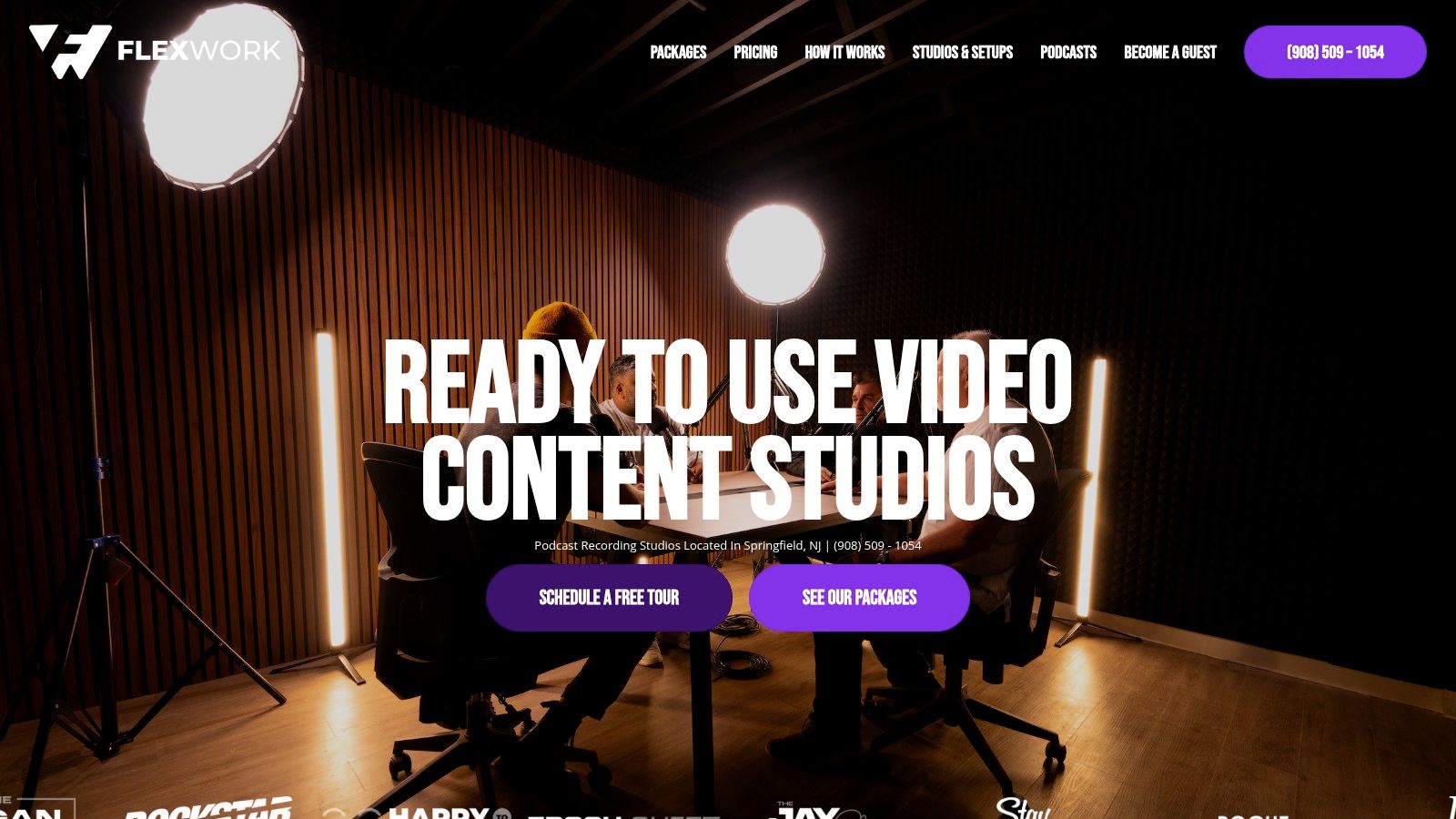
A purpose-built room isn't just quieter. It's engineered for repeatability. For a two-host podcast room, independent studio-design guidance recommends 14–18 m² with a target RT60 of 0.25–0.35 seconds so speech stays natural without obvious echo, and that level of precision is what separates a treated room from a real studio environment. Sound Zero's podcast studio design guide is a useful benchmark if you care about the technical side.
That matters because the value of a studio is consistency. You walk in, sit down, and record without having to rebuild the room around the episode. That's where Flexwork's setup earns its keep for creators who value speed and polish.
What a premium setup actually buys you
Flexwork's studio rental model gives you a controlled place to record without the drag of assembling a one-off environment every week. It also supports production packages that handle the parts most creators don't want on their plate, including the Be My Podcast Producer and Market, Manage & Produce My Podcast offers. For creators who want more than a room, that's the difference between renting space and buying back time.
Flexwork also offers Content Day sessions at $3000/day, and those include 20 edited reels or 60 pro photos. If you're building a podcast that needs clips, thumbnails, guest assets, and social distribution, that kind of production day is a lot easier to justify than piecing together content across multiple separate shoots.
The higher-touch growth tier starts at $1500 per episode with a 20-episode growth commitment. That's the right lane for brands that want the show managed as a channel, not just recorded as a file. Flexwork also builds podcast websites at $5000 plus hosting, which gives the show a home beyond the feed.
For a closer look at the physical side of the setup, the insider look at Flexwork's studio is helpful because it shows how sound, camera angles, and set design work together.
Bottom line: if the podcast needs to support launches, lead generation, or social repurposing, the studio has to serve the business, not just the microphone.
Flexwork Podcast Studios fits that model because it combines recording space with production support, which is the part most high-performing creators eventually need.
Your Checklist for a Flawless Studio Session
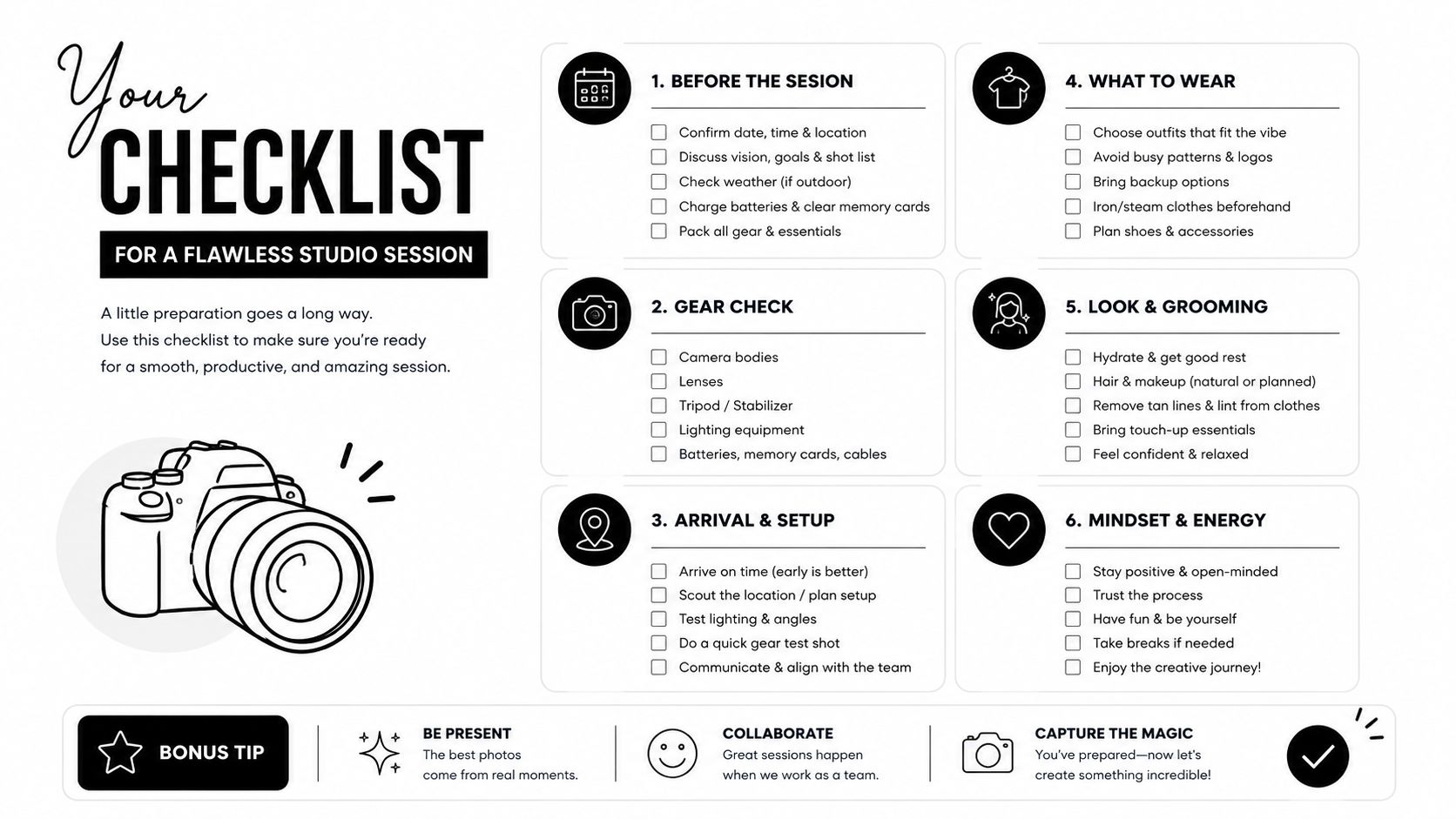
A good studio session starts before you walk through the door. If you show up unprepared, you waste the very thing you paid for, momentum. The goal is to arrive ready to record, not ready to think about logistics.
Bring the right things
- Episode notes: Keep a tight outline, guest bios, and a short list of must-hit talking points.
- Backup files: Bring scripts, logos, or reference visuals on a drive or cloud folder you can access quickly.
- Wardrobe that works on camera: Choose clean colors and avoid anything that distracts under studio lighting.
- Confirmation details: Verify guest arrival time, remote links, and episode order before the session starts.
Ask the studio team the useful questions
- Mic setup: Confirm which microphone input you're on and whether the room is configured for solo, two-person, or group recording.
- Track separation: Ask whether local and remote tracks are being captured separately.
- Video framing: Make sure the camera angle, background, and lighting fit the show's brand.
- Turnaround expectations: Clarify what gets delivered the same day and what goes into post.
The best technical habit is simple. Record a 20- to 30-second test clip before the episode starts. SparkPod's studio setup guidance recommends exactly that, because it lets the engineer and host listen back, confirm the correct input, and make sure local and remote tracks are recording. SparkPod's podcast studio setup guide is a practical reference for that workflow.
Listen to the test clip on headphones, not through the room speakers. That's how you catch the problem before the full session is gone.
Mic technique still matters
Good rooms help, but bad mic habits still show up. Current recording guidance consistently keeps the mic close to the mouth, usually around 4-6 inches or 6-8 inches, with a slight off-axis angle of about 15-20 degrees to soften plosives and keep the vocal tone even. PodMod's home recording guidance is a solid reminder that technique still counts even in a premium space.
Invest in Your Voice Your Brand Your Future
The best place to record a podcast is the one that supports the business behind it. If the show is just a hobby, a spare room can be enough. If the show is part of your brand, your sales pipeline, or your content engine, the room has to do more than exist. It has to help you move faster, sound cleaner, and leave with usable assets every time.
That's why the smart move is to think beyond “Can I record this at home?” and ask, “What does my time cost when I keep doing this the hard way?” A professional environment pays off in cleaner production, better camera-ready content, and fewer wasted hours. It also makes repurposing easier, which matters when your episodes need to become clips, reels, and social posts that extend the life of each recording.
If you're already thinking about sponsors, the next step is even clearer. Flexwork's podcast sponsor guide lines up naturally with a higher-end production approach, because sponsors notice presentation, consistency, and professionalism fast.
Home setups are useful for getting started. Studios are what you choose when the show needs to scale without looking improvised. That's the line worth drawing.
If you're ready to record in a space that treats your podcast like a real asset, visit Flexwork Podcast Studios and book a tour, explore the production packages, or reserve a session that gives your show the sound and visuals it deserves.