
The Antique Coffee Shop: A Creator’s Launch Guide
 June 18, 202627 Minutes
A lot of founders fall for the same version of the dream. They collect references, save café interiors, hunt for bentwood chairs, and start building a brand in their head before they've figured out whether the business can work. The antique coffee shop is especially seductive because it promises more than coffee. It promises atmosphere, identity, and the kind of place people talk about after they leave.
That promise is real, but only if the shop functions as well as it photographs. The strongest antique cafés don't rely on nostalgia alone. They pair heritage, ritual, and tactile design with sharp operations, clear audience fit, and a modern content strategy. If you want to build one, think of it as a hospitality business first, a visual brand second, and a creative platform always.
The Modern Vintage Dream
An antique coffee shop works because the format is older than most founders realize. The coffeehouse tradition reaches back to the 15th and 16th centuries in the Ottoman world, and by the mid-17th century coffeehouses in London, Oxford, and Paris had already become places for exchange, debate, and daily ritual, as noted in this history of early coffeehouses. The modern version isn't a novelty. It's a remix of one of the oldest social business models around.
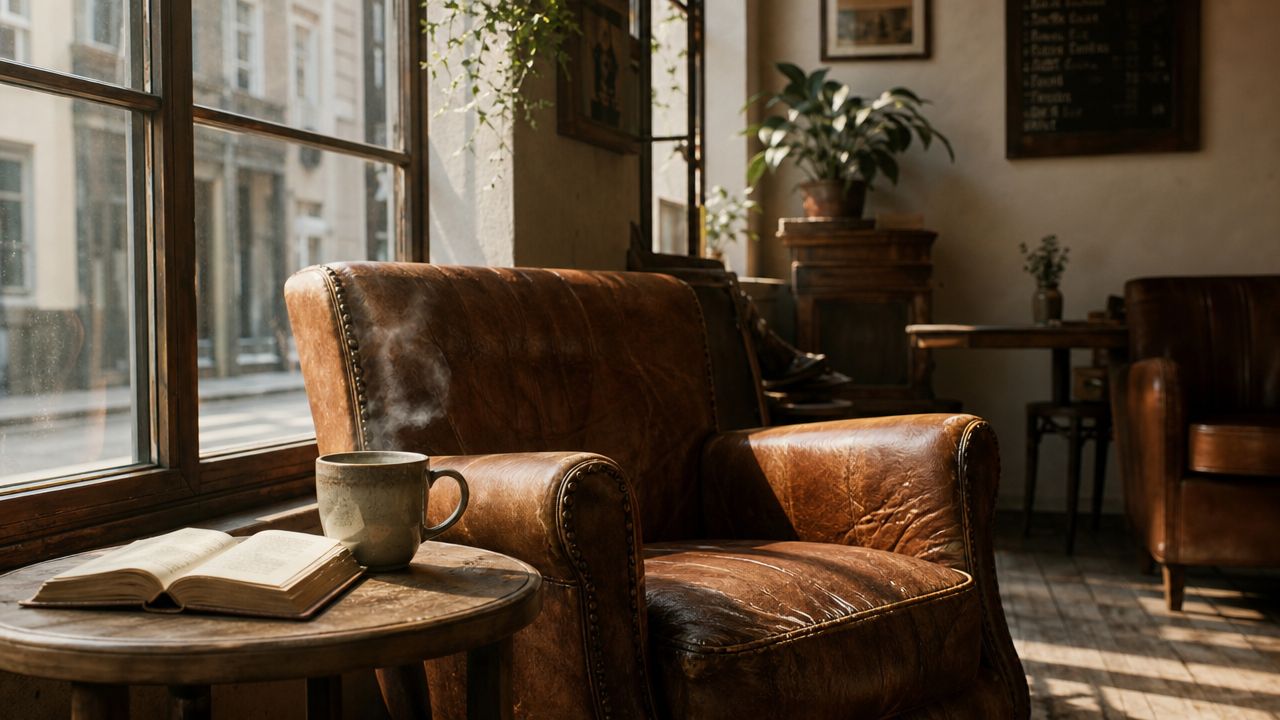
That's why the best spaces feel layered rather than themed. A worn leather chair, old books, unlacquered brass, and a fixture like Golden Lighting vintage gold can suggest age without turning the room into a film set. The difference is restraint.
If the space tells a story, the brand has to do the same. That means naming the feeling, clarifying the audience, and tightening the visual system long before opening day. A useful starting point is this guide on how to brand your business, especially if your instinct is to collect décor before defining the promise.
An antique coffee shop succeeds when customers remember how the room felt, not just what objects were in it.
From Concept to Concrete Blueprint
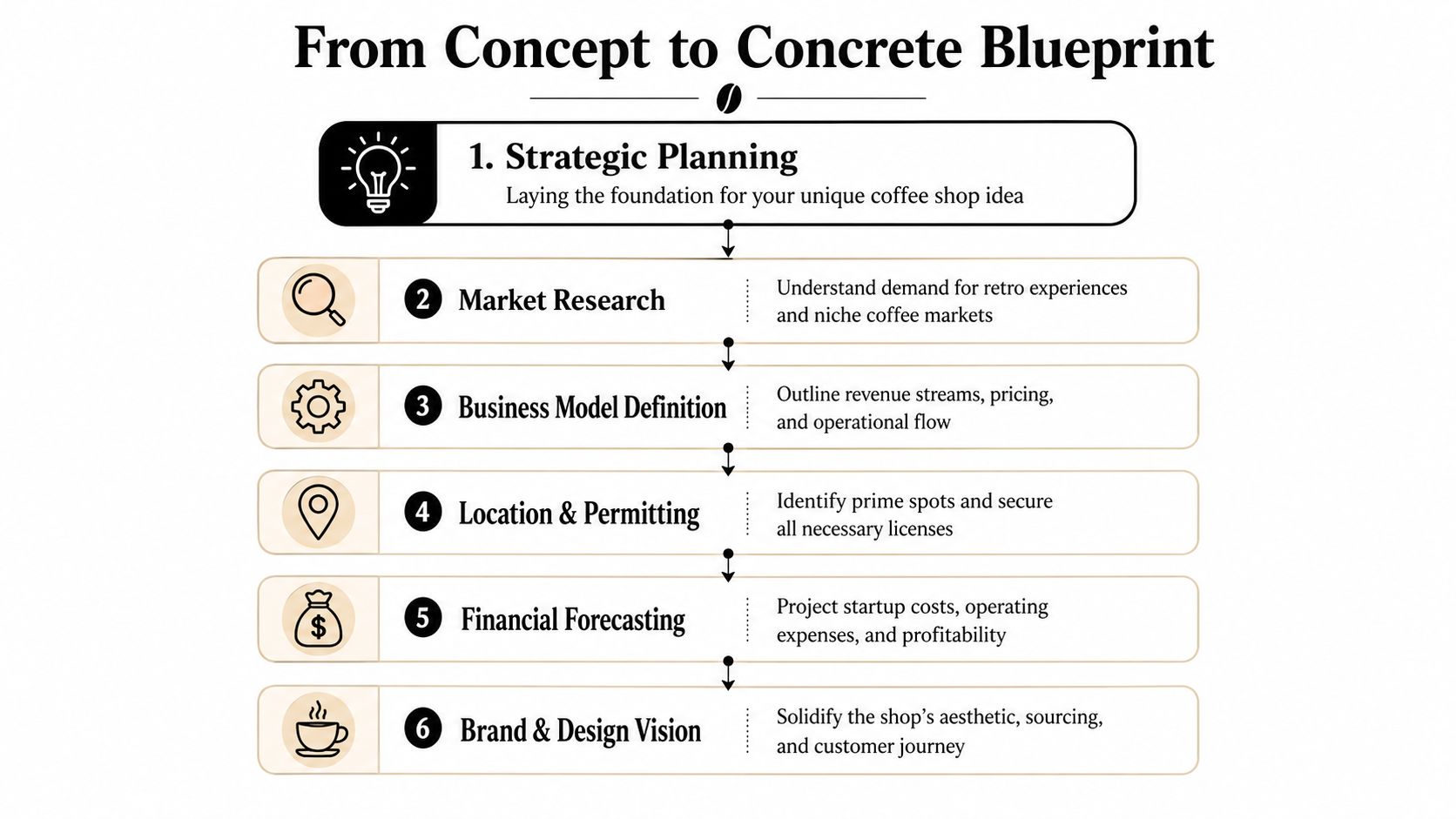
A founder signs a lease for a beautiful old storefront, fills a mood board with bentwood chairs and brass sconces, then realizes the queue blocks the door and the barista has no clean path from grinder to pickup. That mistake is common. A strong antique coffee shop starts with circulation, labor, and a clear reason for existing in your market.
Start with the retro gap
A vintage concept needs local proof. Personal taste is not enough.
Before choosing tile, millwork, or upholstery, audit the cafés in your trade area and look for the gap your shop can own. In practice, that means visiting nearby operators at different times of day, reviewing menus and Google reviews, and tracking what each shop is known for. One may have the old-building charm but no identity beyond location. Another may look nostalgic on Instagram but run like a quick-service counter. A third may serve remote workers well but feel visually flat.
Useful categories usually look like this:
- Historic building café: The architecture carries the story, while the offer stays conventional.
- Vintage-styled coffee bar: The room signals another era, but the service model is fully current.
- Antique mall café hybrid: Coffee supports browsing more than lingering.
- Work-friendly third place: Guests come for laptops, meetings, and long stays, even if the décor nods to the past.
The goal is specificity. If your city already has several dark-academia spots, another one will struggle unless it brings a sharper mix of product, programming, and audience. The better question is what only your shop does. Maybe it is a morning café that converts into an evening listening room. Maybe it is an antique retail concept with disciplined coffee service. Maybe it is a creator-friendly venue with corners designed for interviews, table reads, and short-form video. The owners who build durable brands define that angle before they start buying furniture.
Build the counter for labor, not fantasy
The service counter sets the pace of the business. If it is cramped, decorative, or poorly sequenced, every rush feels harder than it should.
The practical standard is simple. Give staff enough room to take orders, pull shots, plate food, and hand off drinks without crossing paths every few seconds. Guests feel this friction fast. If the grinder crowds the POS, if pickup sits in the doorway, or if a salvaged hutch interrupts the barista's reach, the room starts to feel disorganized even when the design is beautiful.
Practical rule: Keep a clean line from order to payment to espresso to pickup. Antique pieces can frame that flow, but they cannot block it.
That same discipline matters if the shop is meant to serve the creator economy. A café that hopes to attract podcasters, writers, and solo founders needs a front-of-house plan that supports both throughput and content. A quiet rear banquette might double as a casual interview nook. A side wall with flattering light can support short-form filming. For layout references that translate well from hospitality into media-friendly environments, these podcast studio design ideas for creator-focused spaces are a useful benchmark.
Zone the room with intention
An antique coffee shop works best when different parts of the room ask for different behaviors.
| Zone | What belongs there | Why it works |
|---|---|---|
| Front | Faster seats, visible pastry case, easier turnover | Supports impulse orders and short visits |
| Middle | Social tables, flexible seating | Handles pairs, casual meetings, small groups |
| Back | Quiet seats, softer light, laptop-friendly corners | Gives guests a reason to stay longer |
| Perimeter | Power access, narrow shelves, solo seating | Serves remote workers without consuming central tables |
Revenue and atmosphere meet in a very practical way. A shop with only lounge seating slows turnover. A shop with only small café tables pushes away the guests who would stay for a second drink, a client meeting, or an hour of editing. The strongest rooms support several rhythms at once.
Material choices should help with that job. Hard surfaces near the front can keep the energy brisk. Softer finishes in the back can lower noise and make longer stays more pleasant. If you want examples of how surfaces, color, and pattern shape guest flow, this article on designing unforgettable dining experiences offers useful hospitality references.
Budget for the unglamorous essentials
Water treatment, electrical capacity, restroom access, storage, and cleaning clearances rarely make it onto the Pinterest board. They still decide whether the shop performs well six months after opening.
I have seen founders spend heavily on antique casework, then cut corners on the pieces that protect consistency. The result is predictable. Service slows down, maintenance costs rise, and the room loses polish once real volume hits. A strong blueprint accounts for the hidden systems early, while change orders are still avoidable.
That is also where the digital-creator angle becomes commercially useful instead of decorative. If the shop is meant to host small recordings, live conversations, workshops, or brand collaborations, the plan needs power where creators sit, controllable lighting, better sound absorption, and a few camera-friendly sightlines. An antique coffee shop can sell drinks and function as a content engine. The blueprint has to support both from day one.
A beautiful concept becomes bankable when the floor plan respects labor, accessibility, guest behavior, and the kind of audience growth you want the space to create.
Sourcing Authenticity and Performance
A founder finds a marble pastry case at auction, a row of bentwood chairs from a hotel closeout, and a brass mirror that makes the room feel finished before the first drink is poured. Then the hard question shows up. Which pieces build atmosphere, and which choices keep the line moving at 8:15 on a Monday?
That decision separates a photogenic concept from a shop that can hold margin.
Buy your espresso setup like an operator
The equipment package carries revenue, labor speed, and drink consistency. Antique character belongs in the guest experience. Your bar setup has to earn its floor space every hour you are open.
Start with a commercial espresso machine sized to your expected rush, plus separate grinders for espresso and batch or manual brew. Shared grinders create extra dialing time, slower tickets, and more inconsistency than a busy bar can tolerate. Water treatment matters just as much. Scale buildup shortens equipment life, and poor filtration makes even a strong coffee program taste flat.
A practical starter setup usually includes:
- Commercial espresso machine: Match the machine to your projected volume, not to the one dramatic photo you saved.
- Dedicated espresso grinder: Faster calibration, steadier shots, less friction during peak service.
- Separate brew grinder: Protects your coarser settings for batch brew or pour-over.
- Water filtration system: Better flavor and fewer preventable service calls.
- Hot water tower or dispenser: Keeps tea and manual brew orders from slowing the bar.
I always treat the espresso machine as production equipment first and a design object second. Plenty of beautiful machines perform well. The reverse is not always true.
Curate the old around the new
Authenticity comes from editing, not from filling the room with old things.
Use vintage pieces where guests notice texture, patina, and memory. Keep modern systems where failure gets expensive. That usually means antique mirrors, art, shelving, sideboards, and seating in the customer-facing areas, with current refrigeration, dishwashing, point of sale, and back-bar storage handling the operational load.
The same logic applies if the shop will host interviews, creator meetups, or small-format recordings. Warmth on camera helps. Reliability off camera pays the bills. This guide to podcast studio design ideas for creator-friendly spaces shows how to build atmosphere without compromising technical performance.
A guest will accept a hidden modern fridge. They will remember a slow queue, warm milk, or a drink that tastes different every visit.
Build a menu that fits the room and the market
An antique coffee shop can serve a contemporary audience without losing its point of view. In fact, it has to.
The room may suggest old-world ritual, but the menu still needs to reflect current buying habits. That means a tight foundation of espresso, drip coffee, tea, and a few high-confidence specialty drinks, then a measured layer of house signatures that give the concept its own voice. Add too many novelty items and the bar gets slower. Keep the offer too narrow and return visits flatten out.
A balanced menu often has three working layers:
Foundational drinks
Espresso, cappuccino, drip coffee, tea.Signature house drinks
A chicory latte, orange peel mocha, brown sugar tonic, or a seasonal spice-forward pour-over.Modern bridge items
Cold brew, a clean non-coffee option, and one or two flavored drinks for guests who came for the setting as much as the coffee.
That mix does more than improve sales at the register. It also gives creators, regulars, and collaborating brands more reasons to post, review, and revisit. A shop that photographs well but serves a forgettable menu becomes content for one week. A shop with repeatable favorites becomes part of people's routine and their feed.
Source with a filter, not a frenzy
Buying antiques without a rule set is how budgets disappear.
Set your material language before you source. Choose the woods, metals, upholstery, and eras that belong in the room. Then reject pieces that fall outside the system, even if they look impressive on their own. Good sourcing is part taste, part restraint, and part maintenance planning.
Use a simple filter:
- If it slows service, skip it.
- If it is difficult to clean, skip it.
- If it looks staged instead of lived-in, question it.
- If it photographs well but feels uncomfortable, leave it behind.
- If repair costs are unclear, price that work before you buy.
The best antique coffee shops feel edited, not crowded. Every piece supports the story, the service model, or both. That discipline is what turns a charming room into a business with staying power.
Designing for the Creator Economy
The modern antique coffee shop isn't only a place to drink coffee. It's also a backdrop, a meeting point, and in many cases a soft studio. People notice spaces differently now. They don't just enter them. They frame them.
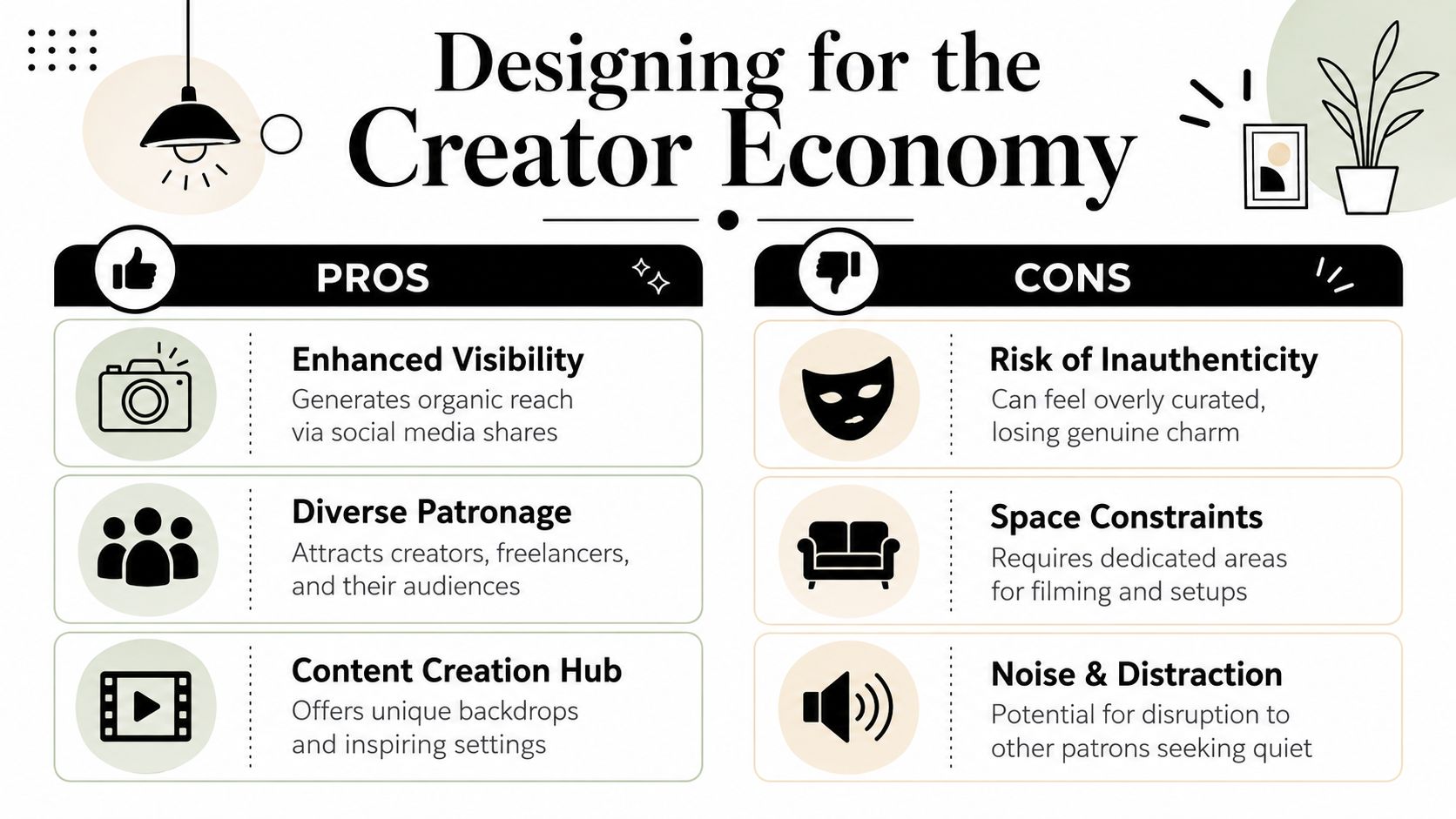
That shift changes how you should design the room. The goal isn't to turn the café into a constant production set. The goal is to make it naturally recordable.
Design corners people want to share
Creators don't need a huge stage. They need repeatable moments.
Build a few visual zones with distinct personalities:
- A conversational corner: Two chairs, a small round table, layered books, warm lamp light
- A clean hero wall: Paneling, framed art, or tile that reads well on camera
- A window seat or bar ledge: Strong daylight for casual photos and solo work
- A tactile counter moment: Cups, pastries, steam, and enough negative space for handheld video
Good creator-friendly design is subtle. It gives people places to shoot without making every surface scream for attention. A room with too many “Instagram spots” often feels synthetic in person.
Solve for light, power, and sound
Three practical details shape whether the shop works for creators and everyday guests at the same time.
First, get the lighting right. Soft, flattering, layered light beats one bright overhead plan every time. Second, make power easy to access without turning the walls into extension-cord chaos. Third, think critically about noise. Hard surfaces, grinder noise, and crowd spill can ruin a recorded conversation even when the room looks perfect.
Coffee shops encounter a specific limitation. They can inspire content, but they usually can't replace a purpose-built production environment. If you're developing branded video, a podcast pilot, or a batch of launch assets, a controlled setup matters more than a charming one.
For founders thinking beyond casual social clips, a stronger framework starts with a real video content marketing strategy. The café can be the setting. The content plan still needs format, distribution logic, and technical consistency.
A quick visual reference helps show what creator-friendly space planning looks like in practice.
Know where the café ends and production begins
Some founders assume that if the room is beautiful enough, the content will take care of itself. It won't. A magnetic setting helps, but content still depends on shot planning, clean audio, editing rhythm, and consistency across platforms.
That's the main trade-off in the creator economy. A highly designed antique coffee shop can generate attention, collaboration, and user-generated media. It can't automatically produce polished long-form content at a professional standard.
A café gives creators atmosphere. A studio gives them control.
If you design your space with creator behavior in mind, you widen its cultural relevance. If you also understand the limits of that environment, you protect the guest experience. That balance keeps the room special instead of chaotic.
Your Launch and Local Marketing Playbook
The audience for a vintage café isn't one type of person. Current discoverability around these spaces suggests a mix of remote workers, social-media-driven visitors, and tourists, and the key opportunity comes from understanding whether they're drawn by atmosphere, nostalgia, or shareability, as discussed in this analysis of vintage café audience fit.

Treat those groups differently. If you market to all of them with the same message, the brand feels vague.
Define who comes for what
A useful launch plan starts with motives rather than demographics.
| Audience | What they want | What to show them |
|---|---|---|
| Remote workers | Comfort, power access, reliable rhythm | Quiet corners, seating variety, daytime mood |
| Social visitors | A memorable setting and ritual | Signature drinks, interiors, shareable moments |
| Tourists | A place with local character | Exterior, neighborhood context, heritage details |
| Creatives | Texture, atmosphere, collaboration energy | Distinct vignettes, event nights, editorial visuals |
This is why “great coffee in a beautiful space” isn't enough as positioning. It's too broad. Your channels should reveal specific reasons to visit.
Launch with programming, not just a grand opening
A ribbon-cutting matters for a day. Recurring reasons to return matter for months.
A smart antique coffee shop usually builds a calendar around low-lift experiences that fit the room:
- Acoustic sets: Best for evenings when the shop wants a slower, intimate mood.
- Poetry or reading nights: Strong match for literary or historic interiors.
- Maker pop-ins: Ceramics, florals, stationery, or antiques dealers create texture and fresh stories.
- Coffee education moments: Manual brew tastings or origin spotlights deepen credibility.
- Creator meetups: Small gatherings for photographers, writers, or podcasters can anchor community.
Not every event should chase scale. In a room built on atmosphere, the better goal is often density and fit. A smaller event with the right crowd can define your brand faster than a packed room with the wrong one.
The best local marketing doesn't feel like promotion. It feels like belonging.
Tell stories people can repeat
Vintage venues market themselves poorly when they only post interiors. Pretty rooms attract attention, but stories create recall.
Your content should rotate through a few reliable themes:
Object stories
Where the mirror came from. Why the cups don't match. How the front counter was restored.Craft stories
Milk texturing, pour-over rituals, pastry arrivals, opening prep.People stories
Baristas, regulars, collaborators, musicians, local makers.Room stories
Morning light, rainy afternoons, event reset, seasonal styling changes.
If you need outside inspiration for campaign structure and neighborhood activation, these local restaurant marketing ideas are useful as prompts, especially for balancing online visibility with foot traffic.
Build the content loop
An antique coffee shop has a natural advantage in social media because guests often want to document the visit. Your job is to make that easy and coherent.
A simple loop works:
- Seed the story: Post the build-out, sourcing process, and menu testing.
- Open with texture: Show the room in use, not empty perfection.
- Invite participation: Feature guests, collaborators, and community rituals.
- Repost selectively: Keep the brand feed curated, but reward the audience publicly.
- Refine what resonates: Double down on the scenes and stories that attract the right guests.
To keep that loop healthy, founders need a system for consistency. This guide on how to grow social media following is a useful complement because it focuses on repeatable habits instead of random posting.
Local marketing for an antique coffee shop works best when it doesn't feel outsourced from another industry. The room already has character. The launch should prove that the character is real, lived in, and worth returning to.
Build a Legacy Beyond the Latte
An antique coffee shop can become a lot more than a beverage business. Done well, it becomes a neighborhood ritual, a visual identity, a host for conversation, and a place people use to mark different parts of their lives. That's what gives the format staying power.
The founders who build durable brands understand something simple. The physical space is only one layer of the legacy. The other layer is the story that travels beyond the room. That might mean a founder-led show, a branded interview series, or a media platform that captures the people and ideas orbiting the café.
If that's part of your vision, think seriously about how the business will live beyond foot traffic. Sponsorships, partnerships, and recurring content can extend the brand far past the espresso bar. This guide on how to get podcast sponsors is a useful next read if you're considering media as part of the long-term model.
An antique coffee shop starts with taste. The legacy comes from discipline, programming, and the stories people carry with them after they leave.
If you're building a creator-led brand and want content that looks and sounds as refined as your concept, explore Flexwork Podcast Studios. From polished podcast production to high-end video capture, it's a smart next step for founders who want their physical space and digital presence to work at the same level.