Podcast Studio Rental NJ: A Complete Local Guide
 September 2, 202623 Minutes
You've booked the guest, outlined the questions, and promised a polished video episode. Then the recording starts. Your guest sounds distant, the laptop fan leaks into the track, and a quick edit turns into an entire weekend. That's the moment many New Jersey creators realize they don't need another microphone. They need a podcast studio rental NJ workflow built around reliable sound, efficient production, and files that are ready for distribution.
Flexwork Studios gives creators, entrepreneurs, and brands a way to trade equipment juggling for a more controlled production day. This guide focuses on the number that matters beyond an hourly rate, your total production cost, including editing time, technical support, visual assets, and the work required to turn one session into content people can find and watch.
The Real Cost of Going DIY in 2026
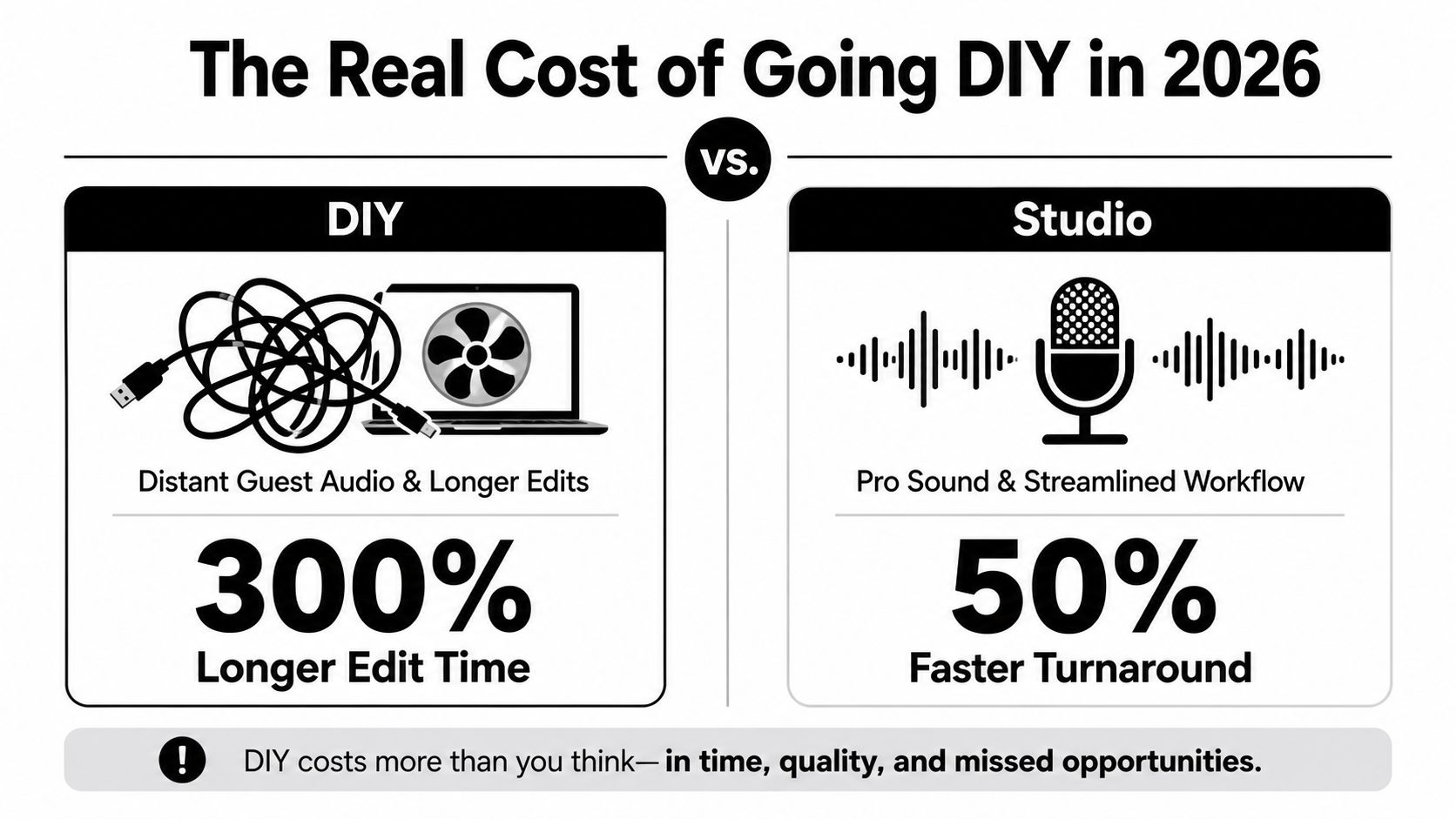
The DIY setup usually fails in stages. First, the room sounds slightly hollow. Then the remote guest's audio arrives compressed or uneven. By the time you notice the laptop fan, a noisy neighbor, or a sync problem between cameras, you're already committed to the interview.
The shopping list grows quickly. A credible home operation may require treated acoustics or a closet booth, a four-channel interface, broadcast-grade microphones for every seat, closed-back headphones, video lighting, redundant storage, and software licenses for editing, transcription, and remote-call capture. The equipment is only the visible cost. Your time becomes the unpaid production department.
The bill behind the room
You'll troubleshoot echo, repair clipped audio, align separate camera files, remove air-conditioning noise, and rebuild a recording when a storage drive fails. Those tasks compete directly with guest outreach, scripting, sponsorship conversations, and promotion.
Producer's rule: Compare the cost of a session with the cost of the hours you'd otherwise spend making the session usable.
A professional booking compresses that buildout into a controlled environment. You arrive with a concept and leave with clean recordings, organized files, and a workflow that doesn't depend on whether your home office happens to be quiet that day. The acoustic target matters here. A podcast room should aim for an RT60 of about 0.25 to 0.35 seconds, a range that reduces room echo while keeping speech natural, according to Audimute's podcast acoustics guidance.
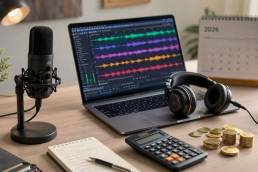
That's why a studio hour shouldn't be judged beside a bare room rental. Depreciating gear, software, setup time, troubleshooting, editing, and missed business work all belong in the calculation. Use this guide to the cost of building a podcast studio before you decide that a home setup is automatically cheaper.
If you're experimenting with synthetic voices or post-production automation, research the top AI voice cloning software separately. It may help with certain creative tasks, but it won't fix a reflective room, a weak performance, or a chaotic recording workflow.
What a Turnkey NJ Podcast Studio Actually Delivers
“Turnkey” should describe a real operating system, not a slogan. You should be able to walk into the room, sit down, record, and leave without assembling the technical chain yourself.
Start with the recording chain
A serious facility should offer dynamic broadcast microphones such as the Shure SM7B or Neumann BCM 705, mounted on articulated boom arms and routed through a multi-track interface from brands such as Sound Devices or Tascam. Ask whether the studio captures uncompressed 24-bit, 48 kHz audio, especially if you're producing video and want clean synchronization with camera footage.
The room itself deserves more attention than the equipment list. Look for bass trapping, wall-to-wall absorption, and enough isolation to keep HVAC systems, traffic, and neighboring activity out of the recording. A separated control room and live room can also give the engineer a more accurate monitoring position while you stay focused on the conversation.
Demand an operator, not just hardware
A turnkey booking should include a dedicated engineer who handles gain levels, routing, headphone mixes, and backup recording. For remote guests, ask whether the studio can capture isolated tracks through platforms such as Riverside or SquadCast rather than relying on a single mixed call recording.
The output should include a mastered broadcast file and, when promised by the package, raw stems for future editing. Hospitality matters too. Water, coffee, talent-ready green rooms, on-site parking, and ADA access remove small friction points that can derail a guest's experience.
Review what makes a great podcast studio before touring. The right question isn't “Does this room have microphones?” It's “Can this team protect the recording, guide the session, and hand me a publishable feed?”
NJ Podcast Studio Pricing Compared
Hourly pricing only becomes useful when you connect it to the work included. Public New Jersey listings show DIY rooms around $55 to $95 per hour, while guided or full-production sessions can begin around $300 to $400 per session and premium setups can reach $200 to $500 per hour, as summarized by Flexwork's podcast studio pricing guide. Some base rentals exclude recording and post-production, so the advertised number may cover only the room.
NJ Podcast Studio Pricing Tiers at a Glance
| Tier | Price/Hour | Best For | Includes |
|---|---|---|---|
| DIY access | Around $55 to $95 | Experienced hosts who can operate and edit | Room access, with recording and post-production potentially billed separately |
| Guided production | From around $300 to $400 per session | Interview shows that need technical support | Engineer-led recording and selected production services |
| Premium setup | Around $200 to $500 per hour | Brands producing video-first content | Higher-end studio environments, cameras, lighting, and production support, depending on the listing |
These categories aren't interchangeable. A low-cost room can work when you already know the equipment, have a controlled format, and want to edit everything yourself. A guided session makes more sense when a guest's time is valuable and you need someone watching levels, routing, and backups. Premium production earns its place when the deliverable includes branded video, social clips, and a faster path to distribution.
Calculate the finished episode
Use this formula before booking:
Episodes per year × total cost per episode = annual production investment.
Your total cost per episode should include the room, engineer, editing, video support, clip creation, travel, and the value of your own time. If you're evaluating a broader business service, compare that investment with tools built for pricing for revenue recovery, especially when production supports a wider marketing operation.
The practical answer is simple. Don't ask which studio has the lowest hourly number. Ask which option gets you to a publish-ready episode with the fewest extra invoices and unfinished tasks. For a deeper local comparison, review the cost to rent a podcast studio in New Jersey.
How Booking and Production Day Actually Work
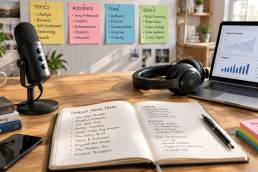
A smooth session starts before you enter the studio. The booking process should function like a checklist, with each checkpoint reducing the chance that paid time gets consumed by preventable decisions.
Five checkpoints that protect the day
Inquiry and quote: Send the show format, number of hosts and guests, audio or video requirements, remote-guest needs, and expected deliverables. Request an itemized quote that distinguishes room access from engineering, editing, clips, and publishing support.
Calendar and deposit: Confirm the date, arrival time, session length, payment schedule, cancellation terms, and delivery expectations in writing. A calendar invitation should include location details, parking information, and guest instructions.
Pre-production: Lock the run of show, talking points, introductions, sponsor reads, visual branding, and guest links before recording day. This call is where you discover missing files, unclear roles, or an unrealistic agenda.
Technical check: The crew should test microphones, headphone mixes, camera framing, lighting, remote connections, storage, and backup paths before the guest begins. A proper mic check is not a formality. It protects the performance and the schedule.
Capture and handoff: Confirm the recording format, file naming, backup process, editing notes, approval process, and final delivery method. Shared drives and publishing platforms should be agreed upon before the session ends.
Where friction usually appears
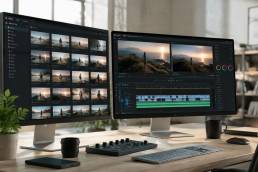
Problems begin when studios treat post-production as an afterthought. A room may be ready, but the team still needs to clarify who edits, who supplies show notes, whether video is color corrected, and how revisions are handled.
Ask for the final deliverable list before you pay the deposit. “Recording included” doesn't automatically mean “publish-ready episode included.”
Use this behind-the-scenes look at a New Jersey podcast studio day to assess whether a facility's workflow matches your expectations. Your goal is a sequence where the host focuses on the conversation, the engineer protects the capture, and the editor receives organized material with clear instructions.
The Studio Vetting Checklist Every Host Needs
A polished website can make any room look production-ready. Vetting requires better questions and evidence. Before signing a contract for a podcast studio rental NJ, ask for specifics that translate directly into the finished episode.
Acoustic treatment and isolation
Stand in the room and listen before anyone turns on the equipment. Ask how the studio controls reflections, low-frequency buildup, HVAC noise, street sound, and adjacent rooms. Request a sample recording from the same room, not a generic demo made elsewhere.
Equipment and redundancy
Ask which microphones, interfaces, cameras, and lights are included. Then ask the uncomfortable question: What happens if one recording path fails? A credible studio should have backup microphones, spare cables, duplicate storage, and a secondary capture path for important sessions.
Engineer and producer support
Find out who will be in the room and what they've handled before. Multi-guest interviews, panel discussions, remote contributors, livestreams, and branded sponsor segments create different demands than a solo recording.
Pricing and package clarity
Get the full cost in writing. Confirm whether editing, mixing, camera operation, color correction, motion graphics, show notes, transcription, and revisions are included or billed separately. A low base price can lose its advantage when every necessary step becomes an add-on.
Distribution support and policies
Ask whether the team can assist with RSS setup, chapter markers, metadata, publishing, and short-form exports. Confirm turnaround commitments, approval windows, rescheduling rules, and cancellation terms before booking.
Request an in-person tour when possible. You're not only inspecting a room. You're testing whether the people behind it communicate clearly, anticipate problems, and take responsibility for the final file.
How Flexwork Studios Solves the Production Gap
The useful distinction isn't between cheap and expensive studios. It's between fragmented production and one accountable workflow. Flexwork Podcast Studios offers a Springfield, New Jersey production environment where creators can choose room access, producer support, content creation, or broader podcast management according to the show's needs.
Start with the format. A solo host shouldn't pay for a panel workflow, while a branded interview series shouldn't rely on a self-operated room just because the hourly rate looks attractive.
Match the package to the show
Solo Podcaster is the logical starting point for a single-host episodic show that needs a controlled room and professional recording environment. Choose it when you're comfortable managing some of the editorial process but want the recording itself to sound and look consistent.
Group Sessions fit panel interviews and conversations with up to four guests. The value is operational. Multiple speakers require deliberate microphone placement, headphone routing, camera composition, guest coordination, and an engineer who can monitor the full room instead of leaving the host to solve problems mid-conversation.
Full Production is for creators who want editing, show notes, and distribution support handled as part of the relationship. It reduces the handoffs between a room rental, a freelance editor, a video contractor, and a publishing assistant.
Flexwork's broader service menu also includes a Content Day priced at $3000 per day, with 20 edited reels or 60 professional photos, according to the provided services information. That option suits entrepreneurs and brands who want to batch-record social assets around their podcast rather than treat every clip as a separate production.
The Market, Manage & Produce My Podcast tier starts at $1500 per episode and includes a 20-episode growth commitment, also specified in the service information. That's the appropriate conversation for a business treating its podcast as a managed media channel, not an occasional recording project.
Flexwork Podcast Studios Package Comparison
| Package | Capacity | Includes | Best For |
|---|---|---|---|
| Solo Podcaster | Single host | Studio recording workflow and support matched to a solo format | Episodic creators who need consistency |
| Group Sessions | Up to four guests | Multi-person recording coordination and production support | Panels and interview shows |
| Full Production | Format-dependent | Editing, show notes, and distribution support | Hosts who want a publish-ready workflow |
| Content Day | Brand or creator team | $3000 per day, 20 edited reels or 60 professional photos | Batch content and social distribution |
| Market, Manage & Produce My Podcast | Ongoing show | From $1500 per episode, 20-episode growth commitment | Brands pursuing managed growth |
Read what you really get for the price before comparing packages against room-only listings. The right selection depends on how much responsibility you want to keep and how quickly you need the final content in circulation.
Your Next Step Toward a Cleaner, Faster Show
Your podcast doesn't need more complexity. It needs a production path that protects the conversation, creates a dependable master, and turns each recording into useful distribution assets.
The DIY route can make sense while you're testing an idea. It becomes a poor business decision when you're repeatedly fixing echo, coordinating freelancers, editing late at night, or asking guests to return because a file failed. An NJ studio rental becomes valuable when it removes those points of failure instead of giving you another room to manage.
Choose by output, not by sticker price
Book an hourly rental when you can operate the session and handle post-production without slowing your publishing schedule. Choose an engineer-led package when guest experience, clean capture, and dependable delivery matter more than absolute room cost. Choose Content Day when your priority is a bank of edited reels or professional photos that can support your broader marketing calendar.
Choose the Market, Manage & Produce My Podcast tier when you want one team responsible for production, management, promotion, and an ongoing growth plan. The creator economy's projected U.S. ad spend is $37 billion in 2025, with a 26% year-over-year increase, compared with 5.7% growth for the overall media industry, according to Globe Market Research's creator economy data. That context supports a straightforward business argument: professional content production can serve a monetization strategy, but only when the workflow consistently produces usable assets.
Podcasting itself is operating at meaningful scale. Independent 2026 industry estimates place the worldwide market at roughly 4.4 million to 4.6 million podcasts and about 584 million to 672 million monthly listeners, while U.S. podcast advertising is projected at roughly $4.2 billion in 2026, according to SearchLab's 2026 podcast statistics. Another 2025 data source counts about 605,122 active podcasts, defined as shows that published at least one episode during the year, as reported by LRB Media.
The opportunity is large, but consistency separates an active show from an abandoned one. SearchLab estimates that only about 8% to 9% of podcasts are active, which makes a repeatable production system more valuable than a one-time burst of enthusiasm.
Start by reviewing Flexwork's service sheet and identifying your actual deliverable. Do you need a clean audio master, a multi-camera interview, a batch of short-form videos, or a managed growth program? Then book the option that removes your biggest bottleneck, not the option with the smallest number on the listing.
The best podcast is the one that gets published on schedule, sounds intentional, and gives your audience a reason to stay. A professional studio isn't a luxury when it replaces scattered tools, wasted hours, and inconsistent output with a production system you can repeat.
Flexwork Podcast Studios offers acoustically treated studio rentals, engineer-led production, Content Day sessions, podcast websites, and growth-focused podcast packages for creators and brands in New Jersey. Visit Flexwork Podcast Studios to review the service options, start the booking process, and choose the workflow that gets your next episode ready for distribution.