
How to Get Podcast Sponsors and Monetize Your Show
 December 28, 202530 Minutes
For ambitious creatives and entrepreneurs, turning a passion project into a profitable podcast is the ultimate goal. Yet, securing sponsorships can feel like a complex puzzle. The key isn't just growing an audience; it's about building a premium media brand that high-caliber sponsors are eager to partner with. Success comes down to three core pillars: establishing a professional foundation, pitching with undeniable value, and monetizing your influence with a smart, scalable strategy.
This guide is your playbook for navigating the entire sponsorship landscape. We'll break down how to craft a media kit that closes deals, price your ad slots with confidence, and leverage professional production to attract premium partnerships. At Flexwork Studios, we partner with New Jersey’s leading creators to build podcasts that don't just sound incredible—they command attention and attract the revenue they deserve.
This flowchart lays it all out—a simple, three-stage roadmap to sponsorship success.
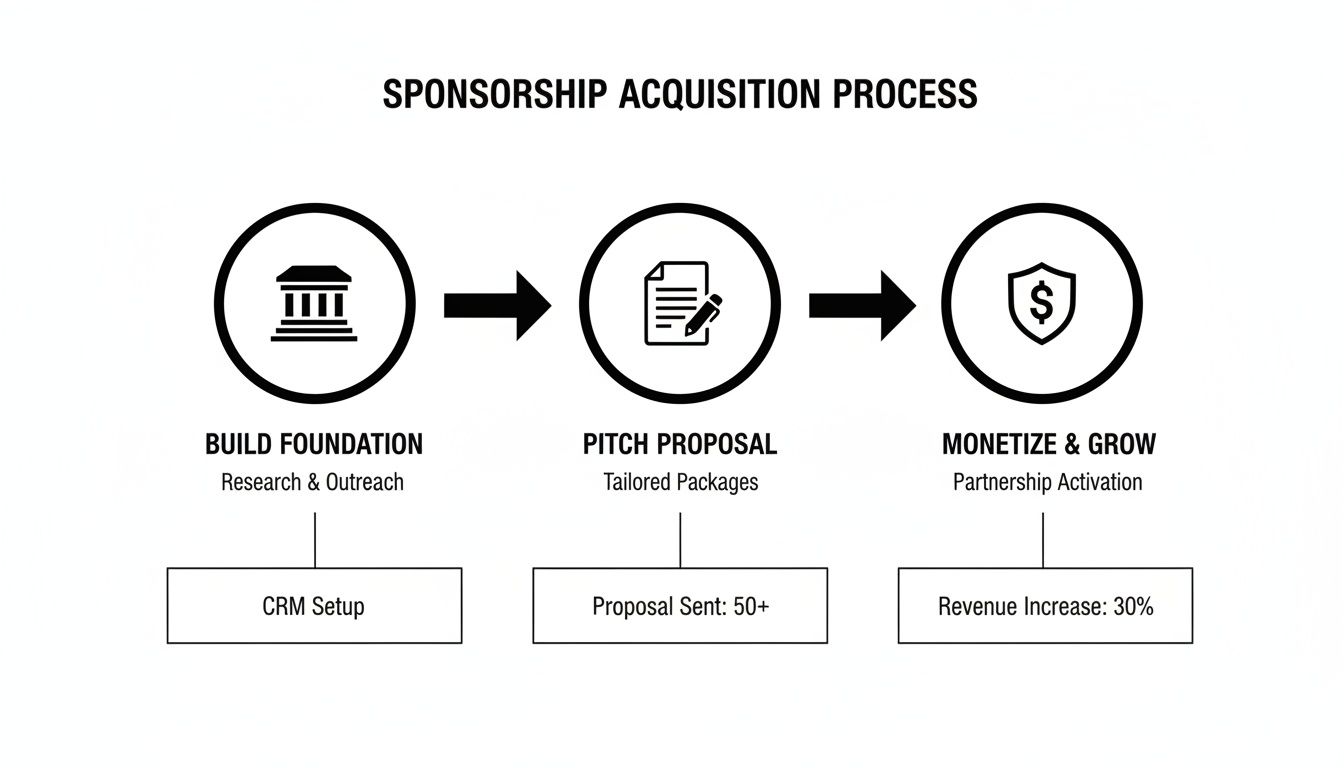
Think of it this way: you can't build a skyscraper on a shaky foundation. Getting that first part right is everything. It's the non-negotiable step before you even think about sending that first outreach email.
Laying the Groundwork for Premium Partnerships
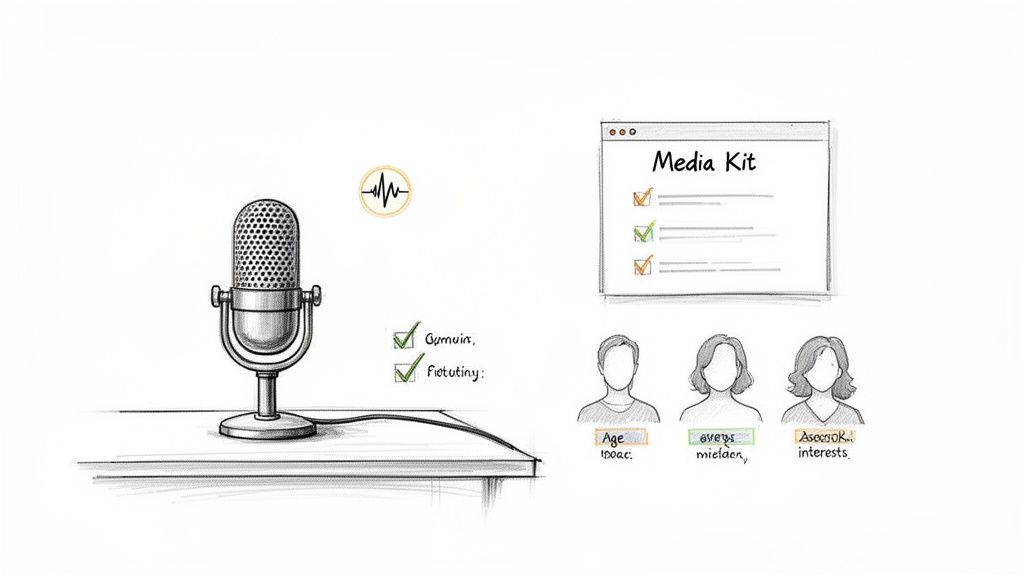
Before you approach a single brand, your podcast must project professionalism. Sponsors aren't just buying ad space; they're aligning their brand with yours. A polished, credible media presence is the price of admission, separating hobbyists from career creators who command serious investment. This foundation is built on three key elements: deep audience insight, impeccable production quality, and a professional digital footprint. Getting this right isn't just a best practice—it's the core of your monetization strategy.
Know Your Audience—Intimately
The first question any potential sponsor will ask is, "Who are we reaching?" A vague answer like "millennial entrepreneurs" won't cut it. You need to present a vivid picture of your listener avatar. What are their career aspirations? Which brands do they admire? What are their specific pain points and passions? This deep demographic and psychographic data is what allows a brand to see a perfect alignment and justify their ad spend.
A niche show with 5,000 die-hard fans is almost always more valuable than a general-interest podcast with 20,000 passive listeners. Why? Because a targeted, engaged audience actually buys things.
Sound Like the Professional You Are
Inconsistent audio, distracting background noise, and amateur editing are immediate red flags for potential sponsors. When a brand invests in your show, they expect a premium environment for their message. Their reputation is on the line, and anything less than broadcast-quality sound suggests a lack of seriousness. This is where professional production becomes a non-negotiable asset.
Recording in a purpose-built space like Flexwork Studios provides the pristine audio quality that signals you are a credible media partner. It's an investment in your show's perceived value and a critical factor in audience growth. In fact, production quality is so vital that we created a guide on how to get more podcast listeners, because a polished sound and a growing audience go hand-in-hand.
Establish Your Digital Headquarters
Your podcast needs a dedicated, professional website. Relying solely on a link-in-bio or a generic page from your hosting service looks temporary and unprofessional. A sophisticated website acts as your central hub—a place to showcase your best episodes, house your media kit, and provide a clear contact point for sponsorship inquiries. This digital storefront signals legitimacy and makes it effortless for a busy brand manager to find the information they need to make a decision.
The podcasting world is exploding, with the global audience set to hit 584.1 million listeners by 2025. All that growth has attracted serious cash—around $4.46 billion in advertising spend. Brands are actively hunting for shows just like yours to reach engaged listeners. The ones who are prepared, with a polished sound and crystal-clear audience data, are the ones who will grab a piece of that multi-billion dollar pie.
Craft a Media Kit That Closes Deals
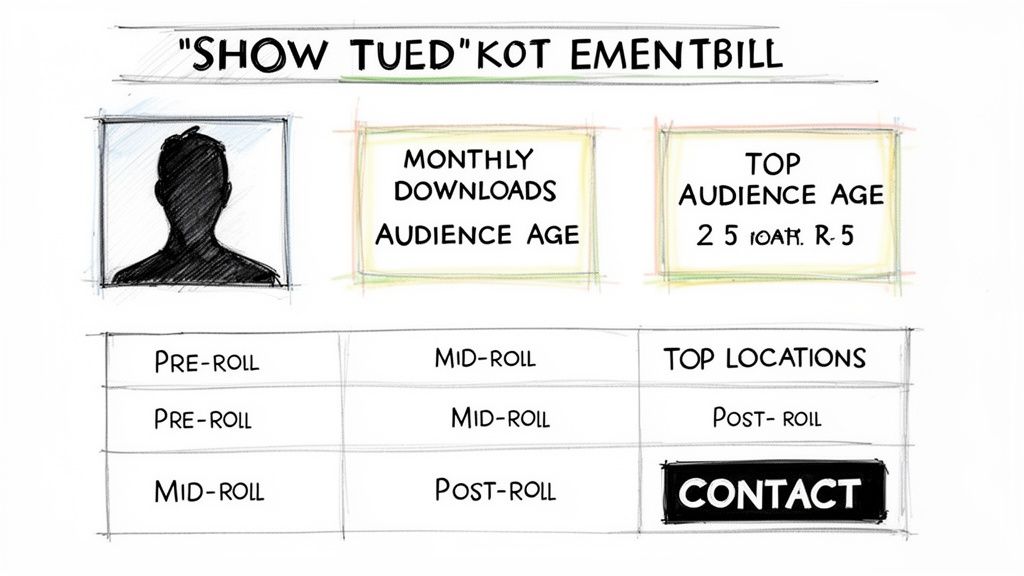
Your media kit is the most critical sales document you will create. It’s your opportunity to translate your podcast's influence into a compelling, data-driven business proposal. A weak, hastily assembled kit leads to missed opportunities. A sharp, persuasive one converts interest into investment. This document isn’t just a summary of your stats; it's a strategic tool designed to make a brand manager's decision to partner with you feel like an obvious win.
The Anatomy of a Winning Media Kit
A powerful media kit is clean, scannable, and focused exclusively on the information that sponsors value most. It should answer their questions proactively and build a case for partnership from the very first page.
A media kit that gets results includes:
- A Compelling Show Summary: Your elevator pitch. In two to three sentences, define your show's mission, unique angle, and target audience.
- In-Depth Listener Demographics: Go beyond age and gender. Highlight location, interests, income levels, and other psychographic details that align with a sponsor's ideal customer.
- The Metrics That Matter: Lead with your average downloads per episode (within the first 30 days) as the primary metric. Also include monthly downloads and listener retention rates to demonstrate engagement.
- Sponsorship Packages & Pricing: Clearly define your offerings. Outline ad placements (pre-roll, mid-roll), deliverables, and pricing, typically structured around a CPM model.
This document is a direct reflection of your professionalism. That's why our Flexwork Podcast Website packages ($5000 plus hosting) include professional media kit design—it’s an essential tool for monetizing your platform.
Tell a Story with Your Data
Numbers alone are uninspiring. To make an impact, you must frame your data within a compelling narrative. Instead of simply stating your audience is 70% female, paint a picture: describe them as ambitious, career-focused women in the NJ/NY metro area who are highly engaged with wellness and lifestyle brands. This context allows a sponsor to immediately see the alignment. Your goal is to connect the dots, showing not just how many people listen, but who they are and why they are the exact audience the brand needs to reach.
A media kit should answer a brand’s questions before they even have to ask them. It’s about building trust and demonstrating value from the very first interaction.
Let Your Personality and Brand Shine
Your voice and personality as a host are significant assets. Brands don't just sponsor podcasts; they partner with trusted creators whose voices resonate with their target market. Your media kit should reflect the unique energy and authority you bring to your show. Include a high-quality, professional headshot and a brief, compelling bio that shares your story. This human element transforms a cold pitch into a warm invitation, positioning you as a creative partner rather than just another ad slot.
Ultimately, your media kit is the first handshake in a professional relationship. It needs to be polished, persuasive, and prove you're worth the investment. For an even deeper look at creating a cohesive look, check out our guide on how to build your podcast brand with custom studio assets.
Set Your Ad Rates and Understand Pricing Models
Defining your sponsorship rates is a pivotal step in transforming your podcast from a creative outlet into a sustainable business. Pricing your ad inventory with confidence requires understanding industry standards while recognizing the unique value your show provides. This isn’t about guessing what you’re worth; it’s about establishing a clear monetization model that honors your work and delivers measurable results for your partners. Let’s demystify the process and equip you to price your offerings like a seasoned professional.
Speaking the Language of Ad Pricing
To effectively negotiate with sponsors, you must speak their language. The podcasting industry primarily uses three pricing models, each suited to different scenarios.
- CPM (Cost Per Mille): The industry gold standard. "Mille" means thousand in Latin, and this model charges a flat rate for every 1,000 downloads an episode receives, typically measured within the first 30 days. It offers predictable revenue for you and scalable ROI for brands.
- CPA (Cost Per Acquisition): A performance-based model where you earn a commission for every sale or lead generated through a unique affiliate link or promo code. This is a low-risk entry point for sponsors but can result in variable income for you.
- Flat-Rate Deals: A single, fixed price for an ad placement, regardless of download numbers. This model is common for new shows, hyper-niche podcasts with high engagement, or special sponsorship packages.
Understanding these options allows you to create flexible packages that cater to different types of sponsors, from emerging startups to established national brands. To get a feel for the market, it's helpful to review current podcast advertising rates.
Below is a quick breakdown of how these models stack up against each other.
Standard Podcast Ad Pricing Models
This table compares the most common sponsorship pricing structures, outlining how each works and which scenarios they are best suited for.
| Pricing Model | How It Works | Typical CPM Range (Mid-Roll) | Best For |
|---|---|---|---|
| CPM | You're paid a set rate for every 1,000 downloads an episode receives. | $20 – $50+ | Established shows with consistent and predictable download numbers. The industry standard. |
| CPA | You earn a commission or bounty for each sale or lead generated through your unique link/code. | N/A (Commission-based) | Shows with a highly engaged audience known for taking action; great for testing new partnerships. |
| Flat Rate | A single, pre-negotiated fee for an ad placement, regardless of performance. | N/A (Fixed fee) | Niche podcasts, new shows building a track record, or for special sponsorship packages. |
Ultimately, a mix-and-match approach often works best. You might run a CPM deal with a national brand while offering a flat-rate package to a local business you love.
Nailing Your CPM with Confidence
So, what should you charge? While every show is different, industry benchmarks provide a solid starting point. The two biggest factors influencing your CPM are ad placement and delivery style. Host-read ads, where you personally endorse a product, are the most valuable assets in podcasting. Data for 2024–2025 shows these integrated, mid-roll placements command the highest CPMs, often falling in the $18–$50+ range, because listeners trust your recommendations.
Your pricing power is determined by three key levers: downloads per episode, proven listener engagement, and your specific audience demographics. While a local sponsor might be thrilled with a show getting 500–1,000 downloads, national brands usually want to see 5,000–25,000+ downloads per episode.
A typical rate card structure might look something like this:
- Pre-roll (15-30 seconds): $15–$25 CPM
- Mid-roll (60 seconds): $20–$50 CPM
- Post-roll (15-30 seconds): $10–$20 CPM
Let’s run the numbers with a quick example. Say your show consistently hits 10,000 downloads per episode. If you sell a single mid-roll ad at a $30 CPM, the math is simple:
(10,000 downloads / 1,000) x $30 CPM = $300 per episode
This formula is the foundation for your rate card and sponsorship packages. A smart podcast monetization strategy will often blend these ad types to maximize your revenue streams.
How Flexwork Helps You Command a Higher Rate
Your rates are not static. The quality of your production, the professionalism of your brand, and your audience growth all directly increase what you can charge. A higher CPM is a direct reflection of your show's perceived value. This is where partnering with a studio like Flexwork becomes a powerful financial advantage.
Our Market, Manage & Produce My Podcast package (starting at $1500 per episode with a 20-episode growth commitment) is an investment in your bottom line. We go beyond production to implement targeted audience development strategies designed to increase your downloads. This creates a virtuous cycle: better production leads to a more engaged audience, more listeners lead to higher downloads, and higher downloads allow you to command a premium CPM. The result is a powerful return on your investment, transforming your podcast into a valuable media asset.
Perfecting the Pitch: How to Land Your First Sponsors
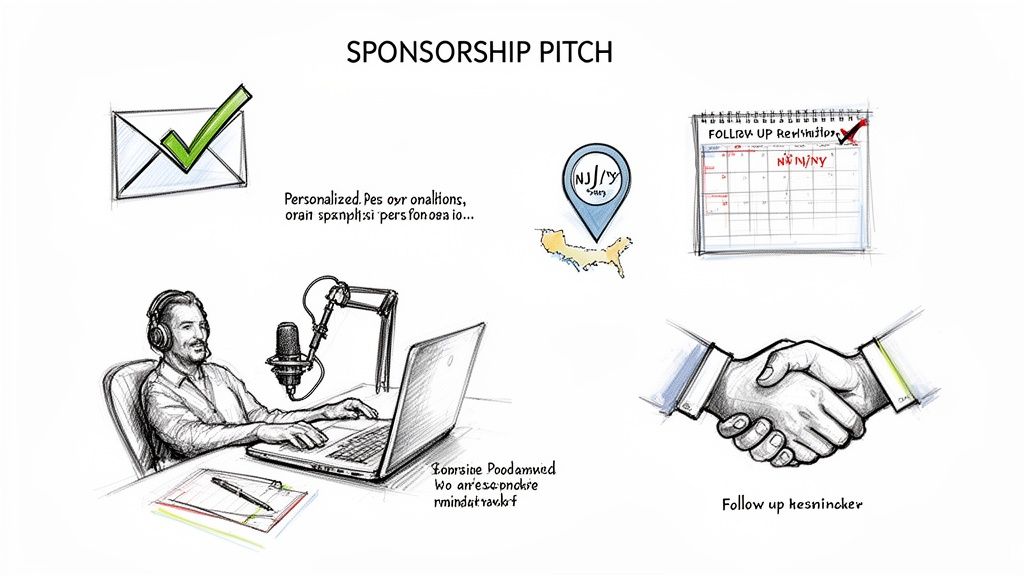
With a compelling media kit and confident pricing, you are now positioned as a credible media business. The next step is proactive outreach. Successfully landing sponsors is not about mass-emailing a generic template; it’s a targeted, personalized approach that demonstrates genuine alignment and a clear understanding of a brand’s marketing goals. This is where strategic research and thoughtful communication transform your efforts into meaningful partnerships.
Look Local: Finding Gold in Your Own Backyard
While national brands are an attractive goal, the most accessible and authentic partnerships often start locally. Businesses in the NJ/NY metro area are actively seeking innovative ways to connect with the community, and your podcast offers a direct and trusted channel to their ideal customers.
Think strategically about brands your listeners already value:
- Local Coffee Roasters & Cafes: Ideal for shows with a morning listenership.
- Boutique Fitness Studios: A natural fit for podcasts focused on wellness or entrepreneurship.
- Coworking Spaces: Perfect for reaching an audience of professionals, freelancers, and creators.
- NJ/NY Tech Startups: Eager to connect with savvy, local early adopters.
Once you have a curated list, it's time to master the art of crafting cold emails that get replies. Your first impression is crucial.
How to Write a Pitch That Inspires a Reply
Brand managers are inundated with requests. Your email must be concise, professional, and centered on their needs. A successful pitch doesn’t just list your accomplishments; it presents a solution to their core challenge: reaching the right audience effectively. Before you write, use LinkedIn to identify the appropriate contact—typically a Marketing Manager or Partnership Lead. Personalize your message by referencing a recent campaign or product launch. This simple step shows you're a genuine admirer of their brand, not just another creator seeking a handout.
Your pitch email has one job: to start a conversation. Keep it short, attach your media kit, and end with a clear, low-friction call to action, like, "Are you available for a brief 15-minute call next week to explore a potential fit?"
The Art of the Follow-Up
The reality of outreach is that many of your initial emails will go unanswered. This is normal. The real opportunity often lies in the follow-up. A polite, professional nudge one week later can be all it takes to land on a busy manager's radar.
A strategic follow-up sequence might look like this:
- The Initial Pitch: Your personalized, value-driven email with your media kit attached.
- Follow-Up #1 (1 week later): A brief and friendly reminder. "Hi [Name], just wanted to follow up on my note. We're covering [relevant upcoming topic] and thought your brand would be a perfect fit for the conversation."
- Follow-Up #2 (2 weeks later): Add new value. Share a recent win, such as a spike in downloads or positive listener feedback. "Just wanted to share that our latest episode is trending! I've re-attached our media kit for your convenience."
Persistence, when done professionally, demonstrates your commitment and belief in the partnership.
Your Secret Weapon: The Flexwork Advantage
During your conversations with potential sponsors, mentioning that you record at Flexwork Studios serves as a powerful signal of your professionalism. It communicates that you have invested in broadcast-quality production, a reliable recording schedule, and a polished final product. This instantly de-risks the partnership for a brand, assuring them that they are aligning with a creator who delivers excellence. The Flexwork stamp of approval can be the deciding factor that closes the deal and accelerates your path to monetization, which typically takes 6–18 months for a new show. This professional edge also makes your content prime for expansion; we even show you how to repurpose a single podcast episode into 10 pieces of content, maximizing value for your sponsors.
Attract Premium Sponsors with Flexwork Studios
The caliber of your sponsors reflects the quality of your show. Elite brands with significant budgets aren't just analyzing download numbers; they are investing in polished, professional media properties that enhance their own reputation. Your production value is not just a creative choice—it is a cornerstone of your monetization strategy. Presenting a brand manager with broadcast-quality audio and video is tangible proof that you are a serious, investment-worthy partner.
Nail Your Sound and Storytelling
For podcasters seeking that undeniable "wow" factor, our "Be My Podcast Producer" package is the solution. It is designed to deliver pristine, broadcast-quality audio and sharp, engaging video for every episode. From a sponsor's perspective, clean, crisp sound is the first indicator of a premium environment. It assures them their brand will be represented with the professionalism it deserves, immediately setting your podcast apart from the competition.
Build the Audience That Gets You Paid
Of course, exceptional sound is only half of the equation. Sponsors need to see a growing and engaged audience. Our premier package, "Market, Manage & Produce My Podcast," is designed for creators ready to elevate their show into a scalable business. Starting at $1500 per episode (with a 20-episode growth commitment), we combine top-tier production with a focused audience development strategy. We don't just help you create a great podcast; we help you connect with the precise listeners that premium sponsors are eager to reach.
The Flexwork Advantage: We provide the professional infrastructure and growth strategy to transform your podcast from a passion project into a premium media property that commands top-dollar sponsorships.
Create a Visual World Around Your Show
Sponsors want to see a vibrant brand with an engaged community, not just an audio file. They need compelling marketing assets that prove your influence extends beyond the microphone. Our Content Day sessions are a podcaster's secret weapon for building a powerful brand presence. For $3000/day, you receive a wealth of ready-to-publish marketing content: 20 professionally edited reels or 60 high-end photos. These assets provide immediate visual proof of your show's quality, elevating your media kit and social channels to a level that attracts premier sponsors.
Ultimately, the choice between DIY and professional production will define your earning potential. When you see how Flexwork vs other NJ podcast studios compare, you’ll understand the value of a partner invested in your growth. We provide the expertise, equipment, and strategic vision to help you secure the sponsorships that will elevate your show to the next level.
Your Top Podcast Sponsorship Questions, Answered
As you transition into monetizing your podcast, a new set of questions inevitably arises. Navigating the world of sponsorships can feel complex, but you're not alone. Here are direct answers to the most common questions we hear from ambitious creators on the path to profitability.
"How Many Downloads Do I Need to Land a Sponsor?"
While many podcasters fixate on a "magic number," the truth is more nuanced. Large national brands often look for a baseline of 5,000 to 10,000+ downloads per episode. However, a highly engaged, niche audience of just 500 to 1,000 listeners can be incredibly valuable to the right local or specialized business. Focus on building a deep connection with your listeners. A small, loyal audience that trusts you is far more powerful—and marketable—than a large, passive one. Your goal is to find sponsors who need to reach your specific people.
"What If a Sponsor Ghosts Me After I Pitch?"
Silence after a pitch is a common part of the process. The key is to be persistent without being unprofessional. A polite follow-up email one week after your initial pitch is standard practice and often effective. If you still don't hear back, wait another week or two and send one final message, perhaps sharing a recent win or positive listener review. After two or three thoughtful attempts with no response, it's best to move on. Your time and energy are better invested in pursuing brands that are actively seeking partnerships.
"Help! A Sponsor Wants to Write My Ad Read Word-for-Word."
This is a frequent request from brands seeking message control. However, a scripted, robotic ad read can alienate your audience and undermine the ad's effectiveness. The value of a host-read ad lies in your authentic endorsement. The best approach is to negotiate professionally. Explain that your listeners respond best to your genuine voice and that a natural delivery drives superior results. Propose a compromise: they provide the key talking points and a clear call-to-action, and you will integrate them into a compelling ad that resonates with your audience. This approach ensures a win-win for you, your sponsor, and your listeners.
"Should I Take a CPA or Affiliate Deal Instead of a Flat Fee?"
It depends on your goals and your show's current stage. A CPA (Cost Per Acquisition) deal can be an excellent way to secure your first sponsorship, as it presents a low financial risk for the brand. It allows you to prove that your audience is engaged and willing to take action. The main drawback is income variability. Once you have a track record of successful CPA campaigns, your objective should be to leverage that performance data to negotiate a more stable CPM (Cost Per Mille) or flat-rate sponsorship. This provides a predictable revenue stream based on your proven influence.
Ready to create a podcast that has sponsors lining up? Flexwork Studios isn't just a recording space; we're your production and growth partner. We provide the professional sound, strategic guidance, and premium environment that signals to brands that you mean business.
Explore our production packages and book a tour of our Springfield, NJ, facility to begin your journey.