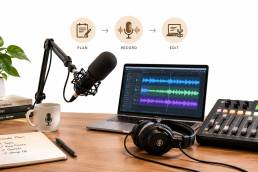

How to Distribute a Podcast for Maximum Reach in 2026
 April 20, 202628 Minutes
Meta description: Learn how to distribute a podcast the right way, from RSS setup to multi-platform growth, with a smarter path for serious creators.
URL slug: /how-to-distribute-a-podcast
Primary keyword: how to distribute a podcast
Secondary keywords: podcast distribution, podcast hosting, podcast marketing
You exported the episode. The audio sounds clean. The cover art looks sharp. You finally have something real.
Then the obvious question lands. How do you distribute a podcast to ensure people find it?
Many first-time hosts stall out at this stage. They assume distribution is a quick upload step, when it’s the bridge between a polished recording and an audience that comes back every week. If you get it wrong, your show sits in a vacuum. If you get it right, your podcast starts behaving like a brand asset, not a hobby file on your laptop. For creators in New Jersey who want a professional path from recording to reach, Flexwork Studios often enters the conversation at exactly this point: after the edit, before momentum either starts or dies.
Your Guide to Podcast Distribution
A new host wraps their first episode, names the file “final_final_v3,” and feels that rare mix of relief and ambition. They’ve done the hard creative work. They showed up, recorded, revised, and approved the cut. Then they open a browser and realize they don’t know what happens next.
That gap is where many strong shows lose energy.
Podcast distribution isn’t a technical errand. It’s the operating system for discoverability. It determines where your show appears, how cleanly platforms ingest it, how listeners experience it, and whether your release process feels repeatable or chaotic. If you want your podcast to grow, you need more than a finished episode. You need a hosting setup, a healthy RSS feed, directory coverage, promotion assets, and a release routine that doesn’t collapse after week three.
Practical rule: If distribution feels like an afterthought, your audience will treat your show like one too.
The Post-Production Void Where Great Podcasts Fade
A lot of creators think the hard part is production. It isn’t. Production is demanding, but it’s visible. You can hear a bad edit. You can spot weak lighting. Distribution problems are quieter. They show up as stalled growth, missed releases, and a show that technically exists but barely moves.
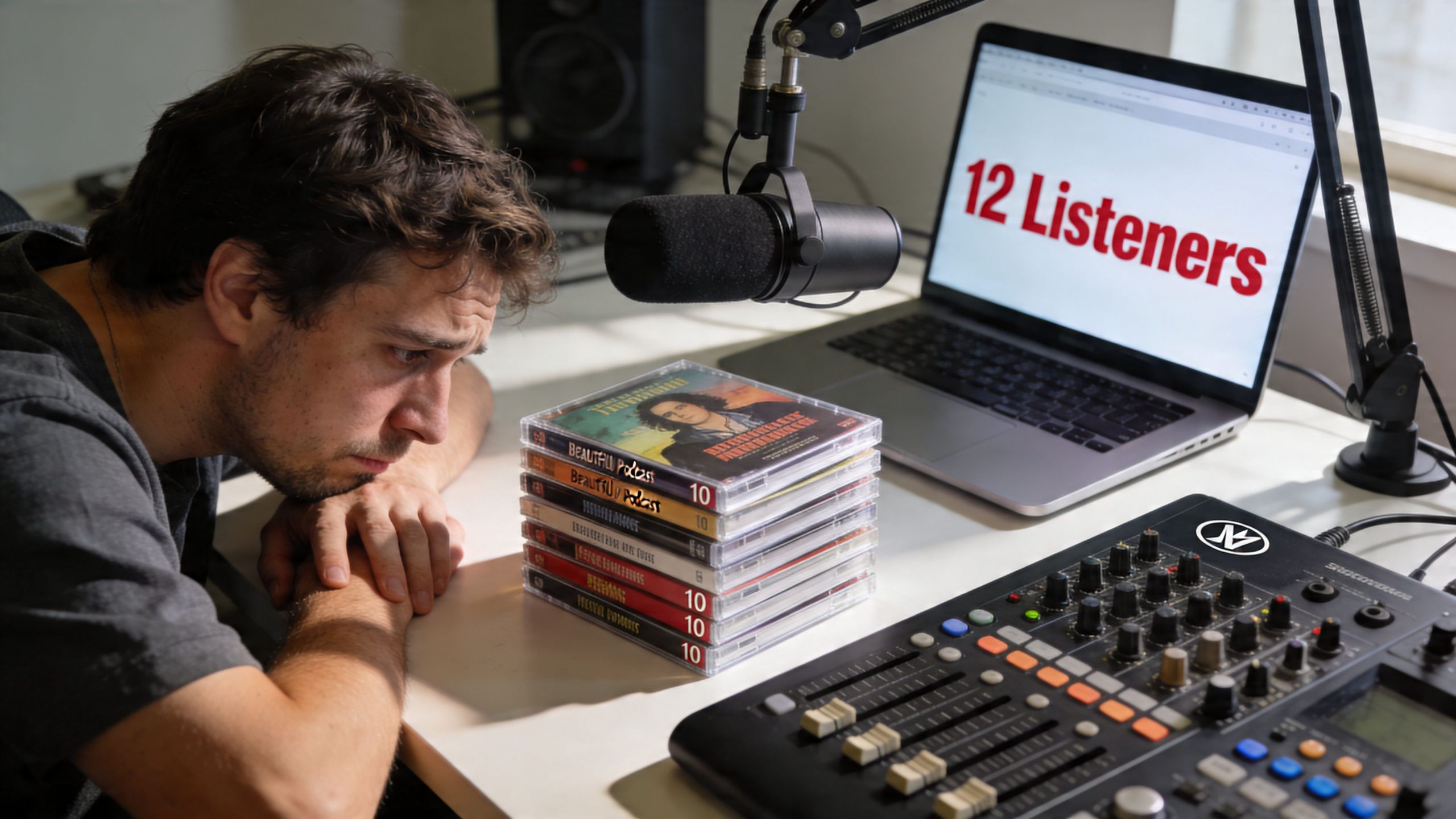
The market is crowded. In 2025, over 5.2 million podcasts exist worldwide, and while 80% of the 120,000 new shows launched that year came from small creators, only 10-11% remain active, largely because of poor discoverability and inconsistent promotion, according to Command Your Brand’s 2025 podcast market breakdown. That’s the part new hosts underestimate. Most podcasts don’t fail because the host had nothing to say. They fade because no one built a system around the content.
Why good shows still disappear
The most common pattern looks like this:
- They finish the episode but not the launch system. The file is edited, but the show title, descriptions, categories, artwork, and distribution workflow are all still loose.
- They publish inconsistently. A missed release train wrecks trust fast. Listeners need rhythm.
- They rely on one platform. If your show only lives where you happened to upload first, you’re shrinking your own ceiling.
- They treat promotion like extra credit. No clips, no newsletter embed, no website post, no guest tags. The episode goes live and then vanishes.
You can clean up your edit with discipline. You can fix your mic technique with practice. Distribution problems create a different kind of burnout because they make creators question the show itself.
DIY burnout is usually workflow failure
Most podcasters don’t quit in one dramatic moment. They drift. They get tired of checking dashboards, fixing metadata, submitting feeds, chasing links, resizing art, and wondering why a solid episode underperformed. The work starts to feel fragmented.
That’s why post-production discipline matters so much. If your release process is messy, every new episode costs too much mental energy. A tighter workflow, like the one outlined in these post-production best practices for podcast episodes, doesn’t just improve polish. It protects consistency.
Distribution failure rarely looks like failure. It looks like a promising show quietly slipping off your own calendar.
What podfading actually looks like
Here’s the reality for ambitious creators:
| What creators think | What usually happens |
|---|---|
| “I’ll upload it after I edit” | The episode sits for days because platform setup isn’t finished |
| “I’ll promote it later” | Later never comes because the next recording is already due |
| “Listeners will find it if it’s good” | They won’t, unless the show is packaged and distributed well |
| “I can manage every platform manually” | The admin load grows faster than the show |
A show doesn’t need to go viral to matter. It does need to be easy to find, easy to follow, and easy to release repeatedly. That’s the threshold many creators never cross.
Your Foundation for Flawless Distribution
If you’re serious about learning how to distribute a podcast, start with the infrastructure. Not the logo tweaks. Not the launch announcement. Infrastructure.
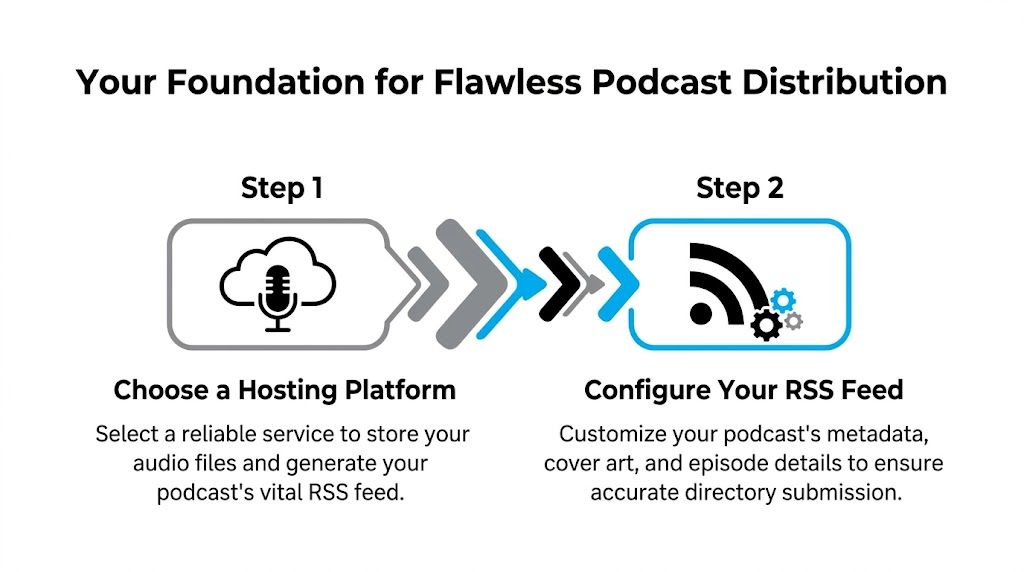
Your two essential requirements are a professional host and a clean RSS feed. Everything else sits on top of that.
Choose a host that behaves like a business tool
Your hosting platform stores the audio, serves the episode files, and generates the RSS feed that directories read. If that host is unreliable, confusing, or thin on analytics, your show feels amateur before a listener even presses play.
Good starting options include Libsyn, Buzzsprout, and Transistor. Each can generate the feed you need and support a cleaner publishing workflow. Don’t choose based on whatever looks cheapest for one month. Choose based on whether you’d trust it to manage your show for the next year.
A solid host should make these jobs simple:
- Episode publishing: Upload the MP3, add title and description, set release timing.
- Feed management: Maintain one stable RSS feed instead of patching together manual uploads.
- Directory distribution: Help you submit to major listening apps without reinventing the process.
- Analytics access: Give you a usable picture of what’s happening after launch.
Your RSS feed is the master key
Think of the RSS feed as your show’s single source of truth. Platforms don’t want random files sent in random formats. They want a structured feed that tells them what the show is, what each episode is called, what image to display, whether it’s explicit, and where the audio file lives.
The feed has to be clean. It also has to be complete.
According to Lisa Larter’s podcast launch guide, technical specs require audio at 128-192kbps stereo MP3, and creators should validate their RSS feed using tools like Podbase because invalid characters or missing fields cause 30-50% of initial rejections from major directories. That’s not a small technicality. That’s the difference between showing up and getting stuck.
What to configure before submission
Don’t rush this part. The feed metadata becomes your storefront.
- Show title: Keep it clear and searchable. Clever is fine. Obscure is expensive.
- Podcast description: Lead with who the show is for and why it matters. Don’t write like a press release.
- Artwork: Use professional cover art that looks credible at thumbnail size.
- Category selection: Pick the category that matches your actual content. Don’t chase vanity placement.
- Explicit rating: Set it correctly. Platforms care.
- Episode-level details: Every episode needs its own useful title and description, not recycled filler.
A sloppy feed tells directories your show isn’t ready. A clean feed tells platforms and listeners they can trust what they’re getting.
The setup I recommend
Use this sequence and don’t improvise:
- Export the episode correctly as a stereo MP3 within the required bitrate range.
- Upload to your host and complete every show-level setting first.
- Fill in episode metadata with listener-focused language, not internal notes.
- Run the feed through Podbase or another validator before submission.
- Fix every error immediately instead of assuming platforms will overlook it.
If you want help building a cleaner publishing workflow around your tools, this roundup of content creator tools and platforms is a useful place to compare what belongs in your stack.
DIY versus professional setup
| Approach | What happens |
|---|---|
| Free-form DIY | You piece together hosting, descriptions, art, and submissions as you go |
| Structured DIY | You choose a real host, validate the feed, and standardize every release |
| Managed setup | A producer or studio team handles the technical configuration and publishing operations |
If your goal is casual experimentation, basic DIY is enough. If your goal is credibility, sponsorship readiness, and repeatable execution, build this foundation like a business asset.
Reaching Listeners Where They Live
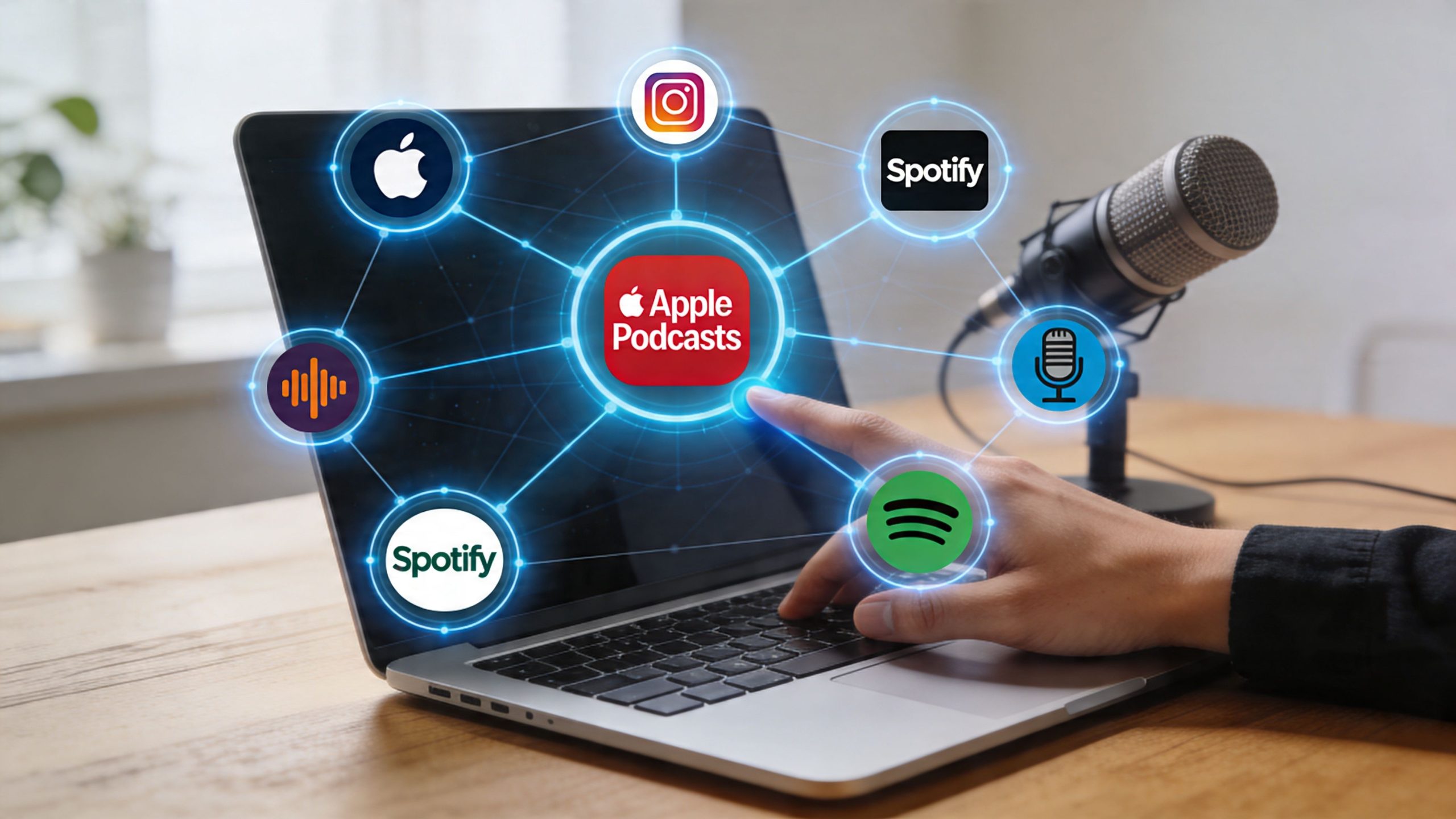
Once your host and RSS feed are in shape, distribution becomes a submission and coverage game. You want your show available where people already listen, not where you hope they’ll migrate.
That matters because podcast listening is already mainstream. In 2025, 55% of the U.S. population, or 158 million monthly listeners, engaged with podcasts, making broad distribution across major services like Apple and Spotify vital, according to Teleprompter’s podcast statistics roundup.
Submit to the big platforms first
Start with the platforms that define legitimacy for most new shows.
Apple Podcasts
Apple still matters because it influences discovery, trust, and listener expectations. Set up your show in Apple Podcasts Connect, submit the RSS feed, and complete ownership verification. Review your show art, title, author name, and categories carefully before you hit submit.
Apple is not the place for sloppy naming. If your metadata looks confused there, it looks confused everywhere.
Spotify
Use Spotify for Podcasters to claim or submit the show. Spotify’s process is usually straightforward if your feed is healthy. Once you’re in, you’ll also have access to analytics that become useful later when you start evaluating audience retention and episode performance.
Google and search visibility
Google’s role matters because discoverability isn’t confined to podcast apps anymore. People search topics, guests, and episode themes. Your feed, descriptions, and later your transcript strategy all influence whether your show gets surfaced.
Then let your host handle the long tail
After the big platforms are live, use your host’s distribution tools to push to additional directories like Amazon Music, Overcast, and Pocket Casts. At this point, efficient systems beat brute force.
You do not need to babysit every app manually if your host supports one-click submission and feed-based updates. You do need to verify that your listings are accurate after they go live.
For creators comparing software stacks beyond podcast-specific tools, this breakdown of best content distribution platforms is a smart reference point because it helps frame distribution as a broader publishing operation, not a one-app tactic.
A clean rollout looks like this
Use a simple release checklist:
- Claim your listings: Don’t leave your show unclaimed on major apps.
- Confirm artwork and descriptions: Fix any truncation, formatting glitches, or bad category choices.
- Test links: Make sure your podcast link hub, website, and social bios point to live listings.
- Publish consistently: Directories can’t help you if your release cadence keeps breaking.
The point of multi-platform distribution isn’t vanity. It’s convenience. Every extra bit of friction costs you listeners who were willing to try the show.
A short walkthrough can help if you’re visual. This video covers the mechanics of publishing and submission:
Don’t confuse availability with growth
Getting into directories is essential. It’s not the finish line.
A show can be available everywhere and still underperform if the branding is weak, the episode titles are vague, or no one is amplifying the release after it lands. Distribution gives you access. Growth comes from packaging and promotion layered on top.
If you want the tactical next step after directory setup, this guide on getting more podcast listeners pairs well with your distribution work because it focuses on turning visibility into actual audience movement.
From Distribution to Dominance The Flexwork Advantage
There’s a point where DIY stops being scrappy and starts being wasteful. That point usually arrives when the creator’s calendar is full, the show is good enough to deserve reach, and distribution still depends on late-night admin work.
At that stage, managed support makes sense. Not because creators can’t learn the mechanics, but because they shouldn’t have to spend their best energy inside dashboards and file naming conventions.
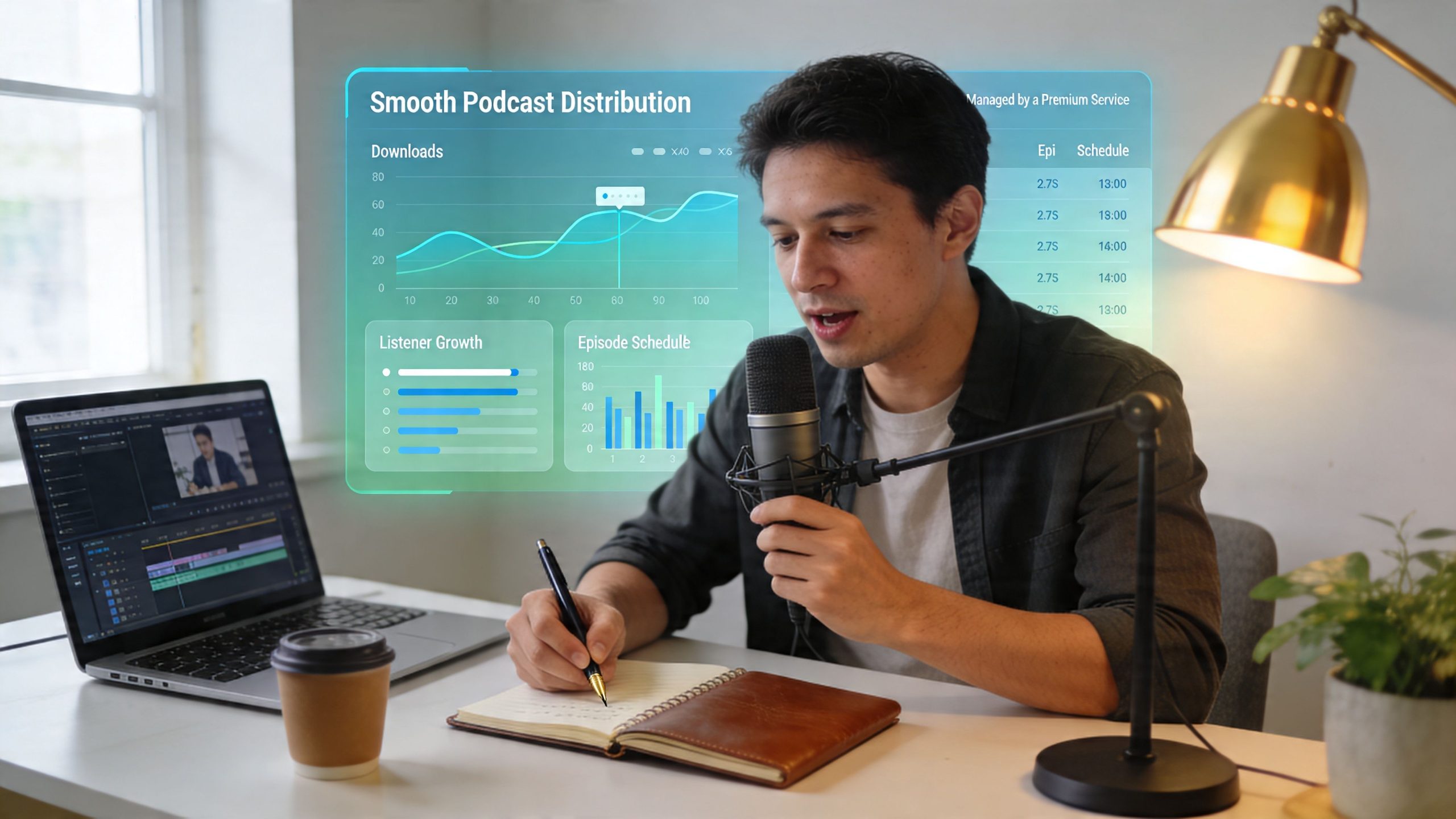
What a premium approach changes
A fully managed workflow turns distribution from a recurring task into a controlled system. That usually includes feed management, release scheduling, metadata cleanup, platform monitoring, repurposing assets, and reporting. The result isn’t magic. It’s consistency.
One option in that category is Flexwork Podcast Studios, which offers podcast distribution as part of its production services. For creators who want hands-on support, the Market, Manage & Produce My Podcast package starts at $1500 per episode with a 20-episode growth commitment. That model is built for people who want the show run like a brand property, not a side project.
The ecosystem matters
Distribution performs better when it’s attached to a larger content system.
Here’s what that can look like:
| Service | Role in distribution |
|---|---|
| Podcast website | Creates a central home for episodes, brand messaging, and search visibility |
| Content Day | Produces promotional assets for launches, clips, and ongoing episode support |
| Managed production | Keeps release quality and release timing aligned |
A podcast website costs $5000 plus hosting and gives the show a stable home outside third-party apps. That matters when you want episode pages, transcripts, embedded players, guest features, and a place to send press, sponsors, or inbound listeners.
A Content Day costs $3000 per day and includes 20 edited reels or 60 professional photos. Those assets directly support episode promotion. That means each release can travel farther than the app listing itself.
Who should stop doing this alone
You should strongly consider managed distribution if any of these are true:
- You’re publishing for a business goal: Brand authority, lead generation, partnerships, recruiting, or client acquisition.
- You’re already recording at a professional level: Weak distribution undercuts expensive production fast.
- Your time is better spent on voice and strategy: The host should host. The operator should operate.
- You want campaign thinking, not random uploads: Distribution improves when every episode is connected to social, search, and audience development.
If your show also needs broader promotional support outside the apps themselves, these influencer marketing strategies for creators and brands can sharpen how you think about audience borrowing, guest influence, and collaborative reach.
Premium service isn’t about outsourcing basic competence. It’s about protecting momentum so the show can compound.
Amplify Your Reach Beyond the Podcast App
Publishing into Apple and Spotify is the floor. Serious growth starts when each episode becomes a full content cycle.
That’s where most creators leave reach on the table. They record one strong conversation, upload it once, and move on. A smarter operator squeezes multiple discovery paths out of the same episode: audio feeds, YouTube, short clips, transcript-driven search, guest promotion, and follow-up content built from the strongest moments.
Repurpose like a producer, not a hobbyist
One episode should produce a week of material. If it doesn’t, your content pipeline is underbuilt.
Start by reviewing the finished episode and pulling moments that earn attention fast. You’re looking for conflict, clarity, surprise, authority, and emotional sharpness. Then package those moments for the platforms that reward short-form discovery.
A practical weekly output might include:
- One vertical teaser clip: Use the strongest opening idea, not a random sentence.
- A quote graphic: Pull a line that sounds decisive and useful.
- One audiogram or static-caption post: Good for platforms where face-forward video isn’t required.
- A guest-ready asset pack: Give your guest polished promo files so they can share without asking questions.
- A newsletter or website embed: Turn the episode into something your owned audience can click immediately.
If you want extra tactical ideas for turning one recording into a full content engine, this guide on repurposing a single podcast episode into 10 pieces of content is worth bookmarking.
Video is no longer optional for serious discovery
The smartest distribution strategy now includes YouTube, even if your show started as audio-first.
According to Better Marketing’s discussion of podcast discoverability, video podcast distribution to YouTube surged 40% in 2025, and 70% of shows lose 50% of listeners by episode 3, which is why analytics from Spotify and Apple matter so much. That first figure points to search and discovery. The second points to retention failure. You need both in view.
Master the metrics that actually matter
Downloads tell you if people clicked. They don’t tell you if people stayed.
The more useful questions are simple:
- Where do listeners stop paying attention?
- Which episode openings hold attention best?
- Which guests or topics pull repeat listening?
- Are listeners finding the show through audio apps, video platforms, or search?
Look closely at the listener retention tools inside Apple and Spotify. A steep drop at the beginning usually means your intro is too slow, too branded, or too self-congratulatory. A drop in the middle often points to pacing issues, weak structure, or a tangent that should’ve been cut.
Field note: If people leave before your core idea arrives, your episode is starting too late.
Build titles and descriptions for discovery
A lot of podcast titles sound stylish and search-dead. Don’t do that.
Use episode titles that include the topic, the promise, or the tension. The listener should know why they should care before they press play. Descriptions should support that same job. Give context, not fluff.
Here’s a quick comparison:
| Weak packaging | Stronger packaging |
|---|---|
| “A Conversation With Maya” | “Maya Patel on Building a Personal Brand Without Burning Out” |
| “Episode 12” | “How to Price Your Creative Work Without Apologizing” |
| “Thoughts on Marketing” | “What Actually Gets Clients to Trust a New Brand” |
Find the audience other creators ignore
Broad distribution is good. Targeted distribution is better.
One of the more overlooked moves in podcast growth is tailoring your distribution to specific audience behavior. Some creators over-focus on generic podcast app presence and ignore where niche audiences spend time. Younger listeners often discover through short clips. Older listeners may need lower-friction access, such as direct posts and simple links. Family-oriented content may perform differently when paired with visual publishing and more accessible formatting.
That kind of audience-specific packaging can create an edge because you stop asking everyone to behave like a default podcast listener.
Use a hybrid growth loop
The modern distribution loop looks like this:
- Publish the full episode to your host and major directories.
- Send the episode to YouTube with a clean visual or full video version.
- Cut short clips for discovery on social platforms.
- Watch retention data to find the moments and formats that hold attention.
- Use those insights to improve the next episode’s hook, pacing, and promo assets.
If you want inspiration for the short-form side of that loop, these podcast viral video marketing strategies are useful because they focus on how clips earn attention outside the podcast app itself.
Keep the system tighter than your ambition
Ambitious creators often overbuild ideas and underbuild execution. Don’t chase every tactic at once. Build a repeatable loop.
Use the same clip template family. Standardize your captions. Create a promotion checklist for every episode. Save your title formulas. Make it easy for guests to share. Treat post-launch like part of production, not an optional bonus round.
That’s how distribution turns into dominance. Not through one upload, but through a system that keeps multiplying the value of every episode you already worked so hard to make.
Your Content Deserves to Be Heard
A podcast doesn’t grow because the file exists. It grows because the distribution system works.
That means a solid host, a clean RSS feed, accurate metadata, broad platform coverage, and an amplification plan that keeps working after launch day. It also means paying attention to retention, not just reach. A podcast that gets discovered but can’t hold attention still leaks momentum.
Most creators can learn how to distribute a podcast. Fewer build a process strong enough to sustain it. That’s the core distinction. The shows that last treat distribution as an ongoing strategic discipline. They don’t upload and hope. They publish, package, measure, and refine.
If you’re building in the NJ/NY market and want your show to sound polished, look credible, and reach beyond your immediate circle, the standard has to be higher than “it’s live.” Ready to build a podcast that cuts through the noise? Book a free tour of our Springfield, NJ studios today, or explore our end-to-end production packages to see how we can manage your entire journey from concept to chart.
If you’re ready to launch with cleaner production, sharper distribution, and a studio workflow that doesn’t waste your time, explore Flexwork Podcast Studios.