
The Studio Oxford: A Guide for Ambitious NJ Creators
 April 16, 202620 Minutes
Meta description: Confused by the studio oxford? Learn what a real pro studio experience looks like and how ambitious NJ creators should choose one.
URL slug: /the-studio-oxford-guide-for-ambitious-nj-creators
Primary keyword: the studio oxford
Secondary keywords: podcast production studio, content day for podcasters, professional podcast studio NJ
A search for the studio oxford sounds simple. It isn’t.
You might be looking for a salon, a piece of studio furniture, an audio tool, or even the larger idea of an elite creative environment. That confusion matters because most creators aren’t searching for a name. They’re searching for a standard. They want a space that makes their work look serious, sound polished, and move like a brand instead of a side project.
That’s where a lot of ambitious podcasters get stuck. The idea is strong. The message is clear. The setup is weak. DIY production starts as a smart shortcut, then turns into inconsistent audio, rushed visuals, technical distractions, and content that doesn’t match the level of the person behind it. If you’re building in the NJ and NY market, that gap costs attention.
What Does "The Studio Oxford" Mean for Creators?
Typing the studio oxford into a search bar reveals a bigger issue. Creators often chase labels when they should be evaluating capability.
A stylish name doesn’t tell you whether a room is acoustically treated. A polished website doesn’t tell you whether the team can capture clean dialogue, light a set properly, or turn one recording session into a full distribution-ready asset stack. If your goal is growth, those details matter more than branding language.
Search intent versus creator needs
Individuals searching this term typically fall into one of a few categories:
- They want a place. A physical studio, salon, or creative venue.
- They want gear. Something like the Oxford Studio Desk or Sonnox Oxford tools.
- They want an ideal. A space associated with quality, prestige, or professional craft.
That third one is the true story.
Practical rule: Don’t choose a studio because it looks expensive. Choose it because it removes friction from your process and raises the quality of every published asset.
Ambitious podcasters don’t need another pretty room. They need a recording environment that supports consistency. They need a team, setup, and workflow that can keep up once the show becomes a real business priority.
A good way to calibrate your standards is to study what defines top-tier spaces. This breakdown of the best podcast studios is useful because it shifts the conversation from style to performance.
The real question to ask
Ask one question before you book anywhere:
Will this studio help me produce content that matches the level of the brand I’m trying to build?
If the answer is vague, keep looking.
Decoding The Studio Oxford Puzzle
What are you searching for when you type the studio oxford?
The phrase is slippery. It can point to a place, a product, a software lineage, or a general aura of refinement. That ambiguity is useful, because it forces a better question. What does a professional studio experience give a creator that a stylish space does not?
One answer is standards.
Oxford carries weight because people associate it with discipline, structure, and serious output. For creators, that matters more than prestige. Strong shows do not come from atmosphere alone. They come from controlled conditions, repeatable workflows, and a team that knows how to capture assets that are ready to publish.
The gear references around "Oxford" make the same point. Studio furniture and audio tools tied to that name are associated with precision, long-session usability, and technical control. You do not need those exact products to build a serious show. You do need the mindset behind them. Real production spaces are designed on purpose. Every choice supports performance, consistency, and speed.
That is why the salon example matters.
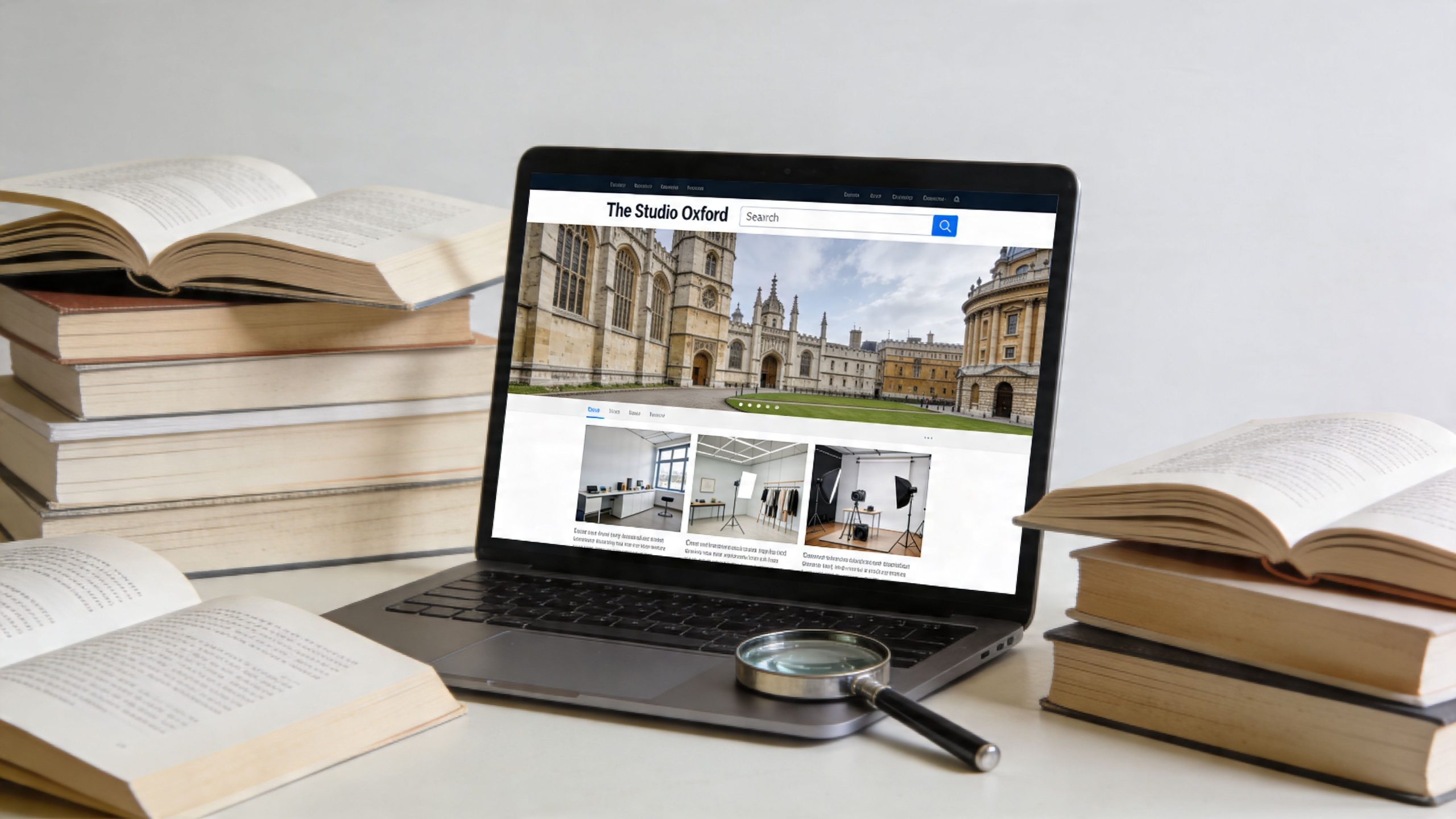
The Studio Oxford in Oxford, Mississippi may deliver a polished in-person experience for beauty clients. That does not make it a production environment for podcasters, founders, or media brands. A luxury interior can photograph well and still fail the test that matters to creators: clean sound, controlled lighting, repeatable framing, fast turnaround, and content that can be cut into a full asset stack after the session.
This is the gap ambitious creators need to see clearly. "Luxury" is often shorthand for taste. Taste helps. It does not replace infrastructure.
If you want the clearest benchmark, study a studio built around output, not appearance. This breakdown of what makes a great podcast studio shows what creators should evaluate before they book.
A premium studio earns its price by making your content stronger, your recording day easier, and your brand harder to ignore.
Beyond Aesthetics The Non-Negotiables of a Pro Studio
What makes a studio professional once you strip away the branding, the mood lighting, and the word "luxury"?
Creators get distracted by surface signals. A beautiful room can still produce weak audio, inconsistent video, and a pile of files that never turn into useful content. If "The Studio Oxford" can mean a salon, a desk, or a creative space, then the fundamental question is simpler. Does the studio help you produce assets that grow your show and your business?
DIY setups usually break at the exact point where consistency starts to matter. One episode sounds tight. The next has room echo. A guest leans back and the frame falls apart. Lighting shifts with the time of day. Then recording day turns into a technical repair job.
That is a bad trade for any founder, host, or brand-builder using a podcast to earn attention and trust.
A professional studio needs to do four jobs well:
- Control the room: Audio should sound clean because the space is treated correctly, not because you hope editing can hide problems.
- Support performance: Seating, table height, monitor placement, and sight-lines should help you stay sharp through long sessions.
- Deliver repeatability: Camera angles, mic position, and capture workflow should produce the same standard every time.
- Prepare content for release: The session should end with organized files and a clear path into editing, clipping, packaging, and publishing.
Comfort affects performance
Ergonomics are production infrastructure. If your chair, desk height, or eye-line is wrong, your energy drops, your delivery tightens up, and long-form conversations lose momentum. That cost shows up on camera.
As noted earlier, purpose-built studio furniture exists for a reason. The point is not the furniture itself. The point is a layout designed for focus, communication, and endurance. Good studios treat physical comfort as part of output, not an afterthought.
Working standard: If the setup pulls your attention toward posture, reach, glare, or monitor placement, it is already hurting the session.
Use this checklist before you book
| What to inspect | Why it matters |
|---|---|
| Room treatment | Clean audio starts in the room |
| Framing consistency | Repeatable visuals build a recognizable show |
| Technical support | The host should focus on the conversation, not troubleshooting |
| Post-production path | Raw footage has no value until it is edited and packaged |
| Session comfort | Long recording days demand physical ease and mental stamina |
If you want a practical benchmark, review these top podcast studio features creators in NJ should look for in 2025 before you commit.
The smartest operators also prefer integrated systems over pieced-together vendors. The same logic behind turnkey solutions applies here. One coordinated production environment saves time, reduces mistakes, and gets content out faster.
The Flexwork Solution A Turnkey Production Hub
What should a creator do with the ambiguity around “The Studio Oxford”? Stop chasing the label and judge the production system. Names can signal prestige. Results come from process.
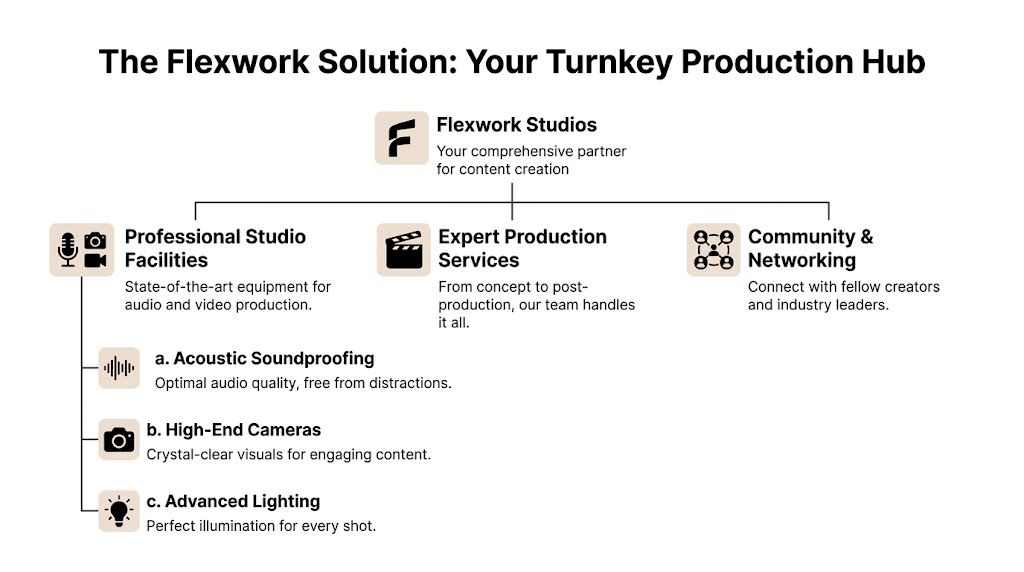
Flexwork answers the question serious podcasters should be asking. Can one studio take you from recording to finished assets without wasted motion, missed details, or a stack of vendors to manage? That is the standard. Anything less creates drag, and drag kills consistency.
What turnkey actually means
A turnkey production hub gives you one coordinated system. The room, cameras, audio chain, lighting, operators, and post-production workflow are designed to work together from the first take to final delivery. That is why turnkey solutions keep outperforming patched-together setups in other industries too.
For creators, the benefit is simple. Fewer handoffs. Fewer mistakes. Faster publishing.
Why Flexwork is the smarter model
Luxury is easy to fake. A clean set, a stylish chair, and a good logo can make a studio look premium in photos. None of that guarantees a strong episode, usable clips, or a repeatable production cadence.
Flexwork is built around output. You book a session inside a professional podcast production studio designed for creators who need polished long-form content, short-form assets, and a workflow they can return to every week or every month. That matters more than abstract “studio vibes” because growth comes from consistent publishing, recognizable visuals, and audio people trust enough to keep listening to.
What ambitious creators should expect
A serious studio partner should provide:
- A recording environment that protects the raw take so you are not fixing basic audio and lighting problems later
- A set and camera plan built for distribution across full episodes, social clips, and branded cutdowns
- Experienced operators in the room who catch framing, sound, and pacing issues while the session is happening
- A post-production path that ends in deliverables instead of dumping files on your drive and calling it done
That is the difference between a room you rent and a production hub that helps build a show.
The right studio does more than look expensive. It makes your content easier to produce, easier to publish, and much harder to ignore.
Amplify Your Brand with a Content Day Session
A strong content day changes how a creator operates. Instead of scrambling to make assets week by week, you batch high-quality material in one controlled session and leave with a usable library.
That’s how professionals protect momentum.
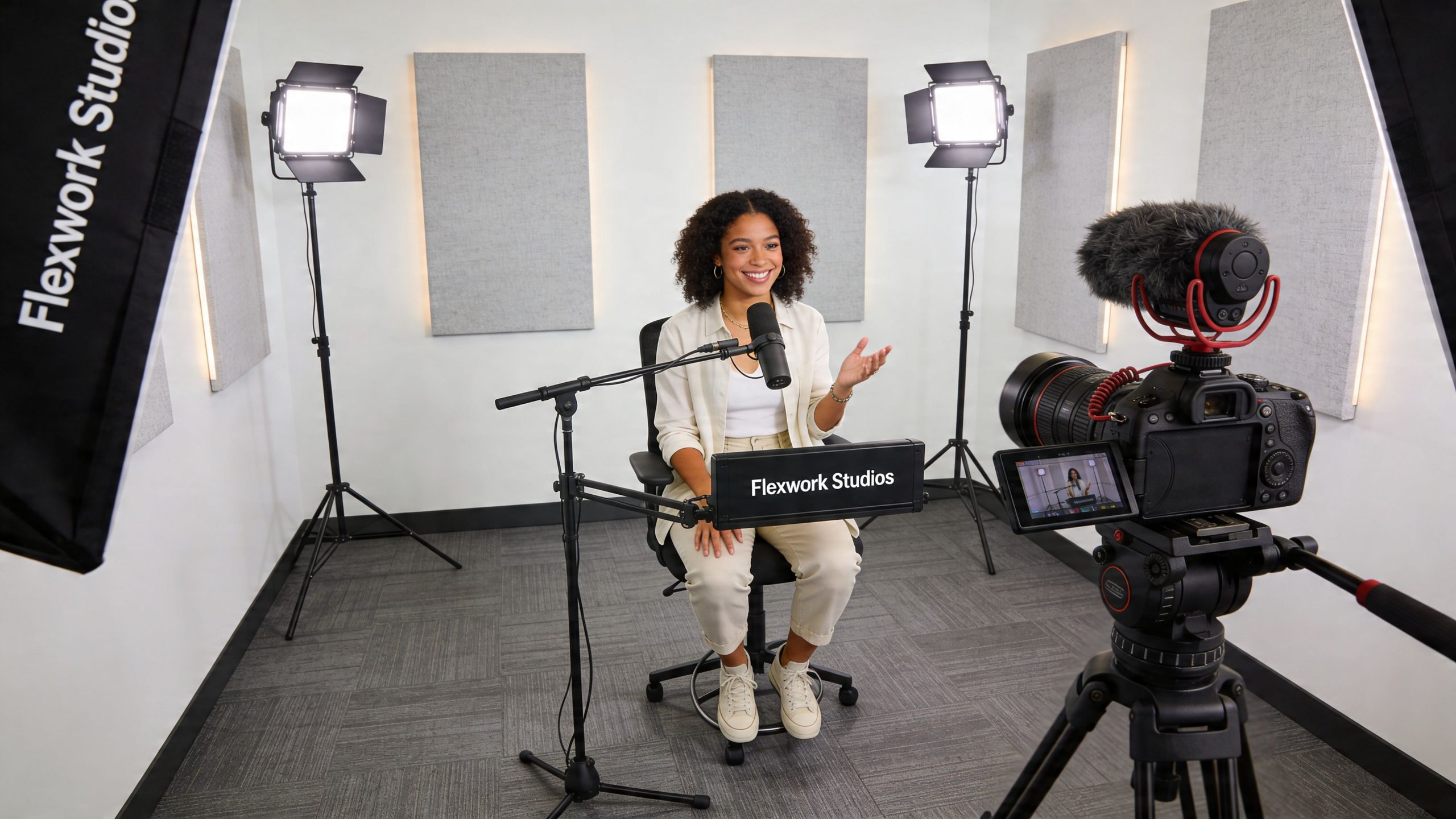
A well-run content day is part editorial sprint, part brand shoot, part production block. You arrive with a plan. The team captures long-form footage, short-form moments, stills, and branded talking points. By the end of the day, you’ve compressed a month of scattered effort into one focused production window.
For creators balancing a business, a show, and a personal brand, that’s a better model than constant last-minute recording.
What the deliverables look like
At Flexwork, a Content Day is $3000/day and includes 20 edited reels or 60 pro photos, based on the service brief provided. That’s compelling because the value isn’t just volume. It’s consistency.
You stop posting random assets that feel disconnected from each other. Your visuals start to look like they came from the same brand because they did.
If you’re comparing options, this page on content day for podcasters gives the clearest sense of how a focused production day supports modern creator workflows.
Three ways to get more from your shoot
- Build your talking points first: Don’t walk in hoping inspiration will save you. Draft the themes, offers, stories, and soundbites you want on camera.
- Plan visual variety: Bring wardrobe changes, alternate props, and segment ideas so your edited assets don’t all feel like the same clip.
- Match content to distribution: Decide which pieces are for reels, which are for episode promos, and which support your website or launch campaign.
A short walkthrough helps make the pacing real:
The creators who benefit most from a content day are usually the ones who have already hit the same wall. They know what they want to say. They just don’t have the time or infrastructure to package it at a premium level every single week.
From Launch to Leaderboard With Full-Service Production
What turns a podcast from a promising launch into a category leader? Not a nicer mic. Not a better backdrop. A production system that can publish, package, and position your show with discipline every single week.
That distinction matters here because the phrase the studio oxford can point to prestige, location, brand identity, or a polished image. Creators should ask a harder question. Can the studio help you build momentum after the first few episodes, or does it only help you record them?
Serious shows need more than session time. They need planning, production, editing, publishing support, and a standard that holds up under repetition. That is why a package like Market, Manage & Produce My Podcast starts at $1500 per episode and requires a 20-episode growth commitment, based on the service brief. That structure makes sense. Audience growth comes from repetition, quality control, and clear distribution habits.
Your website belongs in the same system. A podcast website is $5000 plus hosting, which is the right kind of investment if your show is meant to attract clients, press, guests, or sponsors. Without a credible home base, even strong episodes lose business value.
Your podcast becomes an asset when the production, brand, and distribution strategy work together.
Premium production earns its keep. Luxury language is cheap. Reliable execution is not. The studio that matters is the one that removes friction from your workflow, protects your standards, and gives your brand a consistent public face. Flexwork fits that brief because it functions as a production partner, not a room rental.
If your show supports a business, video has to be part of the plan. This guide to video marketing for small business is worth reading because it connects video output to visibility, trust, and demand generation.
Creators who want leaderboard results should stop buying production one episode at a time. Build the machine, then let the machine compound.
Choose the Studio That Builds Your Future
The phrase the studio oxford starts as a naming puzzle and ends as a standards test.
Some spaces sell atmosphere. Some tools offer precision. Some brands borrow the language of luxury without delivering the infrastructure creators need. If you’re building a serious podcast or video presence in the NJ and NY market, don’t confuse appearance with capability.
Choose the studio that respects your time. Choose the team that understands audio, video, editing, and distribution as one connected system. Choose the environment that helps you publish at the level your brand demands.
That's the fundamental shift. You’re not booking a room. You’re choosing the operating system behind your content.
If your work is still being produced in fragments, fix that now. The market notices quality fast, and it notices inconsistency even faster.
If you’re ready to stop searching and start producing at a higher level, explore Flexwork Podcast Studios. Book a tour, review the production options, and choose a setup that supports the brand you’re trying to build.