
Your Guide to Studio Space for Rent Brooklyn in 2026
 May 13, 202623 Minutes
Meta description: Brooklyn studio rentals look creative on paper, but cost, noise, and setup friction derail production. Here's the smarter path for serious creators.
URL slug: /studio-space-for-rent-brooklyn
Primary keyword: studio space for rent brooklyn
Secondary keywords: brooklyn podcast studio, creative studio rental brooklyn, podcast studio rental
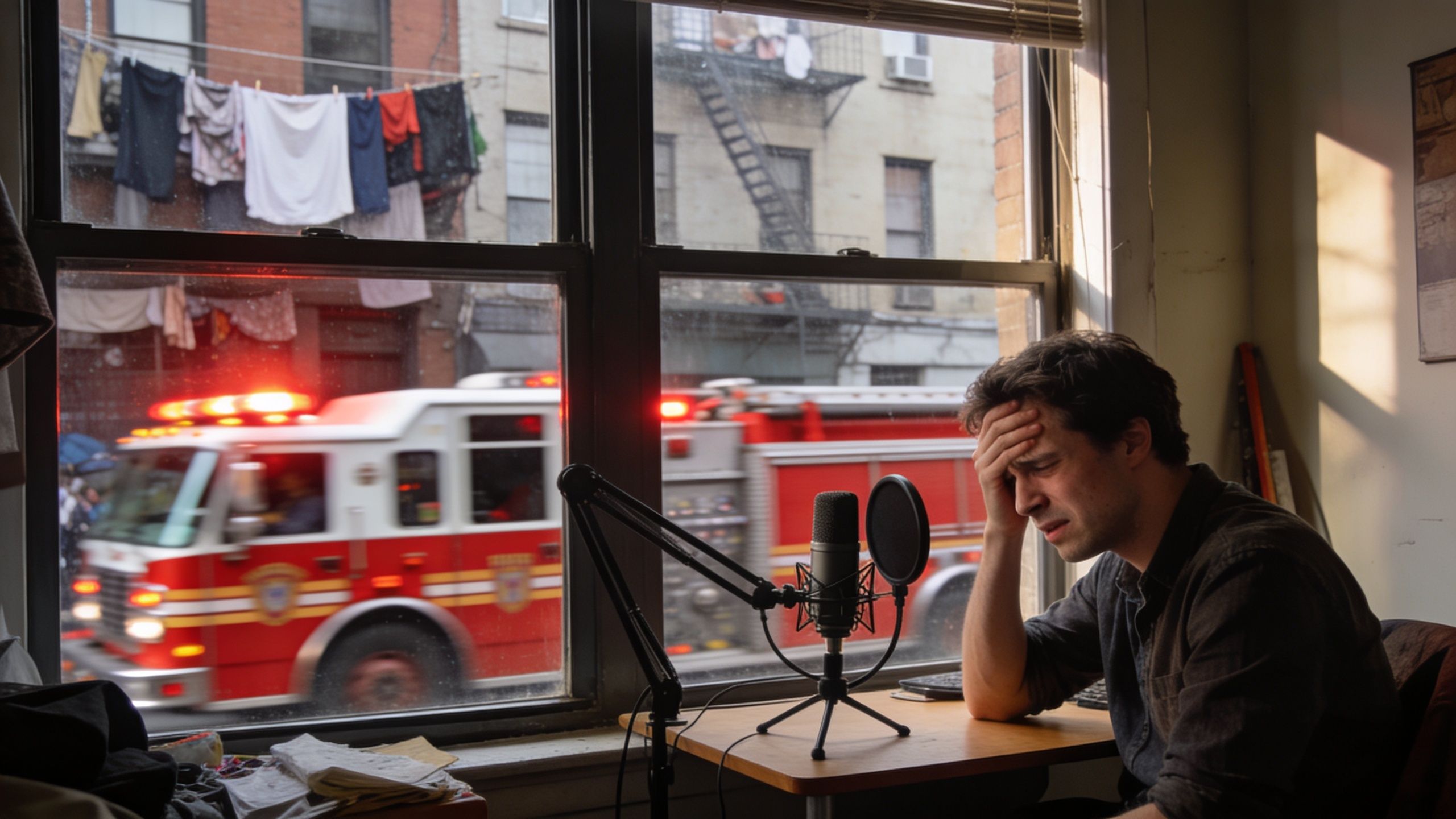
You're probably in the same loop a lot of ambitious creators hit in New York. You've got a strong concept, a decent mic, a few good episodes, and enough taste to know your content should look and sound better than it does right now. But your apartment keeps reminding you who's in charge. Street noise cuts into interviews. Light changes mid-take. Neighbors start moving furniture the second you hit record.
That's usually when people start searching for studio space for rent brooklyn and assume the answer is simple. It isn't. Brooklyn has plenty of creative spaces, but most of them were not built for podcasts, interviews, reels, or polished video production. If you want a setup that actually helps you grow, you need to know what to avoid as much as what to book.
Your Brooklyn Apartment Is Not a Recording Studio
A lot of talented creators stay stuck because they confuse effort with infrastructure. They work hard, prep well, show up consistently, then record in a room that sabotages them.
One siren during a guest answer. One HVAC hum under a solo episode. One muddy video frame that makes your clips feel cheaper than the ideas inside them. That's how good content gets downgraded before anyone even hears the message.
You can patch some problems at home. If you're still fighting noise between sessions, this guide on fixing mic background noise for free is worth a read. But cleanup tricks only go so far when the room itself is the issue.
The bigger problem is consistency. You might get one clean session on Tuesday and a mess on Thursday, in the exact same apartment. That's why so many creators eventually move beyond DIY and start studying what a purpose-built setup looks like. If you want a useful benchmark before touring spaces, review this breakdown of a home podcasting studio setup.
A bad room forces you to become an audio repair technician. A good room lets you stay a host.
The Reality of the Brooklyn Studio Hunt
You find a loft in Brooklyn that looks right on Instagram. Brick walls. Tall windows. Good neighborhood. Then the first session starts, a truck hits the street outside, the room throws your voice back at you, and your guest is waiting in a hallway because the building entry is a mess. That is the Brooklyn studio hunt in one scene.

The market is expensive before you even get to production quality. In Brooklyn's residential market, the average studio apartment was $3,517 per month, up 6.99% year over year and 83% above the national average, according to RentCafe's Brooklyn rent data. If your backup plan is renting a bigger apartment and turning it into a content room, start by admitting what that plan costs.
Commercial space creates a different problem. You can find inventory, but a lot of it is generic office or repurposed industrial stock. It can hold furniture. It cannot automatically deliver clean dialogue, controlled lighting, a professional guest experience, or a setup that resets quickly between shoots.
That gap matters more than the listing photos.
A good address does not fix a bad room
Creators waste money here all the time. They rent a place because it feels artistic, then spend months adding piecemeal fixes for sound, lighting, access, furniture, storage, and setup friction. The room keeps asking for more money because it was never built for spoken-word production in the first place.
Brooklyn inventory also tends to be fragmented. Analysts at CommercialCafe found Brooklyn's vacancy rate averaged 15.95% in 2024, the borough added 284,783 square feet of new office space that year, and only 2 buildings exceeded 25,000 square feet, according to the Brooklyn office market report from CommercialCafe. In plain English, there is space on the market, but much of it is small, mixed-use, or compromised in ways that matter once cameras and microphones come out.
If you want a sharper benchmark than “cool Brooklyn room,” study what a real Brooklyn podcasting studio is supposed to provide, then compare every listing against that standard.
A quick look at the scene helps explain the mismatch.
What usually goes wrong
The failure points are predictable.
- The price looks tolerable until the build-out starts. Acoustic treatment, lighting control, furniture, storage, internet reliability, and basic production gear turn a “cheap” room into an expensive workaround.
- The space looks creative but records poorly. High ceilings, hard surfaces, street-facing windows, and thin walls make audio cleanup a routine cost.
- The building slows the whole day down. Freight elevators, difficult access, inconsistent front-desk support, and awkward guest entry make repeat production harder than it should be.
- The location sells the idea, not the workflow. A trendy Brooklyn address sounds good. A turnkey studio in NJ with quiet rooms, better parking, easier load-in, and production-ready infrastructure is often the smarter business decision.
That last point is the one serious creators figure out first. If the goal is professional content, not just a Brooklyn zip code, Flexwork's all-in-one studio setup in NJ solves the problems Brooklyn listings keep charging you to fix.
Your On-Site Inspection Checklist for Any Studio Space
If you're touring spaces, stop asking whether a room feels creative. Ask whether it will survive a real production day.
That means checking the room like a producer, not like a renter. A lot of spaces can host a meeting. Far fewer can handle back-to-back podcast interviews, video setups, client sessions, and fast resets without turning the day into a scramble.

Start with sound
The most important technical checkpoint is the STC rating, or Sound Transmission Class. For a professional podcast room, STC 50+ is the benchmark that matters. According to BRIC space rental guidance cited in the verified data, an estimated 35% of repurposed Brooklyn lofts fail that standard, which can lead to a 20% to 30% increase in post-production audio repair.
That single fact should reshape how you tour. If a landlord or operator can't speak clearly about isolation, assume the room wasn't built for spoken-word recording.
When you're in the space, test it like this:
- Stand silent for a full minute: Listen for hallway footsteps, HVAC rumble, traffic, sirens, and door slams.
- Clap once, then talk at normal volume: If you hear flutter echo or a sharp slap back, the room needs treatment.
- Record a sample on your phone and headphones: Cheap monitoring still reveals a lot. You're not testing gear. You're testing the room.
Don't let a host tell you “it's usually quiet.” Quiet is not a production standard.
Look at lighting and camera practicality
A space can be acoustically decent and still fail on video. Many Brooklyn lofts have beautiful daylight for an hour, then become a mixed-light headache by afternoon.
Check the room from a creator's point of view:
- Can you control the light? Windows are great until they blow out one side of the frame.
- Is there room for stands and camera angles? Tight corners kill flexibility.
- Do backgrounds already work on camera? If you need to redesign the whole frame each session, your workflow will drag.
Many “creative studio rental” listings often disappoint. They're fine for occasional use, but they don't support repeatable, branded output.
If you want a good reference for what a purpose-built room should include, study this insider look at what makes a great podcast studio.
Check the unglamorous details
This is the part people skip, then regret later. You're not only renting square footage. You're renting reliability.
Use this inspection list before you leave:
- Internet and upload stability: Ask how the connection performs during livestreams, file transfers, and multi-device sessions.
- Power access: Look for clean outlet placement and enough circuits to support lights, cameras, laptops, and monitors.
- Load-in path: Elevators, stairs, door widths, and cart access matter fast when you bring gear or props.
- Guest comfort: Waiting area, bathroom quality, climate control, and ease of entry shape the experience.
- On-site help: A room without support can still work, but every issue becomes your problem.
Ask one blunt question
Ask the operator, “What kind of spoken-word productions are regularly recorded here?”
If the answer drifts toward fashion shoots, art installations, pop-ups, or “all kinds of creatives,” that tells you enough. Broad flexibility often means weak specialization.
The right studio doesn't just rent you a room. It protects the recording.
Calculating the True Cost of Your Studio Rental
You book a Brooklyn studio at a rate that looks manageable. By the time you add setup help, stretch past your slot, and grab a weekend window your guest can manage to attend, the “good deal” starts acting like a production tax.
That is the part many creators get wrong. They compare sticker price, not operating cost.
The posted hourly rate matters less than the conditions attached to it. A room that looks cheaper can still cost more once you account for support, timing, and the extra hours that disappear into setup, troubleshooting, and resets. For podcasters, interview shows, and branded content teams, that loss hits twice. You spend more money, and you leave with less usable output.
Where the budget actually slips
The expensive part is rarely the room by itself. It is everything the room fails to include.
Here is where rental math breaks down fast:
- Technical help: Some studios charge separately for hands-on support. If you need someone to manage cameras, audio, lighting, or routing, your budget climbs immediately.
- Booking windows: Prime-time sessions usually cost more than off-peak hours. That matters if your guests are only available on evenings or weekends.
- Setup and teardown: A two-hour recording block can become a four-hour booking once you include mic checks, framing, lighting adjustments, and breakdown.
- Scope creep: One session often turns into a full content day. You record the main episode, then cut social clips, shoot promos, capture thumbnails, and redo lines that did not land cleanly the first time.
Cheap access is easy to buy. Reliable production is harder.
That distinction matters in Brooklyn because many rentals are still generic creative spaces first and recording environments second. The room may photograph well. That does not mean it protects your timeline or your budget.
Monthly space creates a second job
Some creators respond by looking for a private room they can control full-time. That sounds smart until you run the numbers.
Now you are paying for rent, furniture, maintenance, internet, gear decisions, replacements, cleaning, access coordination, and every technical problem that shows up five minutes before a guest arrives. You also carry the pressure to keep booking enough sessions to justify the fixed cost. For a small team or solo host, that is not efficiency. It is overhead.
The better benchmark is cost per finished session, not cost per hour or cost per square foot.
If you want a cleaner reference point, review these podcast studio rental rates with clear inclusions and session pricing. That is the standard you should use. Know what is included before you book, know what support is available on-site, and know whether the room is built to help you leave with publishable content.
Brooklyn rentals can work for one-off shoots. If your goal is repeatable, professional production, chasing the lowest listed rate is the wrong strategy. A turnkey studio outside the Brooklyn premium often gives you better sound, less friction, and a more predictable total cost.
The Turnkey Solution Your Content Deserves
At a certain point, searching for studio space for rent brooklyn stops being a real estate question and becomes an operations question. Do you want to rent a room, or do you want to produce finished content without drama?
Brooklyn has style. It also has a structural gap. According to High Rise Safety market notes in the verified data, 150+ lofts serve visual artists while neglecting key audio and video needs like acoustic treatment. That gap is exactly why podcasters and video creators keep gravitating toward dedicated, turnkey environments instead of generic creative rentals.
The side-by-side reality
A typical Brooklyn rental often gives you character and flexibility. A turnkey production environment gives you control.
| Factor | Typical Brooklyn Rental | Flexwork Studios Turnkey Solution |
|---|---|---|
| Sound environment | Often uncertain until you record | Acoustically treated, production-ready rooms |
| Setup time | You handle layout, checks, and troubleshooting | Ready-to-record workflow |
| Gear expectation | Bring your own, rent separately, or confirm item by item | Professional audio and video equipment included in the environment |
| Guest experience | Depends on building access and room condition | Designed for client-ready, polished sessions |
| Output | Raw capture depends on your own follow-through | Supports recording, editing, and scaled content production |
| Creative energy | Spent managing variables | Spent performing, hosting, and creating |
That difference matters more than most creators admit. A polished episode isn't just the result of talent. It comes from repeatable conditions.
What serious creators should buy instead of another problem
If your goal is volume with polish, a single booking should generate more than one asset. That's where a structured production day changes the math.
A Content Day is $3000/day and includes 20 edited reels or 60 pro photos. That's the kind of package that makes sense for founders, coaches, agencies, and creators who want a month's worth of premium content in one organized session. It's not just about recording. It's about leaving with usable assets.
If your bigger issue is bandwidth, the stronger move is to stop trying to run your own mini production company. The Market, Manage & Produce My Podcast offering starts at $1500 per episode with a 20-episode growth commitment. That's built for people who are done experimenting and want a real production and growth system around the show.
A lot of creators say they want quality. Fewer are willing to admit they also need structure. The creators who move fastest usually stop piecing together freelancers, borrowed rooms, and inconsistent workflows.
Your podcast does better when you stop treating production like a side errand.
The smarter benchmark
When you evaluate any studio option, ask whether it removes friction or relocates it.
A room can look affordable and still leave you handling prep, setup, monitoring, pickup shots, editing coordination, file organization, and publishing stress. That's not a premium workflow. That's unpaid producer labor, and you're the one doing it.
If you're comparing options, this page on a podcast studio that handles editing is the standard I'd use. Not because every creator needs a full-service package on day one, but because you should understand what a complete solution looks like before settling for a partial one.
The best studio decision is the one that protects your energy, sharpens your output, and makes you more consistent on camera and on mic.
Upgrade Your Content from Aspirational to Professional
The creator from the opening doesn't have a motivation problem. They have an environment problem.
That's the shift. You're not deciding whether to rent a room. You're deciding whether your content will keep carrying the fingerprints of compromise. Great ideas recorded in chaotic conditions still feel smaller than they should. Professional conditions let the work land at full strength.
If you're building a brand, presentation matters beyond the episode itself. Your clips, cover art, guest assets, and profile images all shape how seriously people take the show. If you need to tighten your visual presence too, this guide on how to generate on-brand headshots with Secta Labs is a useful companion move.
The smart play is simple. Stop chasing rooms that almost work. Choose a production environment that makes consistency easier, quality higher, and growth more realistic. That's how content stops being aspirational and starts looking like a real media property.
If you're ready to record in a space built for serious podcast and video production, book a tour with Flexwork Podcast Studios. You can also explore studio sessions, Content Days, and full production support if you want more than just a room.